







Question: Given the vector functions: u(t) = ( e2t, 4t + 1, cos(3t)), v(t) = ( In(t), tan(t), t2), compute the following derivatives (using the differentiation
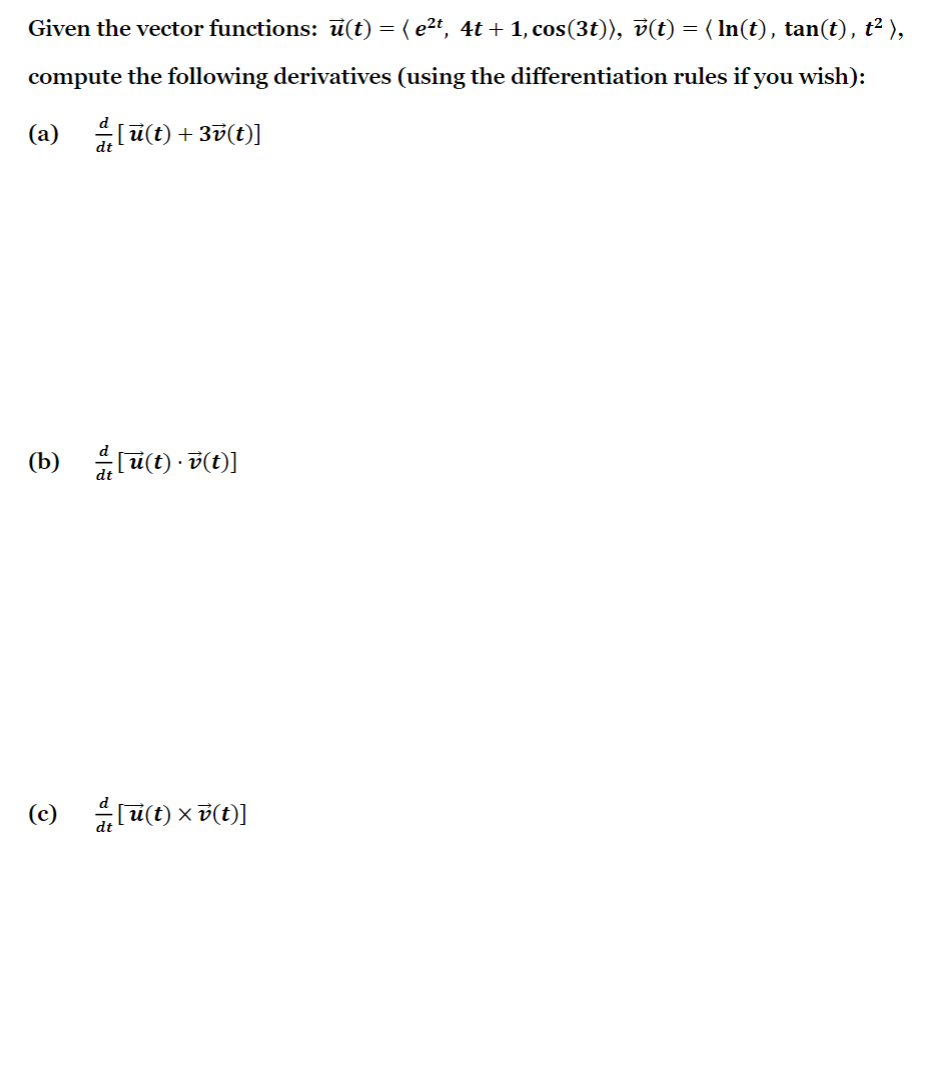
![the differentiation rules if you wish): (a) [u(t) + 30(t) ] (b)](https://s3.amazonaws.com/si.experts.images/answers/2024/06/66779f85ab1eb_65366779f858f27d.jpg)
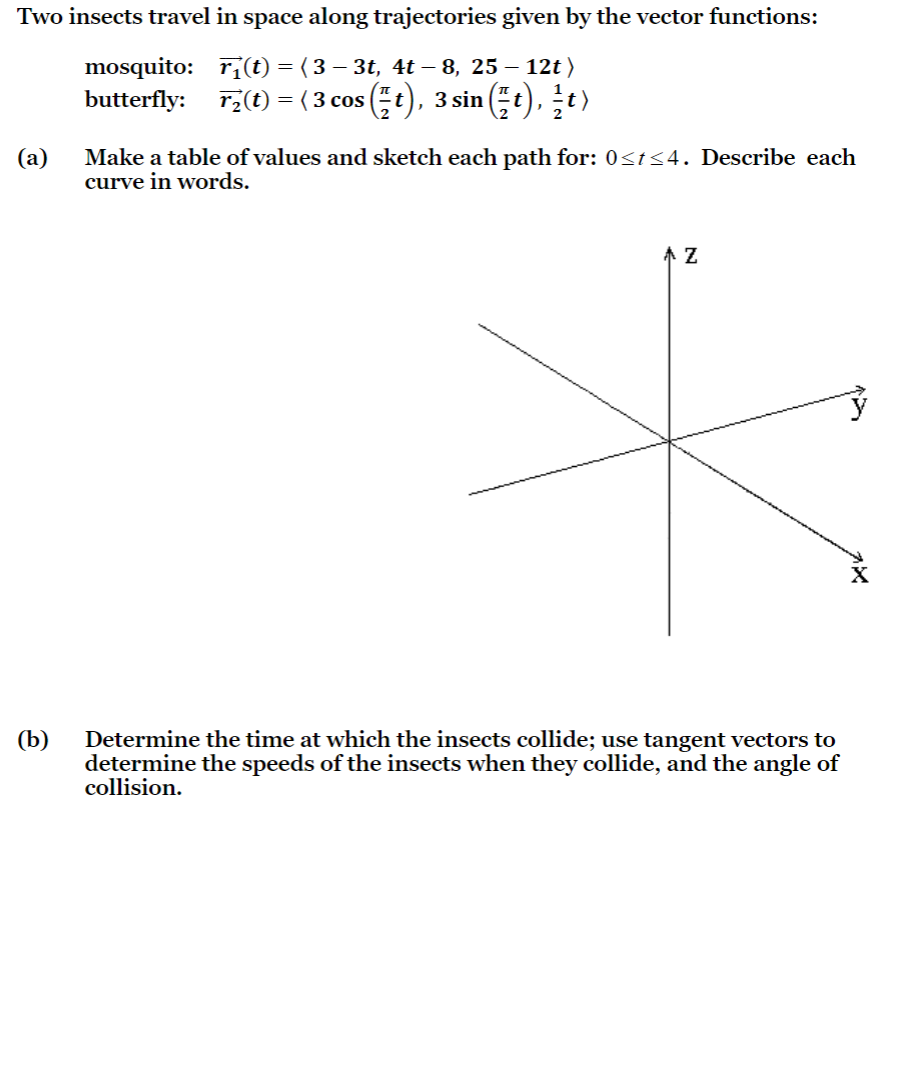
![[u(t) . v(t) ] (c) [u(t) x v(t) ]Two insects travel in](https://s3.amazonaws.com/si.experts.images/answers/2024/06/66779f861554c_65366779f85f4218.jpg)
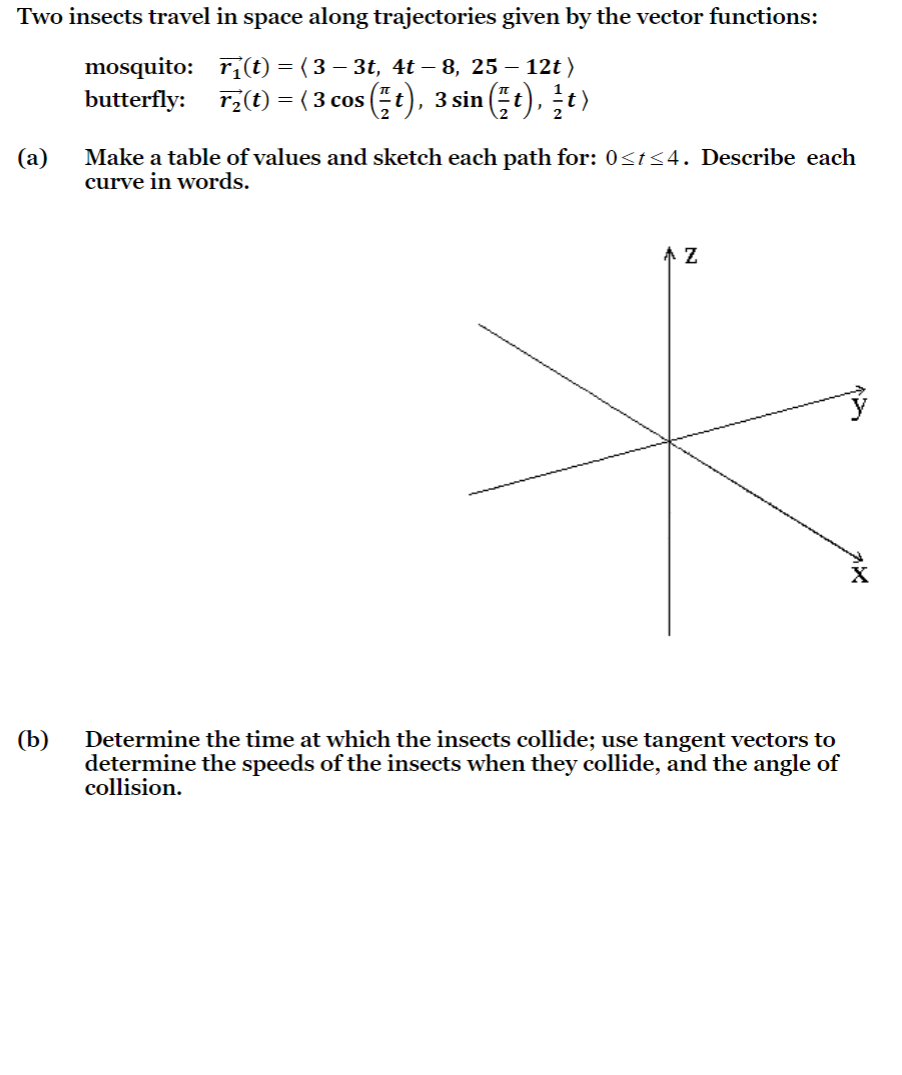
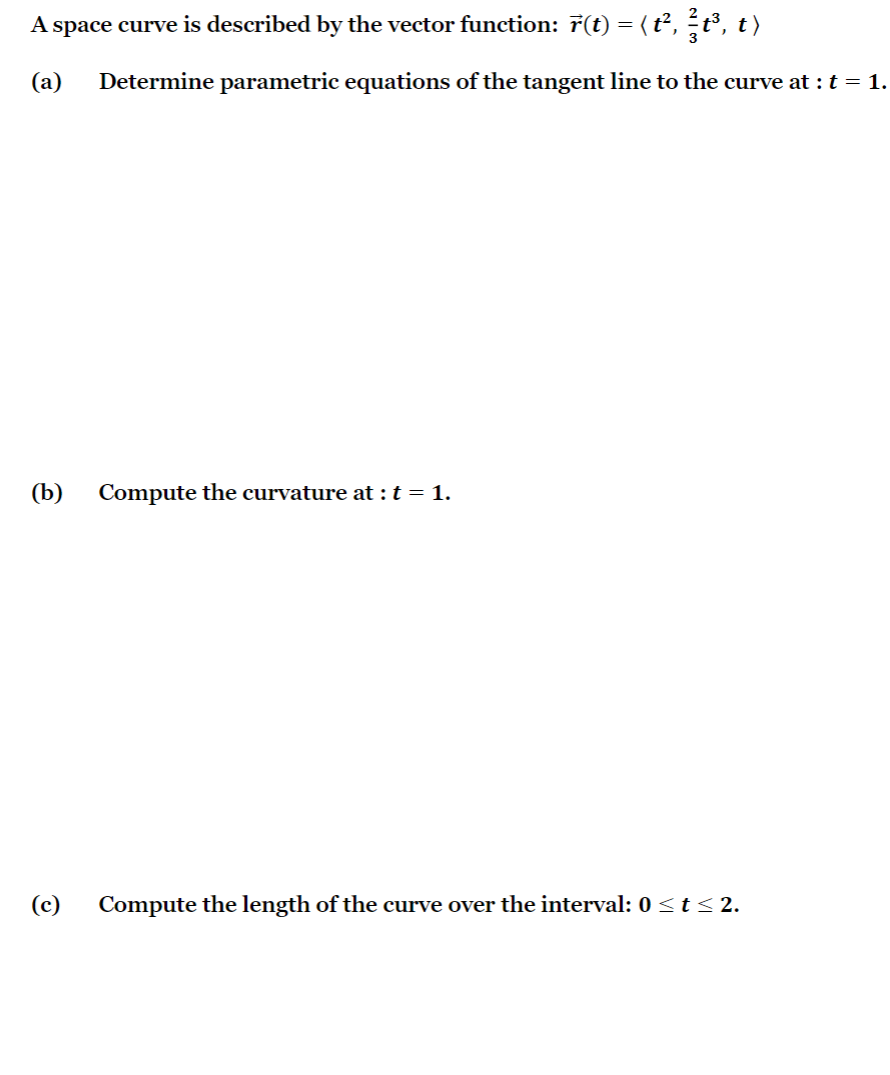
Given the vector functions: u(t) = ( e2t, 4t + 1, cos(3t)), v(t) = ( In(t), tan(t), t2), compute the following derivatives (using the differentiation rules if you wish): (a) [u(t) + 30(t) ] (b) [u(t) . v(t) ] (c) [u(t) x v(t) ]Two insects travel in space along trajectories given by the vector functions: mosquito: r1'(t) = (3 3t, 4t 8, 25 12t) buttery: rZTt) = ( 3 cos (2 t), 35in (E t) , it) (a) Make a table of values and sketch each path for: 0 5 I g 4 . Describe each curve in words. (b) Determine the time at which the insects collide; use tangent vectors to determine the speeds of the insects when they collide, and the angle of collision. A space curve is described by the vector function: t) 2 ( t2, 3153, t) (a) Determine parametric equations of the tangent line to the curve at : t = 1. (b) Compute the curvature at : t = 1. (c) Compute the length of the curve over the interval: 0 S t i 2
Step by Step Solution
There are 3 Steps involved in it

Get step-by-step solutions from verified subject matter experts
 Study Help