







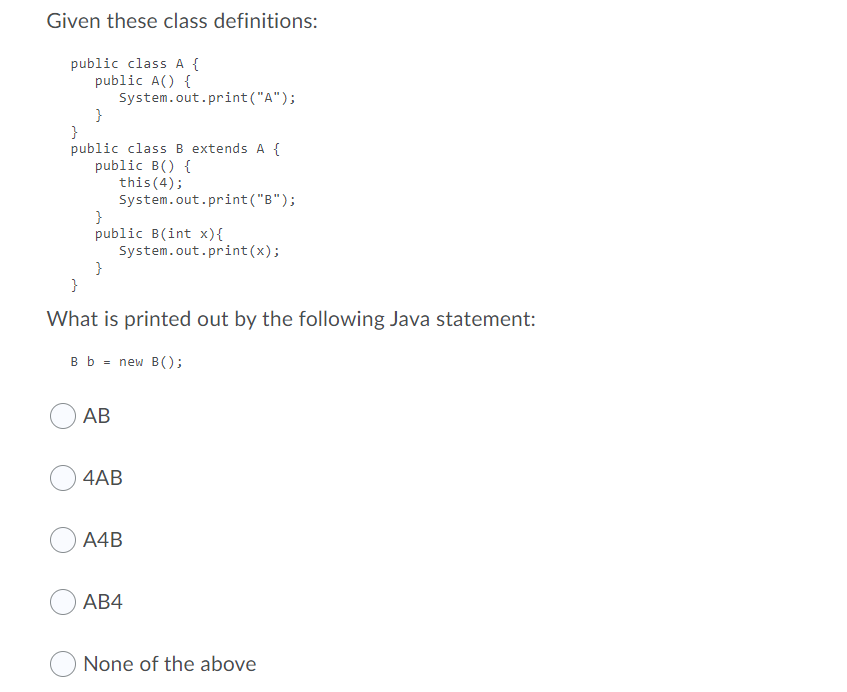
Question: Given these class definitions: public class A public A { System.out.print(A); } } public class B extends A { public B{ this(4), System.out.print(B); } public
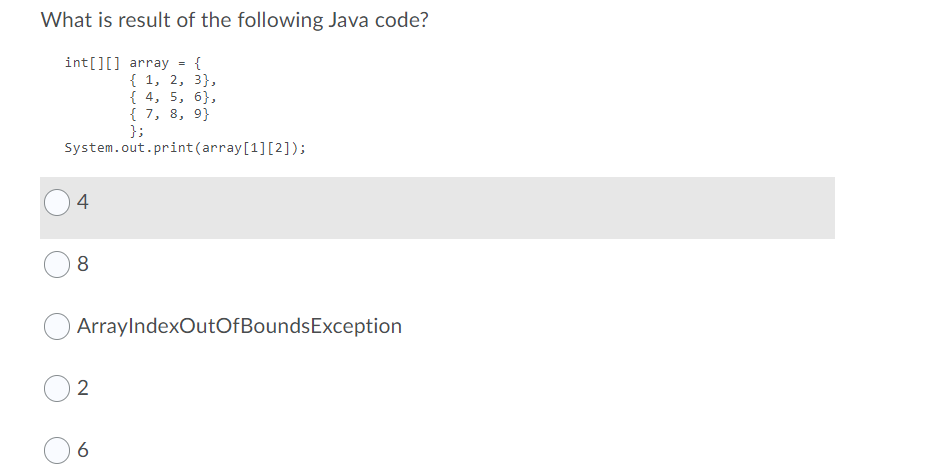
![Java code? int[][] array = { { 1, 2, 3}, { 4,](https://dsd5zvtm8ll6.cloudfront.net/si.experts.images/questions/2024/09/66f4faa513dfe_98066f4faa4a47ff.jpg)
![5, 6}, { 7, 8, 9} }; System.out.print(array[1][2]); 4 8 ArrayIndexOutOfBoundsException 2](https://dsd5zvtm8ll6.cloudfront.net/si.experts.images/questions/2024/09/66f4faa5b166e_98166f4faa54c375.jpg)
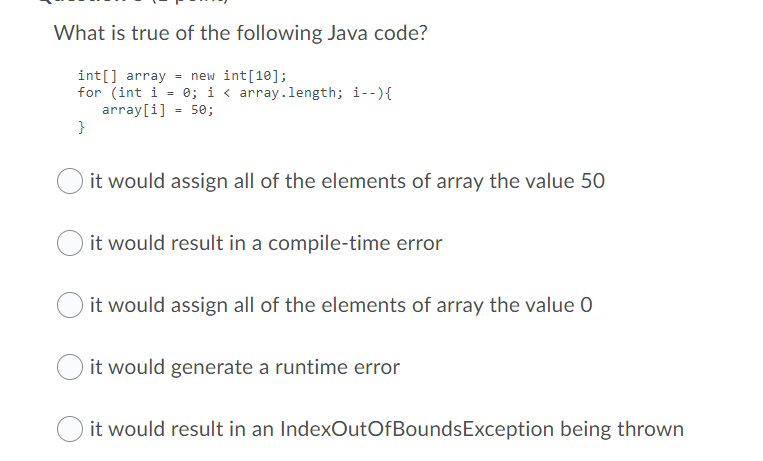
![6 What is true of the following Java code? int[] array =](https://dsd5zvtm8ll6.cloudfront.net/si.experts.images/questions/2024/09/66f4faa676005_98266f4faa612a03.jpg)
![new int[10]; for (int i = 0; i array.length; i--){ array[i] =](https://dsd5zvtm8ll6.cloudfront.net/si.experts.images/questions/2024/09/66f4faa7214cc_98266f4faa6b4564.jpg)
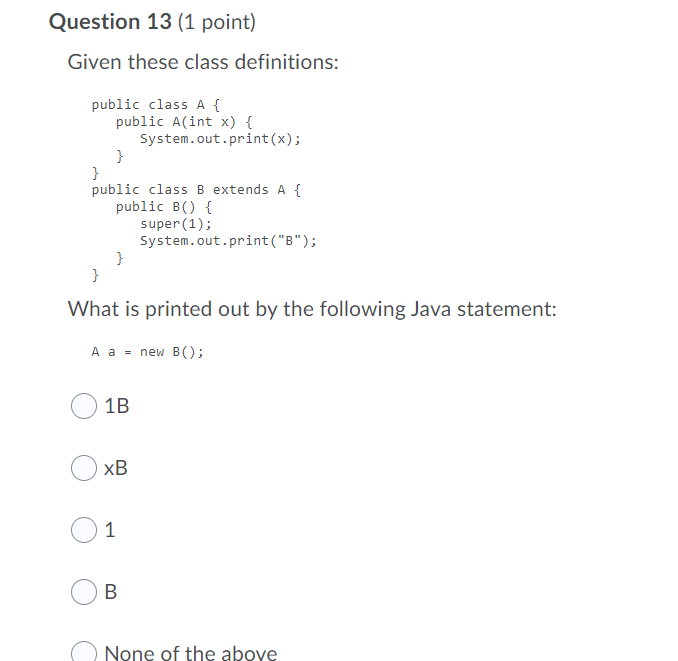
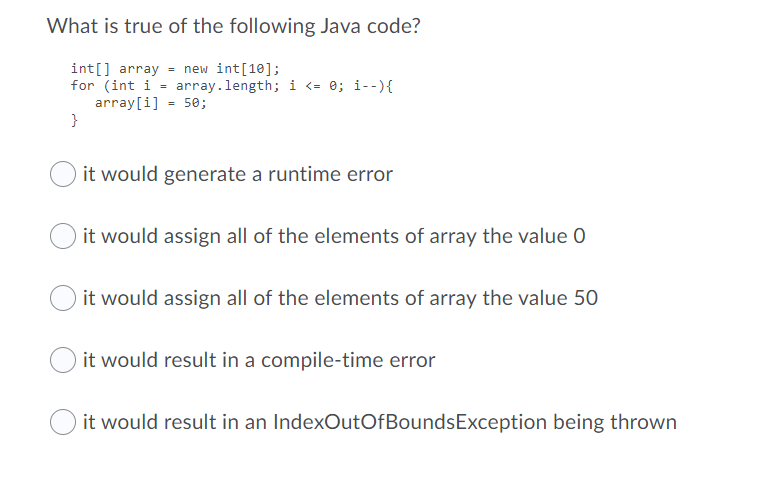
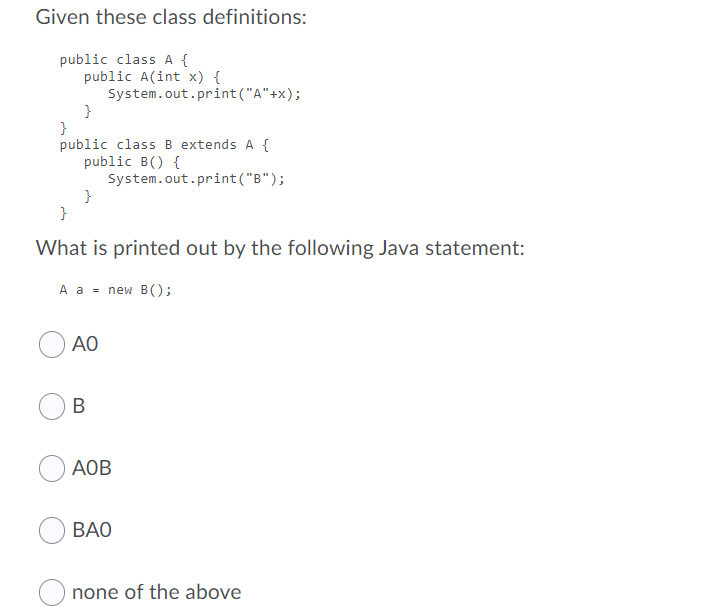
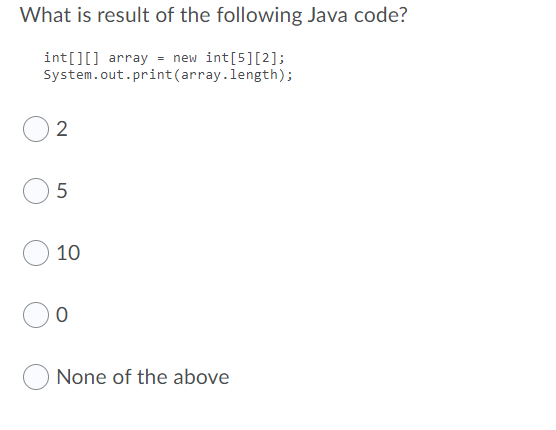
Given these class definitions: public class A public A { System.out.print("A"); } } public class B extends A { public B{ this(4), System.out.print("B"); } public B(int x){ System.out.print(x); } } What is printed out by the following Java statement: B b = new B(); AB 4AB A4B AB4 O None of the above What is result of the following Java code? int[][] array = { { 1, 2, 3}, { 4, 5, 6}, { 7, 8, 9} }; System.out.print(array[1][2]); 4 8 ArrayIndexOutOfBoundsException 2 6 What is true of the following Java code? int[] array = new int[10]; for (int i = 0; i array.length; i--){ array[i] = 50; } it would result in an IndexOutOfBoundsException being thrown O it would generate a runtime error it would assign all of the elements of array the value o it would result in a compile-time error O it would assign all of the elements of array the value 50 What is true of the following Java code? int[] array = new int[10]; for (int i = array.length-1; i >= 0; i--){ array[i] = 50; } it would assign all of the elements of array the value 50 except for the last that will have o it would assign all of the elements of array the value o it would assign all of the elements of array the value 50 it would generate a runtime error it would result in an IndexOutOfBoundsException being thrown Question 13 (1 point) Given these class definitions: public class A { public A(int x) { System.out.print(); } } public class B extends A { public B) { super(1); System.out.print("B"); } } What is printed out by the following Java statement: A a = new B(); 1B 1 B None of the above What is true of the following Java code? int[] array = new int[10]; for (int i = array.length; i
Step by Step Solution
There are 3 Steps involved in it

Get step-by-step solutions from verified subject matter experts
 Study Help