



Question: Greta has risk aversion of A = 4 when applied to return on wealth over a one-year horizon. She is pondering two portfolios, the S&P
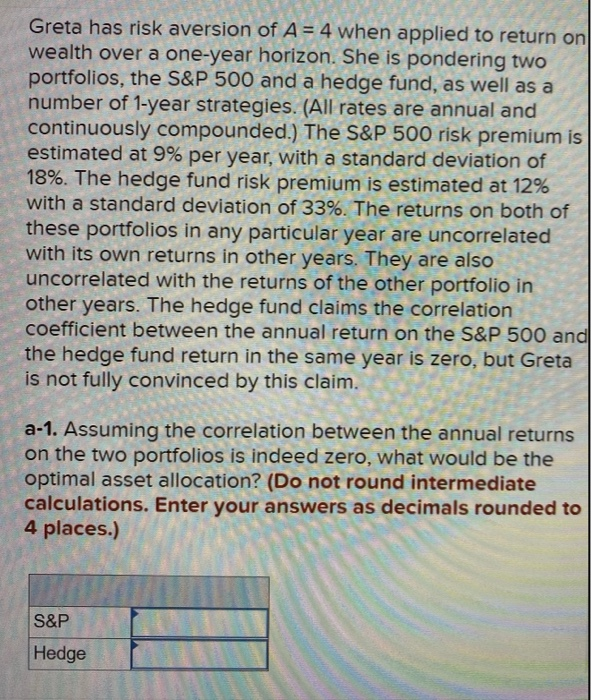
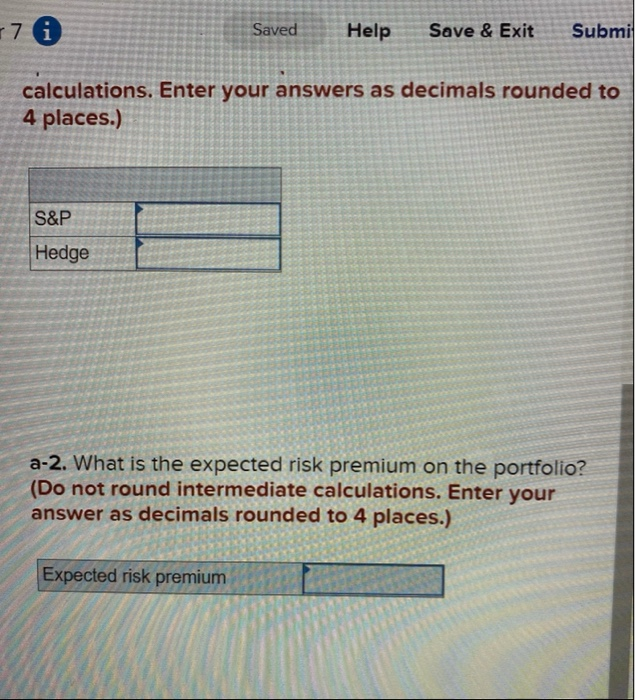
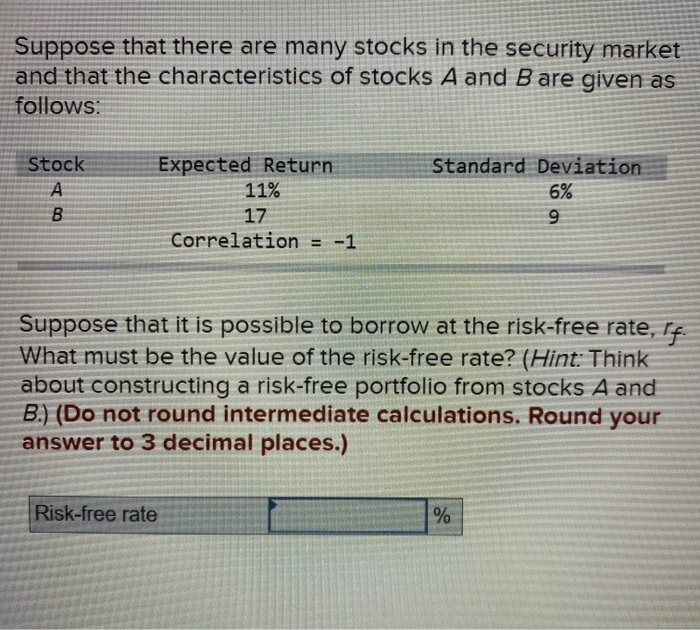
Greta has risk aversion of A = 4 when applied to return on wealth over a one-year horizon. She is pondering two portfolios, the S&P 500 and a hedge fund, as well as a number of 1-year strategies. (All rates are annual and continuously compounded.) The S&P 500 risk premium is estimated at 9% per year, with a standard deviation of 18%. The hedge fund risk premium is estimated at 12% with a standard deviation of 33%. The returns on both of these portfolios in any particular year are uncorrelated with its own returns in other years. They are also uncorrelated with the returns of the other portfolio in other years. The hedge fund claims the correlation coefficient between the annual return on the S&P 500 and the hedge fund return in the same year is zero, but Greta is not fully convinced by this claim. a-1. Assuming the correlation between the annual returns on the two portfolios is indeed zero, what would be the optimal asset allocation? (Do not round intermediate calculations. Enter your answers as decimals rounded to 4 places.) S&P Hedge 17 i Saved Help Save & Exit Submi calculations. Enter your answers as decimals rounded to 4 places.) S&P Hedge a-2. What is the expected risk premium on the portfolio? (Do not round intermediate calculations. Enter your answer as decimals rounded to 4 places.) Expected risk premium Suppose that there are many stocks in the security market and that the characteristics of stocks A and B are given as follows: Stock B Expected Return 11% 17 Correlation = -1 Standard Deviation 6% 9 Suppose that it is possible to borrow at the risk-free rate, If. What must be the value of the risk-free rate? (Hint: Think about constructing a risk-free portfolio from stocks A and B.) (Do not round intermediate calculations. Round your answer to 3 decimal places.) Risk-free rate %
Step by Step Solution
There are 3 Steps involved in it

Get step-by-step solutions from verified subject matter experts