







Question: H! May I ask for help in solving these problems? There are a total of 3 questions. When doing a hypothesis test, which is worse,
H! May I ask for help in solving these problems? There are a total of 3 questions.
- When doing a hypothesis test, which is worse, committing a Type I error or a Type II error? Why?
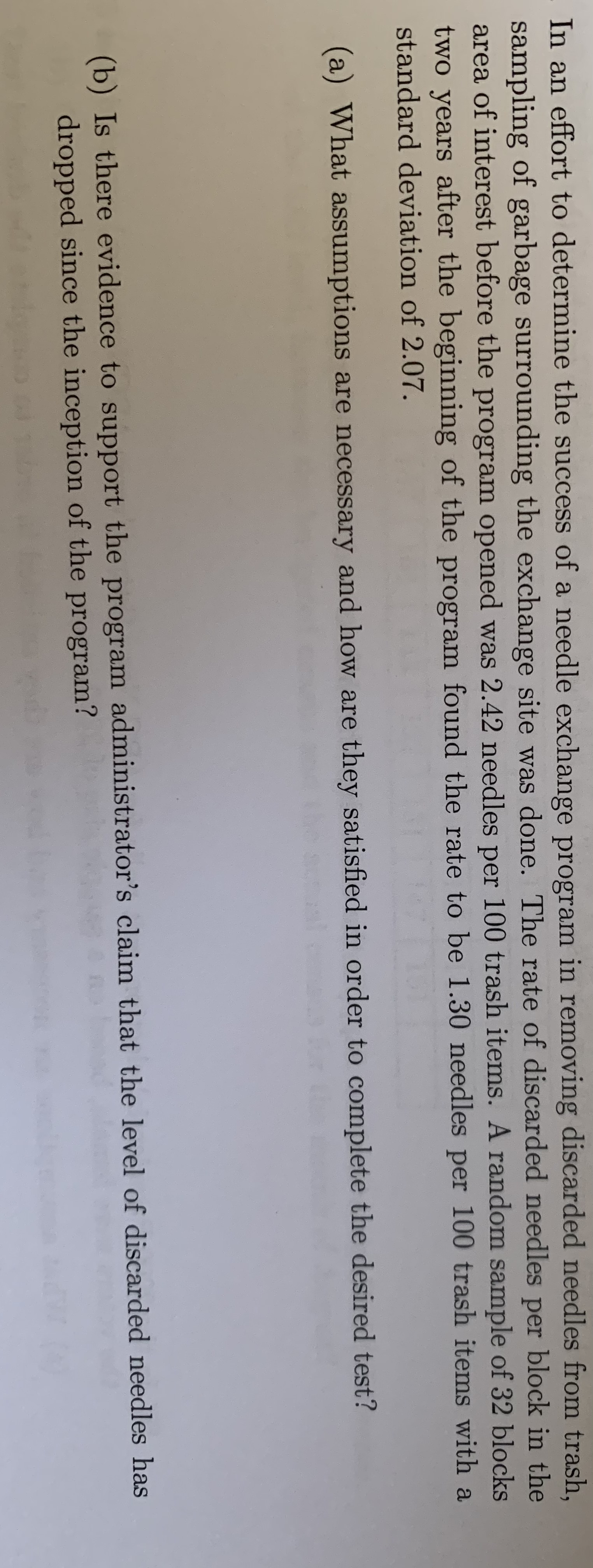
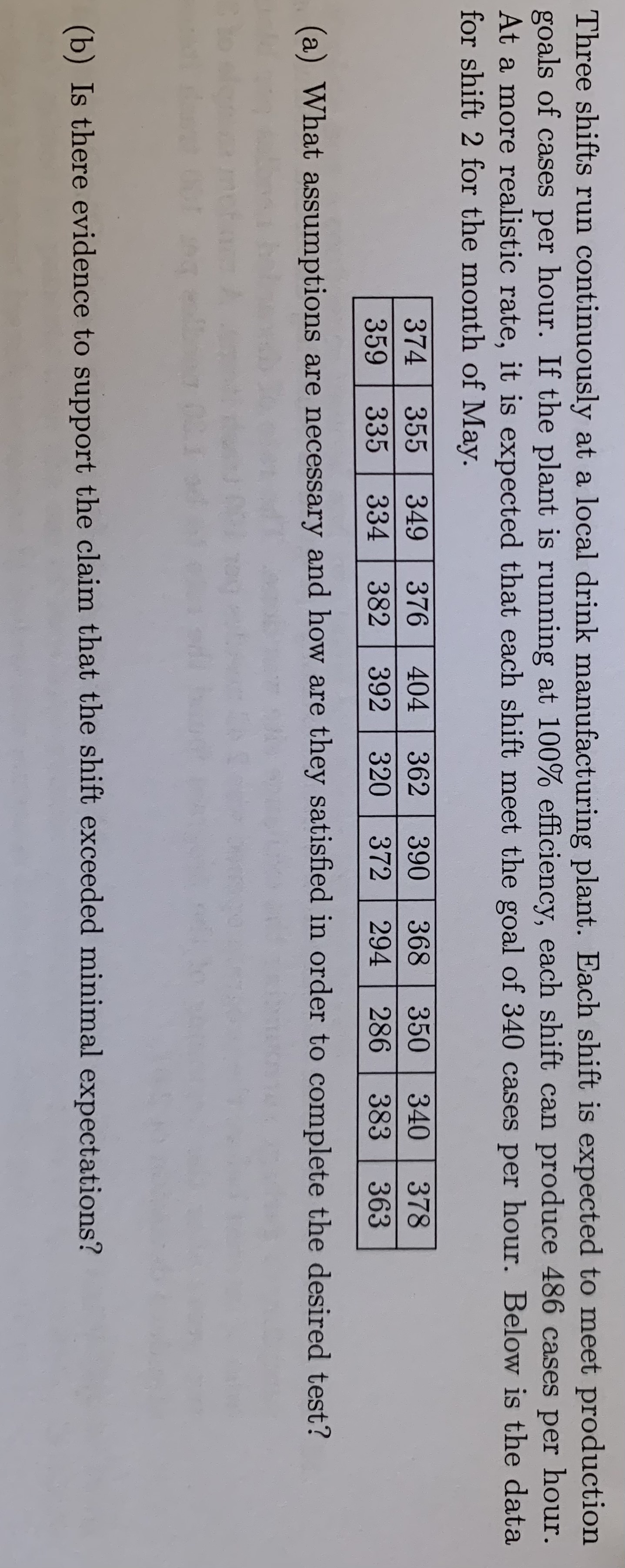
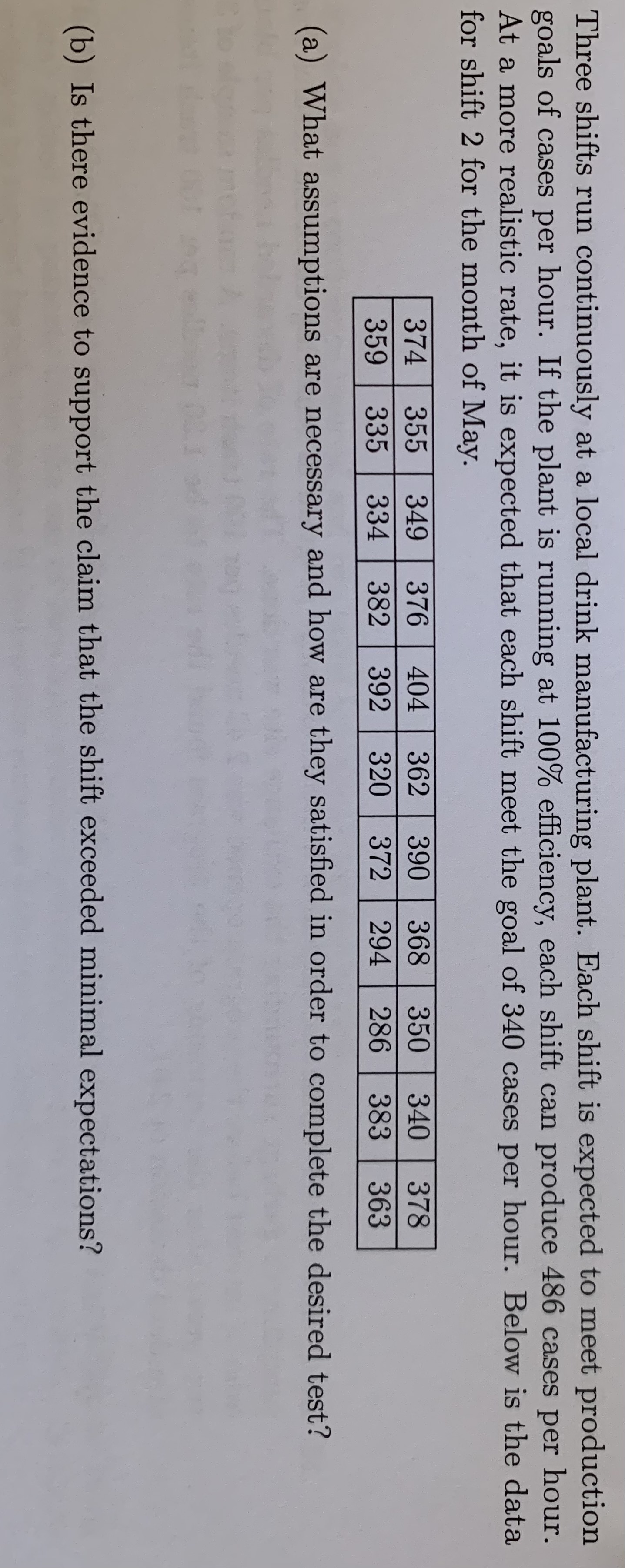
In an effort to determine the success of a needle exchange program in removing discarded needles from trash, sampling of garbage surrounding the exchange site was done. The rate of discarded needles per block in the area of interest before the program opened was 2.42 needles per 100 trash items. A random sample of 32 blocks two years after the beginning of the program found the rate to be 1.30 needles per 100 trash items with a standard deviation of 2.07. (a) What assumptions are necessary and how are they satisfied in order to complete the desired test? (b) Is there evidence to support the program administrator's claim that the level of discarded needles has dropped since the inception of the program?Three shifts run continuously at a local drink manufacturing plant. Each shift is expected to meet production goals of cases per hour. If the plant is running at 100% efficiency, each shift can produce 486 cases per hour. At a more realistic rate, it is expected that each shift meet the goal of 340 cases per hour. Below is the data for shift 2 for the month of May. 374 355 349 376 404 362 390 368 350 340 378 359 335 334 382 392 320 372 294 286 383 363 (a) What assumptions are necessary and how are they satisfied in order to complete the desired test? (b) Is there evidence to support the claim that the shift exceeded minimal expectations
Step by Step Solution
There are 3 Steps involved in it

Get step-by-step solutions from verified subject matter experts
 Study Help