



Question: has been developed to determine if an activity-based costing system would be beneficial: (Click the icon to view the information.) Read the requirements. Then compute
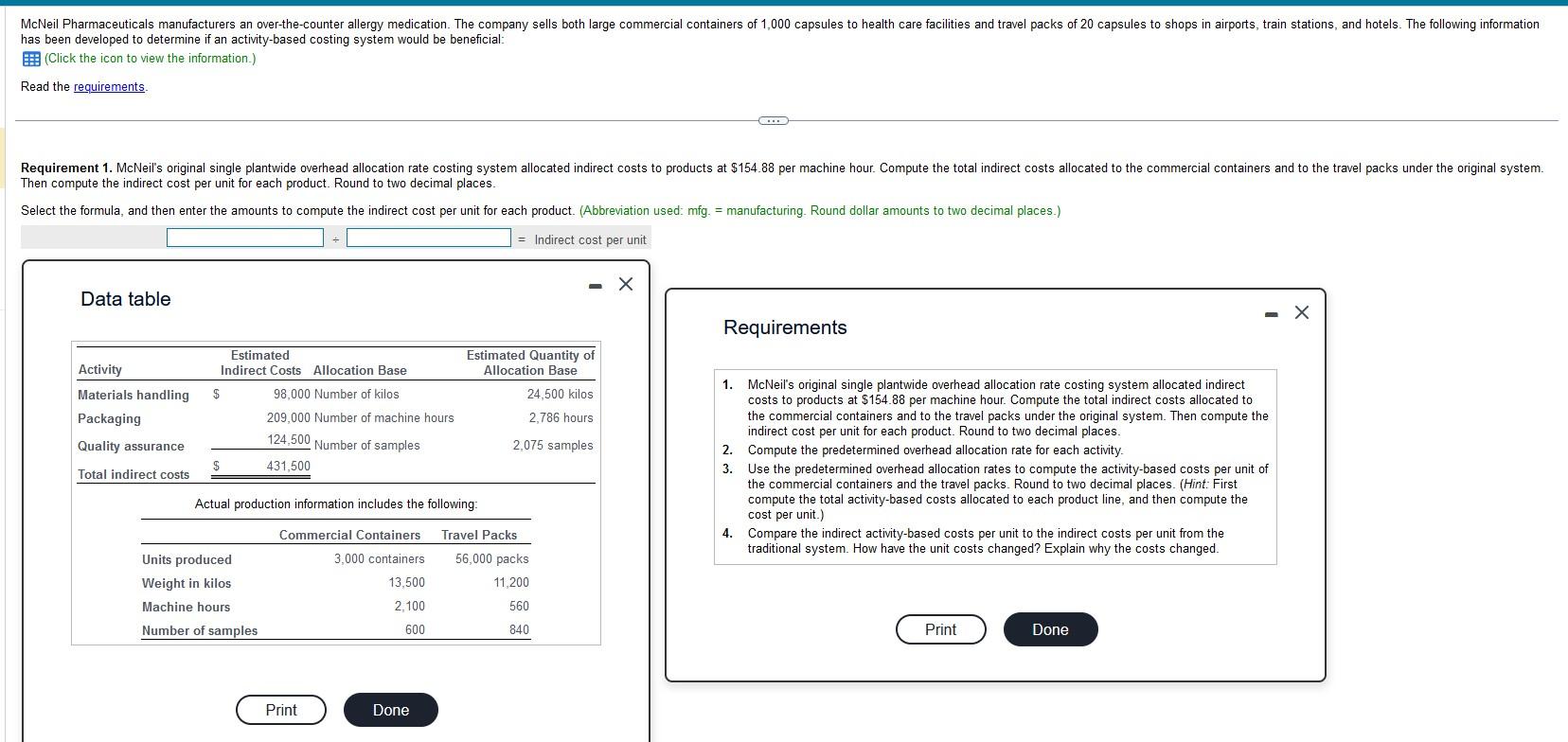
has been developed to determine if an activity-based costing system would be beneficial: (Click the icon to view the information.) Read the requirements. Then compute the indirect cost per unit for each product. Round to two decimal places. Select the formula, and then enter the amounts to compute the indirect cost per unit for each product. (Abbreviation used: mfg. = manufacturing. Round dollar amounts to two decimal places.) Data table Requirements 1. McNeil's original single plantwide overhead allocation rate costing system allocated indirect costs to products at $154.88 per machine hour. Compute the total indirect costs allocated to the commercial containers and to the travel packs under the original system. Then compute the indirect cost per unit for each product. Round to two decimal places. 2. Compute the predetermined overhead allocation rate for each activity. 3. Use the predetermined overhead allocation rates to compute the activity-based costs per unit of the commercial containers and the travel packs. Round to two decimal places. (Hint: First Actual production information includes the following: cost per unit.) 4. Compare the indirect activity-based costs per unit to the indirect costs per unit from the traditional system. How have the unit costs changed? Explain why the costs changed
Step by Step Solution
There are 3 Steps involved in it

Get step-by-step solutions from verified subject matter experts