







Question: Hash Table java --------------------------------------------------------------------------------------------- import java.util.*; public class HashTable implements IHash { // Method of hashing HashFunction hasher; // Hash table : an ArrayList of
Hash Table java
---------------------------------------------------------------------------------------------
import java.util.*;
public class HashTable implements IHash {
// Method of hashing
HashFunction hasher;
// Hash table : an ArrayList of "buckets", which store the actual strings
ArrayList> hashTable;
/**
* Number of Elements
*/
int numberOfElements;
int size;
/**
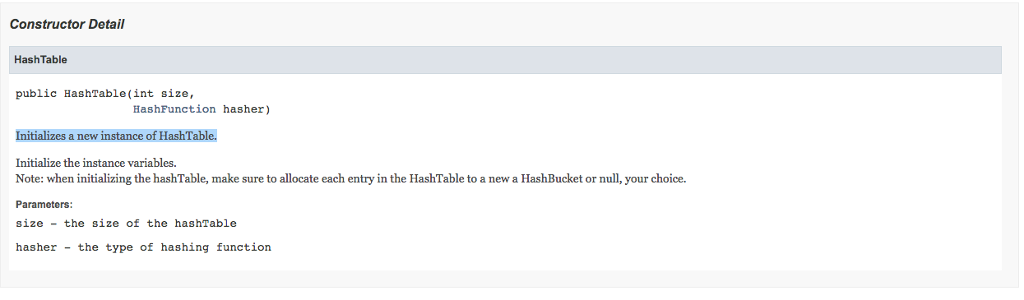
* Initializes a new instance of HashTable.
*
* Initialize the instance variables.
* Note: when initializing the hashTable, make sure to allocate each entry in the HashTable
* to a new a HashBucket or null, your choice.
* @param size the size of the hashTable
* @param hasher the type of hashing function
*/
public HashTable(int size, HashFunction hasher) {
// YOUR CODE HERE
}
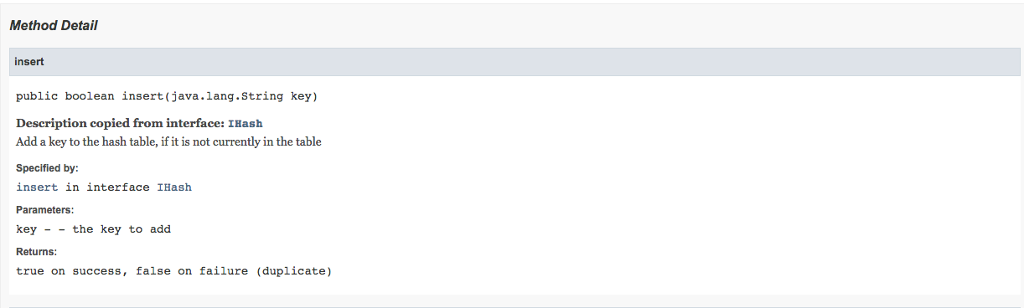
public boolean insert(String key) {
// YOUR CODE HERE
return false;
}
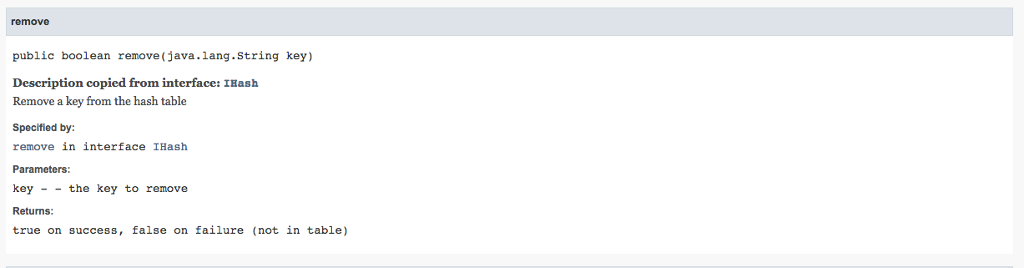
public boolean remove(String key) {
// YOUR CODE HERE
return false;
}
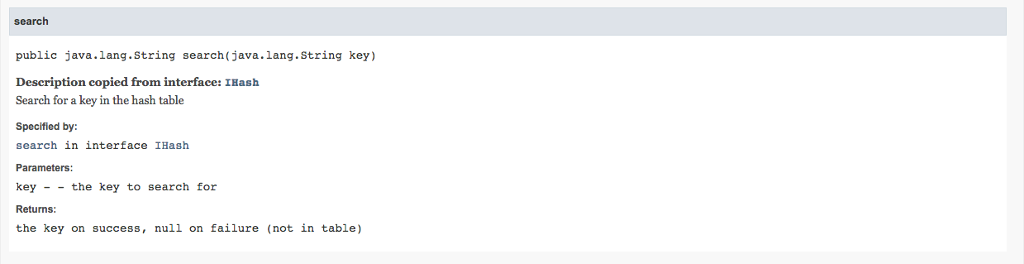
public String search(String key) {
// YOUR CODE HERE
return null;
}
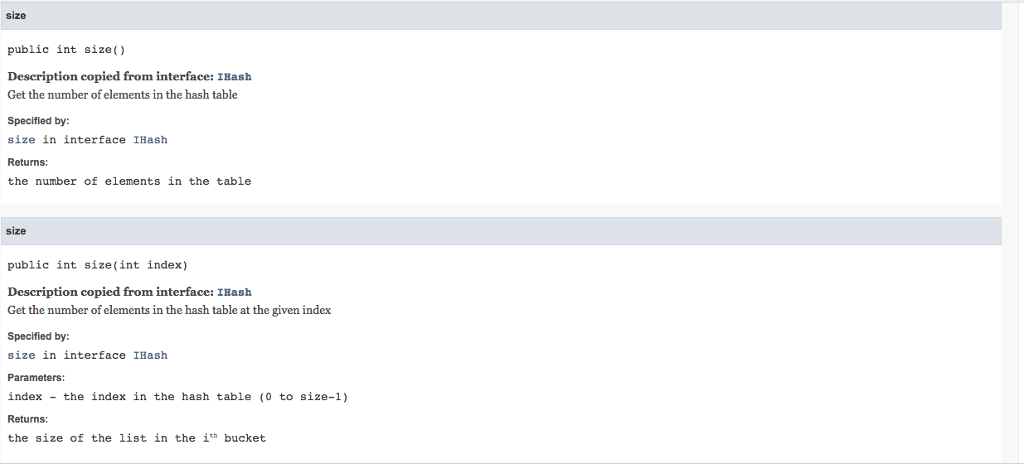
public int size() {
// YOUR CODE HERE
return size;
}
public int size(int index) {
// YOUR CODE HERE
return 0;
}
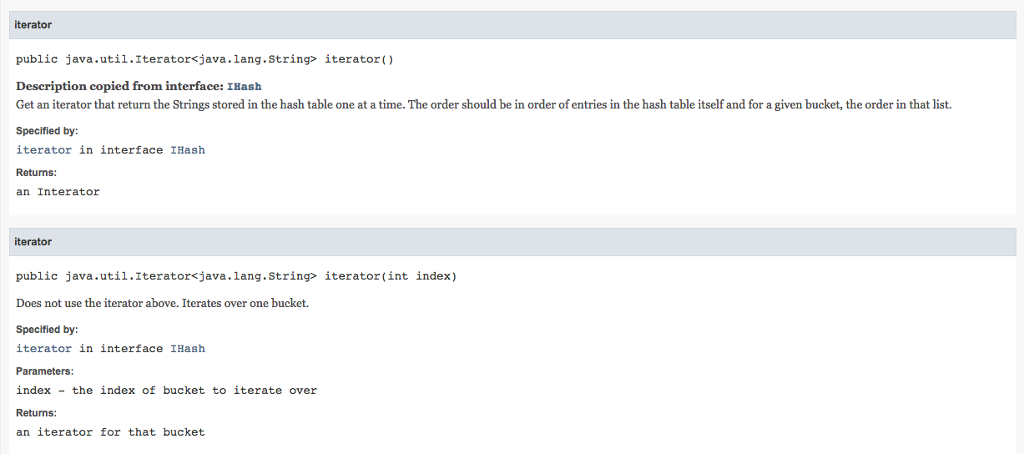
// Return iterator for the entire hashTable,
// must iterate all hashBuckets that are not empty
public class HashIterator implements Iterator
// The current index into the hashTable
private int currentIndex;
// The current iterator for that hashBucket
private Iterator
HashIterator() {
// YOUR CODE HERE
}
public String next() {
// YOUR CODE HERE
return null;
}
public boolean hasNext() {
// YOUR CODE HERE
return false;
}
}
// Return an iterator for the hash table
public Iterator
// YOUR CODE HERE
return null;
}
/**
* Does not use the iterator above. Iterates over one bucket.
*
* @param index the index of bucket to iterate over
* @return an iterator for that bucket
*/
public Iterator
List
return bucket != null ? bucket.iterator() : null;
}
// Prints entire hash table.
// NOTE: This method is used extensively for testing.
public void print() {
Debug.printf("HashTable size: " + size());
for (int index = 0; index
List
if (list != null) {
Debug.printf("HashTable[%d]: %d entries", index, list.size());
for (String word : list) {
Debug.printf("String: %s (hash code %d)", word, hasher.hash(word));
}
}else {
Debug.printf("HashTable[%d]: %d entries", index, 0);
}
}
}
}
Constructor Detail HashTable public HashTable(int size, HashFunction hasher) Initializes a new instance of HashTable. Initialize the instance variables. Note: when initializing the hashTable, make sure to allocate each entry in the HashTable to a new a HashBucket or null, your choice. Parameters size -the size of the hashTable hasher- the type of hashing function Constructor Detail HashTable public HashTable(int size, HashFunction hasher) Initializes a new instance of HashTable. Initialize the instance variables. Note: when initializing the hashTable, make sure to allocate each entry in the HashTable to a new a HashBucket or null, your choice. Parameters size -the size of the hashTable hasher- the type of hashing function
Step by Step Solution
There are 3 Steps involved in it

Get step-by-step solutions from verified subject matter experts
 Study Help