Question: HEAVYLOAD INC has 3 resources (Resource A, Resource B and Resource C) in its production process. The production process involves 3 products (Product A, Product
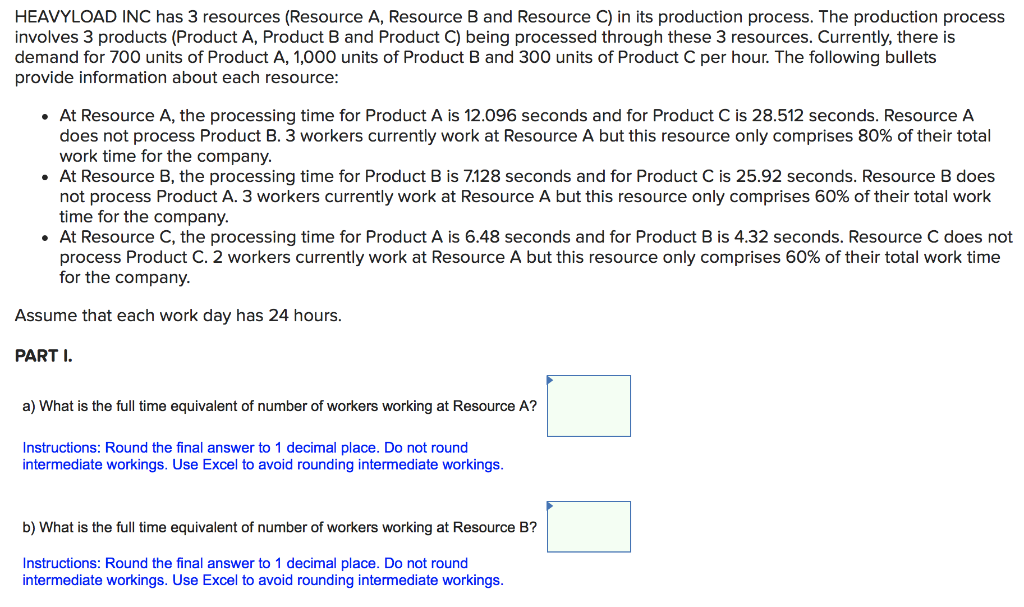
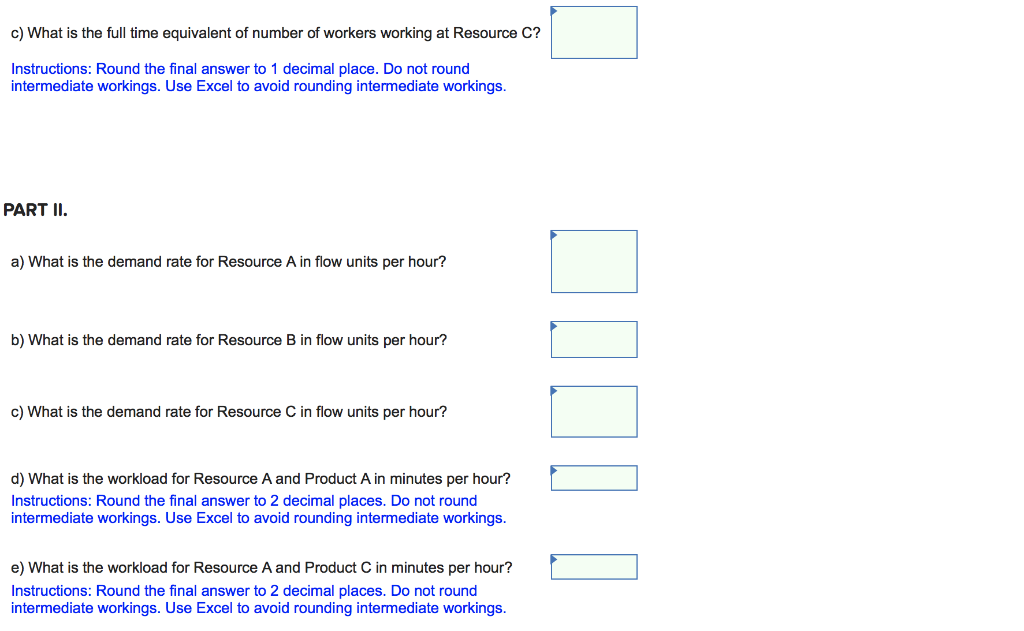
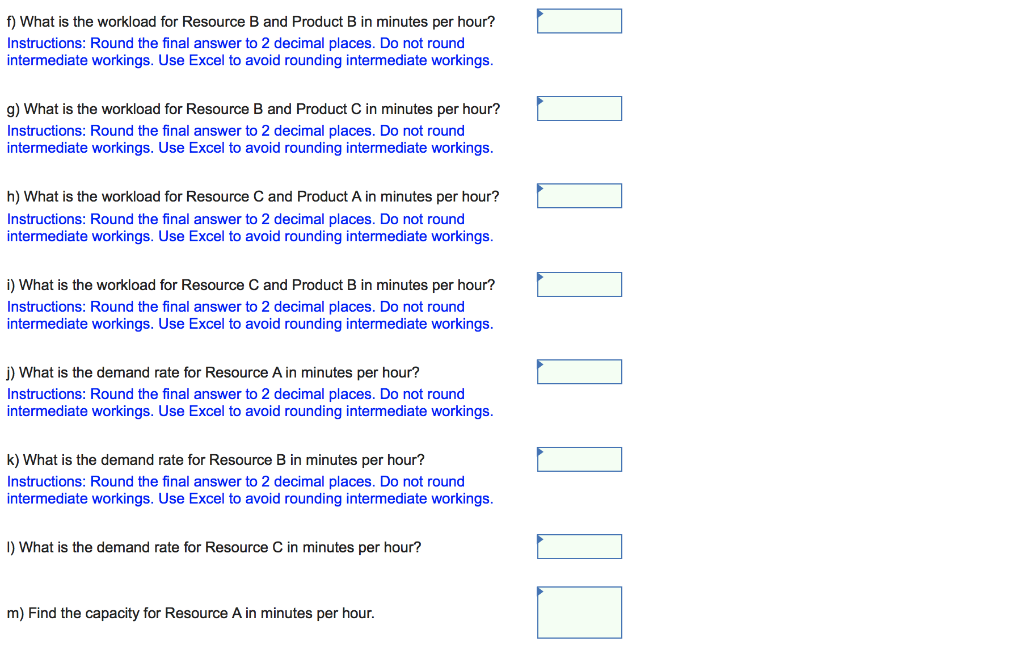
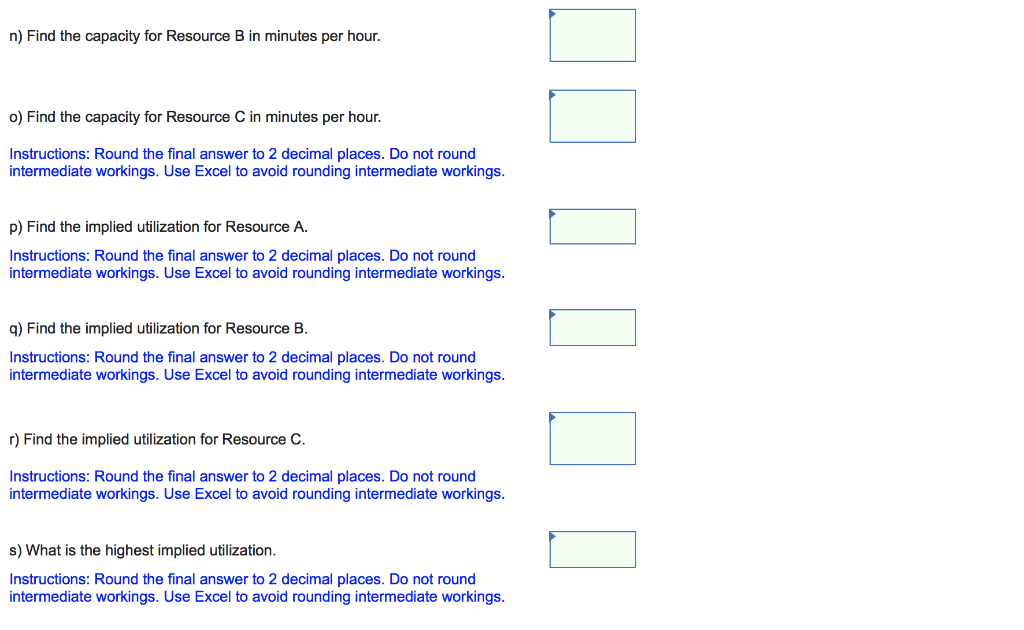
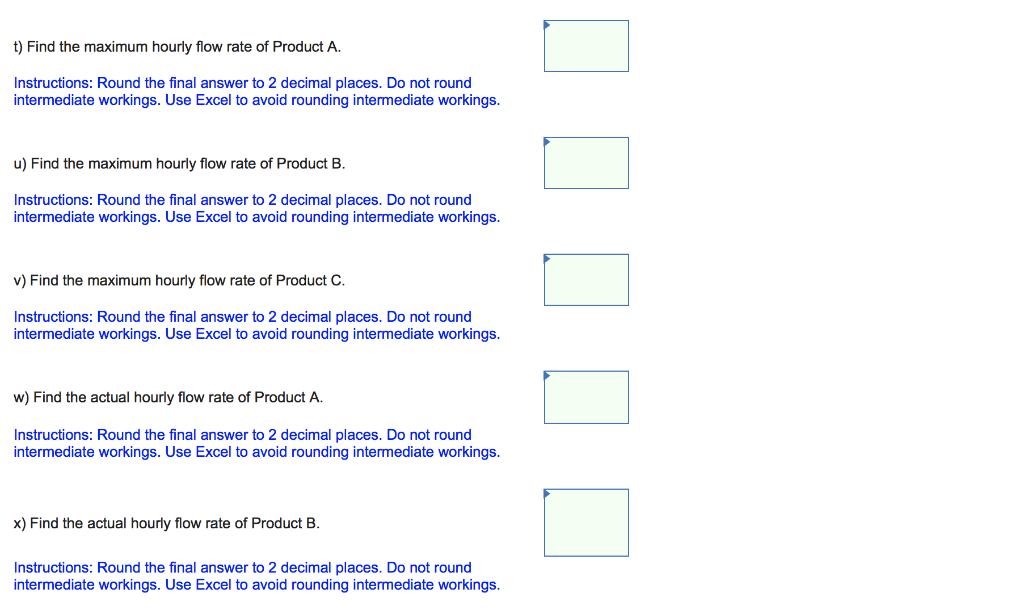
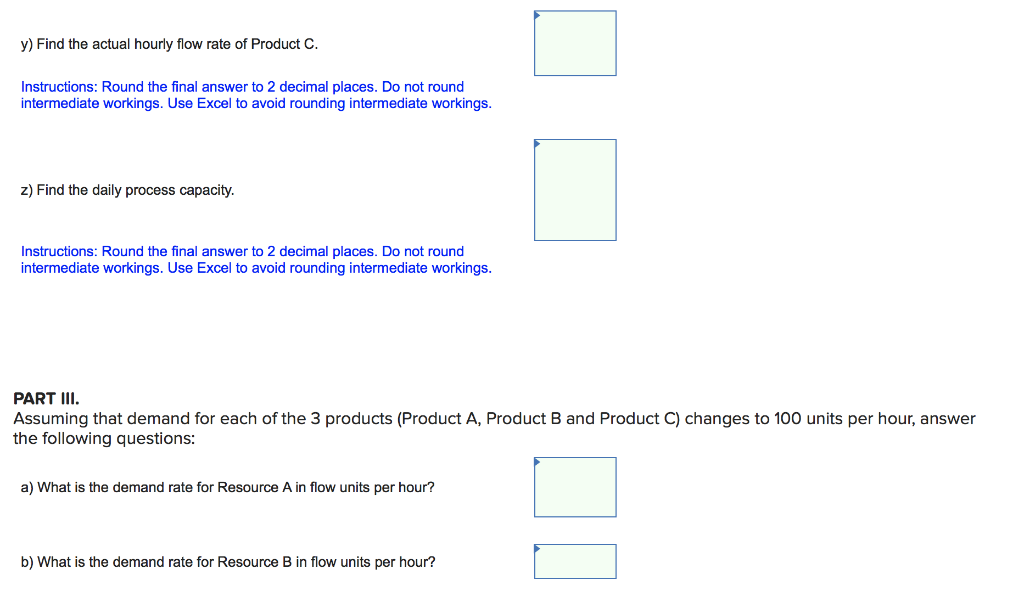
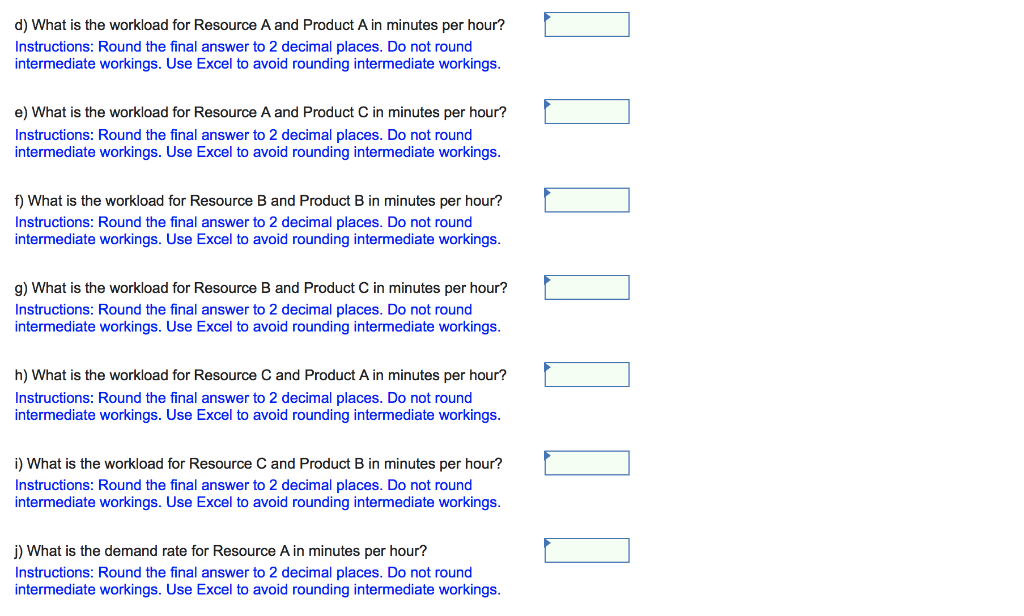
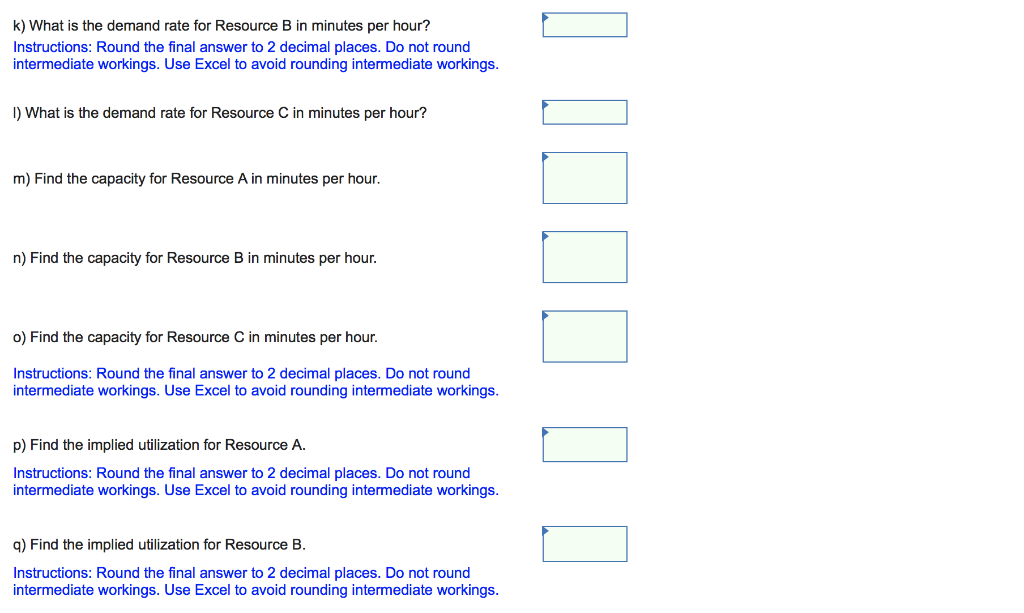
HEAVYLOAD INC has 3 resources (Resource A, Resource B and Resource C) in its production process. The production process involves 3 products (Product A, Product B and Product C) being processed through these 3 resources. Currently, there is demand for 700 units of Product A, 1,000 units of Product B and 300 units of Product C per hour. The following bullets provide information about each resource: At Resource A, the processing time for Product A is 12.096 seconds and for Product C is 28.512 seconds. Resource A does not process Product B. 3 workers currently work at Resource A but this resource only comprises 80% of their total work time for the company. At Resource B, the processing time for Product B is 7.128 seconds and for Product C is 25.92 seconds. Resource B does not process Product A. 3 workers currently work at Resource A but this resource only comprises 60% of their total work time for the company. At Resource C, the processing time for Product A is 6.48 seconds and for Product B is 4.32 seconds. Resource C does not process Product C. 2 workers currently work at Resource A but this resource only comprises 60% of their total work time for the company. Assume that each work day has 24 hours. PARTI. a) What is the full time equivalent of number of workers working at Resource A? Instructions: Round the final answer to 1 decimal place. Do not round intermediate workings. Use Excel to avoid rounding intermediate workings b) What is the full time equivalent of number of workers working at Resource B? Instructions: Round the final answer to 1 decimal place. Do not round intermediate workings. Use Excel to avoid rounding intermediate workings. c) What is the full time equivalent of number of workers working at Resource C? Instructions: Round the final answer to 1 decimal place. Do not round intermediate workings. Use Excel to avoid rounding intermediate workings. PART II. a) What is the demand rate for Resource A in flow units per hour? b) What is the demand rate for Resource B in flow units per hour? c) What is the demand rate for Resource C in flow units per hour? d) What is the workload for Resource A and Product A in minutes per hour? Instructions: Round the final answer to 2 decimal places. Do not round intermediate workings. Use Excel to avoid rounding intermediate workings. e) What is the workload for Resource A and Product C in minutes per hour? Instructions: Round the final answer to 2 decimal places. Do not round intermediate workings. Use Excel to avoid rounding intermediate workings. f) What is the workload for Resource B and Product B in minutes per hour? Instructions: Round the final answer to 2 decimal places. Do not round intermediate workings. Use Excel to avoid rounding intermediate workings. g) What is the workload for Resource B and Product C in minutes per hour? Instructions: Round the final answer to 2 decimal places. Do not round intermediate workings. Use Excel to avoid rounding intermediate workings h) What is the workload for Resource C and Product A in minutes per hour? Instructions: Round the final answer to 2 decimal places. Do not round intermediate workings. Use Excel to avoid rounding intermediate workings. i) What is the workload for Resource C and Product B in minutes per hour? Instructions: Round the final answer to 2 decimal places. Do not round intermediate workings. Use Excel to avoid rounding intermediate workings. j) What is the demand rate for Resource A in minutes per hour? Instructions: Round the final answer to 2 decimal places. Do not round intermediate workings. Use Excel to avoid rounding intermediate workings. k) What is the demand rate for Resource B in minutes per hour? Instructions: Round the final answer to 2 decimal places. Do not round intermediate workings. Use Excel to avoid rounding intermediate workings 1) What is the demand rate for Resource C in minutes per hour? m) Find the capacity for Resource A in minutes per hour. n) Find the capacity for Resource B in minutes per hour. o) Find the capacity for Resource C in minutes per hour. Instructions: Round the final answer to 2 decimal places. Do not round intermediate workings. Use Excel to avoid rounding intermediate workings. p) Find the implied utilization for Resource A. Instructions: Round the final answer to 2 decimal places. Do not round intermediate workings. Use Excel to avoid rounding intermediate workings. q) Find the implied utilization for Resource B. Instructions: Round the final answer to 2 decimal places. Do not round intermediate workings. Use Excel to avoid rounding intermediate workings. r) Find the implied utilization for Resource C. Instructions: Round the final answer to 2 decimal places. Do not round intermediate workings. Use Excel to avoid rounding intermediate workings. s) What is the highest implied utilization. Instructions: Round the final answer to 2 decimal places. Do not round intermediate workings. Use Excel to avoid rounding intermediate workings. t) Find the maximum hourly flow rate of Product A. Instructions: Round the final answer to 2 decimal places. Do not round intermediate workings. Use Excel to avoid rounding intermediate workings. u) Find the maximum hourly flow rate of Product B. Instructions: Round the final answer to 2 decimal places. Do not round intermediate workings. Use Excel to avoid rounding intermediate workings. v) Find the maximum hourly flow rate of Product C. Instructions: Round the final answer to 2 decimal places. Do not round intermediate workings. Use Excel to avoid rounding intermediate workings. w) Find the actual hourly flow rate of Product A. Instructions: Round the final answer to 2 decimal places. Do not round intermediate workings. Use Excel to avoid rounding intermediate workings. x) Find the actual hourly flow rate of Product B. Instructions: Round the final answer to 2 decimal places. Do not round intermediate workings. Use Excel to avoid rounding intermediate workings. y) Find the actual hourly flow rate of Product C. Instructions: Round the final answer to 2 decimal places. Do not round intermediate workings. Use Excel to avoid rounding intermediate workings. 2) Find the daily process capacity. Instructions: Round the final answer to 2 decimal places. Do not round intermediate workings. Use Excel to avoid rounding intermediate workings. PART III. Assuming that demand for each of the 3 products (Product A, Product B and Product C) changes to 100 units per hour, answer the following questions: a) What is the demand rate for Resource A in flow units per hour? b) What is the demand rate for Resource B in flow units per hour? k) What is the demand rate for Resource B in minutes per hour? Instructions: Round the final answer to 2 decimal places. Do not round intermediate workings. Use Excel to avoid rounding intermediate workings. 1) What is the demand rate for Resource C in minutes per hour? m) Find the capacity for Resource A in minutes per hour. n) Find the capacity for Resource B in minutes per hour. o) Find the capacity for Resource C in minutes per hour. Instructions: Round the final answer to 2 decimal places. Do not round intermediate workings. Use Excel to avoid rounding intermediate workings. p) Find the implied utilization for Resource A. Instructions: Round the final answer to 2 decimal places. Do not round intermediate workings. Use Excel to avoid rounding intermediate workings q) Find the implied utilization for Resource B. Instructions: Round the final answer to 2 decimal places. Do not round intermediate workings. Use Excel to avoid rounding intermediate workings. HEAVYLOAD INC has 3 resources (Resource A, Resource B and Resource C) in its production process. The production process involves 3 products (Product A, Product B and Product C) being processed through these 3 resources. Currently, there is demand for 700 units of Product A, 1,000 units of Product B and 300 units of Product C per hour. The following bullets provide information about each resource: At Resource A, the processing time for Product A is 12.096 seconds and for Product C is 28.512 seconds. Resource A does not process Product B. 3 workers currently work at Resource A but this resource only comprises 80% of their total work time for the company. At Resource B, the processing time for Product B is 7.128 seconds and for Product C is 25.92 seconds. Resource B does not process Product A. 3 workers currently work at Resource A but this resource only comprises 60% of their total work time for the company. At Resource C, the processing time for Product A is 6.48 seconds and for Product B is 4.32 seconds. Resource C does not process Product C. 2 workers currently work at Resource A but this resource only comprises 60% of their total work time for the company. Assume that each work day has 24 hours. PARTI. a) What is the full time equivalent of number of workers working at Resource A? Instructions: Round the final answer to 1 decimal place. Do not round intermediate workings. Use Excel to avoid rounding intermediate workings b) What is the full time equivalent of number of workers working at Resource B? Instructions: Round the final answer to 1 decimal place. Do not round intermediate workings. Use Excel to avoid rounding intermediate workings. c) What is the full time equivalent of number of workers working at Resource C? Instructions: Round the final answer to 1 decimal place. Do not round intermediate workings. Use Excel to avoid rounding intermediate workings. PART II. a) What is the demand rate for Resource A in flow units per hour? b) What is the demand rate for Resource B in flow units per hour? c) What is the demand rate for Resource C in flow units per hour? d) What is the workload for Resource A and Product A in minutes per hour? Instructions: Round the final answer to 2 decimal places. Do not round intermediate workings. Use Excel to avoid rounding intermediate workings. e) What is the workload for Resource A and Product C in minutes per hour? Instructions: Round the final answer to 2 decimal places. Do not round intermediate workings. Use Excel to avoid rounding intermediate workings. f) What is the workload for Resource B and Product B in minutes per hour? Instructions: Round the final answer to 2 decimal places. Do not round intermediate workings. Use Excel to avoid rounding intermediate workings. g) What is the workload for Resource B and Product C in minutes per hour? Instructions: Round the final answer to 2 decimal places. Do not round intermediate workings. Use Excel to avoid rounding intermediate workings h) What is the workload for Resource C and Product A in minutes per hour? Instructions: Round the final answer to 2 decimal places. Do not round intermediate workings. Use Excel to avoid rounding intermediate workings. i) What is the workload for Resource C and Product B in minutes per hour? Instructions: Round the final answer to 2 decimal places. Do not round intermediate workings. Use Excel to avoid rounding intermediate workings. j) What is the demand rate for Resource A in minutes per hour? Instructions: Round the final answer to 2 decimal places. Do not round intermediate workings. Use Excel to avoid rounding intermediate workings. k) What is the demand rate for Resource B in minutes per hour? Instructions: Round the final answer to 2 decimal places. Do not round intermediate workings. Use Excel to avoid rounding intermediate workings 1) What is the demand rate for Resource C in minutes per hour? m) Find the capacity for Resource A in minutes per hour. n) Find the capacity for Resource B in minutes per hour. o) Find the capacity for Resource C in minutes per hour. Instructions: Round the final answer to 2 decimal places. Do not round intermediate workings. Use Excel to avoid rounding intermediate workings. p) Find the implied utilization for Resource A. Instructions: Round the final answer to 2 decimal places. Do not round intermediate workings. Use Excel to avoid rounding intermediate workings. q) Find the implied utilization for Resource B. Instructions: Round the final answer to 2 decimal places. Do not round intermediate workings. Use Excel to avoid rounding intermediate workings. r) Find the implied utilization for Resource C. Instructions: Round the final answer to 2 decimal places. Do not round intermediate workings. Use Excel to avoid rounding intermediate workings. s) What is the highest implied utilization. Instructions: Round the final answer to 2 decimal places. Do not round intermediate workings. Use Excel to avoid rounding intermediate workings. t) Find the maximum hourly flow rate of Product A. Instructions: Round the final answer to 2 decimal places. Do not round intermediate workings. Use Excel to avoid rounding intermediate workings. u) Find the maximum hourly flow rate of Product B. Instructions: Round the final answer to 2 decimal places. Do not round intermediate workings. Use Excel to avoid rounding intermediate workings. v) Find the maximum hourly flow rate of Product C. Instructions: Round the final answer to 2 decimal places. Do not round intermediate workings. Use Excel to avoid rounding intermediate workings. w) Find the actual hourly flow rate of Product A. Instructions: Round the final answer to 2 decimal places. Do not round intermediate workings. Use Excel to avoid rounding intermediate workings. x) Find the actual hourly flow rate of Product B. Instructions: Round the final answer to 2 decimal places. Do not round intermediate workings. Use Excel to avoid rounding intermediate workings. y) Find the actual hourly flow rate of Product C. Instructions: Round the final answer to 2 decimal places. Do not round intermediate workings. Use Excel to avoid rounding intermediate workings. 2) Find the daily process capacity. Instructions: Round the final answer to 2 decimal places. Do not round intermediate workings. Use Excel to avoid rounding intermediate workings. PART III. Assuming that demand for each of the 3 products (Product A, Product B and Product C) changes to 100 units per hour, answer the following questions: a) What is the demand rate for Resource A in flow units per hour? b) What is the demand rate for Resource B in flow units per hour? k) What is the demand rate for Resource B in minutes per hour? Instructions: Round the final answer to 2 decimal places. Do not round intermediate workings. Use Excel to avoid rounding intermediate workings. 1) What is the demand rate for Resource C in minutes per hour? m) Find the capacity for Resource A in minutes per hour. n) Find the capacity for Resource B in minutes per hour. o) Find the capacity for Resource C in minutes per hour. Instructions: Round the final answer to 2 decimal places. Do not round intermediate workings. Use Excel to avoid rounding intermediate workings. p) Find the implied utilization for Resource A. Instructions: Round the final answer to 2 decimal places. Do not round intermediate workings. Use Excel to avoid rounding intermediate workings q) Find the implied utilization for Resource B. Instructions: Round the final answer to 2 decimal places. Do not round intermediate workings. Use Excel to avoid rounding intermediate workings









 Study Help