Question: Hello, can you please help me to answer Question #3 which is highlight? by using Case Best Buy Co., Incby MARNE L. ARTHAUD-DAY AND FRANK
Hello, can you please help me to answer Question #3 which is highlight? by using Case "Best Buy Co., Inc"by MARNE L. ARTHAUD-DAY AND FRANK T. ROTHAERMEL. This assignment is for my MGMT 4480-852:Corp And Business Strategy.
the case is 20 pages long & this is 1/20.
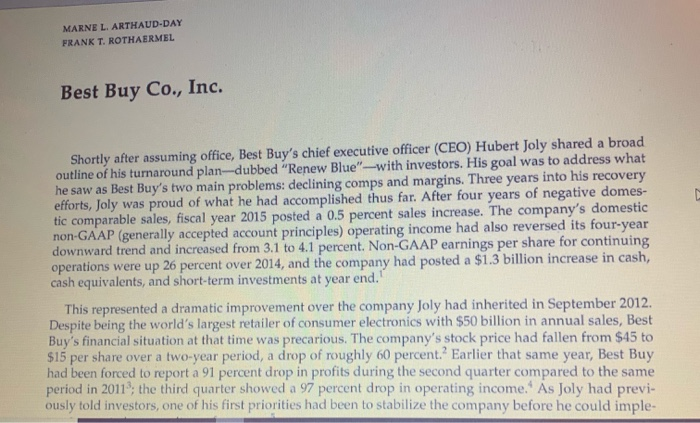
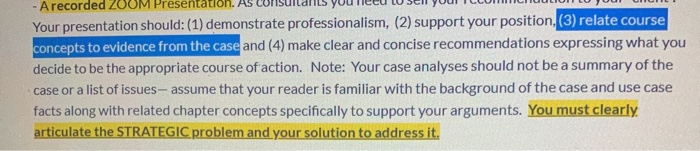
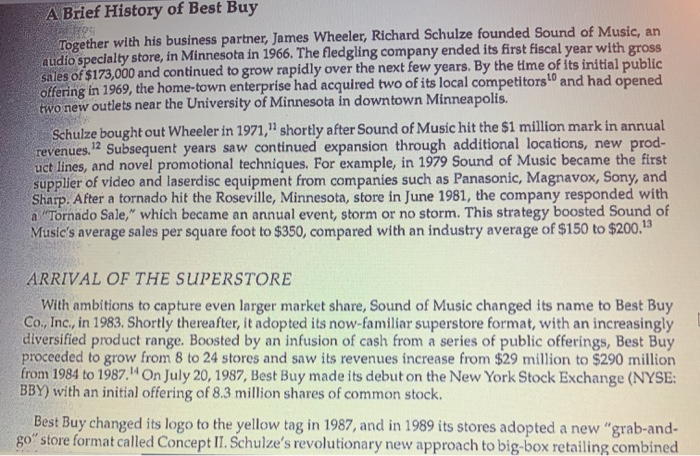
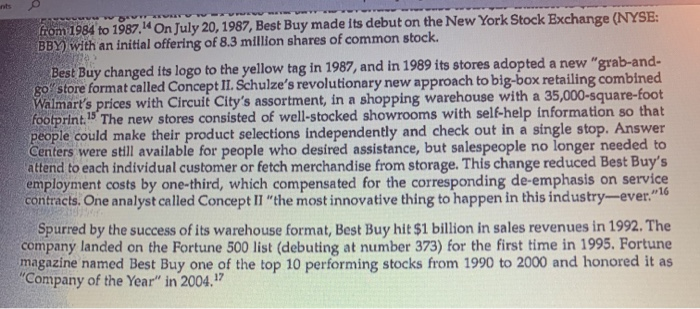
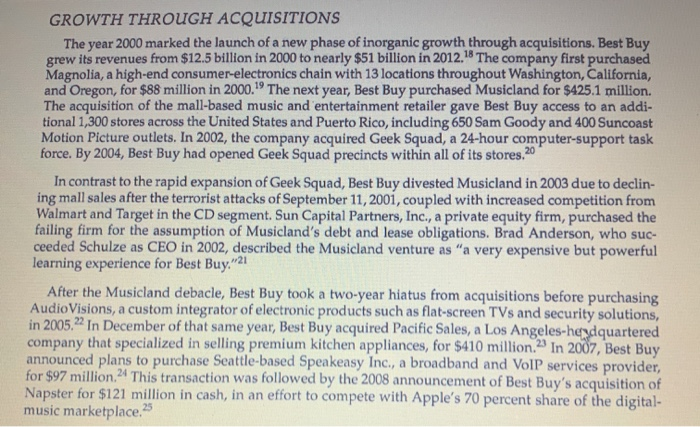
- A recorded ZOOM Presentation. As Your presentation should: (1) demonstrate professionalism, (2) support your position, (3) relate course concepts to evidence from the case and (4) make clear and concise recommendations expressing what you decide to be the appropriate course of action. Note: Your case analyses should not be a summary of the case or a list of issues - assume that your reader is familiar with the background of the case and use case facts along with related chapter concepts specifically to support your arguments. You must clearly. articulate the STRATEGIC problem and your solution to address it. MARNE L. ARTHAUD-DAY FRANK T. ROTHAERMEL Best Buy Co., Inc. Shortly after assuming office, Best Buy's chief executive officer (CEO) Hubert Joly shared a broad outline of his turnaround plan-dubbed "Renew Blue"-with investors. His goal was to address what he saw as Best Buy's two main problems: declining comps and margins. Three years into his recovery efforts, Joly was proud of what he had accomplished thus far. After four years of negative domes- tic comparable sales, fiscal year 2015 posted a 0.5 percent sales increase. The company's domestic non-GAAP (generally accepted account principles) operating income had also reversed its four-year downward trend and increased from 3.1 to 4.1 percent. Non-GAAP earnings per share for continuing operations were up 26 percent over 2014, and the company had posted a $1.3 billion increase in cash, cash equivalents, and short-term investments at year end.' This represented a dramatic improvement over the company Joly had inherited in September 2012 Despite being the world's largest retailer of consumer electronics with $50 billion in annual sales, Best Buy's financial situation at that time was precarious. The company's stock price had fallen from $45 to $15 per share over a two-year period, a drop of roughly 60 percent. Earlier that same year, Best Buy had been forced to report a 91 percent drop in profits during the second quarter compared to the same period in 2011; the third quarter showed a 97 percent drop in operating income." As Joly had previ- ously told investors, one of his first priorities had been to stabilize the company before he could imple- A Brief History of Best Buy tos Together with his business partner, James Wheeler, Richard Schulze founded Sound of Music, an audio specialty store, in Minnesota in 1966. The fledgling company ended its first fiscal year with gross sales of $173,000 and continued to grow rapidly over the next few years. By the time of its initial public offering in 1969, the home-town enterprise had acquired two of its local competitors and had opened two new outlets near the University of Minnesota in downtown Minneapolis. Schulze bought out Wheeler in 1971,"shortly after Sound of Music hit the $1 million mark in annual revenues. Subsequent years saw continued expansion through additional locations, new prod- uct lines, and novel promotional techniques. For example, in 1979 Sound of Music became the first supplier of video and laserdisc equipment from companies such as Panasonic, Magnavox, Sony, and Sharp. After a tornado hit the Roseville, Minnesota, store in June 1981, the company responded with a "Tornado Sale," which became an annual event, storm or no storm. This strategy boosted Sound of Music's average sales per square foot to $350, compared with an industry average of $150 to $200.13 ARRIVAL OF THE SUPERSTORE With ambitions to capture even larger market share, Sound of Music changed its name to Best Buy Co., Inc., in 1983. Shortly thereafter, it adopted its now-familiar superstore format, with an increasingly diversified product range. Boosted by an infusion of cash from a series of public offerings, Best Buy proceeded to grow from 8 to 24 stores and saw its revenues increase from $29 million to $290 million from 1984 to 1987. "On July 20, 1987, Best Buy made its debut on the New York Stock Exchange (NYSE: BBY) with an initial offering of 8.3 million shares of common stock, Best Buy changed its logo to the yellow tag in 1987, and in 1989 its stores adopted a new "grab-and- go" store format called Concept II. Schulze's revolutionary new approach to big-box retailing combined from 1984 to 1987. On July 20, 1987, Best Buy made its debut on the New York Stock Exchange (NYSE: BBY) with an initial offering of 8.3 million shares of common stock. Best Buy changed its logo to the yellow tag in 1987, and in 1989 its stores adopted a new "grab-and- go store format called Concept II. Schulze's revolutionary new approach to big-box retailing combined Walmart's prices with Circuit City's assortment in a shopping warehouse with a 35,000-square-foot footprint.15 The new stores consisted of well-stocked showrooms with self-help information so that people could make their product selections independently and check out in a single stop. Answer Centers were shll available for people who desired assistance, but salespeople no longer needed to attend to each individual customer or fetch merchandise from storage. This change reduced Best Buy's employment costs by one-third, which compensated for the corresponding de-emphasis on service contracts. One analyst called Concept II "the most innovative thing to happen in this industry-ever."16 Spurred by the success of its warehouse format, Best Buy hit $1 billion in sales revenues in 1992. The company landed on the Fortune 500 list (debuting at number 373) for the first time in 1995. Fortune magazine named Best Buy one of the top 10 performing stocks from 1990 to 2000 and honored it as "Company of the Year" in 2004." GROWTH THROUGH ACQUISITIONS The e year 2000 marked the launch of a new phase of inorganic growth through acquisitions. Best Buy grew its revenues from $12.5 billion in 2000 to nearly $51 billion in 2012.18 The company first purchased Magnolia, a high-end consumer-electronics chain with 13 locations throughout Washington, California, and Oregon, for $88 million in 2000." The next year, Best Buy purchased Musicland for $425.1 million The acquisition of the mall-based music and entertainment retailer gave Best Buy access to an addi- tional 1,300 stores across the United States and Puerto Rico, including 650 Sam Goody and 400 Suncoast Motion Picture outlets. In 2002, the company acquired Geek Squad, a 24-hour computer-support task force. By 2004, Best Buy had opened Geek Squad precincts within all of its stores.20 In contrast to the rapid expansion of Geek Squad, Best Buy divested Musicland in 2003 due to declin- ing mall sales after the terrorist attacks of September 11, 2001, coupled with increased competition from Walmart and Target in the CD segment. Sun Capital Partners, Inc., a private equity firm, purchased the failing firm for the assumption of Musicland's debt and lease obligations. Brad Anderson, who suc- ceeded Schulze as CEO in 2002, described the Musicland venture as "a very expensive but powerful learning experience for Best Buy. 21 After the Musicland debacle, Best Buy took a two-year hiatus from acquisitions before purchasing AudioVisions, a custom integrator of electronic products such as flat-screen TVs and security solutions, in 2005.22 In December of that same year, Best Buy acquired Pacific Sales, a Los Angeles-heydquartered company that specialized in selling premium kitchen appliances, for $410 million.2 In 2007, Best Buy announced plans to purchase Seattle-based Speakeasy Inc., a broadband and VoIP services provider, for $97 million 21 This transaction was followed by the 2008 announcement of Best Buy's acquisition of Napster for $121 million in cash, in an effort to compete with Apple's 70 percent share of the digital- music marketplace.25 - A recorded ZOOM Presentation. As Your presentation should: (1) demonstrate professionalism, (2) support your position, (3) relate course concepts to evidence from the case and (4) make clear and concise recommendations expressing what you decide to be the appropriate course of action. Note: Your case analyses should not be a summary of the case or a list of issues - assume that your reader is familiar with the background of the case and use case facts along with related chapter concepts specifically to support your arguments. You must clearly. articulate the STRATEGIC problem and your solution to address it. MARNE L. ARTHAUD-DAY FRANK T. ROTHAERMEL Best Buy Co., Inc. Shortly after assuming office, Best Buy's chief executive officer (CEO) Hubert Joly shared a broad outline of his turnaround plan-dubbed "Renew Blue"-with investors. His goal was to address what he saw as Best Buy's two main problems: declining comps and margins. Three years into his recovery efforts, Joly was proud of what he had accomplished thus far. After four years of negative domes- tic comparable sales, fiscal year 2015 posted a 0.5 percent sales increase. The company's domestic non-GAAP (generally accepted account principles) operating income had also reversed its four-year downward trend and increased from 3.1 to 4.1 percent. Non-GAAP earnings per share for continuing operations were up 26 percent over 2014, and the company had posted a $1.3 billion increase in cash, cash equivalents, and short-term investments at year end.' This represented a dramatic improvement over the company Joly had inherited in September 2012 Despite being the world's largest retailer of consumer electronics with $50 billion in annual sales, Best Buy's financial situation at that time was precarious. The company's stock price had fallen from $45 to $15 per share over a two-year period, a drop of roughly 60 percent. Earlier that same year, Best Buy had been forced to report a 91 percent drop in profits during the second quarter compared to the same period in 2011; the third quarter showed a 97 percent drop in operating income." As Joly had previ- ously told investors, one of his first priorities had been to stabilize the company before he could imple- A Brief History of Best Buy tos Together with his business partner, James Wheeler, Richard Schulze founded Sound of Music, an audio specialty store, in Minnesota in 1966. The fledgling company ended its first fiscal year with gross sales of $173,000 and continued to grow rapidly over the next few years. By the time of its initial public offering in 1969, the home-town enterprise had acquired two of its local competitors and had opened two new outlets near the University of Minnesota in downtown Minneapolis. Schulze bought out Wheeler in 1971,"shortly after Sound of Music hit the $1 million mark in annual revenues. Subsequent years saw continued expansion through additional locations, new prod- uct lines, and novel promotional techniques. For example, in 1979 Sound of Music became the first supplier of video and laserdisc equipment from companies such as Panasonic, Magnavox, Sony, and Sharp. After a tornado hit the Roseville, Minnesota, store in June 1981, the company responded with a "Tornado Sale," which became an annual event, storm or no storm. This strategy boosted Sound of Music's average sales per square foot to $350, compared with an industry average of $150 to $200.13 ARRIVAL OF THE SUPERSTORE With ambitions to capture even larger market share, Sound of Music changed its name to Best Buy Co., Inc., in 1983. Shortly thereafter, it adopted its now-familiar superstore format, with an increasingly diversified product range. Boosted by an infusion of cash from a series of public offerings, Best Buy proceeded to grow from 8 to 24 stores and saw its revenues increase from $29 million to $290 million from 1984 to 1987. "On July 20, 1987, Best Buy made its debut on the New York Stock Exchange (NYSE: BBY) with an initial offering of 8.3 million shares of common stock, Best Buy changed its logo to the yellow tag in 1987, and in 1989 its stores adopted a new "grab-and- go" store format called Concept II. Schulze's revolutionary new approach to big-box retailing combined from 1984 to 1987. On July 20, 1987, Best Buy made its debut on the New York Stock Exchange (NYSE: BBY) with an initial offering of 8.3 million shares of common stock. Best Buy changed its logo to the yellow tag in 1987, and in 1989 its stores adopted a new "grab-and- go store format called Concept II. Schulze's revolutionary new approach to big-box retailing combined Walmart's prices with Circuit City's assortment in a shopping warehouse with a 35,000-square-foot footprint.15 The new stores consisted of well-stocked showrooms with self-help information so that people could make their product selections independently and check out in a single stop. Answer Centers were shll available for people who desired assistance, but salespeople no longer needed to attend to each individual customer or fetch merchandise from storage. This change reduced Best Buy's employment costs by one-third, which compensated for the corresponding de-emphasis on service contracts. One analyst called Concept II "the most innovative thing to happen in this industry-ever."16 Spurred by the success of its warehouse format, Best Buy hit $1 billion in sales revenues in 1992. The company landed on the Fortune 500 list (debuting at number 373) for the first time in 1995. Fortune magazine named Best Buy one of the top 10 performing stocks from 1990 to 2000 and honored it as "Company of the Year" in 2004." GROWTH THROUGH ACQUISITIONS The e year 2000 marked the launch of a new phase of inorganic growth through acquisitions. Best Buy grew its revenues from $12.5 billion in 2000 to nearly $51 billion in 2012.18 The company first purchased Magnolia, a high-end consumer-electronics chain with 13 locations throughout Washington, California, and Oregon, for $88 million in 2000." The next year, Best Buy purchased Musicland for $425.1 million The acquisition of the mall-based music and entertainment retailer gave Best Buy access to an addi- tional 1,300 stores across the United States and Puerto Rico, including 650 Sam Goody and 400 Suncoast Motion Picture outlets. In 2002, the company acquired Geek Squad, a 24-hour computer-support task force. By 2004, Best Buy had opened Geek Squad precincts within all of its stores.20 In contrast to the rapid expansion of Geek Squad, Best Buy divested Musicland in 2003 due to declin- ing mall sales after the terrorist attacks of September 11, 2001, coupled with increased competition from Walmart and Target in the CD segment. Sun Capital Partners, Inc., a private equity firm, purchased the failing firm for the assumption of Musicland's debt and lease obligations. Brad Anderson, who suc- ceeded Schulze as CEO in 2002, described the Musicland venture as "a very expensive but powerful learning experience for Best Buy. 21 After the Musicland debacle, Best Buy took a two-year hiatus from acquisitions before purchasing AudioVisions, a custom integrator of electronic products such as flat-screen TVs and security solutions, in 2005.22 In December of that same year, Best Buy acquired Pacific Sales, a Los Angeles-heydquartered company that specialized in selling premium kitchen appliances, for $410 million.2 In 2007, Best Buy announced plans to purchase Seattle-based Speakeasy Inc., a broadband and VoIP services provider, for $97 million 21 This transaction was followed by the 2008 announcement of Best Buy's acquisition of Napster for $121 million in cash, in an effort to compete with Apple's 70 percent share of the digital- music marketplace.25









 Study Help