Question: Hello could you help me understand the steps to solve these problems. Thank You 24) Use the Law of Sines or Law of Cosines to
Hello could you help me understand the steps to solve these problems. Thank You
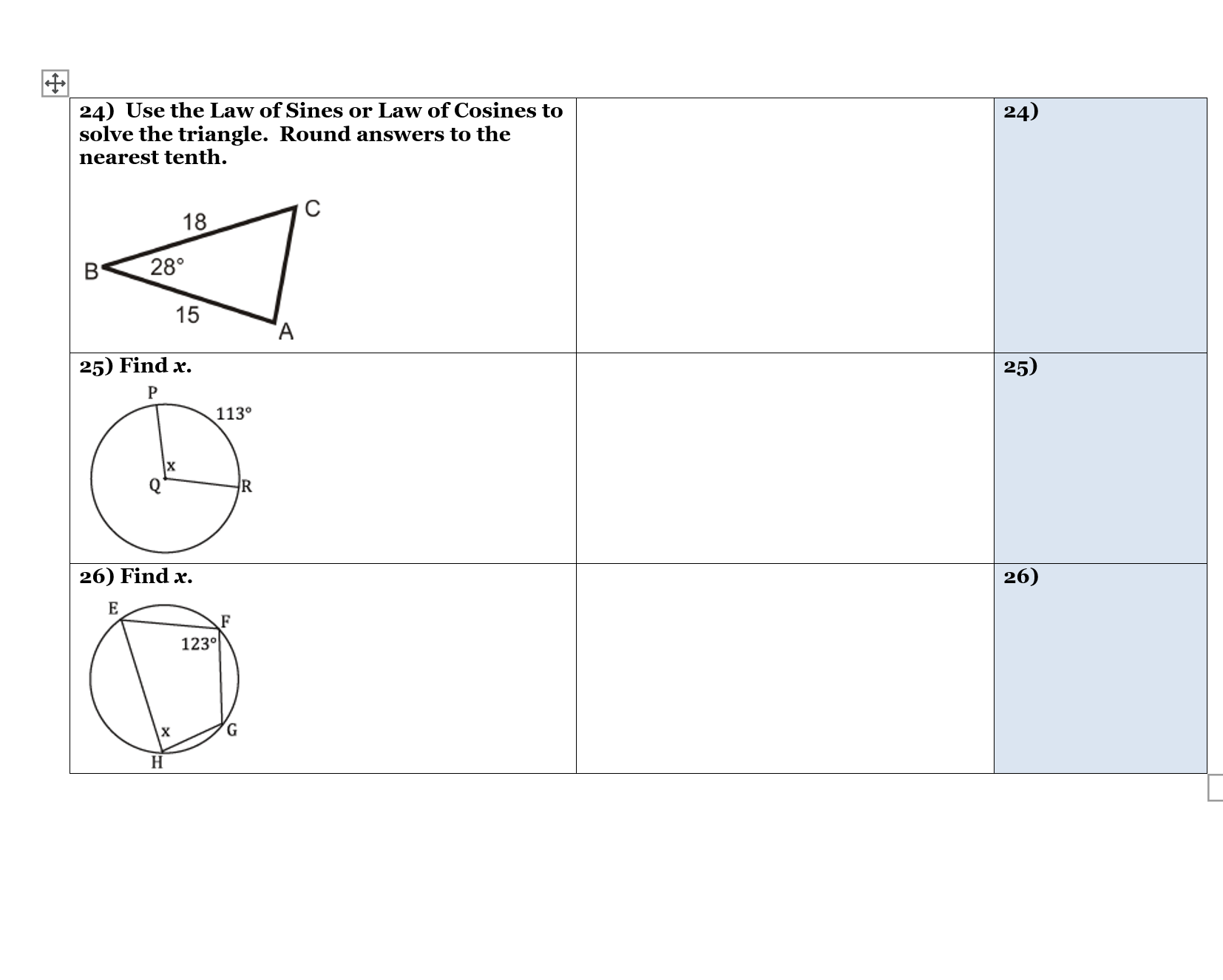
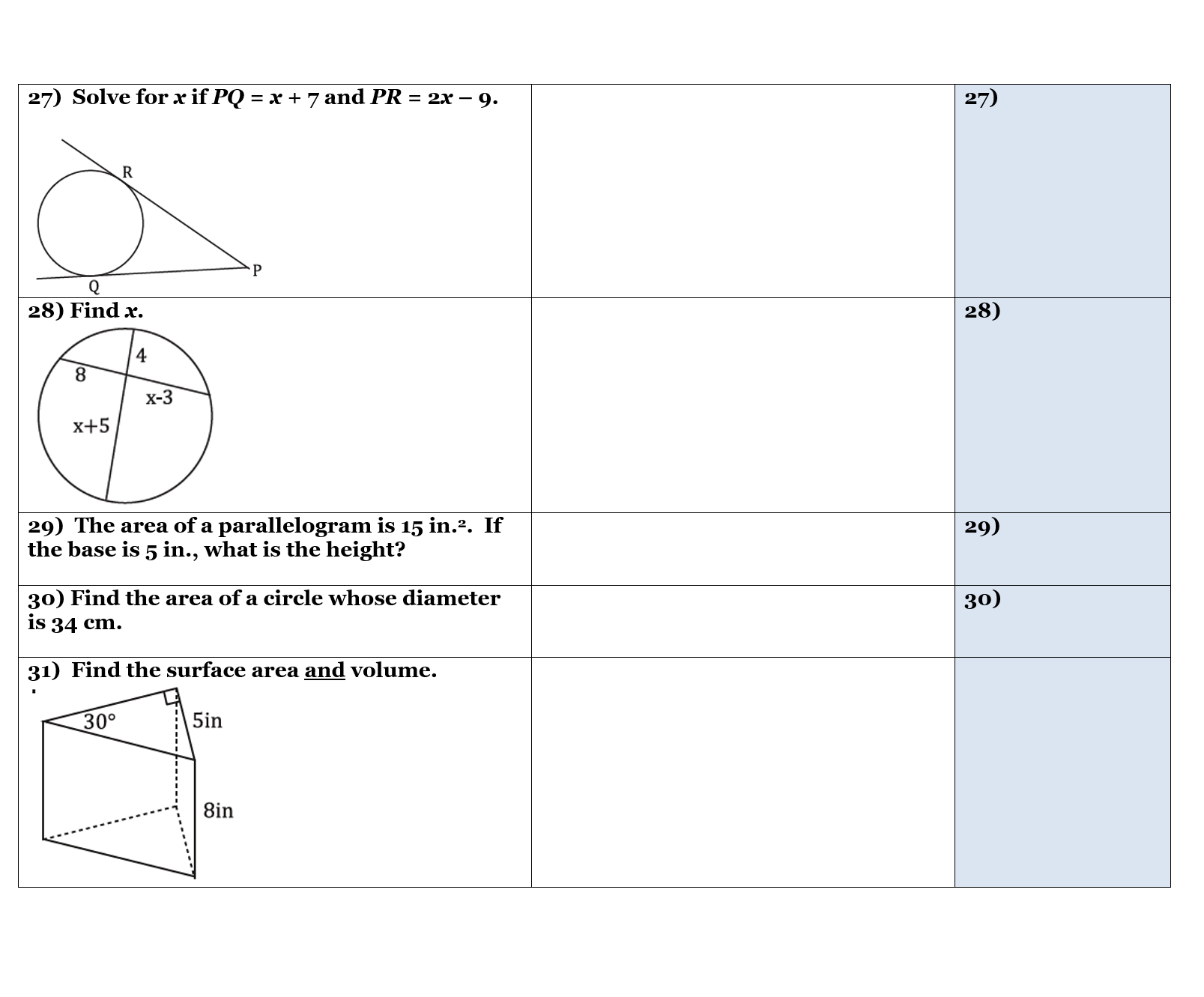
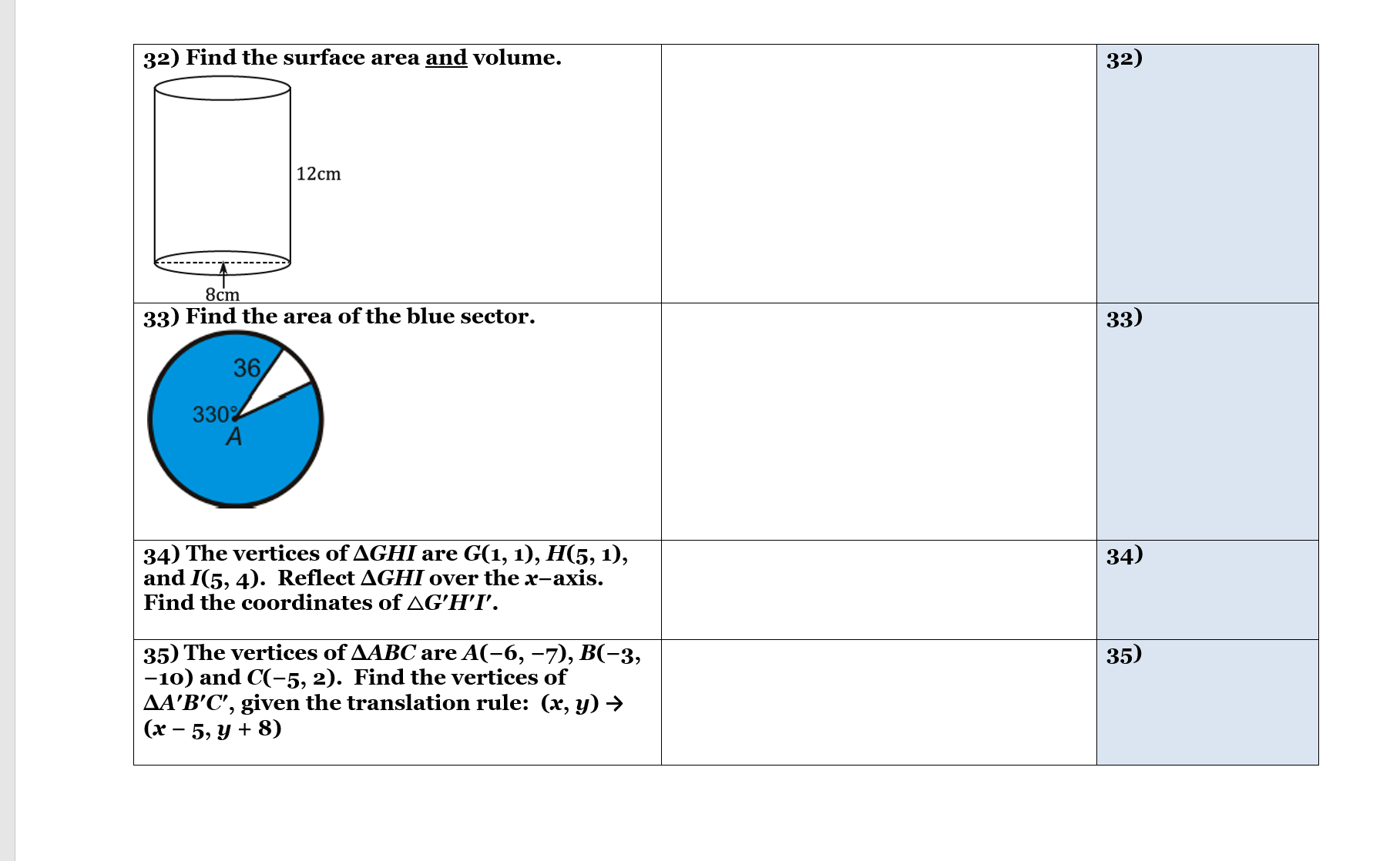
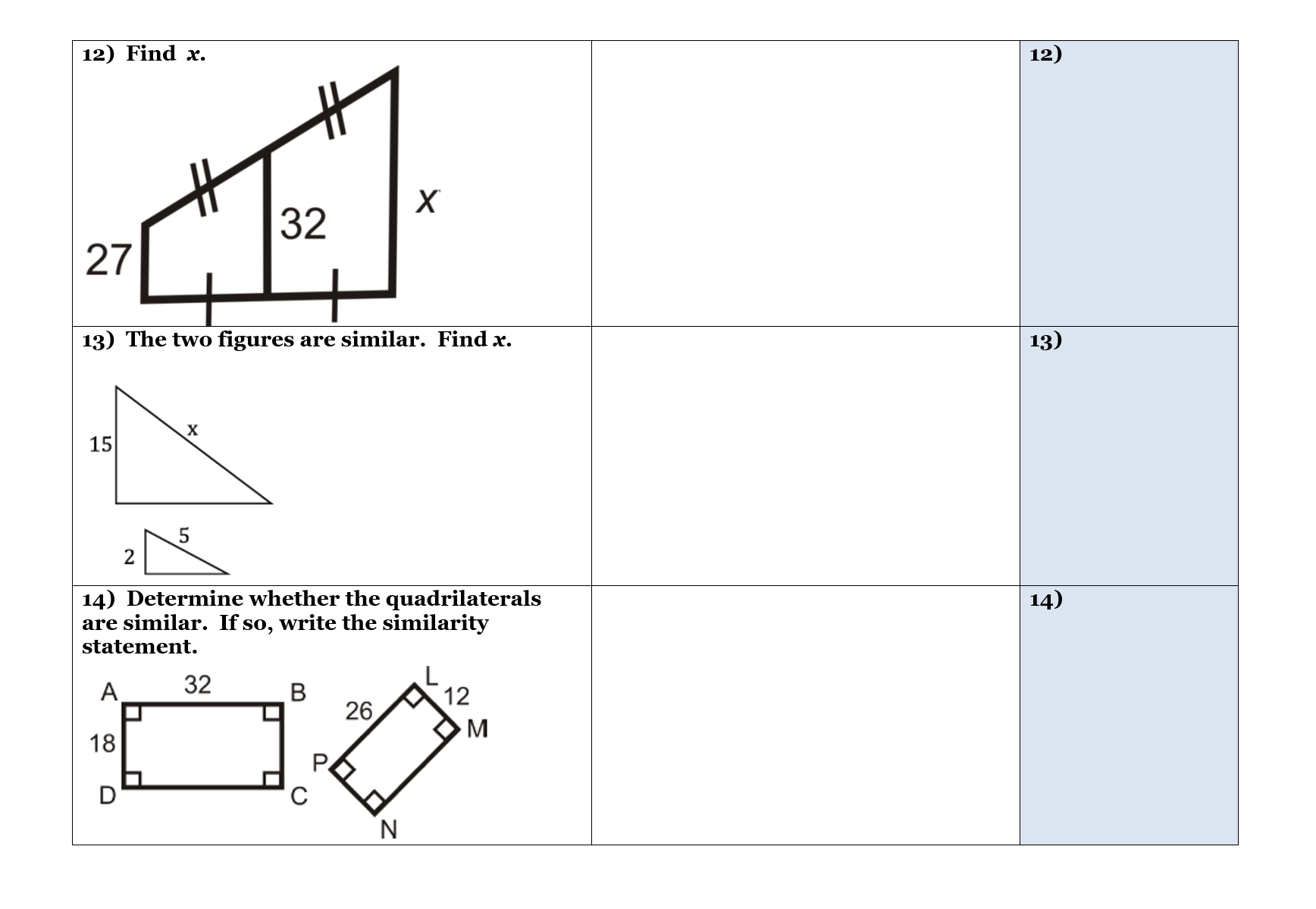
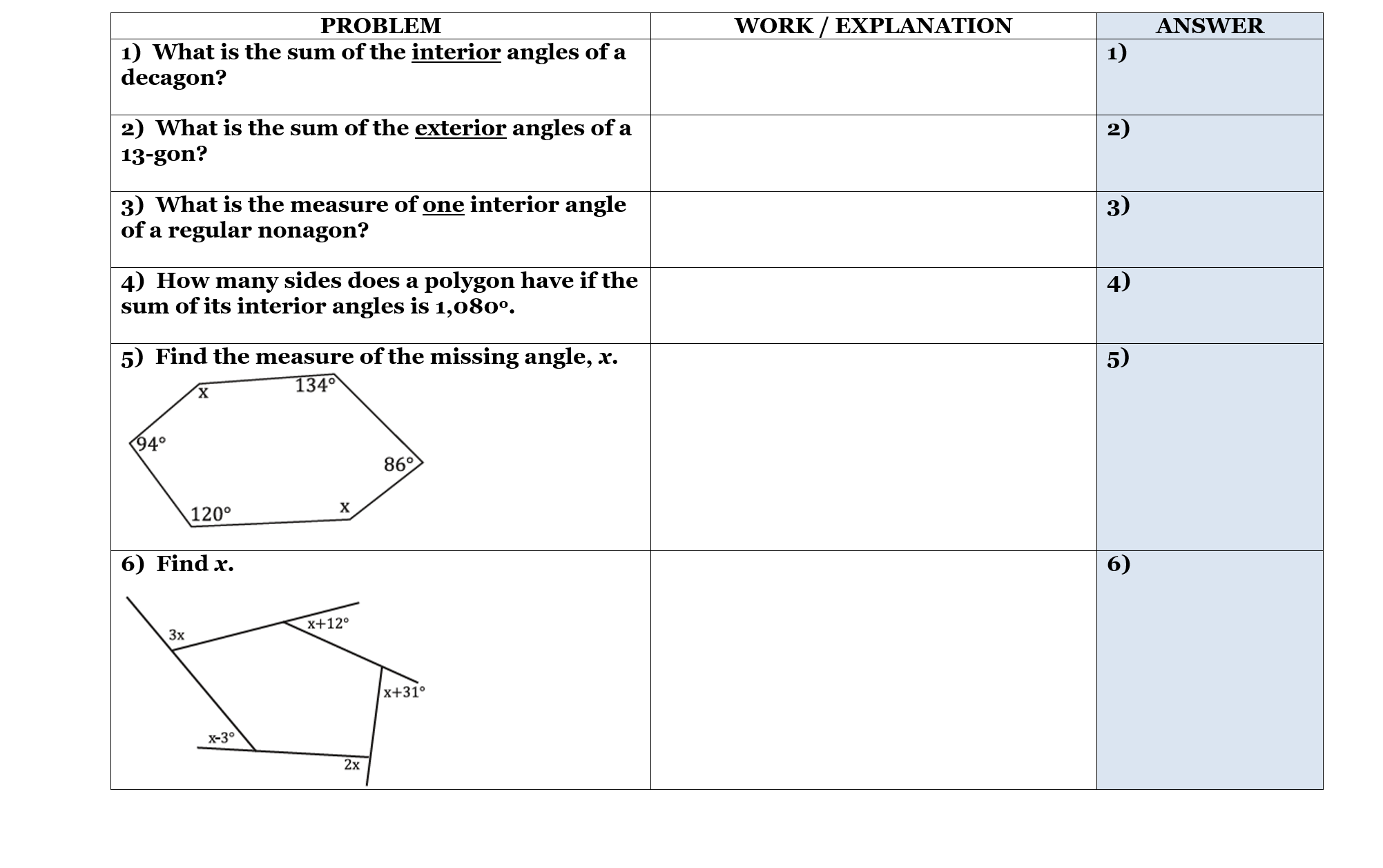
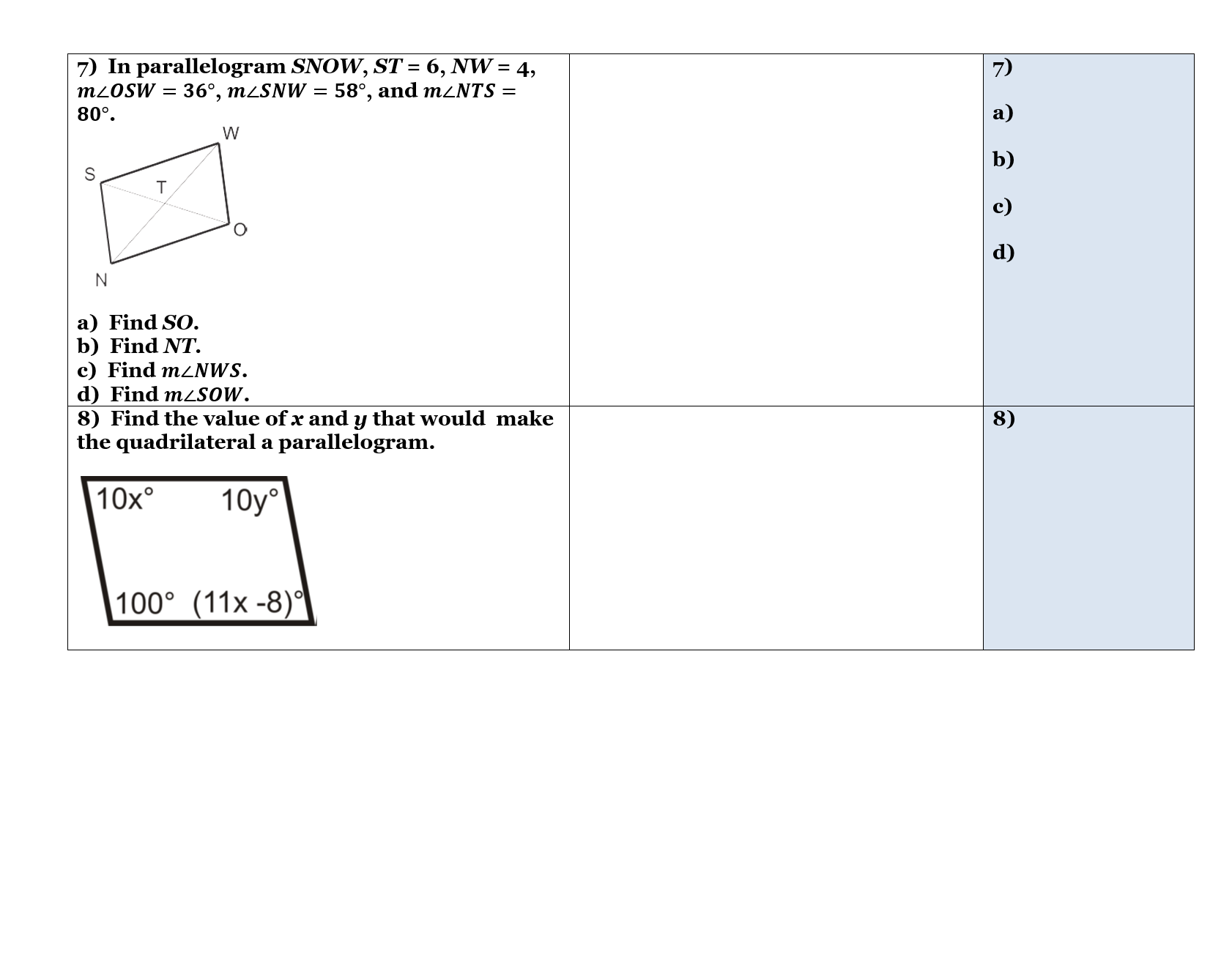
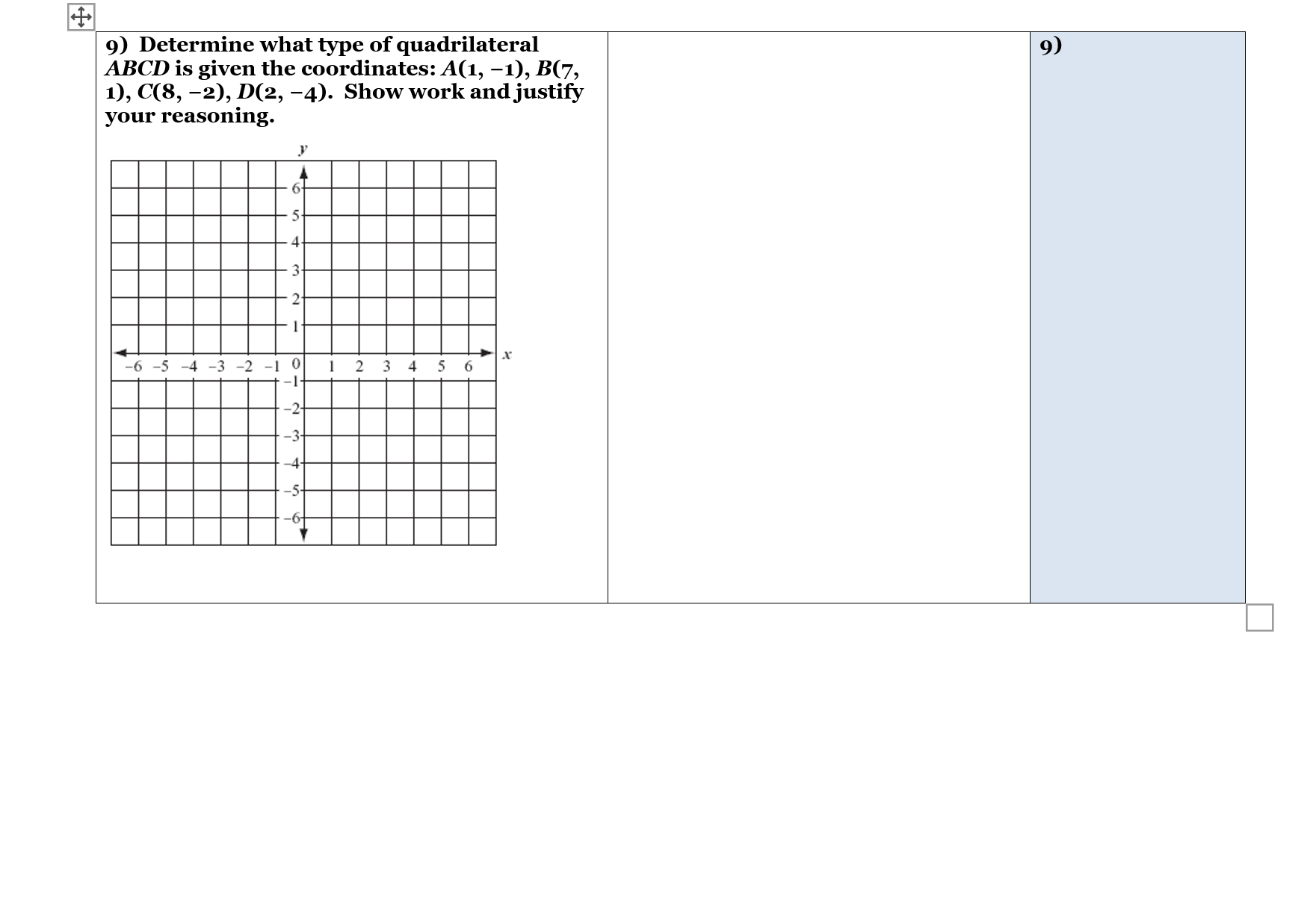
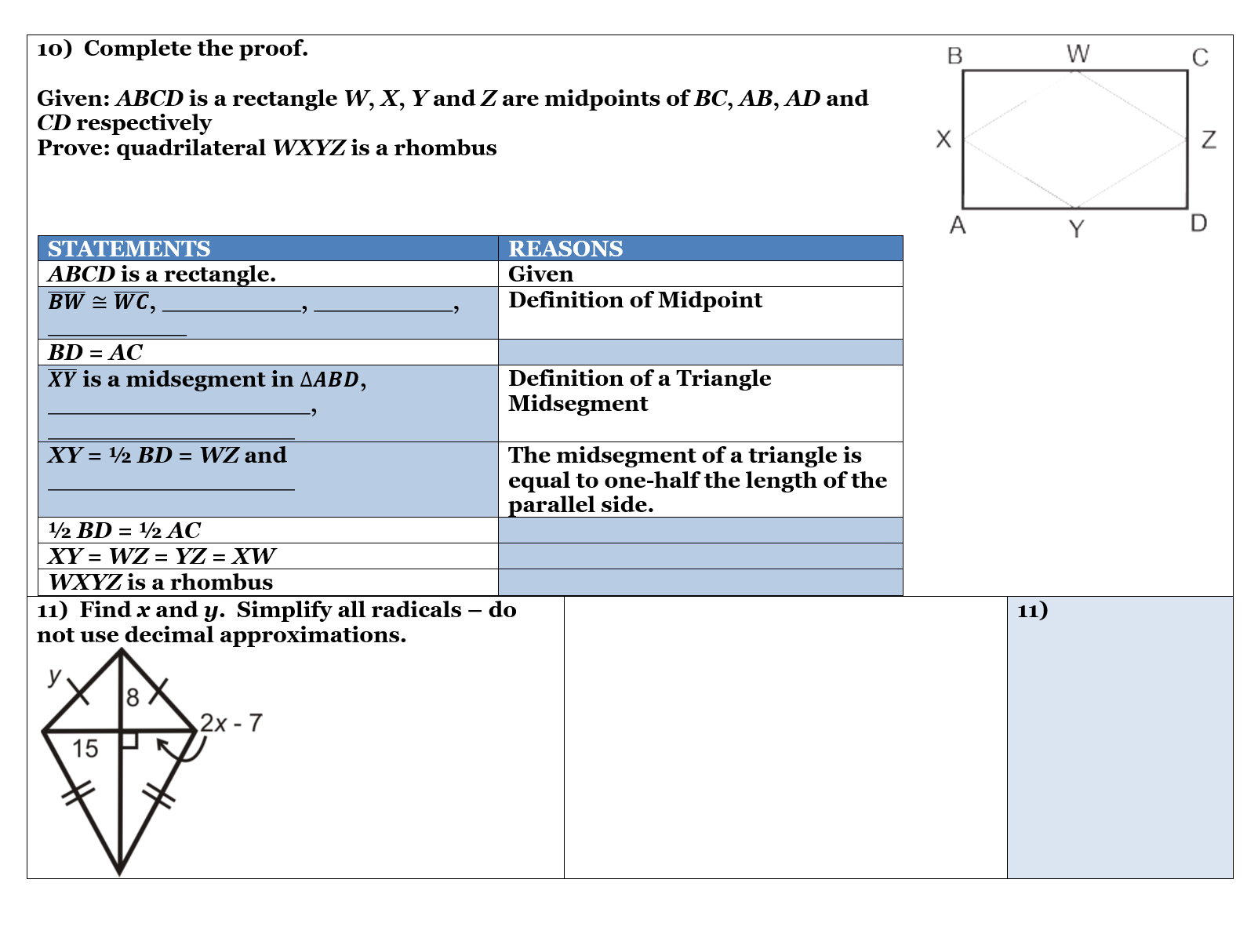
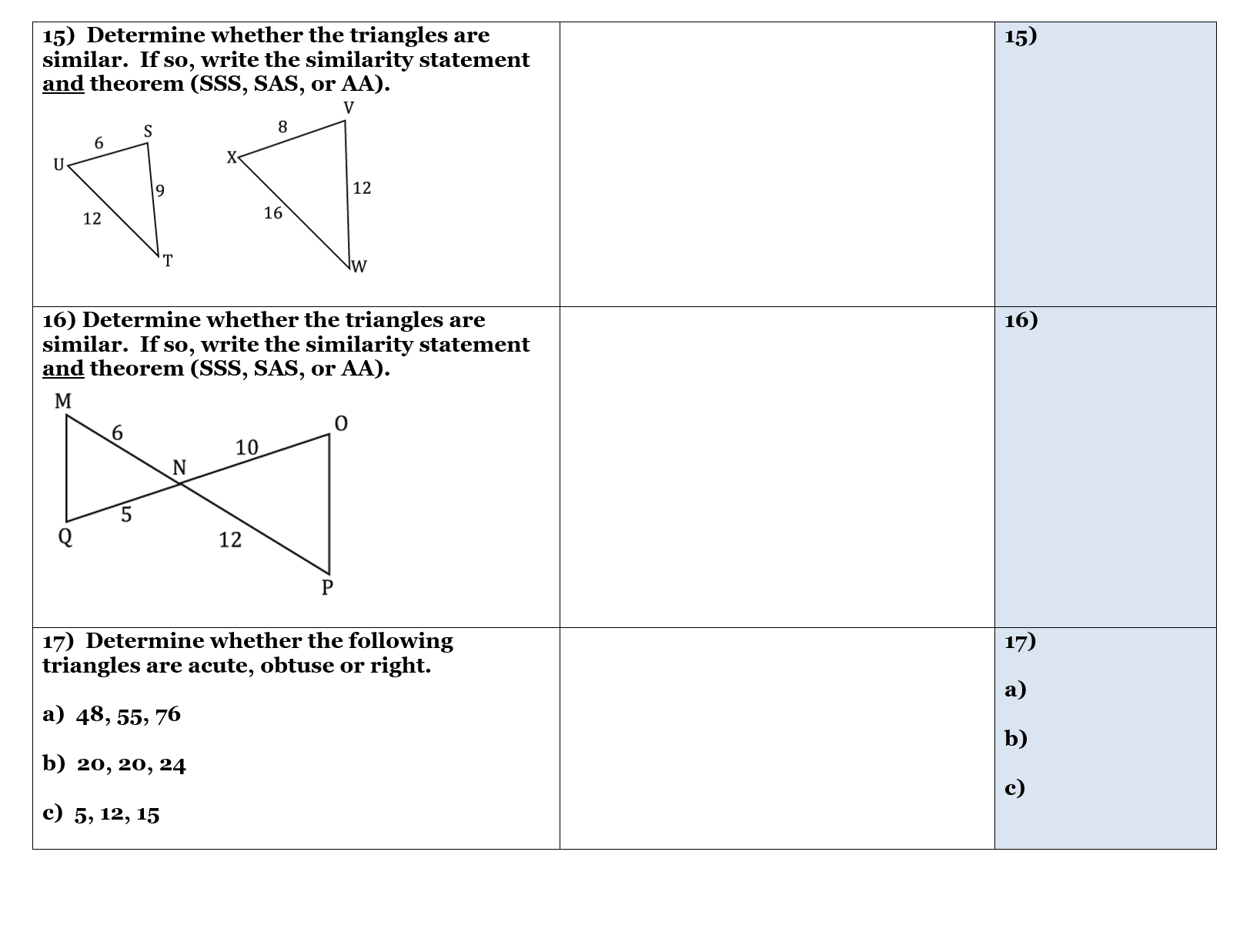
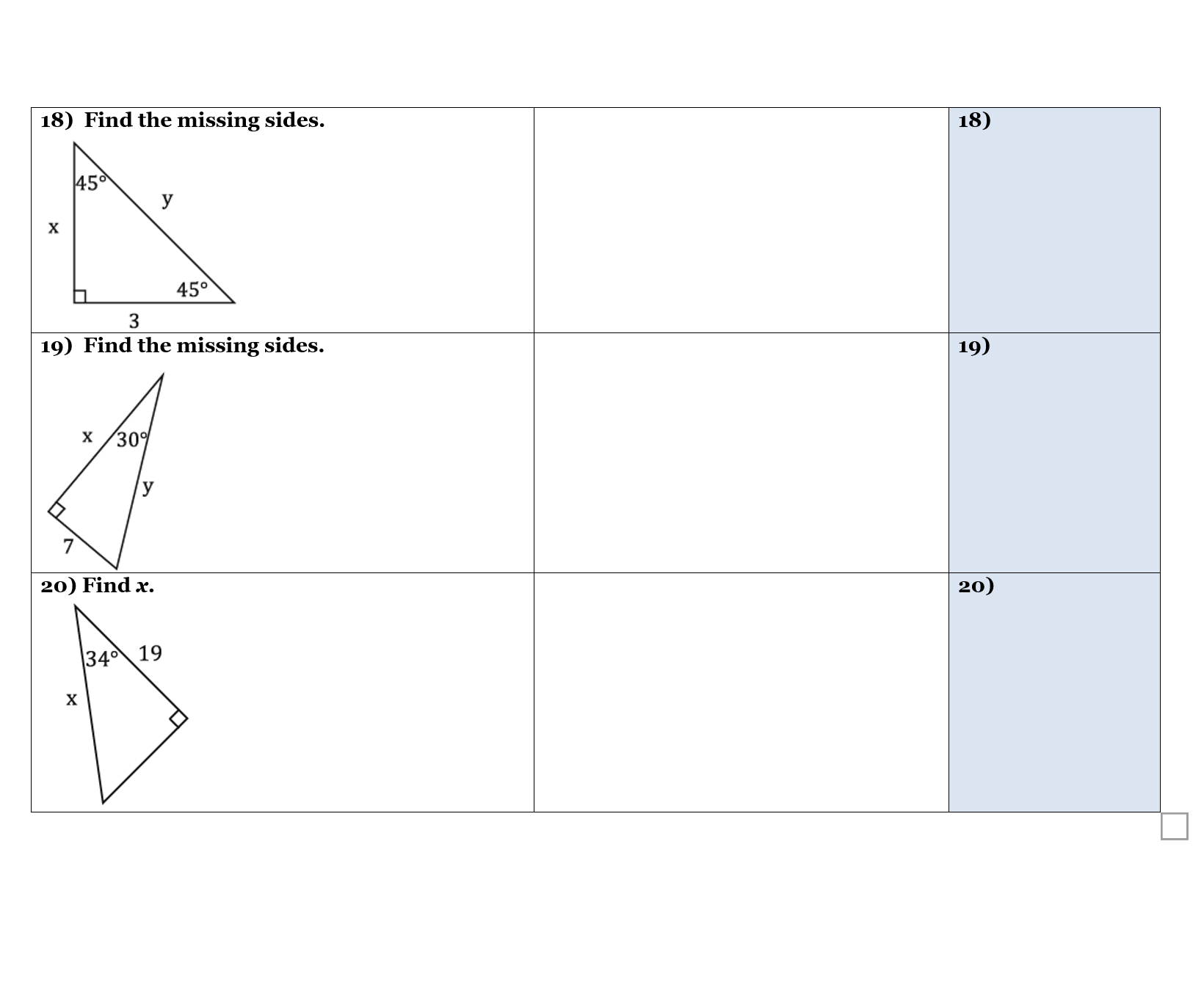
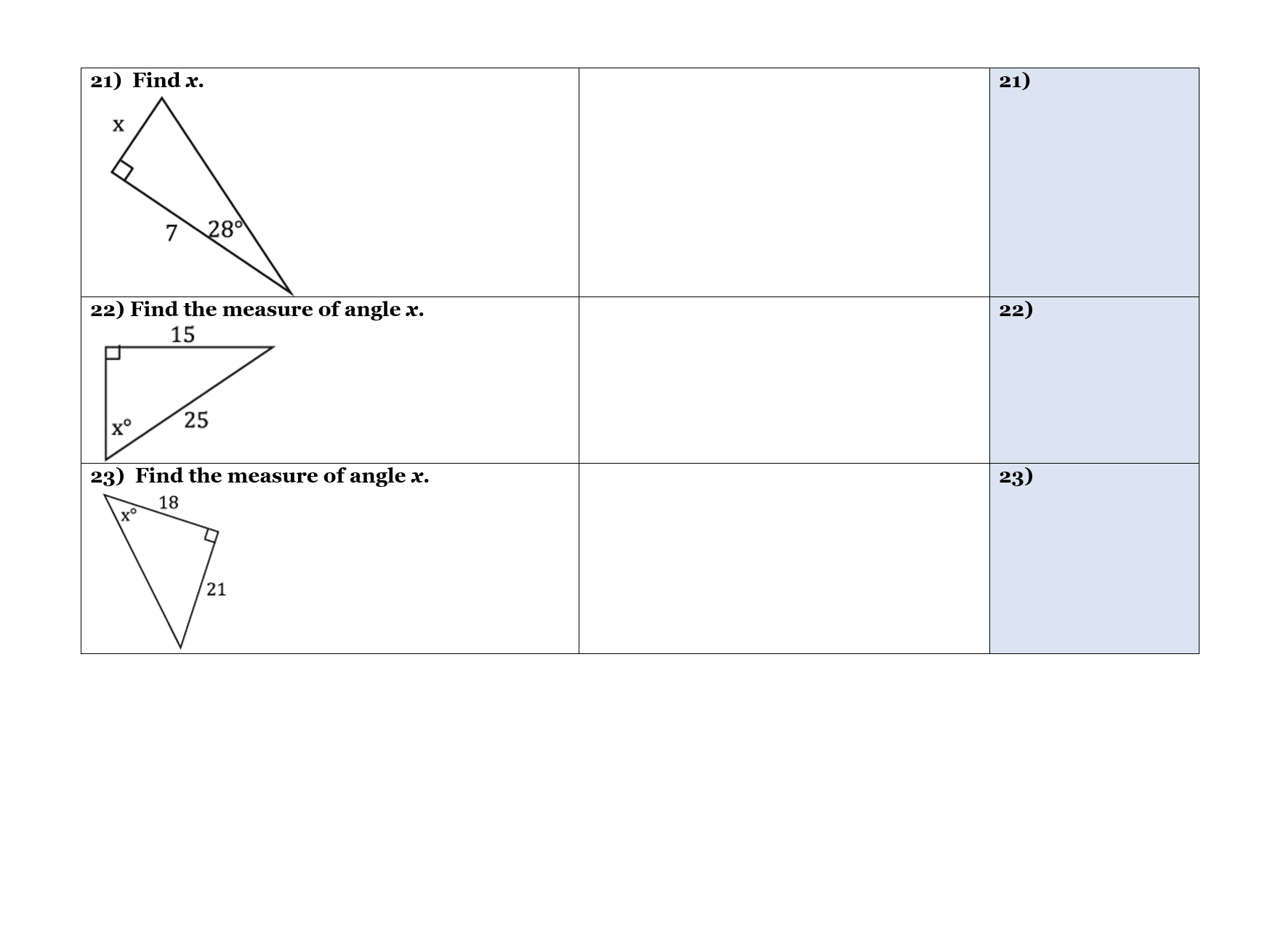
24) Use the Law of Sines or Law of Cosines to solve the triangle. Round answers to the nearest tenth. 18 C 15 24) 25) Find x. P '3' R 25) 26) Find x. E ' F /G 26) 27) Solve forxifPQ = x + 7 and PR 2 2x 9. 27) R P Q 28) Find x. 28) 29) The area of a parallelogram is 15 in.=. If 29) the base is 5 in., what is the height? 30) Find the area of a circle whose diameter 30) is 34 cm. 31) Find the surface area and volume. I {I'm 8in 32) Find the surface area and volume. 32 12cm 3cm 33) Find the area of the blue sector. 33) 36 330% A 34) The vertices of AGHI are G(1, 1), H(5, 1), 34) and I(5, 4). Reflect AGHI over the x-axis. Find the coordinates of AG'H'T'. 35) The vertices of AABC are A(-6, -7), B(-3, 35) -10) and C(-5, 2). Find the vertices of AA'B'C', given the translation rule: (x, y) > (x - 5, y + 8)12) Find x. 12) X 32 27 13) The two figures are similar. Find x. 13) X 15 14) Determine whether the quadrilaterals 14) are similar. If so, write the similarity statement. A 32 B -12 26 M 18 C NPROBLEM WORK/ EXPLANATION ANSWER 1) What is the sum of the interior angles of a 1) decagon? 2) What is the sum of the exterior angles of a 2) 13-gon? 3) What is the measure of one interior angle 3) of a regular nonagon? 4) How many sides does a polygon have if the 4) sum of its interior angles is 1,0800. 5) Find the measure of the missing angle, x. 5) 6) Find x. 6) 7) In parallelogram SNOW, ST = 6, NW = 4, mLOSW = 36, mLSNW = 58, and meNTS = 80. W S T N a) Find SO. b) Find NT. c) Find meNWS. d) Find meSOW. 8) Find the value of x and y that would make 8) the quadrilateral a parallelogram. 10x 10y 100 (11x -8)9) Determine what type of quadrilateral ABCD is given the coordinates: A(1, 1), 1307, 1), C(8, 2), D(2, 4). Show work and justify your reasoning. 9) 10) Complete the proof. B W C Given: ABCD is a rectangle W, X, Y and Z are midpoints of BC, AB, AD and CD respectively Prove: quadrilateral WXYZ is a rhombus X Z A Y D STATEMENTS REASONS ABCD is a rectangle. Given BW = WC, Definition of Midpoint BD = AC XY is a midsegment in AABD, Definition of a Triangle Midsegment XY = 1/2 BD = WZ and The midsegment of a triangle is equal to one-half the length of the parallel side. 1/2 BD = 1/2 AC XY = WZ = YZ = XW WXYZ is a rhombus 11) Find x and y. Simplify all radicals - do 11) not use decimal approximations. 8 X 2x - 7 1515) Determine whether the triangles are 15) similar. If so, write the similarity statement and theorem (SSS, SAS, or AA). V 8 12 12 16 16) Determine whether the triangles are 16) similar. If so, write the similarity statement and theorem (SSS, SAS, or AA). M 6 O 10 N 5 Q 12 17) Determine whether the following 17) triangles are acute, obtuse or right. a) a) 48, 55, 76 b ) b) 20, 20, 24 c) 5, 12, 1518) Find the missing sides. 18) 45 y X 450 3 19) Find the missing sides. 19) x 309 y 20) Find x. 20) 340 1921) Find x. 21) 22) Find the measure of angle x. 22) 15 I 25 23) Find the measure of angle x. 23) 18 21









 Study Help