



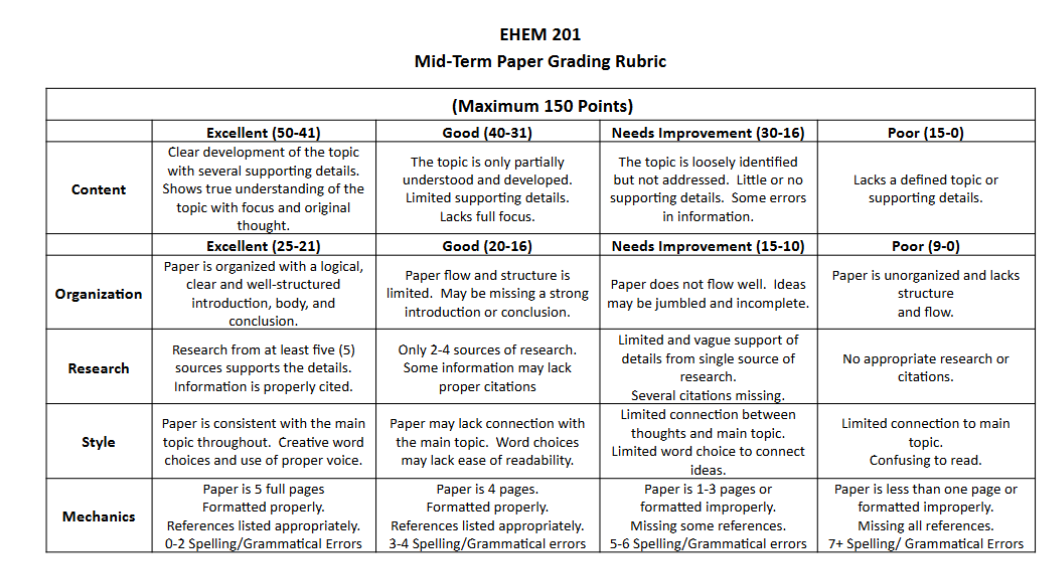
Question: Hello, I am writing a paper and need help with revising and shrinking down my writing a bit. I am currently at the page limit
Hello, I am writing a paper and need help with revising and shrinking down my writing a bit. I am currently at the page limit and still need to write a conclusion and my essay can't exceed a 6 page count.
The whole community concept to an emergency manager means that all members in emergency management and the community work together to gain abetter understanding and work out a strategic approach (FDOC, 2011). Moreover, the whole community concept is about recognizing that no single entity, whether government or private, will manage a disaster alone. Furthermore, it requires collaboration between public agencies, private organizations, nonprofit groups, and the community itself. By engaging a wide range of groups, emergency managers can develop more effective strategies that not only address immediate needs during a disaster but also build long-term resilience within the community. This approach ensures that resources are distributed equally so that vulnerable populations are not left behind. This essay focuses on the importance of incorporating the whole community in emergency management, particularly with ensuring that vulnerable populations are not overlooked. It will address the challenges that come due to poverty, geographic location, and disabilities. Furthermore, by referencing historical disasters such as Hurricane Katrina in 2005 and The Galveston Hurricane in 1990, the essay highlights how important the whole community concept is to get effective outcomes.
Furthermore, this approach goes beyond just government agencies and by bringing together various entities, emergency managers can create a more comprehensive and effective disaster response plan that utilizes the unique strengths and resources of each group.
Moreover, incorporating input from the private sector is essential, as businesses can provide vital supplies and logistical support. For example, local grocery stores may facilitate food distribution during emergencies, while pharmacies can ensure access to necessary medications. Nonprofit organizations and faith-based groups, are more familiar with the communities around them which allows them to be more fit to provide shelter and basic needs compared to the government who may overlook things like first aid care and making sure everyone has a place to sleep at night ( Peacock, 2014)
The importance of considering every segment of society cannot be overstated, particularly when addressing vulnerable populations like the elderly, disabled, low-income groups, racial minorities, and non-English speakers. Each of these groups face distinct challenges during emergencies. For instance, elderly individuals may have mobility issues that hinder their ability to evacuate quickly, while low-income families might lack the financial resources to secure safe housing before a disaster. Additionally, language barriers can prevent non-English speakers from receiving critical information about evacuations or safety measures, leaving them at a higher risk (Bullard and Wright, 2009).
An effective whole-community approach also acknowledges that social and structural inequities contribute to the vulnerability of certain populations. For instance, low-income communities may live in areas more prone to flooding or wildfires due to historical discrimination in housing policies, leaving them more exposed to disaster risks ( Fathergil and Peak,2004). Therefore, emergency managers strive to address these issues in their planning and response efforts, ensuring that resources and support are offered to everyone.
Ultimately, the whole community concept seeks to build resilience by ensuring that all voices are heard and that all community members have a role in disaster management. This inclusive approach not only enhances the effectiveness of emergency response efforts but also instills a sense of support within the community(FEMA, 2011).Moreover, by prioritizing the needs of every individual, especially those who are most vulnerable, emergency managers can create a more safe and resilient society capable of withstanding future challenges.
Disasters often reveal the inequalities present within societies, particularly regarding the planning, response, and recovery efforts. Historical events, such as Hurricane Katrina in 2005 and the Great Galveston Hurricane in 1900, show how status can drastically affect the outcomes for different communities during and after a disaster.
Furthermore, Hurricane Katrina is an important example of how wealthier areas were able to evacuate more effectively than low-income communities. For instance, as the hurricane approached New Orleans, those with the means to do so were able to leave the city, seeking safety in other areas. However, many residents in predominantly Black, low-income neighborhoods lacked the necessary resources for evacuation. A report by the Institute for Southern Studies (2006) highlights that many residents had no access to vehicles, while public transportation options were limited as the storm approached. As a result, thousands of individuals were left stranded in dangerous conditions when the storm hit, leading to a humanitarian crisis that unfolded in the Superdome and other shelters (Institute for Southern Studies, 2006).
The response to Hurricane Katrina highlighted the systemic issues that caused the suffering of vulnerable populations. After the storm, the recovery efforts revealed deep disparities in how aid was given. For instance, higher-income neighborhoods received quicker restoration of services and infrastructure, while low-income areas faced delays and inadequate support. According to the U.S. House of Representatives (2006), the disaster response was marred by mismanagement, resulting in the prioritization of affluent areas for recovery funds and resources, further marginalizing already vulnerable populations. Similarly, researchers Elliott and Pais (2006) note that racial and socioeconomic disparities influenced recovery efforts, leaving many low-income communities struggling to access basic resources.
The Great Galveston Hurricane of 1900 provides another example of the challenges faced by vulnerable populations during disasters. When the hurricane struck, many residents were unprepared and unable to evacuate in time. The city lacked proper warning systems and emergency plans, which affected low-income individuals who had limited access to information and resources (Galveston Historical Foundation, n.d.). As reported by the Galveston Historical Foundation, " the city's infrastructure was insufficient to support a rapid evacuation, leaving many individuals trapped and vulnerable when the storm made landfall. The aftermath of the hurricane saw wealthier residents receiving preferential treatment in recovery efforts, while marginalized communities struggled to rebuild with limited resources."
Socioeconomic status plays a significant role in determining evacuation capabilities, access to aid, and the design of recovery plans. Communities with higher socioeconomic status often possess the resources necessary to prepare for disasters, including access to transportation, savings for emergencies, and the ability to purchase supplies in advance (Morrow, 2008). Conversely, low-income individuals and families may lack these resources, leaving them more vulnerable when disaster strikes. Furthermore, recovery plans often reflect the needs of affluent communities, which can lead to the exclusion of marginalized populations from the planning process. For example, recovery efforts in New Orleans after Katrina focused on rebuilding infrastructure in wealthier neighborhoods, often at the expense of low-income areas that remained in disrepair for years (Levy, 2016).
Infrastructure failures in vulnerable communities demonstrate the challenges faced during disasters. Many low-income neighborhoods are situated in areas prone to flooding or other hazards, and the lack of investment in these areas results in inadequate infrastructure to withstand such events. As noted by Cutter, Boruff, and Shirley (2003), this lack of infrastructure often leads to slower recovery times and higher long-term costs for these communities. Recovery efforts tend to prioritize higher-income neighborhoods, where property values are higher and political influence is stronger. This inequity can lead to long-lasting disparities in community resilience and recovery capabilities, leaving vulnerable populations at greater risk in future disasters.
Affluent individuals tend to have better access to insurance and resources, allowing them to recover more quickly after disasters. Wealthier households often possess private insurance and savings that enable them to rebuild homes and businesses promptly, while low-income families typically lack such resources. Many low-income groups depend on government aid, which is often slow, insufficient, or not tailored to their specific needs (Fothergill & Peek, 2004). This disparity was evident in the aftermath of Hurricane Katrina, where many affluent neighborhoods were rebuilt quickly, while vulnerable populations, particularly in New Orleans' Ninth Ward, struggled to secure basic recovery assistance (Plyer, 2016). The unequal access to financial resources creates long-term disparities, leaving low-income communities more vulnerable to future disasters.
Environmental justice concerns arise when recovery projects inadvertently displace vulnerable populations. In many cases, post-disaster recovery efforts?such as building flood walls, levees, and other protective infrastructure?are concentrated in wealthier areas, further marginalizing low-income communities. This can lead to the displacement of these populations, as was seen following Hurricane Katrina, where gentrification pushed many low-income residents out of their neighborhoods (Freudenberg et al., 2009). Similarly, after the 1900 Galveston Hurricane, recovery efforts focused primarily on the wealthier parts of the city, while poorer, often minority communities were left to fend for themselves (McComb, 2012). These projects, while beneficial in reducing future risks for affluent neighborhoods, often fail to consider the broader social impacts on vulnerable communities, deepening inequalities in the process.
Mitigation efforts, such as upgrading infrastructure, must consider the needs of the entire community to avoid exacerbating these inequalities. Flood walls, levees, and other protective structures are essential in reducing the risk of future disasters, but their placement and design must be equitable. When such efforts are only applied to wealthier areas, they may unintentionally increase risks for neighboring low-income or marginalized communities (Bullard & Wright, 2009). Ensuring that mitigation efforts are evenly distributed across all neighborhoods is essential for building resilient communities that are better prepared for future disasters.
Solutions to these challenges include ensuring the equal distribution of resources during recovery and mitigation efforts. Government agencies must prioritize funding for low-income communities that lack access to insurance or other financial resources. Providing direct aid and ensuring that recovery programs are designed to meet the unique needs of these populations can help close the recovery gap between affluent and vulnerable communities (Fothergill & Peek, 2004).
Step by Step Solution
There are 3 Steps involved in it

Get step-by-step solutions from verified subject matter experts