Question: hello i have request give me that how the problem is form by use the Organization behaviour modal or concept like using MARS model at
hello i have request give me that how the problem
hello i have request give me that how the problemhello i have request give me that how the problem is form by use the Organization behaviour modal or concept like using MARS model at least use 2 modal to answer that question .by using your own word
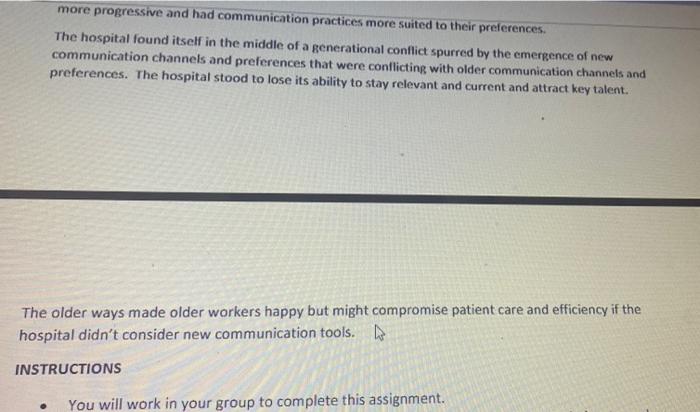
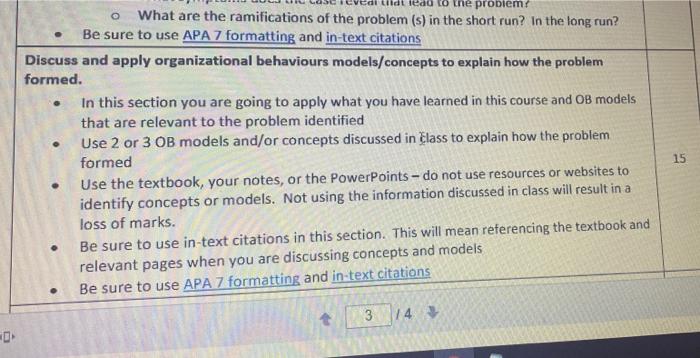
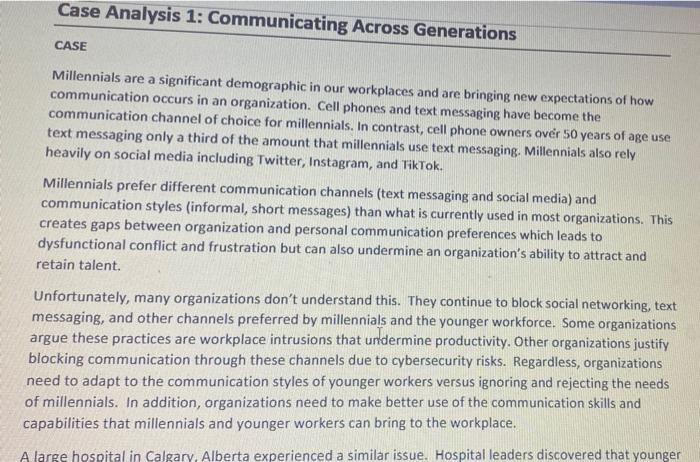
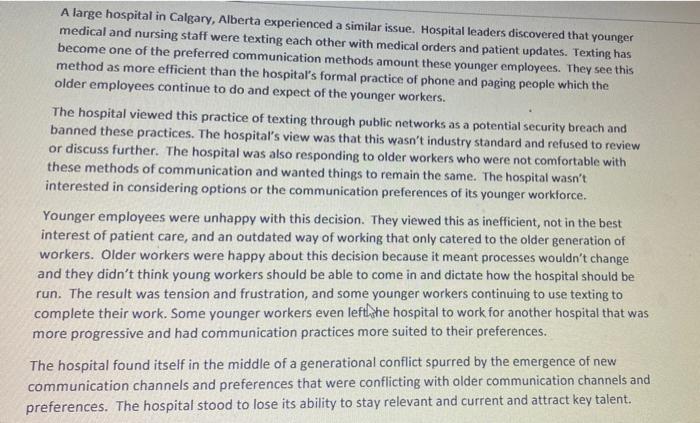
Case Analysis 1: Communicating Across Generations CASE Millennials are a significant demographic in our workplaces and are bringing new expectations of how communication occurs in an organization. Cell phones and text messaging have become the communication channel of choice for millennials. In contrast, cell phone owners over 50 years of age use text messaging only a third of the amount that millennials use text messaging. Millennials also rely heavily on social media including Twitter, Instagram, and TikTok. Millennials prefer different communication channels (text messaging and social media) and communication styles (informal, short messages) than what is currently used in most organizations. This creates gaps between organization and personal communication preferences which leads to dysfunctional conflict and frustration but can also undermine an organization's ability to attract and retain talent. Unfortunately, many organizations don't understand this. They continue to block social networking, text messaging, and other channels preferred by millennials and the younger workforce. Some organizations argue these practices are workplace intrusions that undermine productivity. Other organizations justify blocking communication through these channels due to cybersecurity risks. Regardless, organizations need to adapt to the communication styles of younger workers versus ignoring and rejecting the needs of millennials. In addition, organizations need to make better use of the communication skills and capabilities that millennials and younger workers can bring to the workplace. A large hospital in Calgary, Alberta experienced a similar issue. Hospital leaders discovered that younger A large hospital in Calgary, Alberta experienced a similar issue. Hospital leaders discovered that younger medical and nursing staff were texting each other with medical orders and patient updates. Texting has become one of the preferred communication methods amount these younger employees. They see this method as more efficient than the hospital's formal practice of phone and paging people which the older employees continue to do and expect of the younger workers. The hospital viewed this practice of texting through public networks as a potential security breach and banned these practices. The hospital's view was that this wasn't industry standard and refused to review or discuss further. The hospital was also responding to older workers who were not comfortable with these methods of communication and wanted things to remain the same. The hospital wasn't interested in considering options or the communication preferences of its younger workforce. Younger employees were unhappy with this decision. They viewed this as inefficient, not in the best interest of patient care, and an outdated way of working that only catered to the older generation of workers. Older workers were happy about this decision because it meant processes wouldn't change and they didn't think young workers should be able to come in and dictate how the hospital should be run. The result was tension and frustration, and some younger workers continuing to use texting to complete their work. Some younger workers even left he hospital to work for another hospital that was more progressive and had communication practices more suited to their preferences. The hospital found itself in the middle of a generational conflict spurred by the emergence of new communication channels and preferences that were conflicting with older communication channels and preferences. The hospital stood to lose its ability to stay relevant and current and attract key talent. more progressive and had communication practices more suited to their preferences The hospital found itself in the middle of a generational conflict spurred by the emergence of new communication channels and preferences that were conflicting with older communication channels and preferences. The hospital stood to lose its ability to stay relevant and current and attract key talent. The older ways made older workers happy but might compromise patient care and efficiency if the hospital didn't consider new communication tools. INSTRUCTIONS You will work in your group to complete this assignment. tildi o What are the ramifications of the problem (s) in the short run? In the long run? to the problem? Be sure to use APA 7 formatting and in-text citations Discuss and apply organizational behaviours models/concepts to explain how the problem formed. In this section you are going to apply what you have learned in this course and OB models that are relevant to the problem identified Use 2 or 3 OB models and/or concepts discussed in class to explain how the problem formed Use the textbook, your notes, or the PowerPoints - do not use resources or websites to identify concepts or models. Not using the information discussed in class will result in a loss of marks. Be sure to use in-text citations in this section. This will mean referencing the textbook and relevant pages when you are discussing concepts and models Be sure to use APA 7 formatting and in-text citations 15 3 14

Step by Step Solution

There are 3 Steps involved in it

1 Expert Approved Answer
Step: 1 Unlock blur-text-image

Question Has Been Solved by an Expert!

Get step-by-step solutions from verified subject matter experts

Step: 2 Unlock
Step: 3 Unlock

Students Have Also Explored These Related General Management Questions!