Question: Hello, I need help with solving this assignment Follow these steps describing how the MIRR is calculated to complete the table for Project X. .
Hello, I need help with solving this assignment
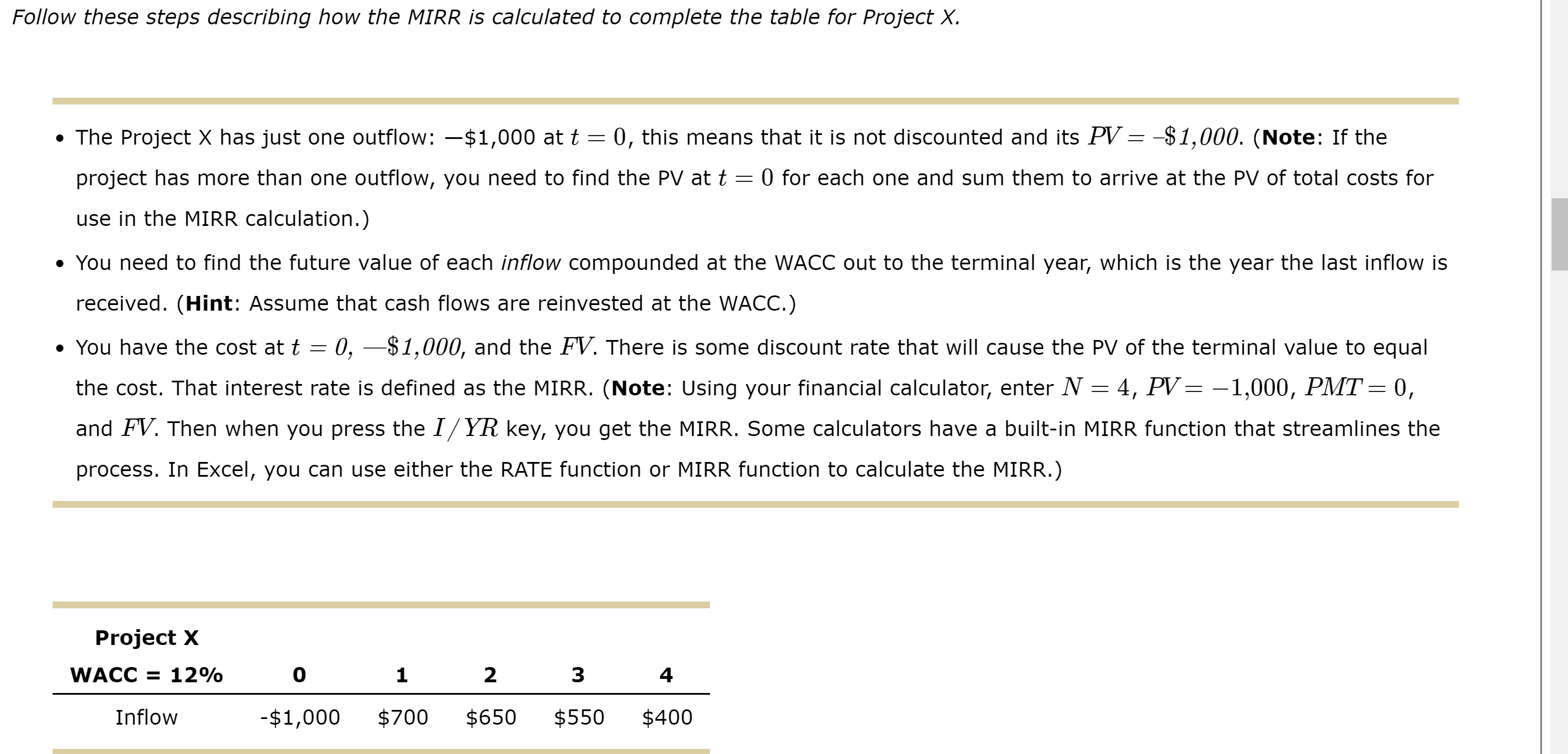
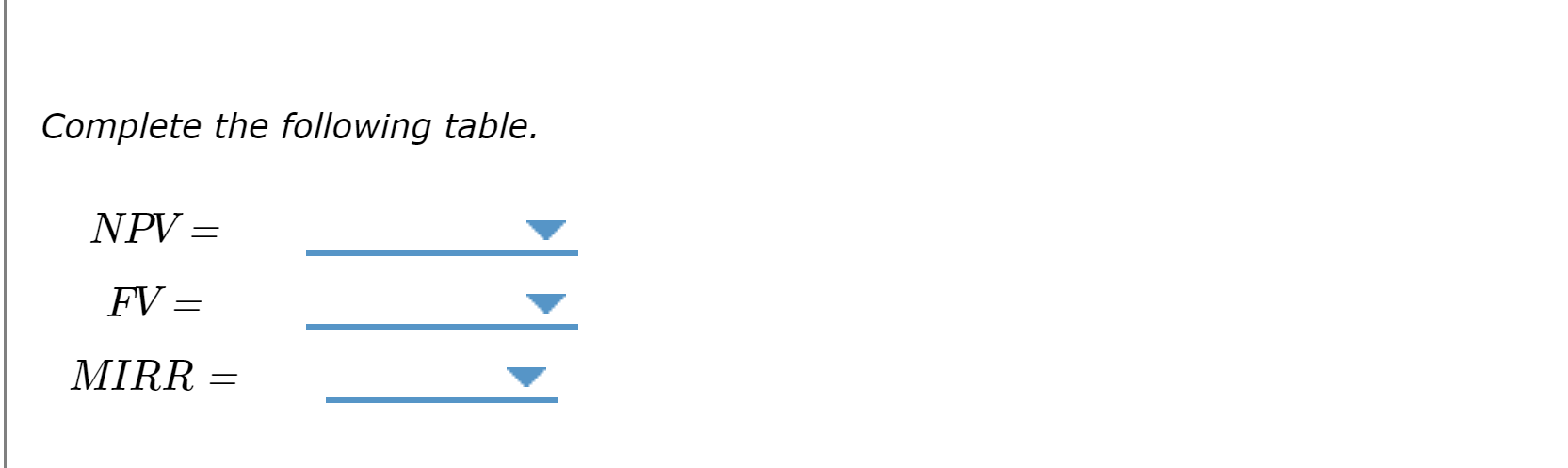
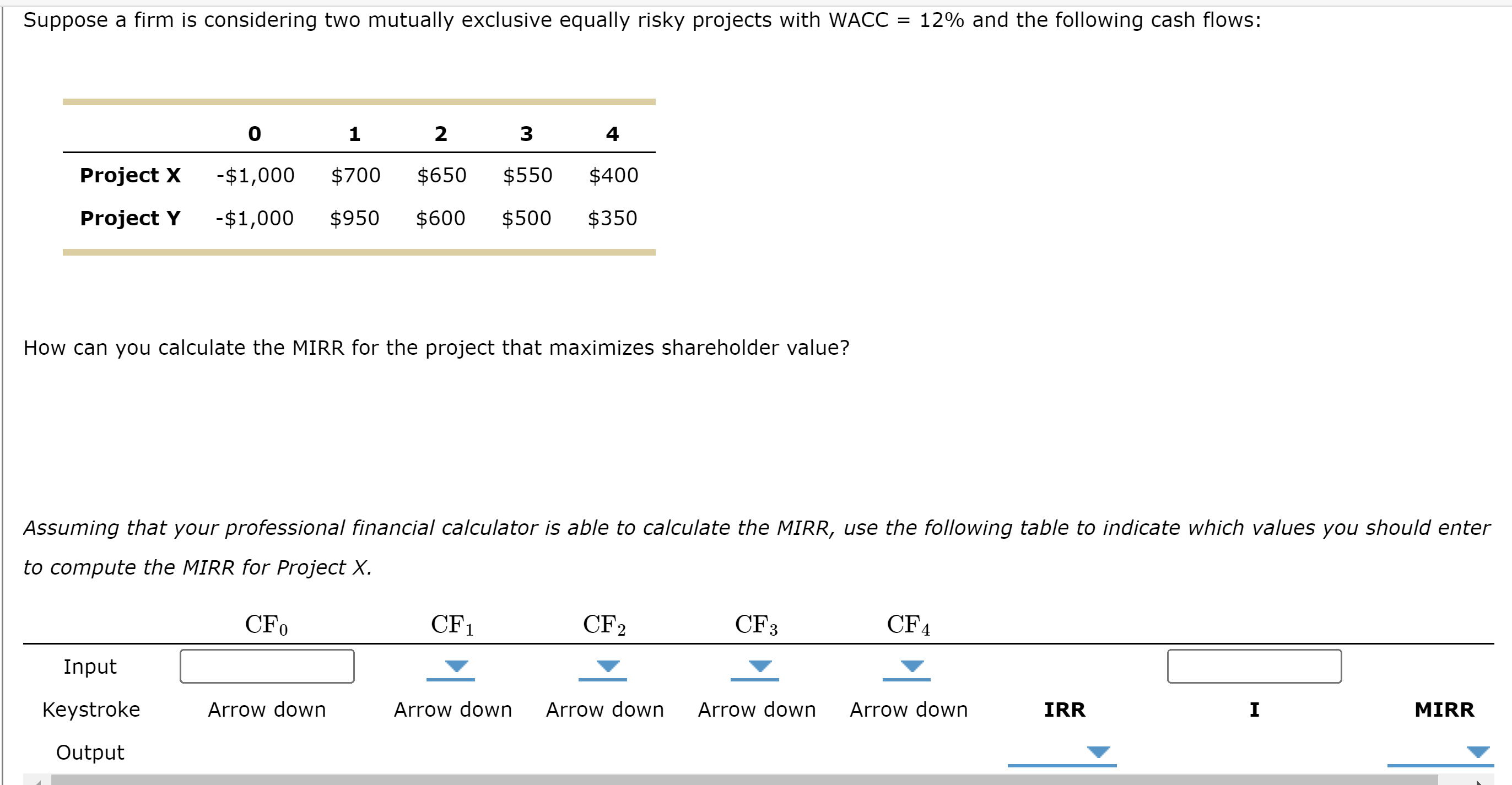
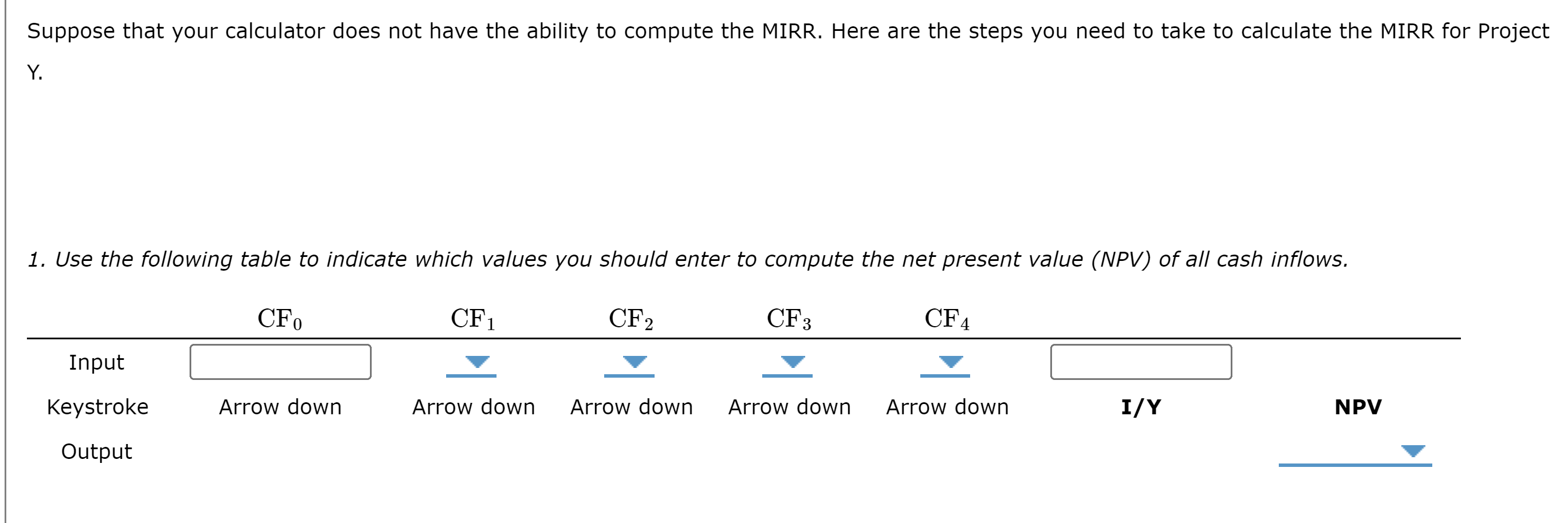
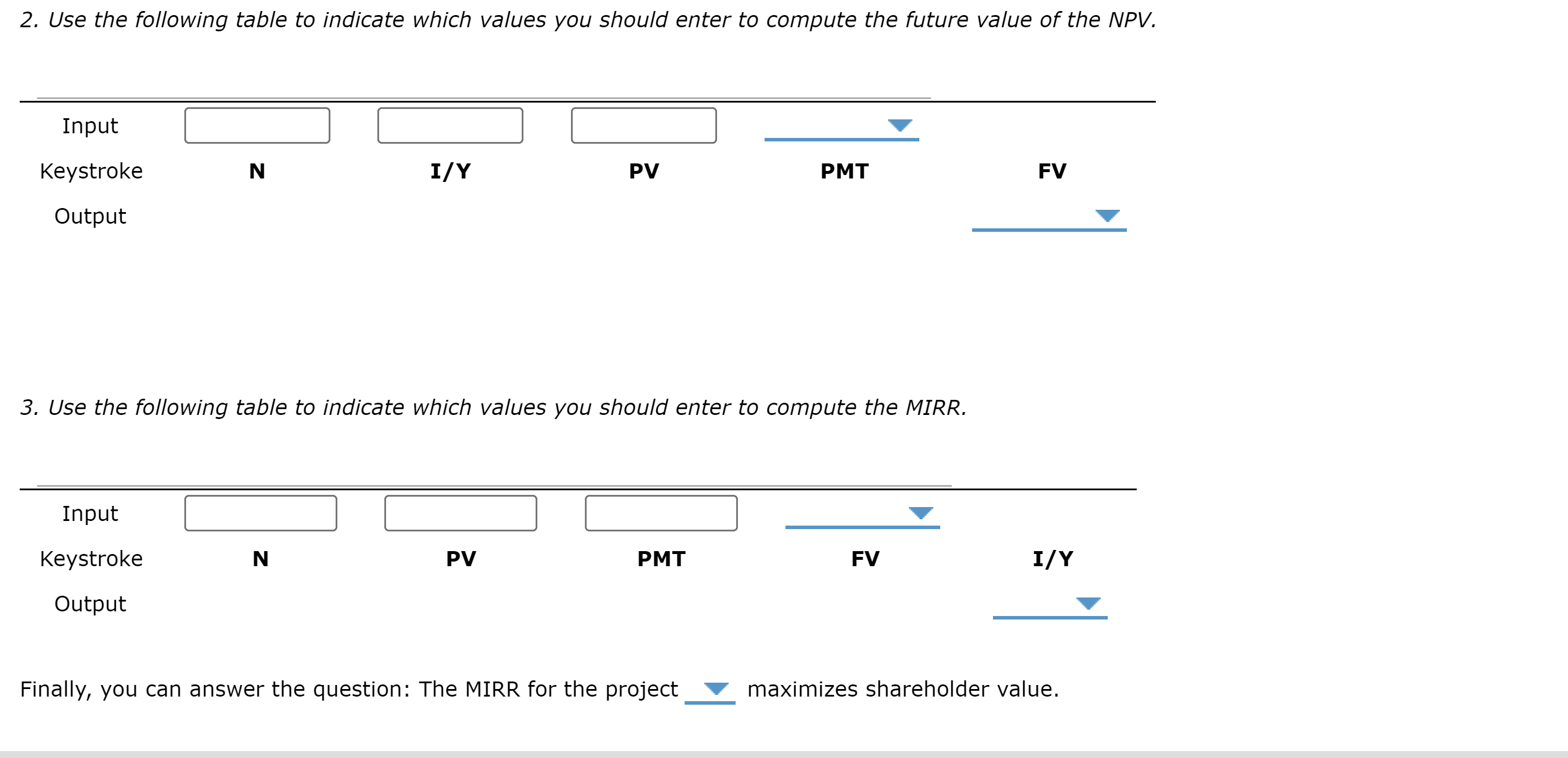
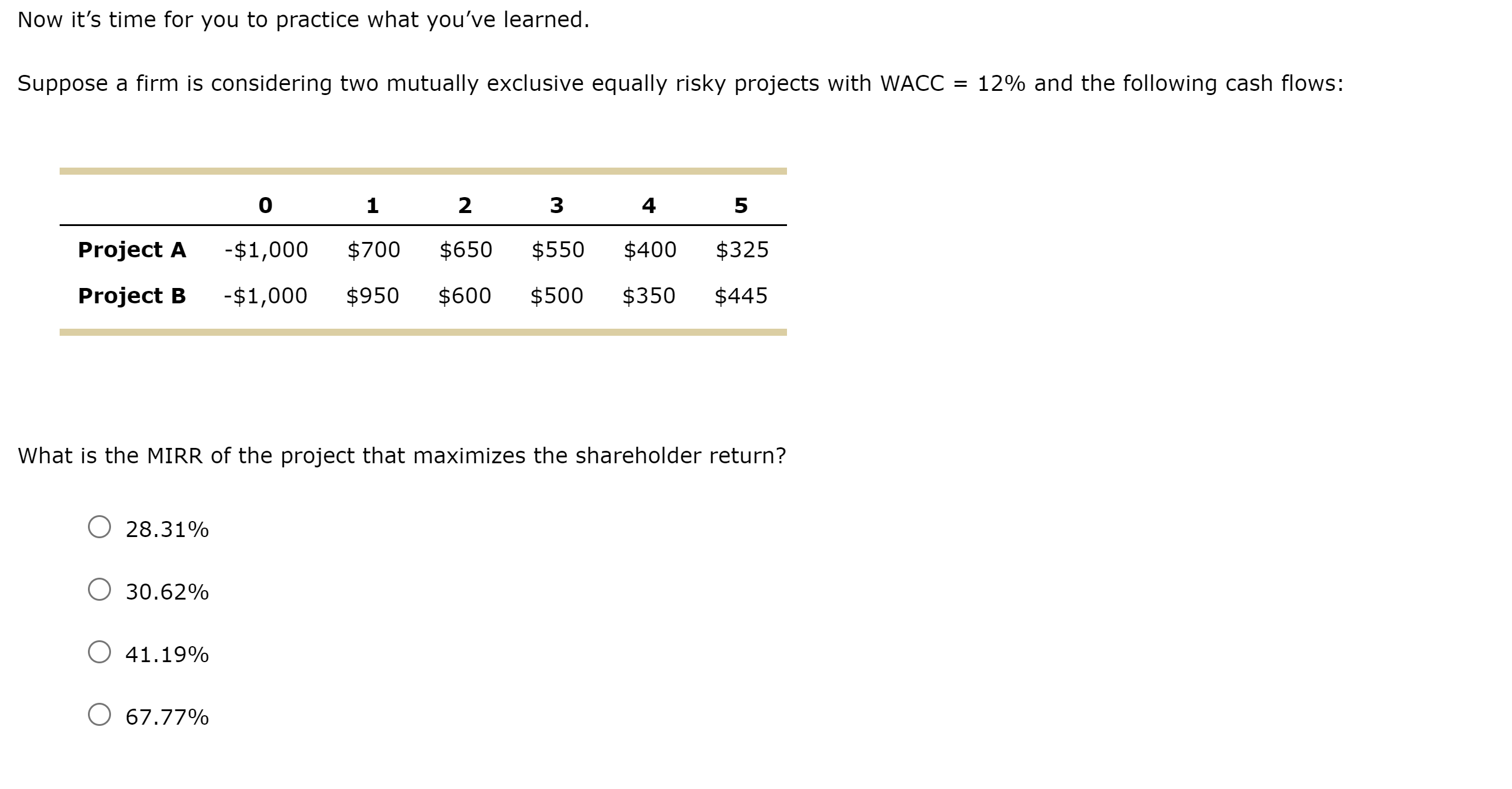
Follow these steps describing how the MIRR is calculated to complete the table for Project X. . The Project X has just one outflow: $1,000 at t : 0, this means that it is not discounted and its W: $1,000. (Note: If the project has more than one outflow, you need to find the PV at t : 0 for each one and sum them to arrive at the PV of total costs for use in the MIRR calculation.) 0 You need to find the future value of each inflow compounded at the WACC out to the terminal year, which is the year the last inflow is received. (Hint: Assume that cash flows are reinvested at the WACC.) 0 You have the cost at t : 0, 7$1,000, and the FV. There is some discount rate that will cause the PV of the terminal value to equal the cost. That interest rate is defined as the MIRR. (Note: Using your financial calculator, enter N : 4, PV: 1,000, PMT: 0, and FV. Then when you press the I/YR key, you get the MIRR. Some calculators have a built-in MIRR function that streamlines the process. In Excel, you can use either the RATE function or MIRR function to calculate the MIRR.) Project X WACC = 12% 0 1 2 3 4 Inflow -$1,000 $700 $650 $550 $400 Complete the following table. NPV = FV = MIRR =Suppose a firm is considering two mutually exclusive equally risky projects with WACC = 12% and the following cash flows: 0 1 2 3 4 Project X $1,000 $700 $650 $550 $400 Project Y -$1,000 $950 $600 $500 $350 How can you calculate the MIRR for the project that maximizes shareholder value? Assuming that your professional nancial calculator is able to calculate the MIRR, use the following table to indicate which values you should enter to compute the MIRR for Project X. CFO CF1 CF2 CF3 CF4 Input :1 v v v v [:J Keystroke Arrow down Arrow down Arrow down Arrow down Arrow down IRR I MIRR Output V ______v Suppose that your calculator does not have the ability to compute the MIRR. Here are the steps you need to take to calculate the MIRR for Project Y. 1. Use the following table to indicate which values you should enter to compute the net present value (NPV) of all cash inflows. CFO CF1 CF2 CF3 CF4 Input :1 v v v _v :1 Keystroke Arrow down Arrow down Arrow down Arrow down Arrow down I/Y NPV Output v 2. Use the following table to indicate which values you should enter to compute the future value of the NPV. Input Keystroke N I/Y PV PMT FV Output 3. Use the following table to indicate which values you should enter to compute the MIRR. Input Keystroke N PV PMT FV I/Y Output Finally, you can answer the question: The MIRR for the project maximizes shareholder value.Now it's time for you to practice what you've learned. Suppose a firm is considering two mutually exclusive equally risky projects with WACC = 12% and the following cash flows: 0 1 2 3 4 5 project A -$1,000 $700 $650 $550 $400 $325 Project B -$1,000 $950 $600 $500 $350 $445 What is the MIRR of the project that maximizes the shareholder return? 0 28.31% 0 30.62% 0 41.19% 0 67.77%
Step by Step Solution
There are 3 Steps involved in it
1 Expert Approved Answer
Step: 1 Unlock
Question Has Been Solved by an Expert!
Get step-by-step solutions from verified subject matter experts
Step: 2 Unlock
Step: 3 Unlock
Students Have Also Explored These Related Finance Questions!









 Study Help