







Question: Hello, I really need help with this I've been trying to understand it for what feels like forever to the point where I bought this
Hello, I really need help with this I've been trying to understand it for what feels like forever to the point where I bought this subscription.
Sorry, I know it's a lot of reading, but I just really need the help right now.
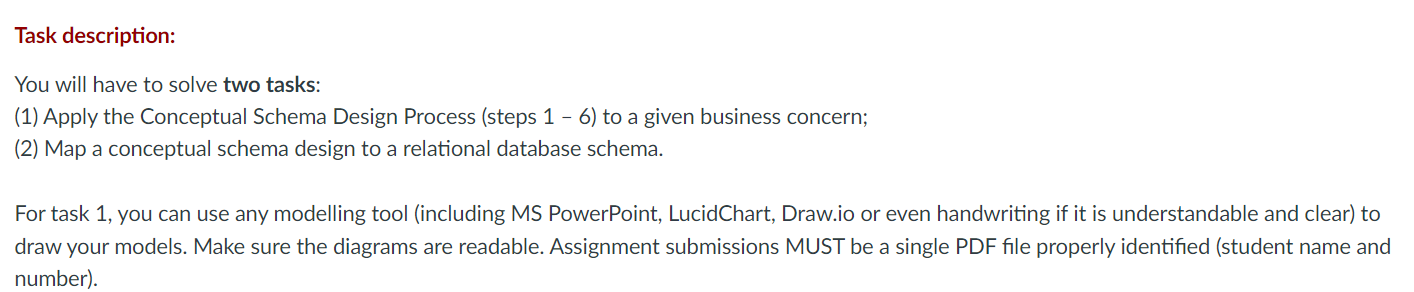
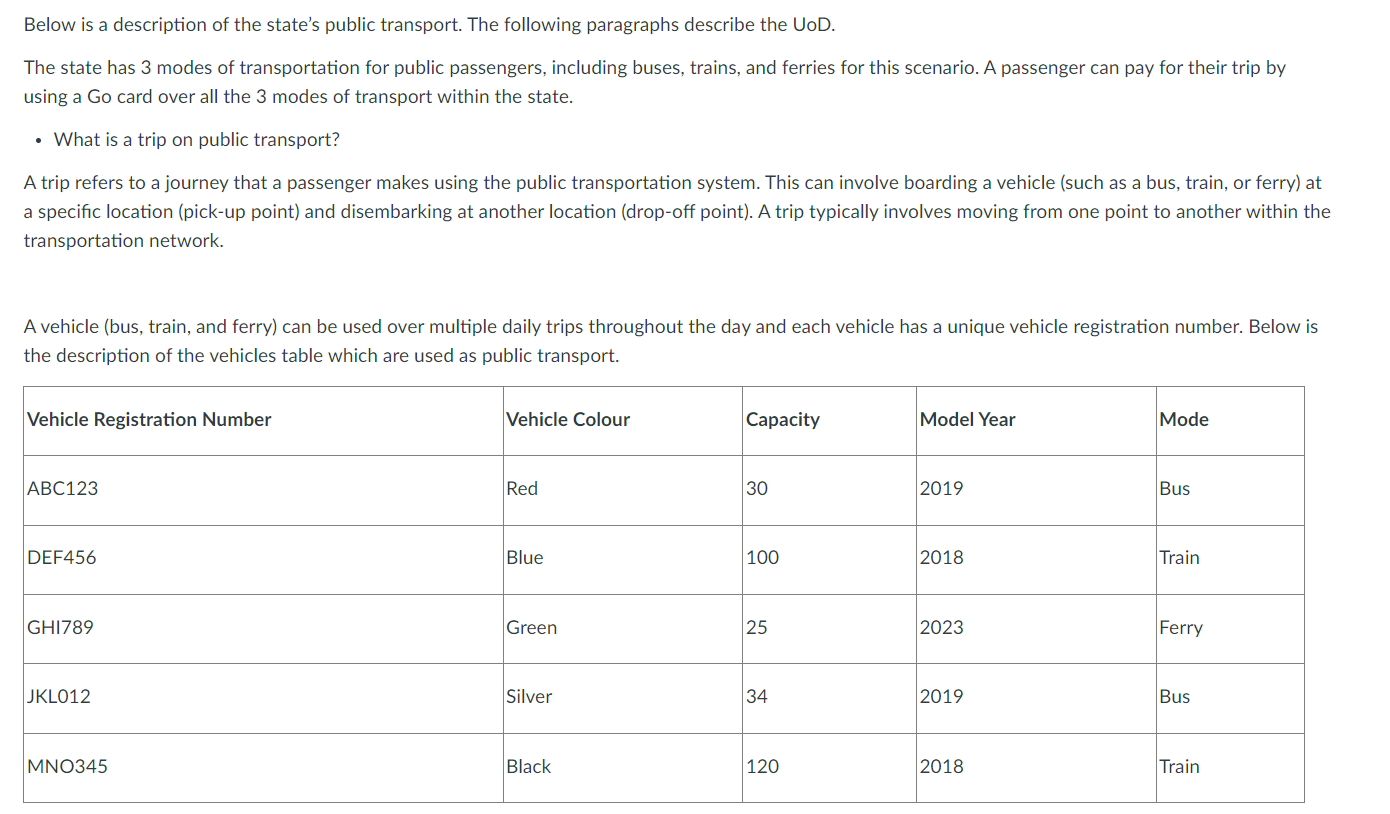
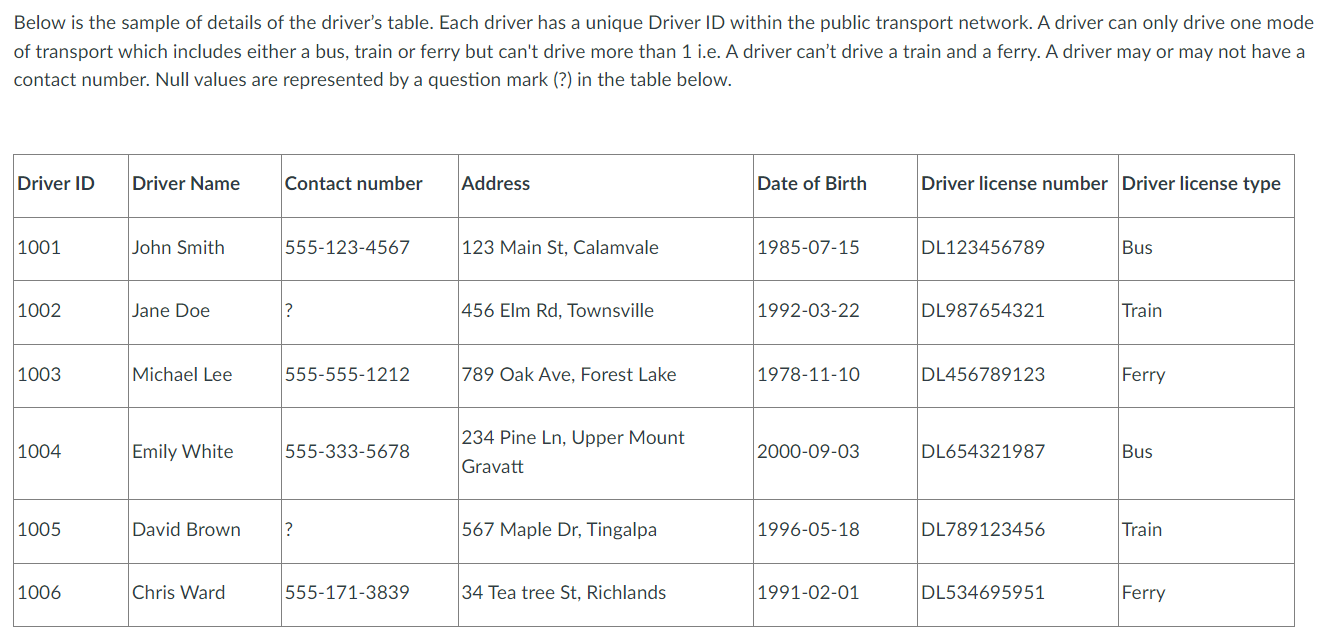
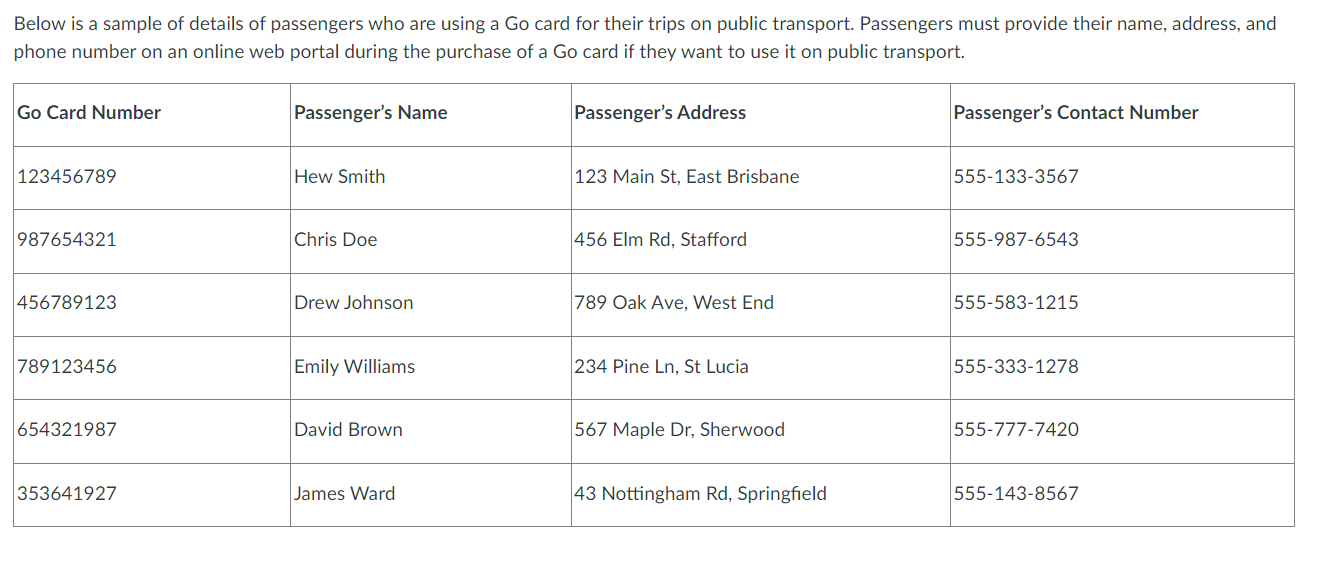
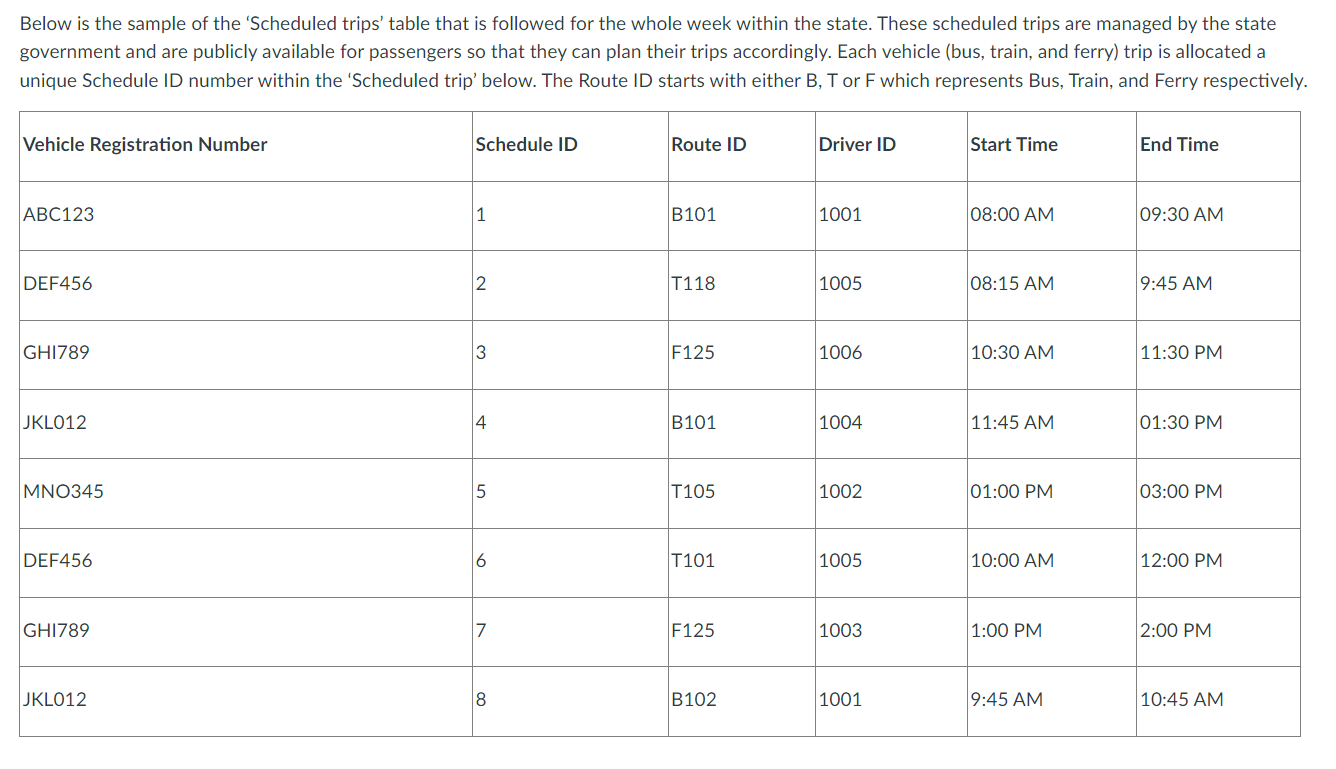
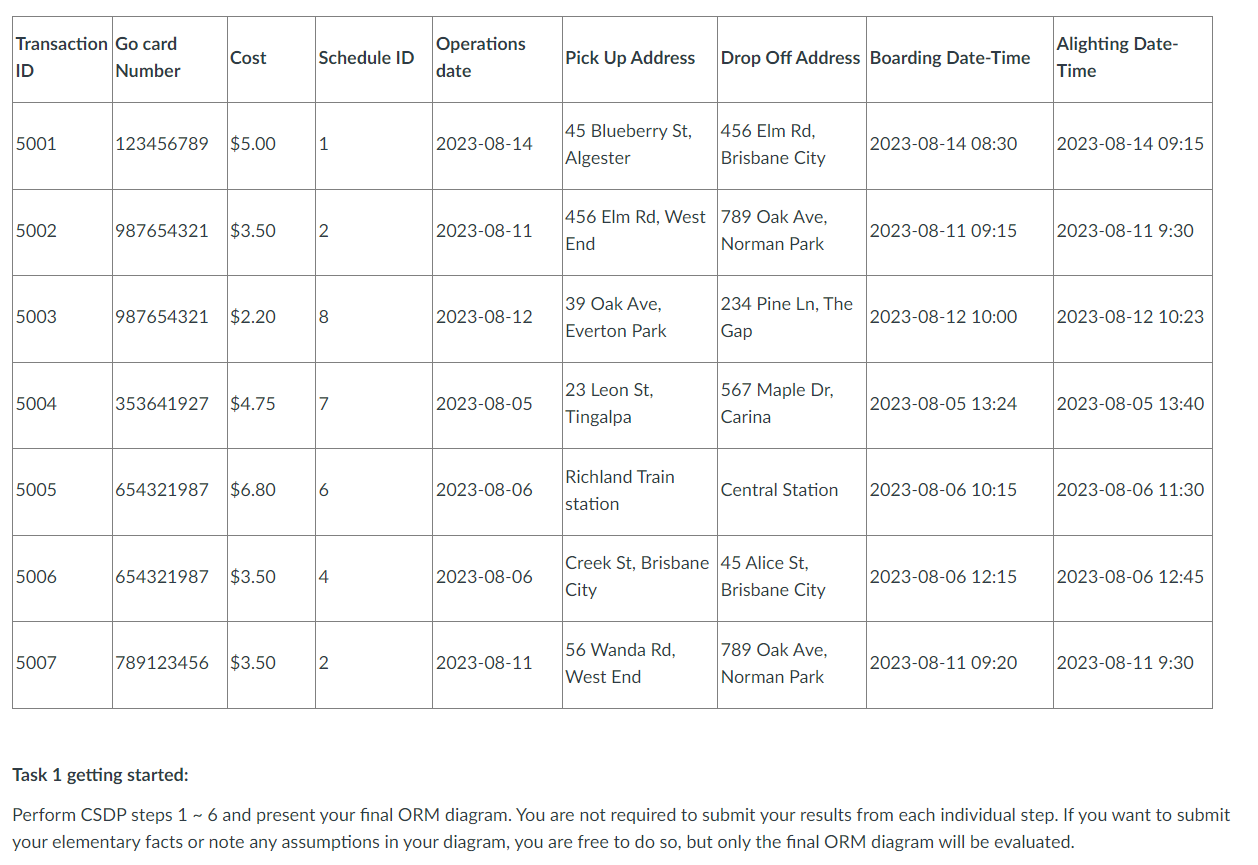
Below is the sample of details of the driver's table. Each driver has a unique Driver ID within the public transport network. A driver can only drive one mode of transport which includes either a bus, train or ferry but can't drive more than 1 i.e. A driver can't drive a train and a ferry. A driver may or may not have a contact number. Null values are represented by a question mark (?) in the table below. Below is the sample of the 'Scheduled trips' table that is followed for the whole week within the state. These scheduled trips are managed by the state government and are publicly available for passengers so that they can plan their trips accordingly. Each vehicle (bus, train, and ferry) trip is allocated a unique Schedule ID number within the 'Scheduled trip' below. The Route ID starts with either B, T or F which represents Bus, Train, and Ferry respectively. Below is a description of the state's public transport. The following paragraphs describe the UoD. The state has 3 modes of transportation for public passengers, including buses, trains, and ferries for this scenario. A passenger can pay for their trip by using a Go card over all the 3 modes of transport within the state. - What is a trip on public transport? A trip refers to a journey that a passenger makes using the public transportation system. This can involve boarding a vehicle (such as a bus, train, or ferry) at a specific location (pick-up point) and disembarking at another location (drop-off point). A trip typically involves moving from one point to another within the transportation network. A vehicle (bus, train, and ferry) can be used over multiple daily trips throughout the day and each vehicle has a unique vehicle registration number. Below is the description of the vehicles table which are used as public transport. Below is a sample of details of passengers who are using a Go card for their trips on public transport. Passengers must provide their name, address, and phone number on an online web portal during the purchase of a Go card if they want to use it on public transport. Task description: You will have to solve two tasks: (1) Apply the Conceptual Schema Design Process (steps 1 - 6) to a given business concern; (2) Map a conceptual schema design to a relational database schema. For task 1, you can use any modelling tool (including MS PowerPoint, LucidChart, Draw.io or even handwriting if it is understandable and clear) to draw your models. Make sure the diagrams are readable. Assignment submissions MUST be a single PDF file properly identified (student name and number). Task 1 getting started: Perform CSDP steps 16 and present your final ORM diagram. You are not required to submit your results from each individual step. If you want to submit your elementary facts or note any assumptions in your diagram, you are free to do so, but only the final ORM diagram will be evaluated
Step by Step Solution
There are 3 Steps involved in it

Get step-by-step solutions from verified subject matter experts
 Study Help