Question: hello please help me answer these short questions. 1. Click and drag the given steps (in the right) to their corresponding step names (in the
hello please help me answer these short questions.
1.
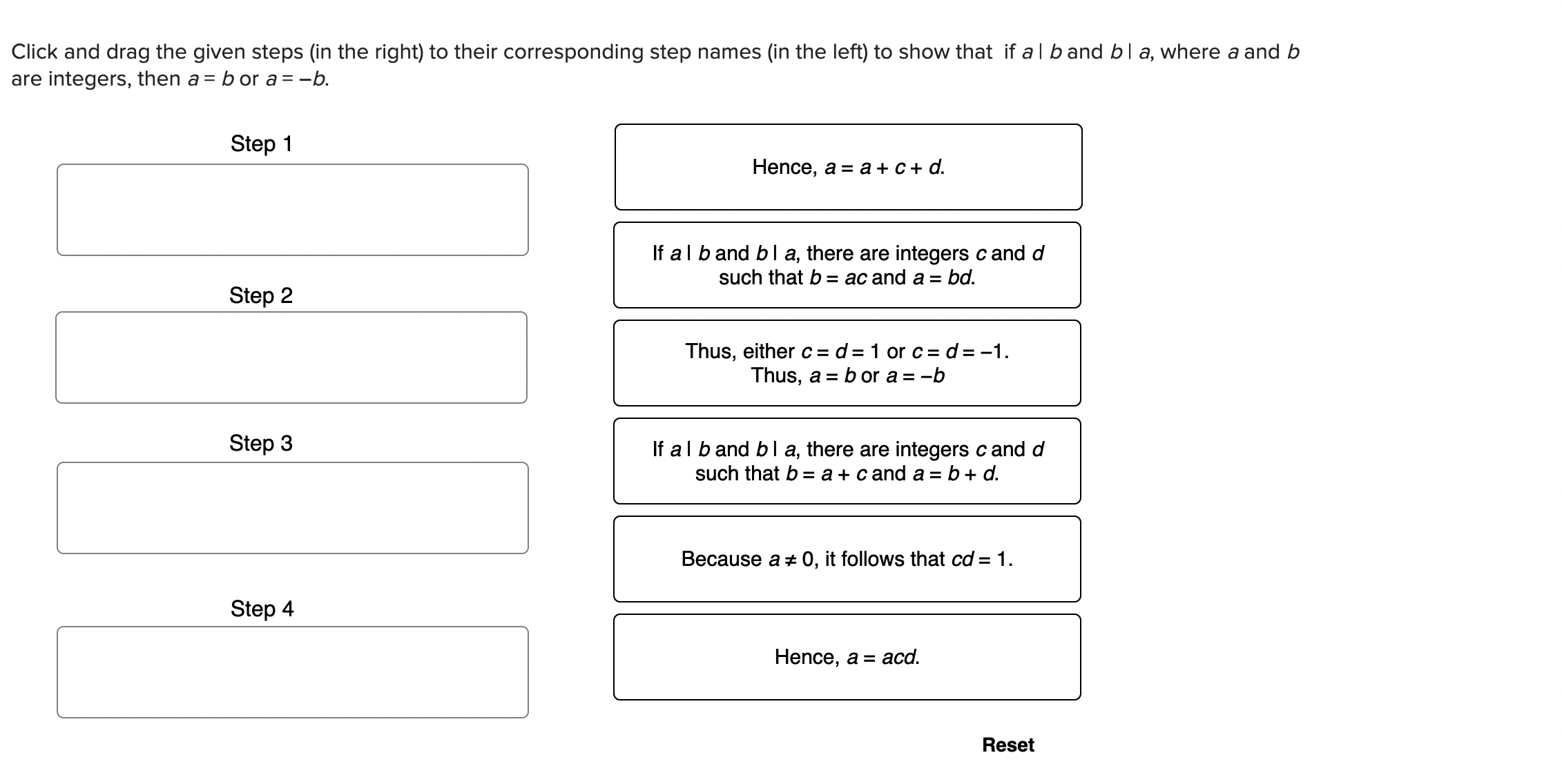
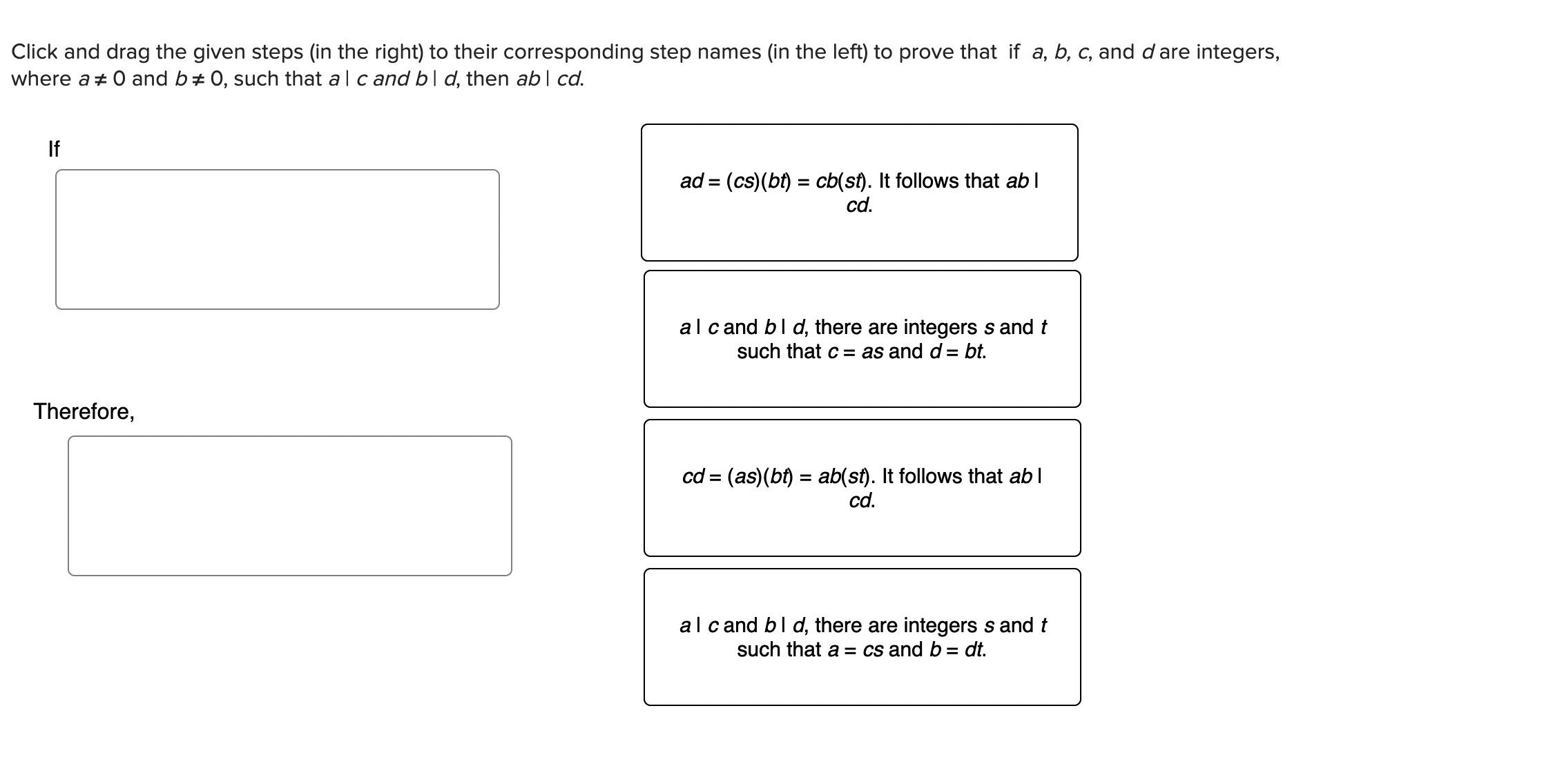
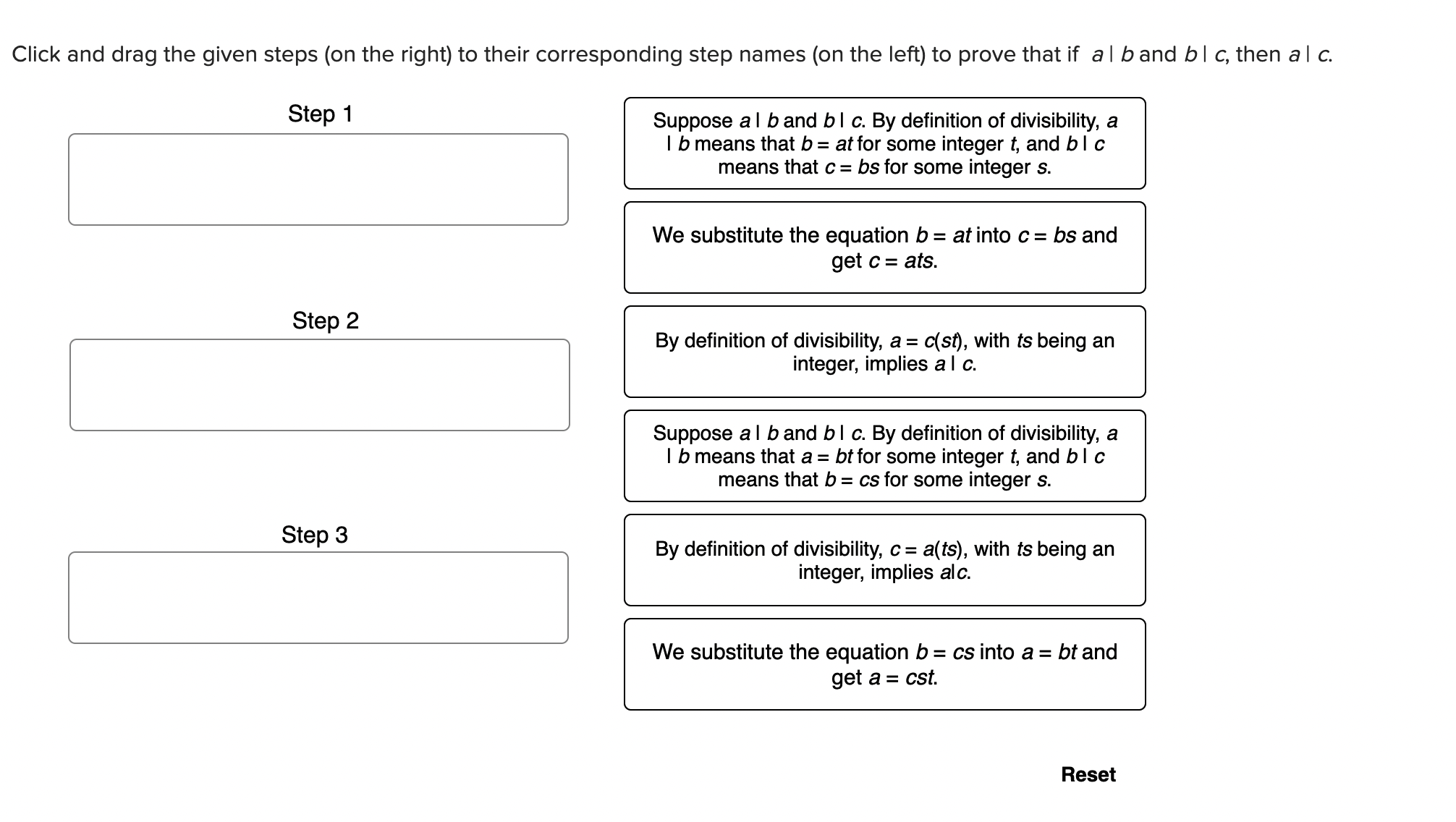
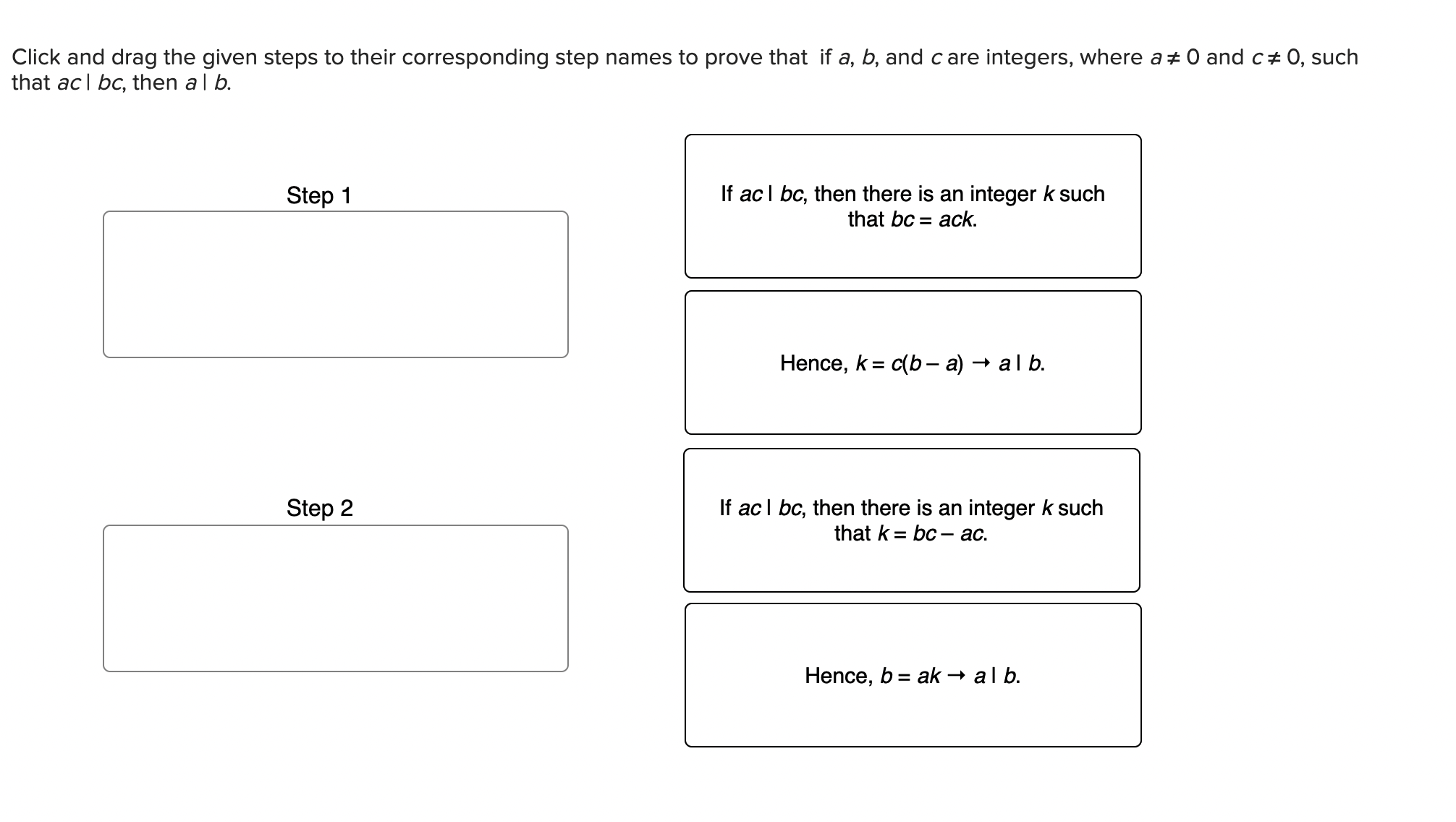
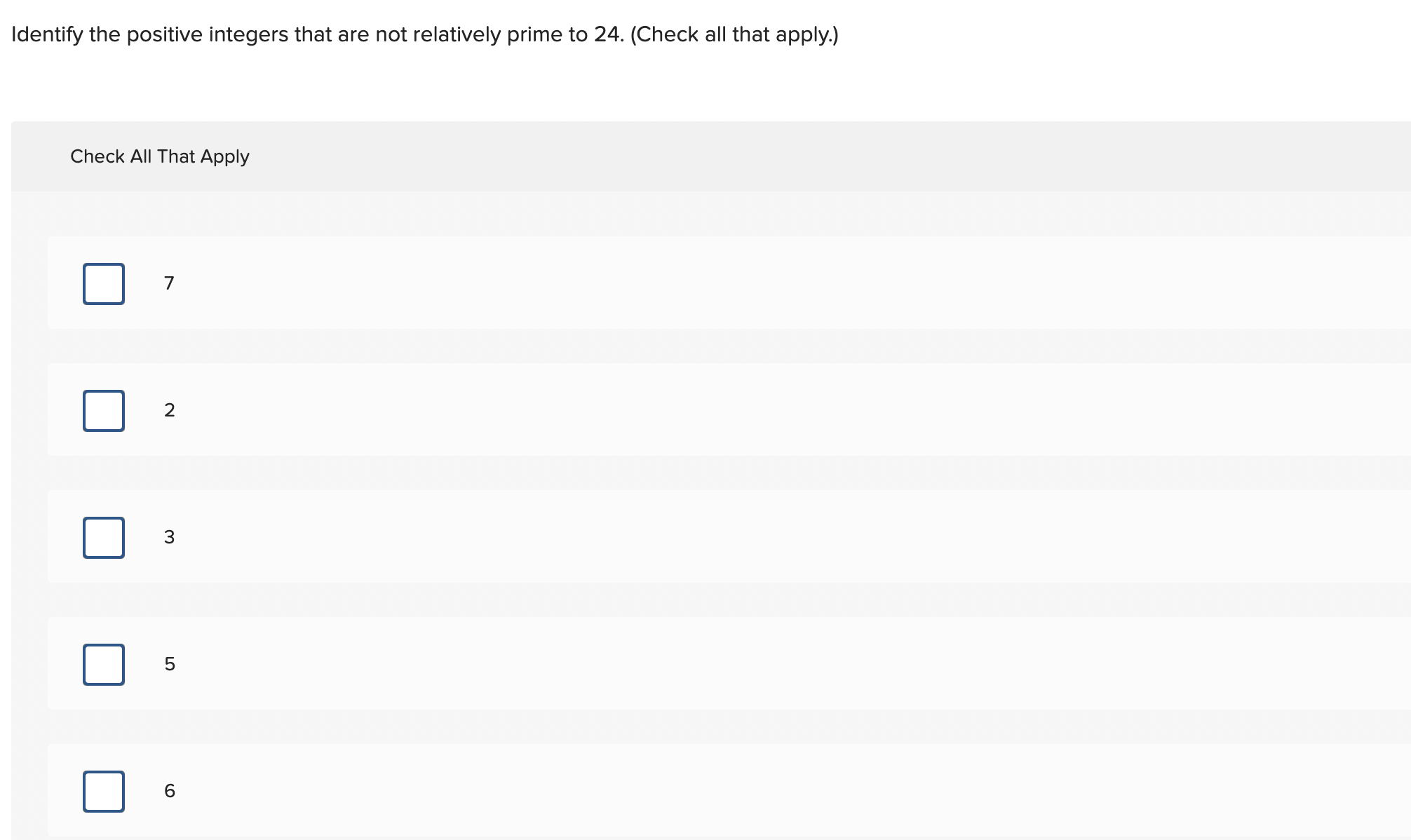
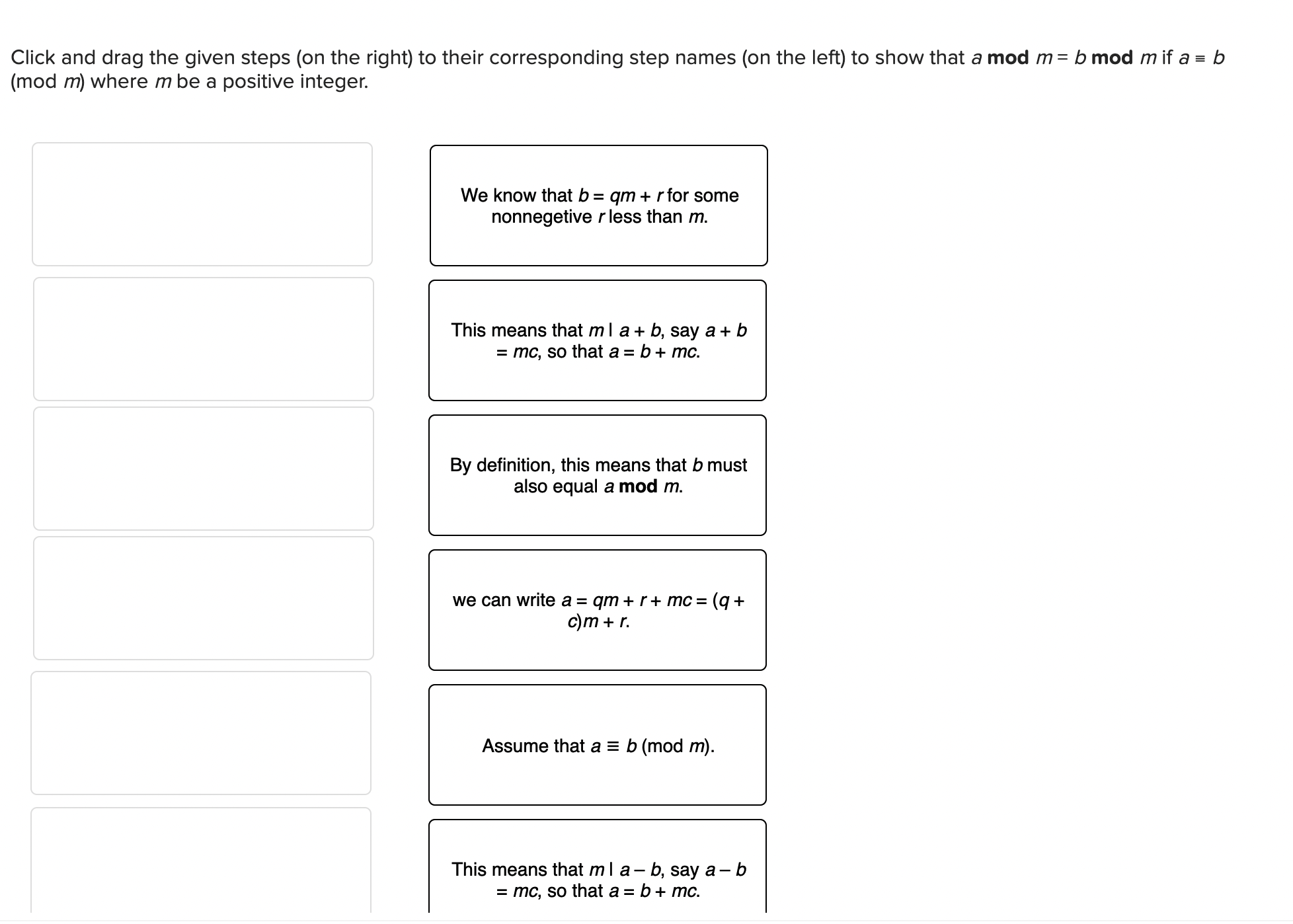
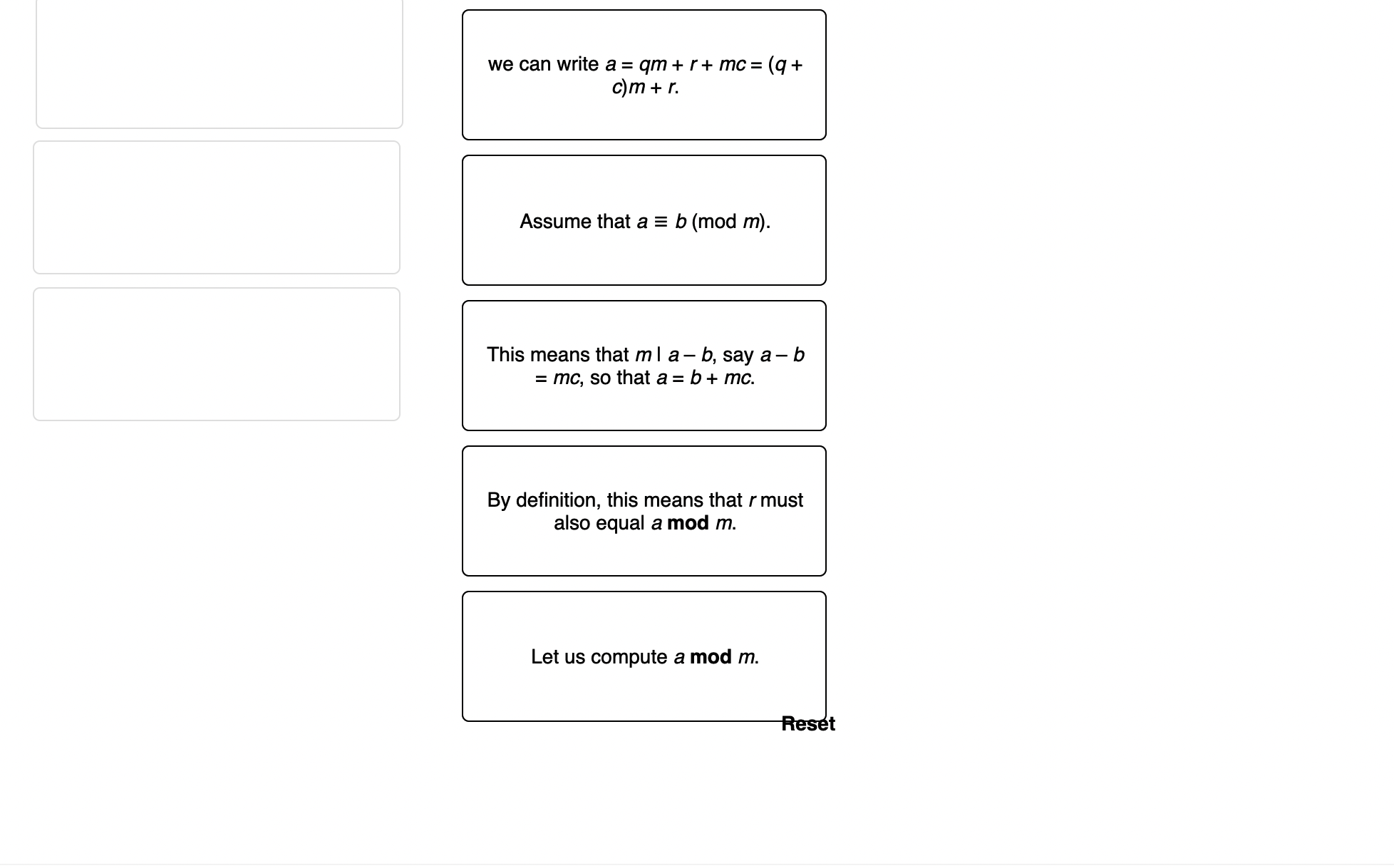
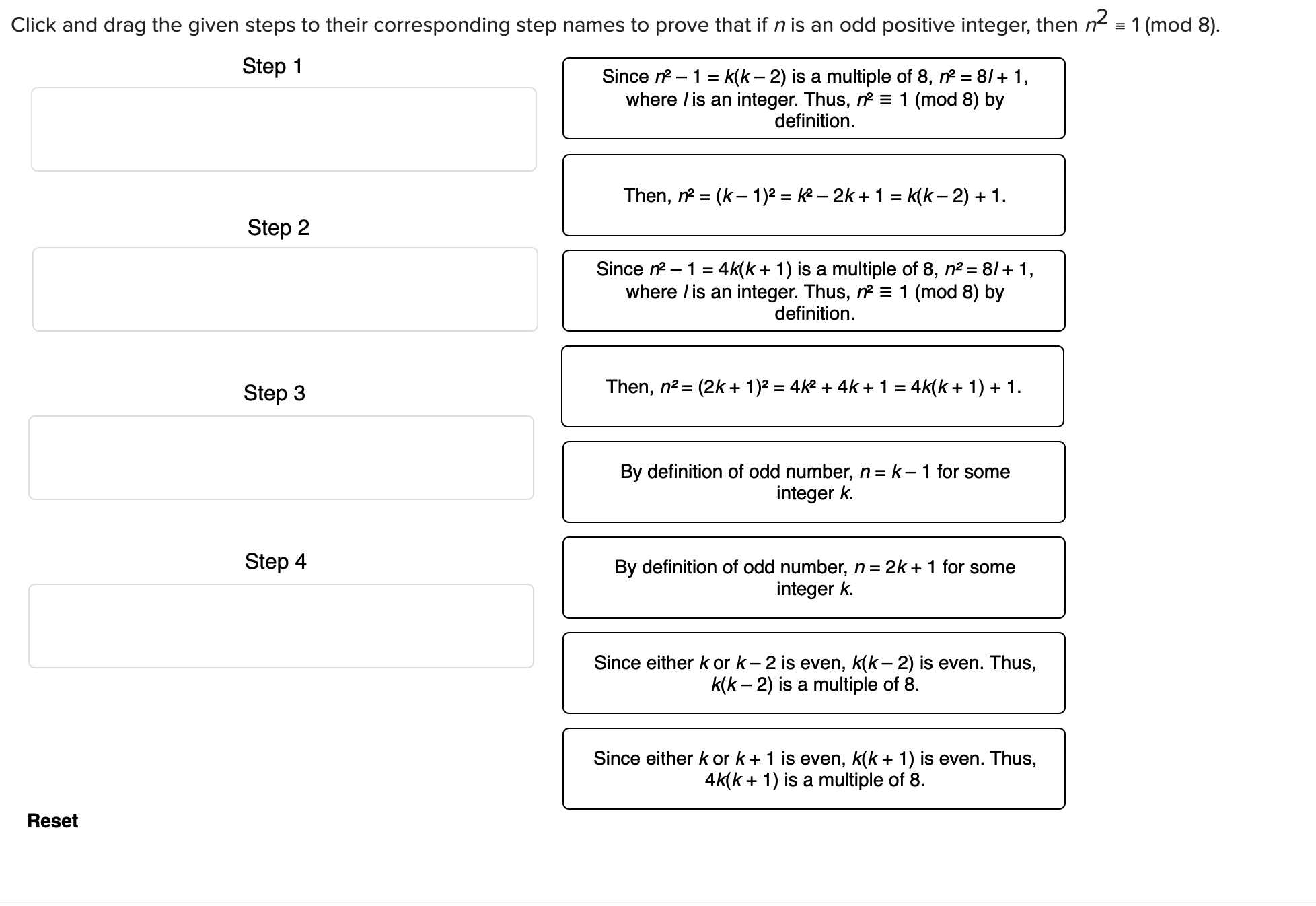
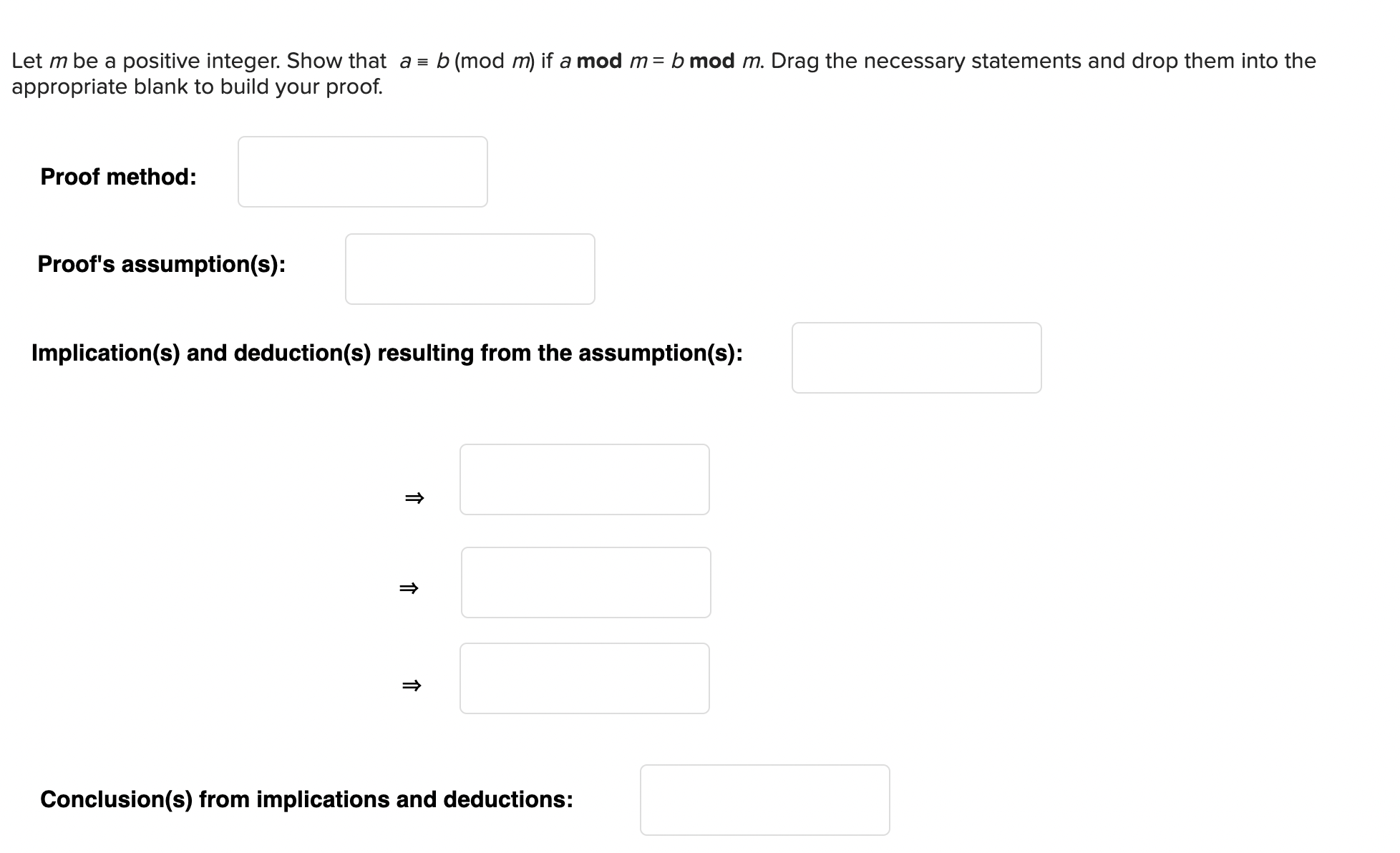
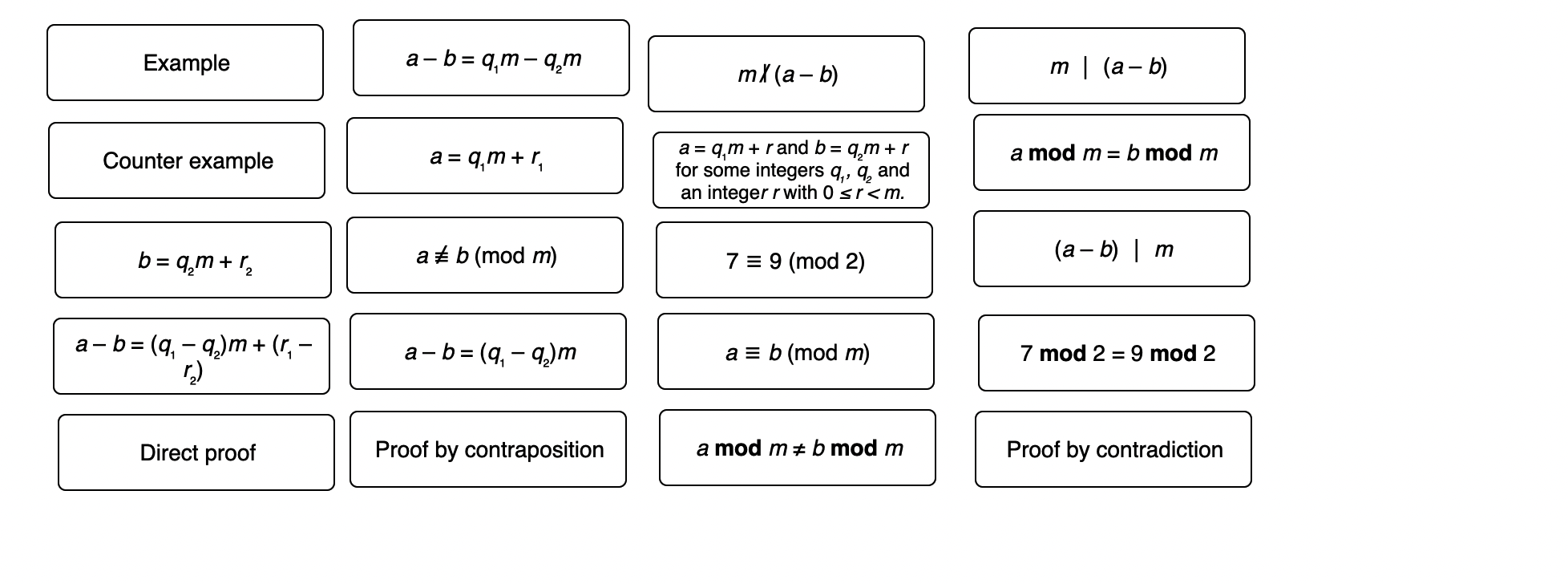
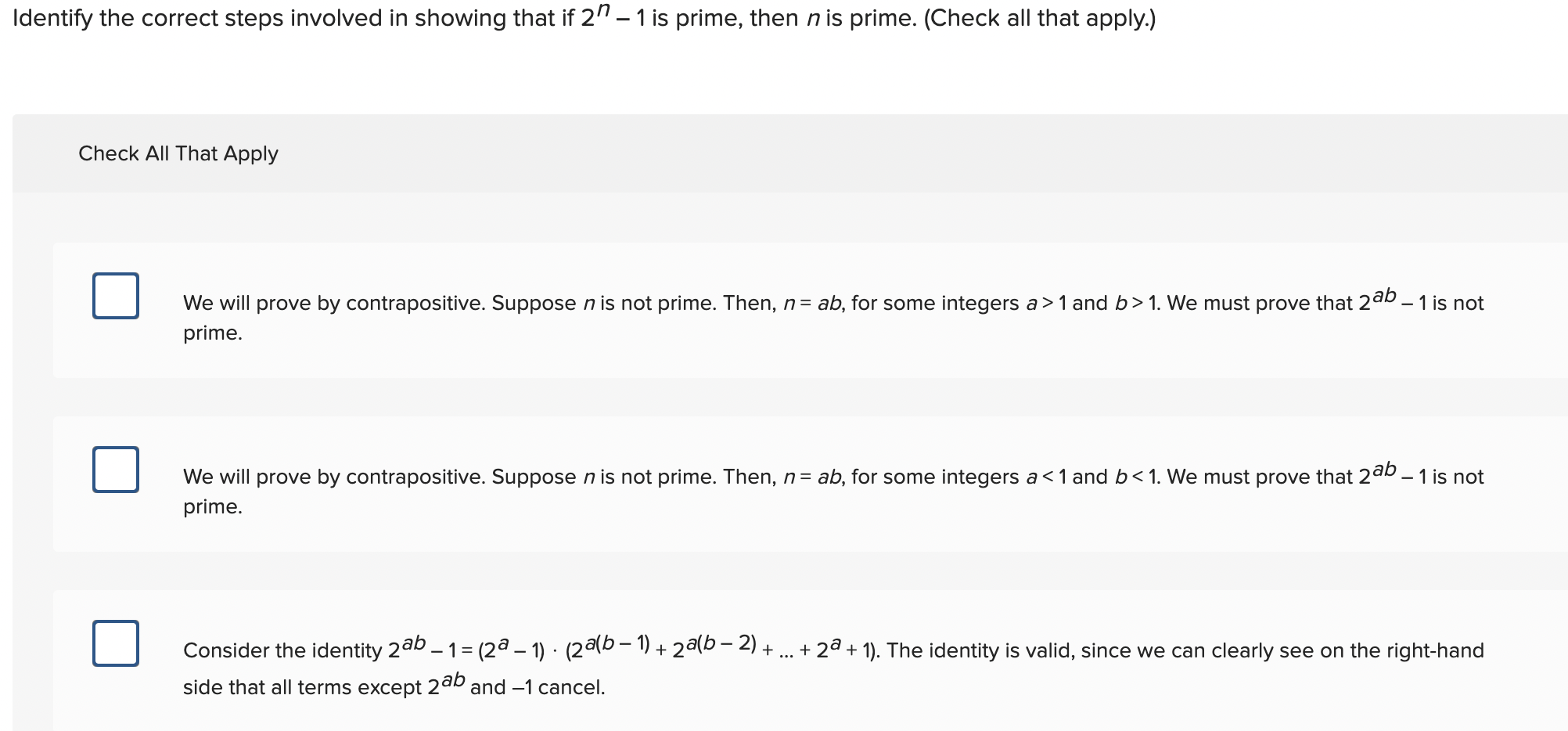
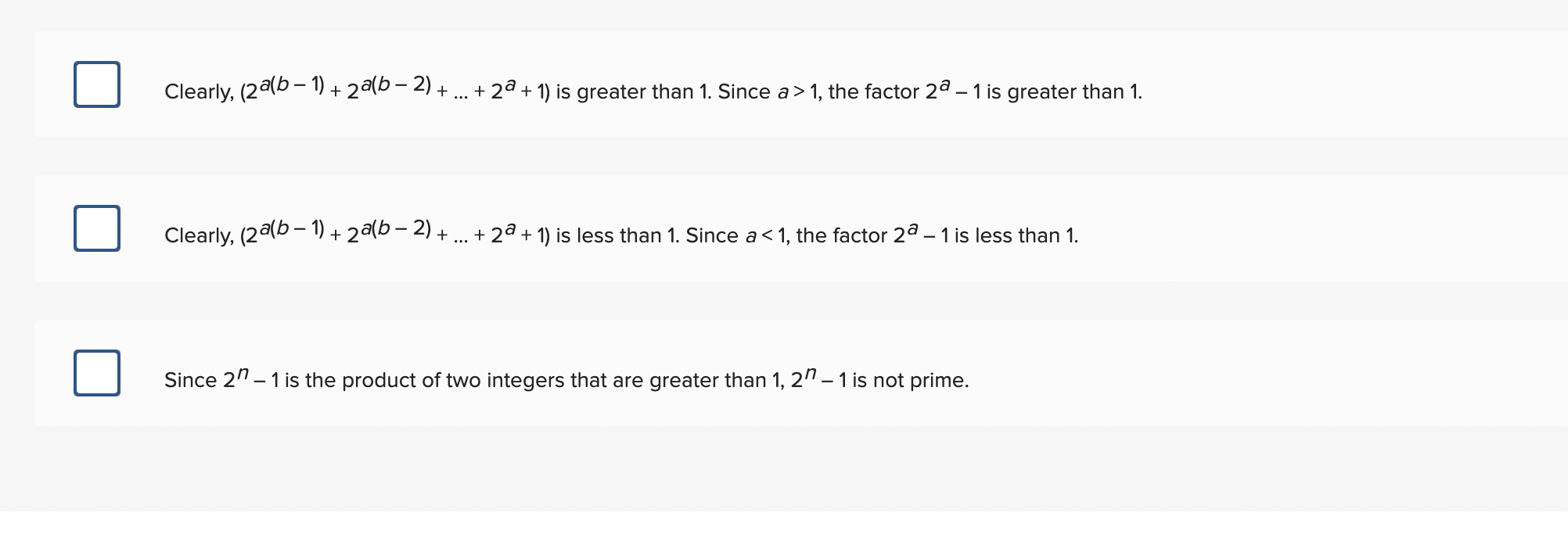
Click and drag the given steps (in the right) to their corresponding step names (in the left) to show that if a l b and bla, where a and b are integers, then a = b or a = -b. Step 1 Hence, a = a + c+ d. If a l b and bla, there are integers c and d such that b = ac and a = bd. Step 2 Thus, either c = d= 1 or c = d = -1. Thus, a = bor a = -b Step 3 If a l b and bla, there are integers c and d such that b = a + c and a = b + d. Because a # 0, it follows that cd = 1. Step 4 Hence, a = acd. ResetClick and drag the given steps (in the right) to their corresponding step names (in the left) to prove that if a, b, c, and dare integers, where a # 0 and b # 0, such that al c and bl d, then ab | cd. If ad = (cs)(bt) = cb(st). It follows that ab | cd. al c and bl d, there are integers s and t such that c = as and d = bt. Therefore, cd = (as)(bt) = ab(st). It follows that ab l cd. al c and bl d, there are integers s and t such that a = cs and b = dt.Click and drag the given steps (on the right) to their corresponding step names (on the left) to prove that if a | b and bl C, then al c. 5'9P 1 Suppose a | b and bi 0. By definition of divisibility, a | b means that b = atfor some integer t, and b | 0 means that c = bs for some integer s. We substitute the equation b = at into c = bs and get 0 = ats. Step 2 . . . . . _ . . . . ' By definition of diVISIbility, a = C(st), With ts being an integer, implies at c. Suppose a | b and bi c. By definition of divisibility, a | b means that a = btfor some integer I, and b | 0 means that b = as for some integer 5. Step 3 By definition of divisibility, c = a(ts), with ts being an integer, implies alc. We substitute the equation b = as into a = D! and get a = 051'. Reset Click and drag the given steps to their corresponding step names to prove that if a, b, and care integers, where a # 0 and c # 0, such that acl bc, then al b. Step 1 If acl bc, then there is an integer k such that bc = ack. Hence, K = c(b - a) - alb. Step 2 If ac l bc, then there is an integer k such that k = bc- ac. Hence, b = ak - al b.Identify the positive integers that are not relatively prime to 24' (Check all that apply') Check All That Apply DECIDE] Click and drag the given steps (on the right) to their corresponding step names (on the left) to show that a mod m = b mod m if a = b (mod m) where m be a positive integer. We know that b = qm + r for some nonnegetive r less than m. This means that m l a + b, say a + b = mc, so that a = b + mc. By definition, this means that b must also equal a mod m. we can write a = qm + r+ mc = (q + c)m+r. Assume that a = b (mod m). This means that m l a - b, say a - b = mc, so that a = b + mc.we can write a = qm + r + mc = (q+ c)m + r. Assume that a = b (mod m). This means that ml a - b, say a - b = mc, so that a = b + mc. By definition, this means that r must also equal a mod m. Let us compute a mod m. ResetClick and drag the given steps to their corresponding step names to prove that if n is an odd positive integer, then n- = 1 (mod 8). Step 1 Since 12 - 1 = k(k - 2) is a multiple of 8, n2 = 8/ + 1, where / is an integer. Thus, /2 = 1 (mod 8) by definition. Then, 12 = (k - 1)2 = k2 - 2k + 1 = k(k-2) + 1. Step 2 Since n2 - 1 = 4k(k + 1) is a multiple of 8, n2 = 8/+ 1, where / is an integer. Thus, n2 = 1 (mod 8) by definition. Step 3 Then, n2 = (2k + 1)2 = 42 + 4k+ 1 = 4k(k + 1) + 1. By definition of odd number, n = k - 1 for some integer k. Step 4 By definition of odd number, n = 2k + 1 for some integer k. Since either k or k - 2 is even, k(k - 2) is even. Thus, K(k- 2) is a multiple of 8. Since either k or k + 1 is even, k(k + 1) is even. Thus, 4k(k + 1) is a multiple of 8. ResetLet m be a positive integer. Show that a a b (mod m) if a mod m = b mod m. Drag the necessary statements and drop them into the appropriate blank to build your proof. Proof method: Proof's assumption(s): Implication(s) and deduction(s) resulting from the assumption(s): Conclusion(s) from implications and deductions: Example a - b= qm - q,m my (a - b) m | (a- b) Counter example a = qm+r a = q,m + rand b = q,m + r a mod m = b mod m for some integers q,, q, and an integer rwith 0 sr 1 and b >1. We must prove that 26b 1 is not prime. C] We will prove by contrapositive. Suppose n is not prime. Then, n = ab, for some integers 3 1, the factor 2'3 1 is greater than 1. E] Clearly, (2a(b 1) + 28(b- 2) + + 23+ 1) is less than 1' Since a
Step by Step Solution
There are 3 Steps involved in it
1 Expert Approved Answer
Step: 1 Unlock
Question Has Been Solved by an Expert!
Get step-by-step solutions from verified subject matter experts
Step: 2 Unlock
Step: 3 Unlock
Students Have Also Explored These Related Mathematics Questions!









 Study Help