







Question: Hello, please help me to write answer for this question. Dont post other solutions u will find on Chegg of this question. If u gave
Hello, please help me to write answer for this question. Dont post other solutions u will find on Chegg of this question. If u gave wrong answer or other available Chegg solns I will downvote straightly and report you. Please let expert write the answer, do not make stupid comments if u dont know anything.
- The following two diagrams represent different sale and cash collection policies. Please use whatever real-life business you believe is suitable to explain the differences between the two types of business models. Make sure you elaborate on each of the four cardinalities below.
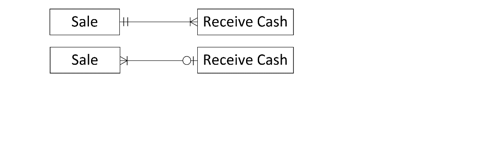
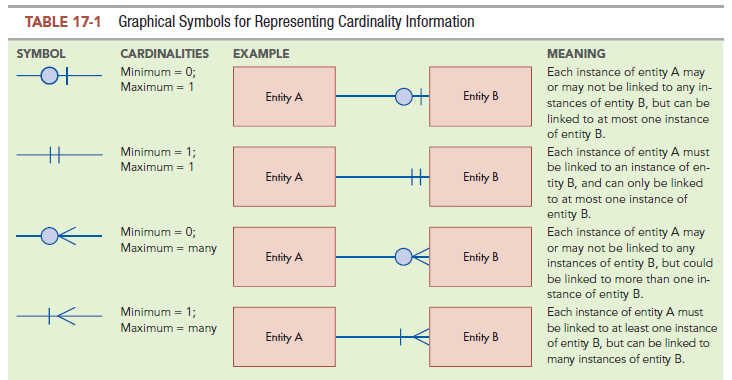
+ k Receive Cash Sale Sale H Receive Cash TABLE 17-1 Graphical Symbols for Representing Cardinality Information EXAMPLE SYMBOL OF CARDINALITIES Minimum = 0; Maximum = 1 Entity A Entity B Minimum = 1; Maximum = 1 Entity A TH Entity B MEANING Each instance of entity A may or may not be linked to any in- stances of entity B, but can be linked to at most one instance of entity B. Each instance of entity A must be linked to an instance of en- tity B, and can only be linked to at most one instance of entity B. Each instance of entity A may or may not be linked to any instances of entity B, but could be linked to more than one in- stance of entity B. Each instance of entity A must be linked to at least one instance of entity B, but can be linked to many instances of entity B. -OK Minimum = 0; Maximum = many Entity A Entity B Minimum = 1; Maximum = many Entity A Entity B + k Receive Cash Sale Sale H Receive Cash TABLE 17-1 Graphical Symbols for Representing Cardinality Information EXAMPLE SYMBOL OF CARDINALITIES Minimum = 0; Maximum = 1 Entity A Entity B Minimum = 1; Maximum = 1 Entity A TH Entity B MEANING Each instance of entity A may or may not be linked to any in- stances of entity B, but can be linked to at most one instance of entity B. Each instance of entity A must be linked to an instance of en- tity B, and can only be linked to at most one instance of entity B. Each instance of entity A may or may not be linked to any instances of entity B, but could be linked to more than one in- stance of entity B. Each instance of entity A must be linked to at least one instance of entity B, but can be linked to many instances of entity B. -OK Minimum = 0; Maximum = many Entity A Entity B Minimum = 1; Maximum = many Entity A Entity B
Step by Step Solution
There are 3 Steps involved in it

Get step-by-step solutions from verified subject matter experts
 Study Help