







Question: Hello there can you please help me solve the remaining questions to this problem. (1d. , 2 and 3) with proper steps. THANK YOU!!! $87,500.
Hello there can you please help me solve the remaining questions to this problem. (1d. , 2 and 3) with proper steps. THANK YOU!!!
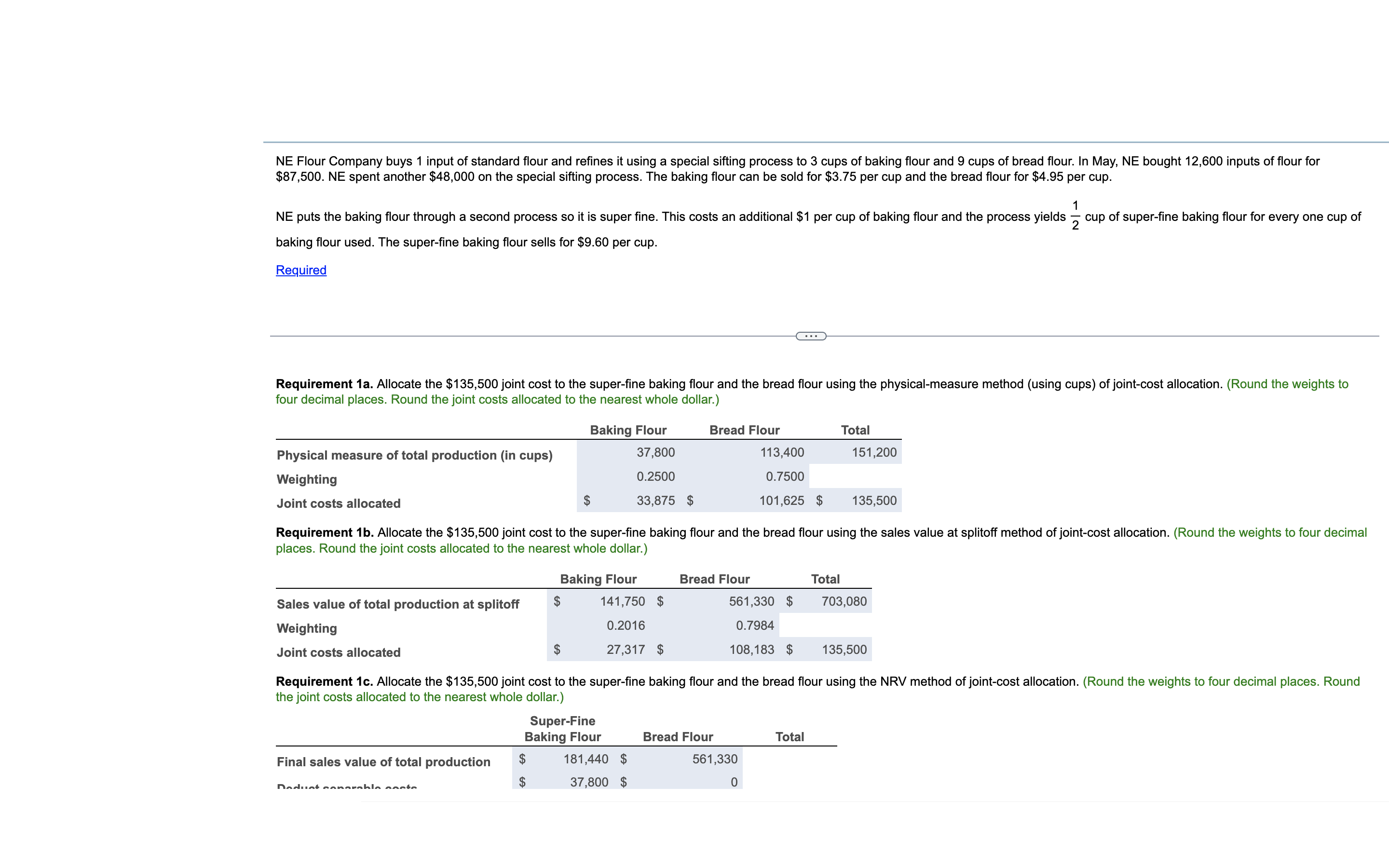
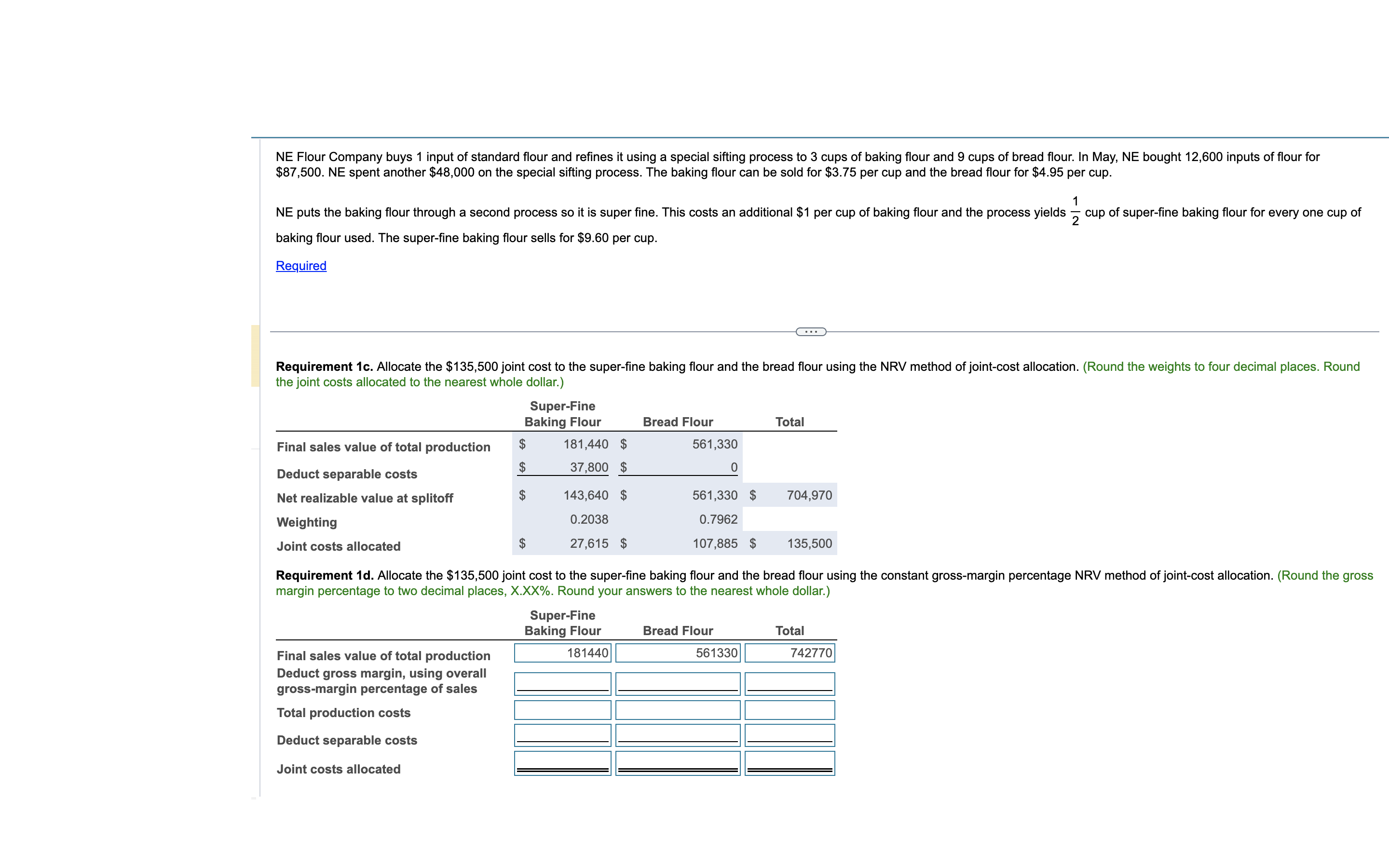
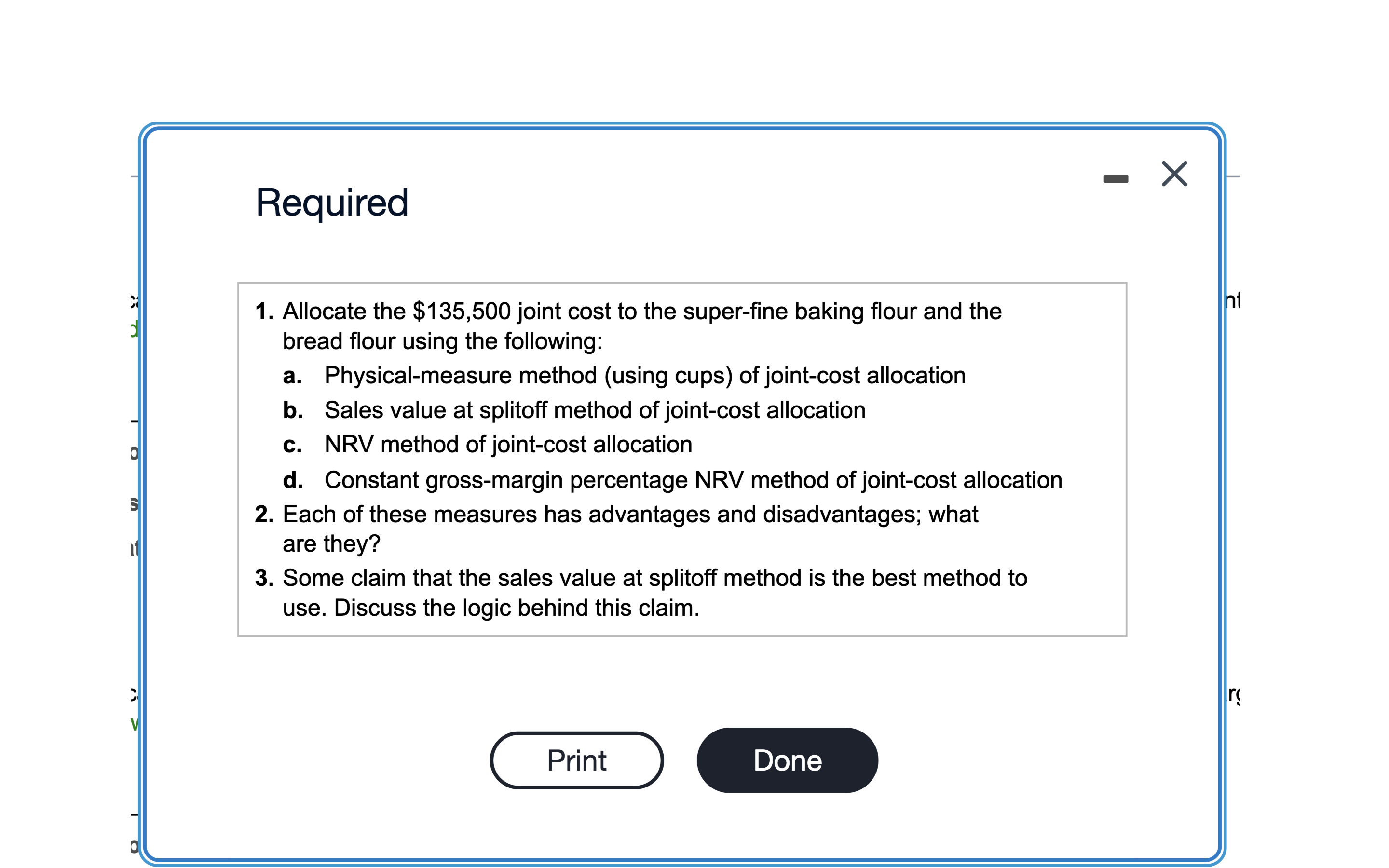
$87,500. NE spent another $48,000 on the special sifting process. The baking flour can be sold for $3.75 per cup and the bread flour for $4.95 per cup. baking flour used. The super-fine baking flour sells for $9.60 per cup. Required four decimal places. Round the joint costs allocated to the nearest whole dollar.) places. Round the joint costs allocated to the nearest whole dollar.) NE Flour Company buys 1 input of standard flour and refines it using a special sifting process to 3 cups of baking flour and 9 cups of bread flour. In May, NE bought 12,600 inputs of flour for $87,500. NE spent another $48,000 on the special sifting process. The baking flour can be sold for $3.75 per cup and the bread flour for $4.95 per cup. NE puts the baking flour through a second process so it is super fine. This costs an additional $1 per cup of baking flour and the process yields 21 cup of super-fine baking flour for every one cup of baking flour used. The super-fine baking flour sells for $9.60 per cup. Required Required 1. Allocate the $135,500 joint cost to the super-fine baking flour and the bread flour using the following: a. Physical-measure method (using cups) of joint-cost allocation b. Sales value at splitoff method of joint-cost allocation c. NRV method of joint-cost allocation d. Constant gross-margin percentage NRV method of joint-cost allocation 2. Each of these measures has advantages and disadvantages; what are they? 3. Some claim that the sales value at splitoff method is the best method to use. Discuss the logic behind this claim. $87,500. NE spent another $48,000 on the special sifting process. The baking flour can be sold for $3.75 per cup and the bread flour for $4.95 per cup. baking flour used. The super-fine baking flour sells for $9.60 per cup. Required four decimal places. Round the joint costs allocated to the nearest whole dollar.) places. Round the joint costs allocated to the nearest whole dollar.) NE Flour Company buys 1 input of standard flour and refines it using a special sifting process to 3 cups of baking flour and 9 cups of bread flour. In May, NE bought 12,600 inputs of flour for $87,500. NE spent another $48,000 on the special sifting process. The baking flour can be sold for $3.75 per cup and the bread flour for $4.95 per cup. NE puts the baking flour through a second process so it is super fine. This costs an additional $1 per cup of baking flour and the process yields 21 cup of super-fine baking flour for every one cup of baking flour used. The super-fine baking flour sells for $9.60 per cup. Required Required 1. Allocate the $135,500 joint cost to the super-fine baking flour and the bread flour using the following: a. Physical-measure method (using cups) of joint-cost allocation b. Sales value at splitoff method of joint-cost allocation c. NRV method of joint-cost allocation d. Constant gross-margin percentage NRV method of joint-cost allocation 2. Each of these measures has advantages and disadvantages; what are they? 3. Some claim that the sales value at splitoff method is the best method to use. Discuss the logic behind this claim
Step by Step Solution
There are 3 Steps involved in it

Get step-by-step solutions from verified subject matter experts
 Study Help