







Question: help asap please !:) Apple Goes Global It was not long ago that products from Apple, perhaps the most recognizable name in electronics manufacturing around
help asap please !:) 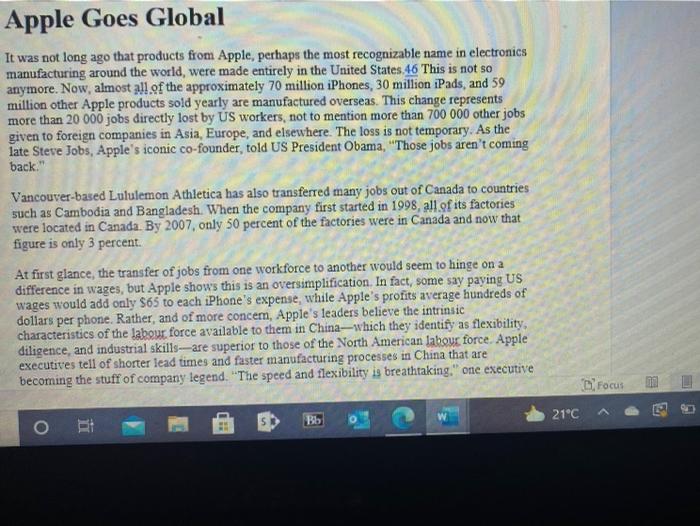
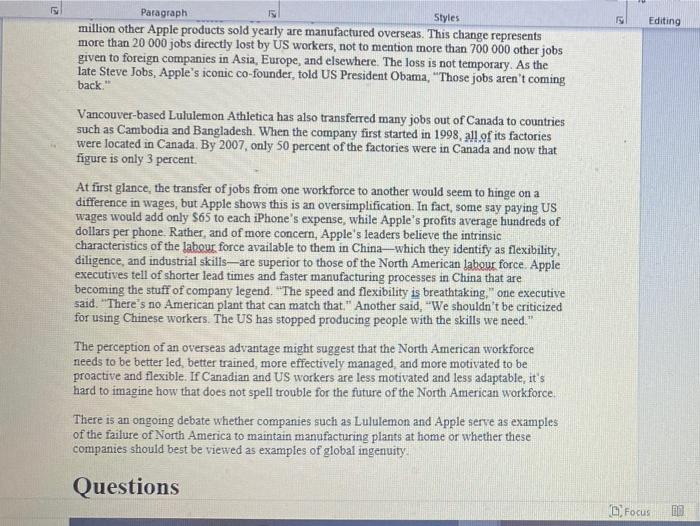
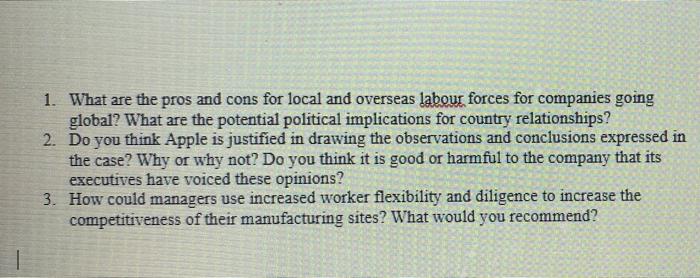
Apple Goes Global It was not long ago that products from Apple, perhaps the most recognizable name in electronics manufacturing around the world, were made entirely in the United States. 46 This is not so anymore. Now, almost all of the approximately 70 million iPhones, 30 million iPads, and 59 million other Apple products sold yearly are manufactured overseas. This change represents more than 20 000 jobs directly lost by US workers, not to mention more than 700 000 other jobs given to foreign companies in Asia, Europe, and elsewhere. The loss is not temporary. As the late Steve Jobs, Apple's iconic co-founder, told US President Obama, "Those jobs aren't coming back." Vancouver-based Lululemon Athletica has also transferred many jobs out of Canada to countries such as Cambodia and Bangladesh. When the company first started in 1998, all of its factories were located in Canada. By 2007, only 50 percent of the factories were in Canada and now that figure is only 3 percent. At first glance, the transfer of jobs from one workforce to another would seem to hinge on a difference in wages, but Apple shows this is an oversimplification. In fact, some say paying US wages would add only $65 to each iPhone's expense, while Apple's profits average hundreds of dollars per phone. Rather, and of more concem, Apple's leaders believe the intrinsic characteristics of the labour force available to them in China--which they identify as flexibility, diligence, and industrial skills-are superior to those of the North American labour force. Apple executives tell of shorter lead times and faster manufacturing processes in China that are becoming the stuff of company legend. "The speed and flexibility is breathtaking." one executive D Focus 21C BE o Editing Paragraph Styles million other Apple products sold yearly are manufactured overseas. This change represents more than 20 000 jobs directly lost by US workers, not to mention more than 700 000 other jobs given to foreign companies in Asia, Europe, and elsewhere. The loss is not temporary. As the late Steve Jobs, Apple's iconic co-founder, told US President Obama, "Those jobs aren't coming back." Vancouver-based Lululemon Athletica has also transferred many jobs out of Canada to countries such as Cambodia and Bangladesh. When the company first started in 1998, all of its factories were located in Canada. By 2007, only 50 percent of the factories were in Canada and now that figure is only 3 percent. At first glance, the transfer of jobs from one workforce to another would seem to hinge on a difference in wages, but Apple shows this is an oversimplification. In fact, some say paying US wages would add only $65 to each iPhone's expense, while Apple's profits average hundreds of dollars per phone. Rather, and of more concern, Apple's leaders believe the intrinsic characteristics of the labour force available to them in China-which they identify as flexibility, diligence, and industrial skills are superior to those of the North American Jabour force. Apple executives tell of shorter lead times and faster manufacturing processes in China that are becoming the stuff of company legend. "The speed and flexibility is breathtaking," one executive said. "There's no American plant that can match that." Another said, "We shouldn't be criticized for using Chinese workers. The US has stopped producing people with the skills we need." The perception of an overseas advantage might suggest that the North American workforce needs to be better led, better trained, more effectively managed, and more motivated to be proactive and flexible. If Canadian and US workers are less motivated and less adaptable, it's hard to imagine how that does not spell trouble for the future of the North American workforce. There is an ongoing debate whether companies such as Lululemon and Apple serve as examples of the failure of North America to maintain manufacturing plants at home or whether these companies should best be viewed as examples of global ingenuity Questions Focus ED 1. What are the pros and cons for local and overseas labour forces for companies going global? What are the potential political implications for country relationships? 2. Do you think Apple is justified in drawing the observations and conclusions expressed in the case? Why or why not? Do you think it is good or harmful to the company that its executives have voiced these opinions? 3. How could managers use increased worker flexibility and diligence to increase the competitiveness of their manufacturing sites? What would you recommend
Step by Step Solution
There are 3 Steps involved in it
1 Expert Approved Answer
Step: 1 Unlock

Question Has Been Solved by an Expert!
Get step-by-step solutions from verified subject matter experts
Step: 2 Unlock
Step: 3 Unlock
 Study Help