Question: help me answer these questions Pantun / Taking & Wur of Words Too Literally - 17 He politely introduced himself and told me that he'd
help me answer these questions
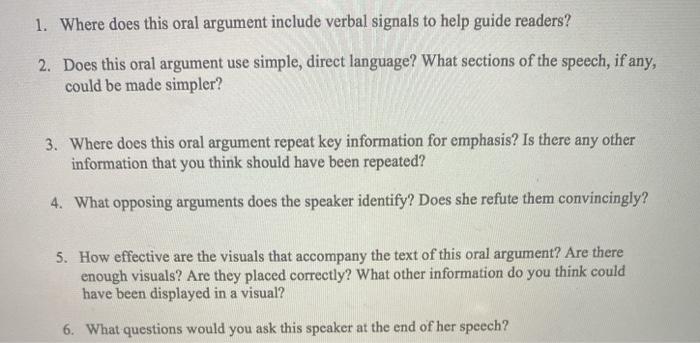
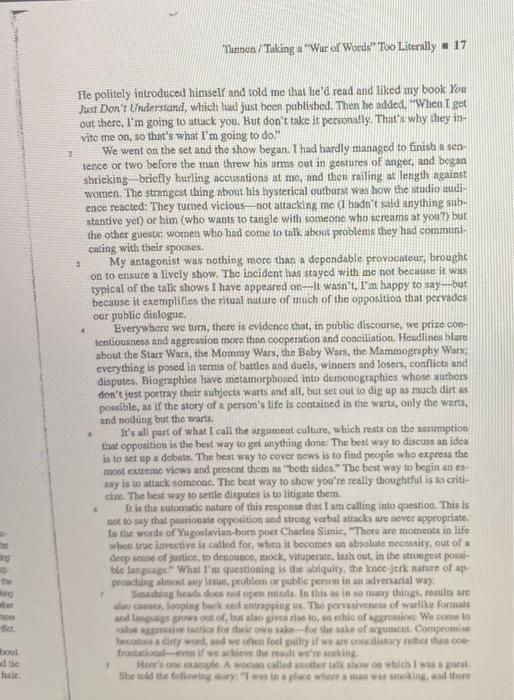
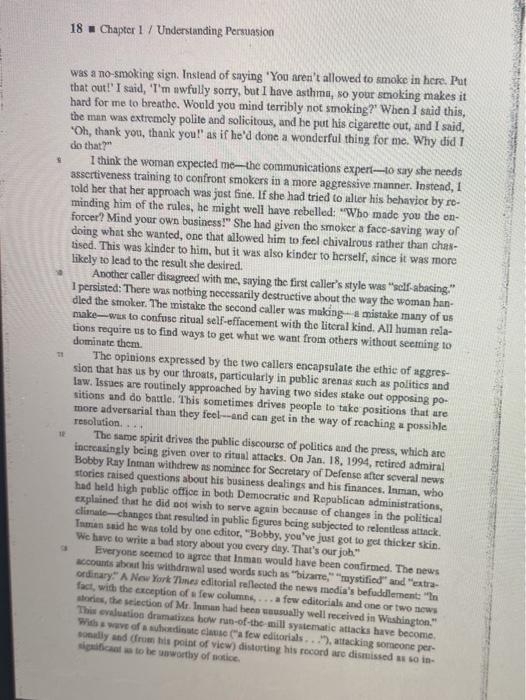
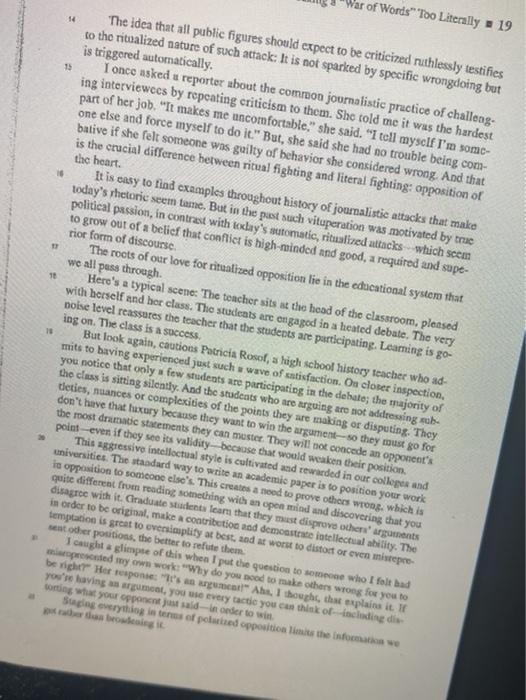
Pantun / Taking & Wur of Words Too Literally - 17 He politely introduced himself and told me that he'd read and liked my book You Just Don't Understand, which had just been published. Then he added. "When I get out there, I'm going to attack you. But don't take it personally. That's why they in- vite me on, so that's what I'm going to do." We went on the set and the show began. I had hardly managed to finish a sen- tence or two before the man threw his arms out in gestures of anger, and began shricking briefly hurling accusations at me, and then railing at length against women. The strangest thing about his hysterical outburst was how the studio audi- ence reacted: They turned vicious--not attacking me a hadn't said anything sub- stantive yet) or him (who wants to tangle with someone who screams at you?) but the other guests women who had come to talk about problems they had comment- caling with their spouses. My antagonist was nothing more than a dependable provocateur, brought on to ensure a lively show. The incident has stayed with me not because it was typical of the talk shows I have appeared on it wasn't, I'm happy to say but because it exemplifies the ritual nature of much of the opposition that pervades our public dialogue Everywhere we turn, there is evidence that, in public discourse, we prize con- tentiousness and aggression more than cooperation and conciliation, Headlines blare about the Star Wars, the Mommy Wars, the Baby Wars, the Mammography Wars: everything is posed in terms of battles and duels, winners and losers, conflicts and disputes, Biographies have metamorphosed into demonographies whose authors don't just portray their subjects wants and all, but set out to dig op as much dirt as possible, as if the story of a person's life is contained in the warts, only the warts, and nouluing but the warts, It's all part of what I call the argument culture, which rests on the assumption that opposition is the best way to get anything done: The best way to discuss an idea is to set up a debate. The best way to cover news is to find people who express the most extreme views and present them as both sides." The best way to begin an es- say is to attack someone. The best way to show you're really thoughtful is to criti- cize. The best way to settle disputes is to litigate them It is the stomatic nature of this response that I am calling into question. This is not to say that passionate opposition and strong verbal attacks are never appropriate In the words of Yugoslavian-born poet Charles Simic, "There are moments in life who true invective is called for, when it becomes an absolute necessity, out of deep sense of justice, to denounoc, mock, vituperate, tash out in the strongest possi ble l What I'm questioning is the ubiquity, the oce jerk nature of ap- proacting almost any issue, problem or public porn in an adversarial way. Smashing heads does not open minds. In this as in so many things, results are lo coses, looping back santrapping. The pervasiveness of walk formats und languages out of, but also give rise to, sa ethic of Sion We come to valuessive stics for their own cake for the sake of gumont. Compromise becomes a tiny word, sad when feel guilty if we are conciliatory rather than con Toon is achieve were solding He's come example. A woman called another talk show on which I was She odd the following wory: "I place where a mass moking, and there bout ad the 18 Chapter 1 / Understanding Persuasion was a no-smoking sign. Instead of saying 'You aren't allowed to smoke in here. Put that out!' I said, 'I'm uwfully sorry, but I have asthma, so your smoking makes it hard for me to breathe. Would you mind terribly not smoking?" When I said this, the man was extremely polite and solicitous, and he put his cigarette out, and I said, "Oh, thank you, thank you!" as if he'd done a wonderful thing for me. Why did I do that?" I think the woman expected me the communications experto say she needs assertiveness training to confront smokers in a more aggressive manner. Instead, I told her that her approach was just fine. If she had tried to alter his behavior by ro- minding him of the rules, he might well have rebelled: "Who made you the on- forcer? Mind your own business!" She had given the smoker a face-saving way of doing what she wanted, one that allowed him to feel chivalrous rather than chan- tised. This was kinder to him, but it was also kinder to herself, since it was more likely to lead to the result she desired. Another caller disagreed with me, saying the first caller's style was "self-abasing." I persisted: There was nothing necessarily destructive about the way the woman han- dled the smoker. The mistake the second caller was making- a mistake many of us make-wus to confusc ritual self-effacement with the literal kind. All human rela- tions require us to find ways to get what we want from others without seeming to dominate them The opinions expressed by the two callers encapsulate the ethic of aggres- sion that has us by our throats, particularly in public arenas such as politics and Law. Issues are routinely approached by having two sides stake out opposing po sitions and do battle. This sometimes drives people to take positions that are more adversarial than they feel--and can get in the way of reaching possible resolution.. The same spirit drives the public discourse of politics and the press, which are increasingly being given over to ritual attacks. On Jan. 18, 1994, retired admiral Bobby Ray Inman withdrew as nomine for Secretary of Defense after several news stories raised questions about his business dealings and his finances. Inman, who had held high public office in both Democratic and Republican administrations, explained that he did not wish to serve again because of changes in the political climate changes that resulted in public figures being subjected to relentless attack. Tas said he was told by one editor, "Bobby, you've just got to get thicker skin. We have to write a bad story about you every day. That's our job." Everyone seemed to agree that Inman would have been confirmed. The news accounts about his withdrawal used words such as bizarre," "mystified" and "extra- ordinary" A New York Times editorial rellected the news media's befuddlement: "In fact, with the exception of a few columns, a few editorials and one or two news oes, the selection of Mr. Innan had been unusually well received in Washington." This evaluation dramatizes how run-of-the-will systematic attacks have become With wave of a shodouche "a few editorials...') attacking someone per cally and from his point of view) distorting his rocordare dismissed soin- ficaat to be worthy of notice War of Words 'Too Literally - 19 14 15 10 The idea that all public figures should expect to be criticized ruthlessly testifies to tho ritualized nature of such attack: It is not sparked by specific wrongdoing but is triggered automatically. I once asked u reporter about the common journalistic practice of challeng. ing interviewees by repeating criticism to them. She told me it was the hardest part of her job. "It makes me uncomfortable," she said. "I tell myself I'm some- one else and force myself to do it" But, she said she had no trouble being com- balive if she felt someone was guilty of behavior she considered wrong. And that is the crucial difference between ritual fighting and literal fighting: opposition of the heart. It is easy to find examples throughout history of journalistic attacks that make voday's rhetoric seem tame. But in the past such vituperation was motivated by trae political passion, in contrast with toxluy's automatic, ritualized attacks which seem to grow out of a belief that conflict is high-minded and good, a required and supe- rior form of discourse The roots of our love for ritualized opposition lie in the educational system that we all pass through Here's a typical scene: The toncher sits at the head of the classroom, pleased with herself and her class. The students are engaged in a heated debate. The very noise level reassures the teacher that the students are participating. Learning is go- ing on. The class is a success But look again, cautions Patricia Rosol, a high school history teacher who ad- mits to having experienced just such a wave of eatisfaction. On closer inspection, you notice that only a few students are participating in the debate; the majority of the class is sitting silently. And the students who are arguing are not addressing sub- deties, nuances or complexities of the points they are making or disputing. They don't have that luxury because they want to win the argument so they must go for the most dramatic statements they can muster. They will not concede an opponent's point-even if they see its validity because that would weaken their position. This aggressive intellctual style is cultivated and rewarded in our colleges and universities. The standard way to write an academic paper is to position your work in opposition to someone else's. This creates a need to prove others wrong, which is quite different from reading something with an open mind and discovering that you disagree with it. Craduate students learn that they must disprove other arguments in order to be original, make a contribution and demonstrate intellectual ability. The temptation is great to oversimplify at best and at worst to distort or even niere sest other positions, the better to refute them I caught a glimpse of this when I put the question to someone who I felt had moprescited my own work: "Why do you need to make others wrong for you to bevigher Her response: "e's an argumentl" Ahs, I thought, that explains it. If you're having an argument, you use every tactic you can think of including di boring what your opponent just said in order to win Supling everyths of polied opposition limit the informatie per te begin 18 1. Where does this oral argument include verbal signals to help guide readers? 2. Does this oral argument use simple, direct language? What sections of the speech, if any, could be made simpler? 3. Where does this oral argument repeat key information for emphasis? Is there any other information that you think should have been repeated? 4. What opposing arguments does the speaker identify? Does she refute them convincingly? 5. How effective are the visuals that accompany the text of this oral argument? Are there enough visuals? Are they placed correctly? What other information do you think could have been displayed in a visual? 6. What questions would you ask this speaker at the end of her speech









 Study Help