Question: Help me solve this please, and show me your work to how you got the answer along with calculations. Thank-you!! The following jobs are waiting
 Help me solve this please, and show me your work to how you got the answer along with calculations. Thank-you!!
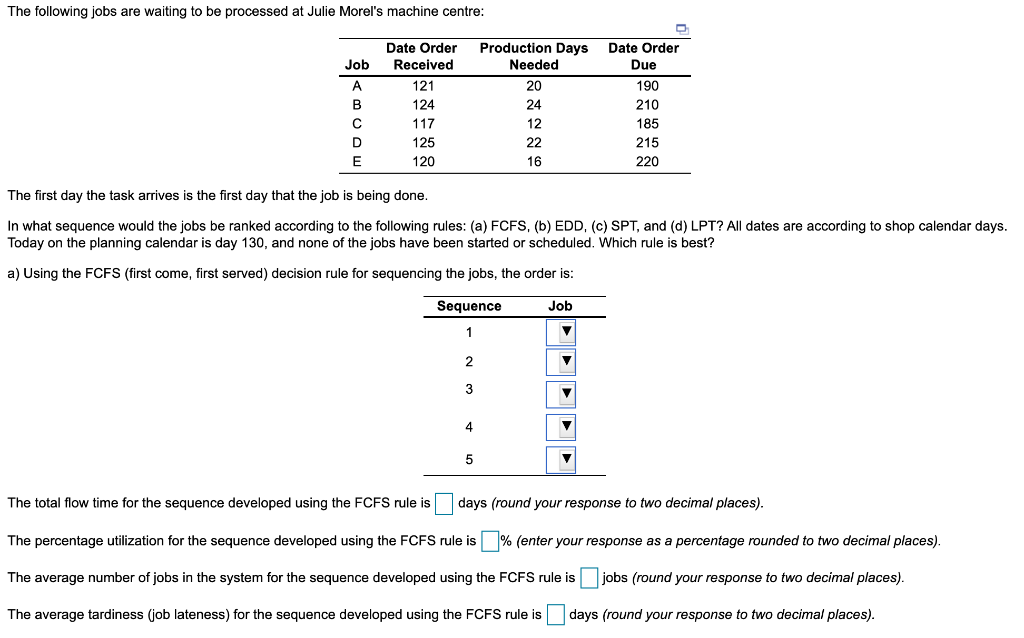
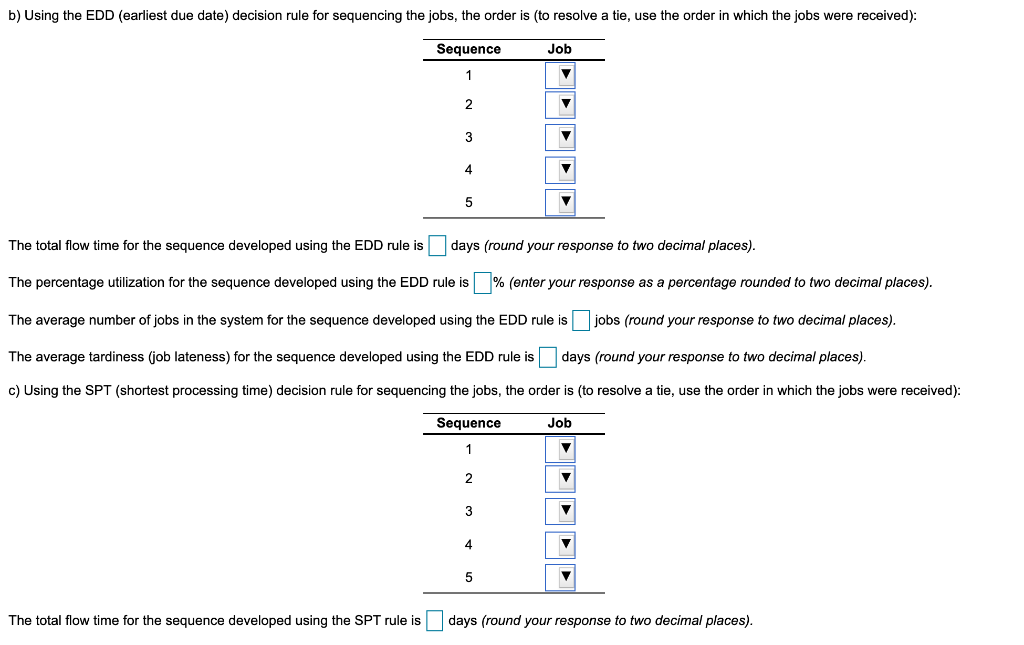
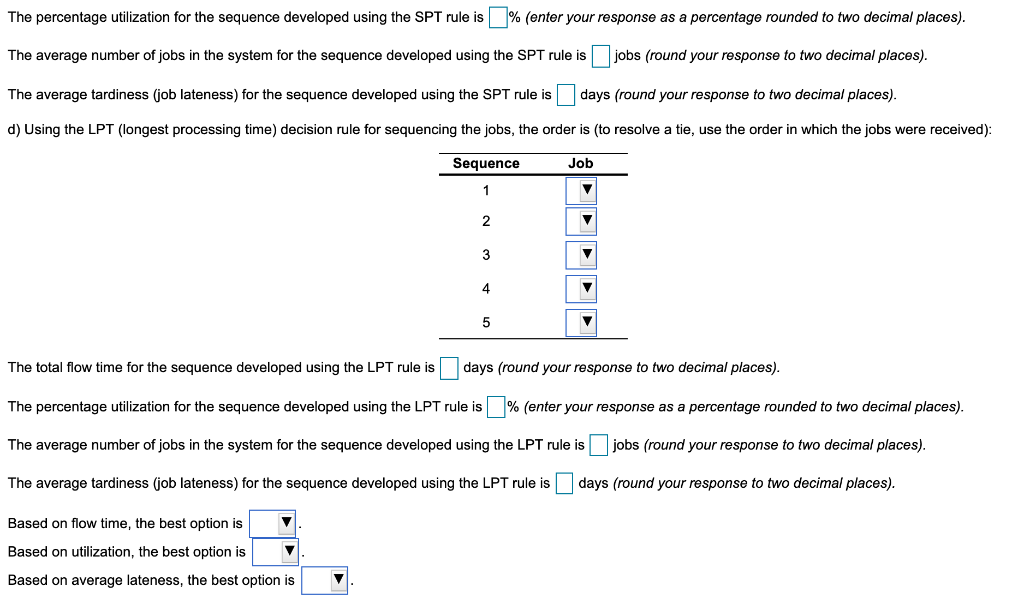
The following jobs are waiting to be processed at Julie Morel's machine centre: Job A B D E Date Order Received 121 124 117 125 120 Production Days Needed 20 24 12 22 16 D Date Order Due 190 210 185 215 220 The first day the task arrives is the first day that the job is being done. In what sequence would the jobs be ranked according to the following rules: (a) FCFS, (b) EDD, (C) SPT, and (d) LPT? All dates are according to shop calendar days. Today on the planning calendar is day 130, and none of the jobs have been started or scheduled. Which rule is best? a) Using the FCFS (first come, first served) decision rule for sequencing the jobs, the order is: Sequence Job 1 2 7 3 4 5 The total flow time for the sequence developed using the FCFS rule is days (round your response to two decimal places). The percentage utilization for the sequence developed using the FCFS rule is % (enter your response as a percentage rounded to two decimal places). The average number of jobs in the system for the sequence developed using the FCFS rule is jobs (round your response to two decimal places). The average tardiness (job lateness) for the sequence developed using the FCFS rule is days (round your response to two decimal places). b) Using the EDD (earliest due date) decision rule for sequencing the jobs, the order is (to resolve a tie, use the order in which the jobs were received): Sequence Job 1 2 3 V 4 5 The total flow time for the sequence developed using the EDD rule is days (round your response to two decimal places). The percentage utilization for the sequence developed using the EDD rule is % (enter your response as a percentage rounded to two decimal places). The average number of jobs in the system for the sequence developed using the EDD rule is jobs (round your response to two decimal places). The average tardiness (job lateness) for the sequence developed using the EDD rule is days (round your response to two decimal places). c) Using the SPT (shortest processing time) decision rule for sequencing the jobs, the order is (to resolve a tie, use the order in which the jobs were received): Sequence Job 7 2 7 3 4 5 V The total flow time for the sequence developed using the SPT rule is days (round your response to two decimal places). The percentage utilization for the sequence developed using the SPT rule is % (enter your response as a percentage rounded to two decimal places). The average number of jobs in the system for the sequence developed using the SPT rule is jobs (round your response to two decimal places). The average tardiness (job lateness) for the sequence developed using the SPT rule is days (round your response to two decimal places). d) Using the LPT (longest processing time) decision rule for sequencing the jobs, the order is (to resolve a tie, use the order in which the jobs were received): Sequence Job 1 7 2 7 3 7 4 7 5 The total flow time for the sequence developed using the LPT rule is days (round your response to two decimal places). The percentage utilization for the sequence developed using the LPT rule is % (enter your response as a percentage rounded to two decimal places). The average number of jobs in the system for the sequence developed using the LPT rule is jobs (round your response to two decimal places). The average tardiness (job lateness) for the sequence developed using the LPT rule is days (round your response to two decimal places). 7 Based on flow time, the best option is Based on utilization, the best option is Based on average lateness, the best option is









 Study Help