



Question: help me with 3, 4, and 5 The following data relate to the operations of Shilow Company, a wholesale distributor of consumer goods: Current assets
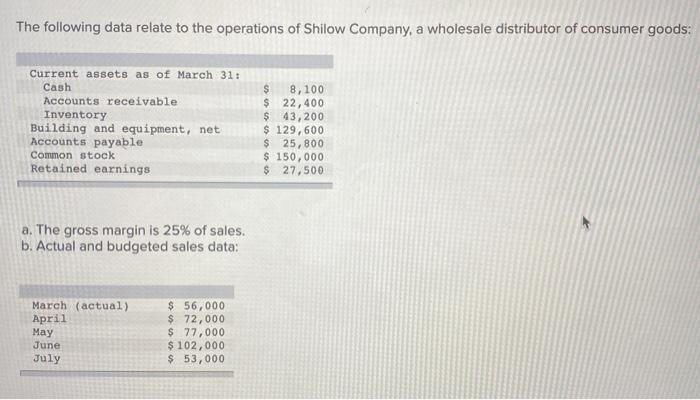
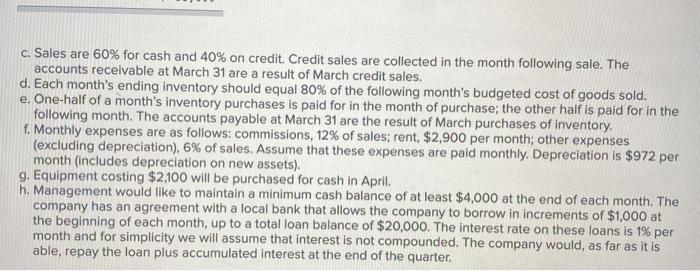
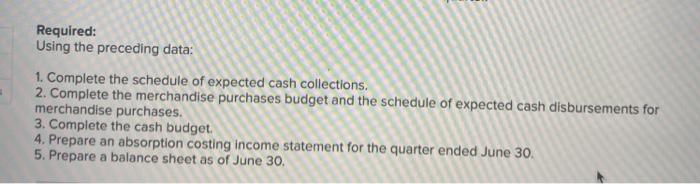
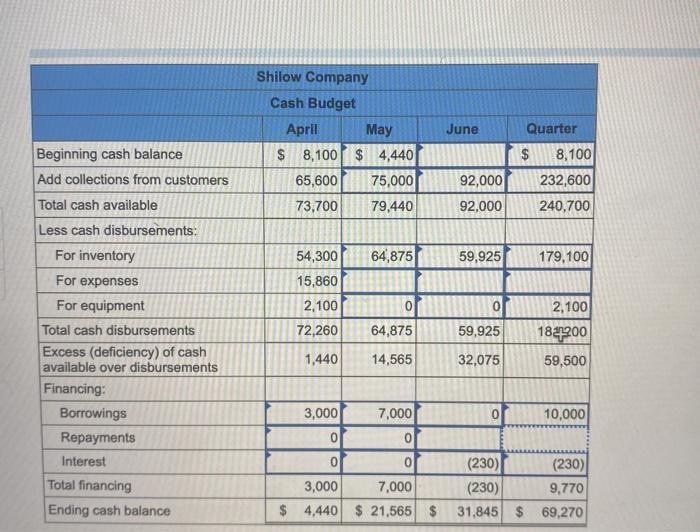
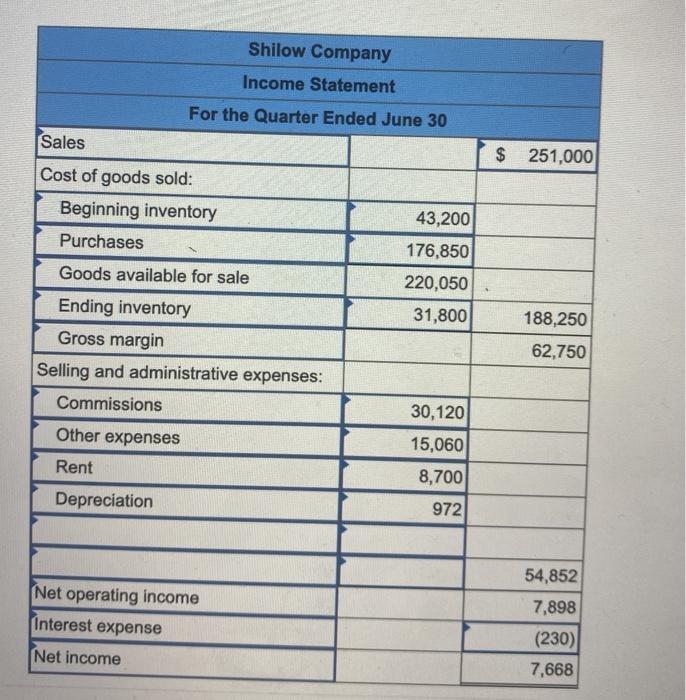
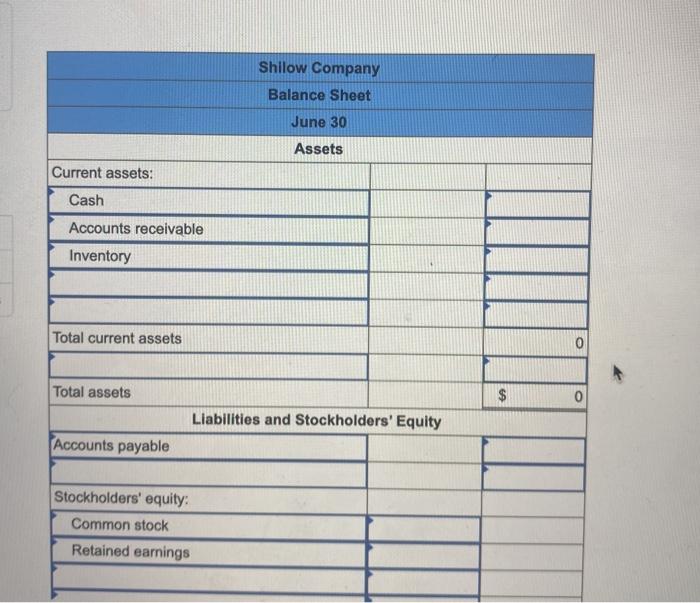
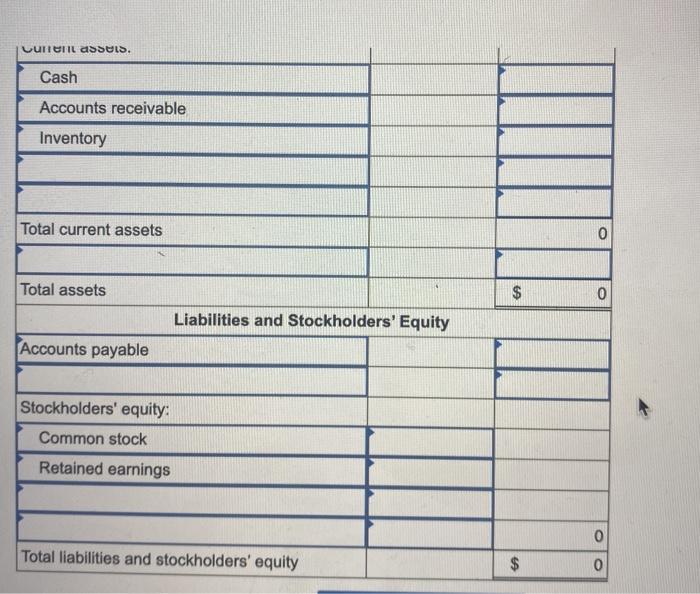
The following data relate to the operations of Shilow Company, a wholesale distributor of consumer goods: Current assets as of March 31: Cash Accounts receivable Inventory Building and equipment, net Accounts payable Common stock Retained earnings $ 8,100 $ 22,400 $ 43,200 $ 129,600 $ 25,800 $ 150,000 $ 27,500 a. The gross margin is 25% of sales. b. Actual and budgeted sales data: March (actual) April May June July $ 56,000 $ 72,000 $77,000 $ 102,000 $ 53,000 c. Sales are 60% for cash and 40% on credit. Credit sales are collected in the month following sale. The accounts receivable at March 31 are a result of March credit sales. d. Each month's ending inventory should equal 80% of the following month's budgeted cost of goods sold. e. One-half of a month's inventory purchases is paid for in the month of purchase; the other half is paid for in the following month. The accounts payable at March 31 are the result of March purchases of inventory. f. Monthly expenses are as follows: commissions, 12% of sales; rent, $2,900 per month; other expenses (excluding depreciation), 6% of sales. Assume that these expenses are paid monthly. Depreciation is $972 per month (includes depreciation on new assets) g. Equipment costing $2,100 will be purchased for cash in April. h. Management would like to maintain a minimum cash balance of at least $4,000 at the end of each month. The company has an agreement with a local bank that allows the company to borrow in increments of $1,000 at the beginning of each month, up to a total loan balance of $20,000. The interest rate on these loans is 1% per month and for simplicity we will assume that interest is not compounded. The company would, as far as it is able, repay the loan plus accumulated interest at the end of the quarter. Required: Using the preceding data: 1. Complete the schedule of expected cash collections. 2. Complete the merchandise purchases budget and the schedule of expected cash disbursements for merchandise purchases. 3. Complete the cash budget. 4. Prepare an absorption costing income statement for the quarter ended June 30. 5. Prepare a balance sheet as of June 30. June Shilow Company Cash Budget April May $ 8,100 $ 4,440 65,600 75,000 73,700 79,440 Quarter $ 8,100 92,000 92,000 232,600 240,700 64,875 59,925 179,100 Beginning cash balance Add collections from customers Total cash available Less cash disbursements: For inventory For expenses For equipment Total cash disbursements Excess (deficiency) of cash available over disbursements Financing: Borrowings Repayments Interest Total financing Ending cash balance 54,300 15,860 2,100 72,260 2,100 64,875 59,925 184200 1,440 14,565 32,075 59,500 7,000 10,000 3,000 0 0 0 0 3,000 7,000 $ 4,440 $ 21,565 $ (230) (230) (230) 9,770 31,845 $ 69,270 Shilow Company Income Statement For the Quarter Ended June 30 Sales $ 251,000 Cost of goods sold: Beginning inventory Purchases 43,200 176,850 Goods available for sale 220,050 31,800 188,250 Ending inventory Gross margin Selling and administrative expenses: Commissions 62,750 30,120 Other expenses Rent 15,060 8,700 972 Depreciation Net operating income Interest expense 54,852 7,898 (230) 7,668 Net income Shllow Company Balance Sheet June 30 Assets Current assets: Cash Accounts receivable Inventory Total current assets 0 Total assets $ 0 Liabilities and Stockholders' Equity Accounts payable Stockholders' equity: Common stock Retained earnings LunenL aSSUS. Cash Accounts receivable Inventory Total current assets 0 Total assets $ 0 Liabilities and Stockholders' Equity Accounts payable Stockholders' equity: Common stock Retained earnings 0 Total liabilities and stockholders' equity $ 0
Step by Step Solution
There are 3 Steps involved in it

Get step-by-step solutions from verified subject matter experts