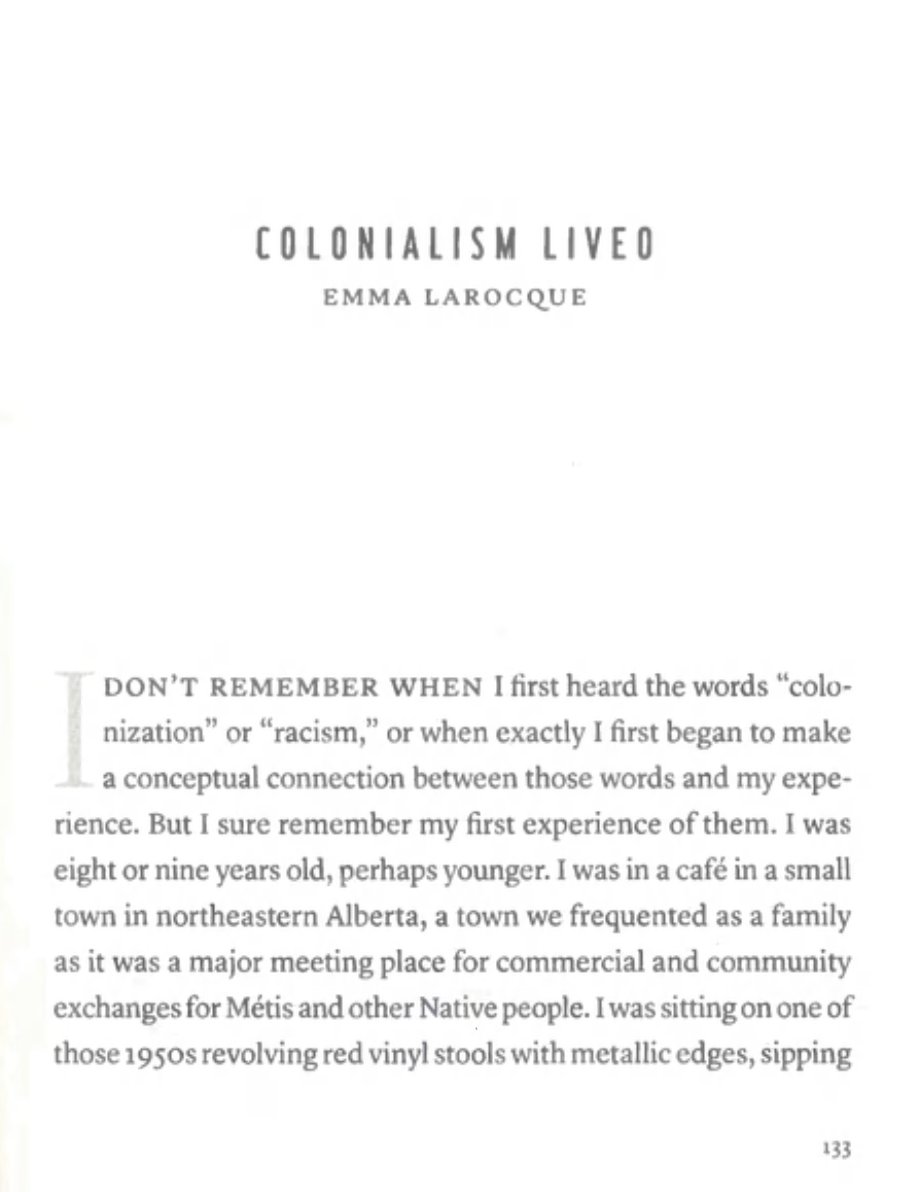
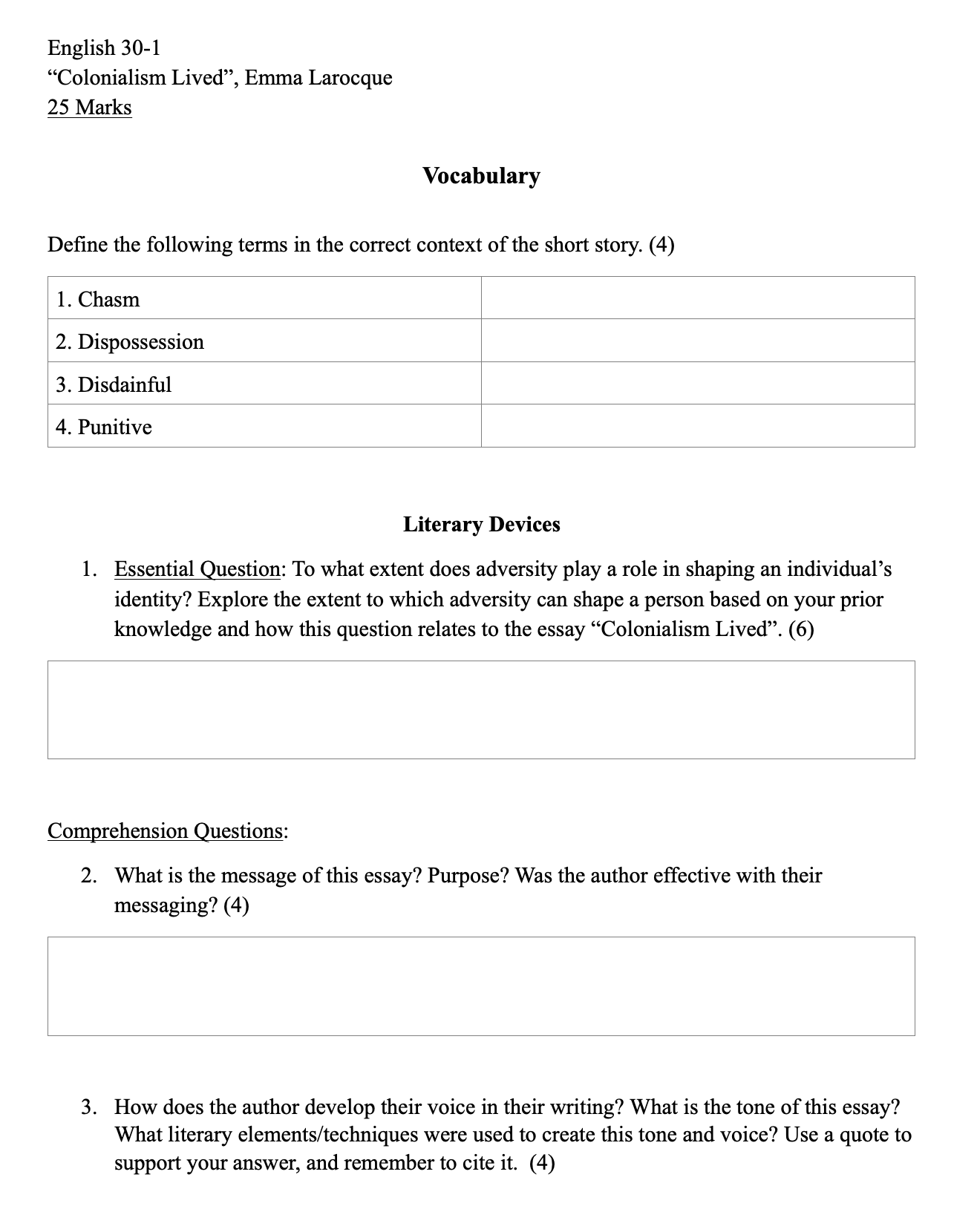
Question: Help me with this assignment for English 30-1 Alberta SHORT STORY READING: COLONIALISM LIVEO EMMA LAROCQUE DON'T REMEMBER WHEN | first heard the words colo-
Help me with this assignment for English 30-1 Alberta
SHORT STORY READING:
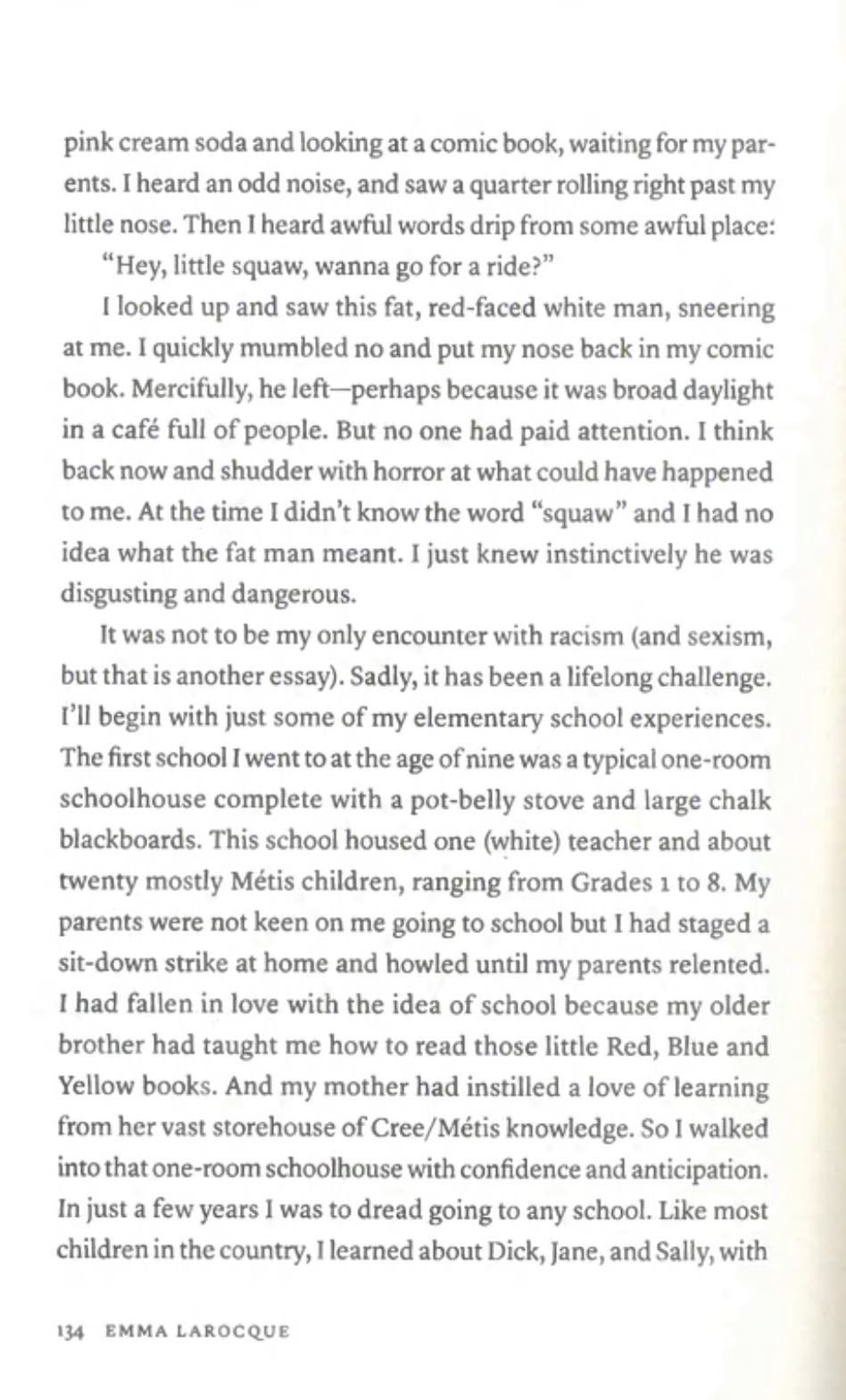
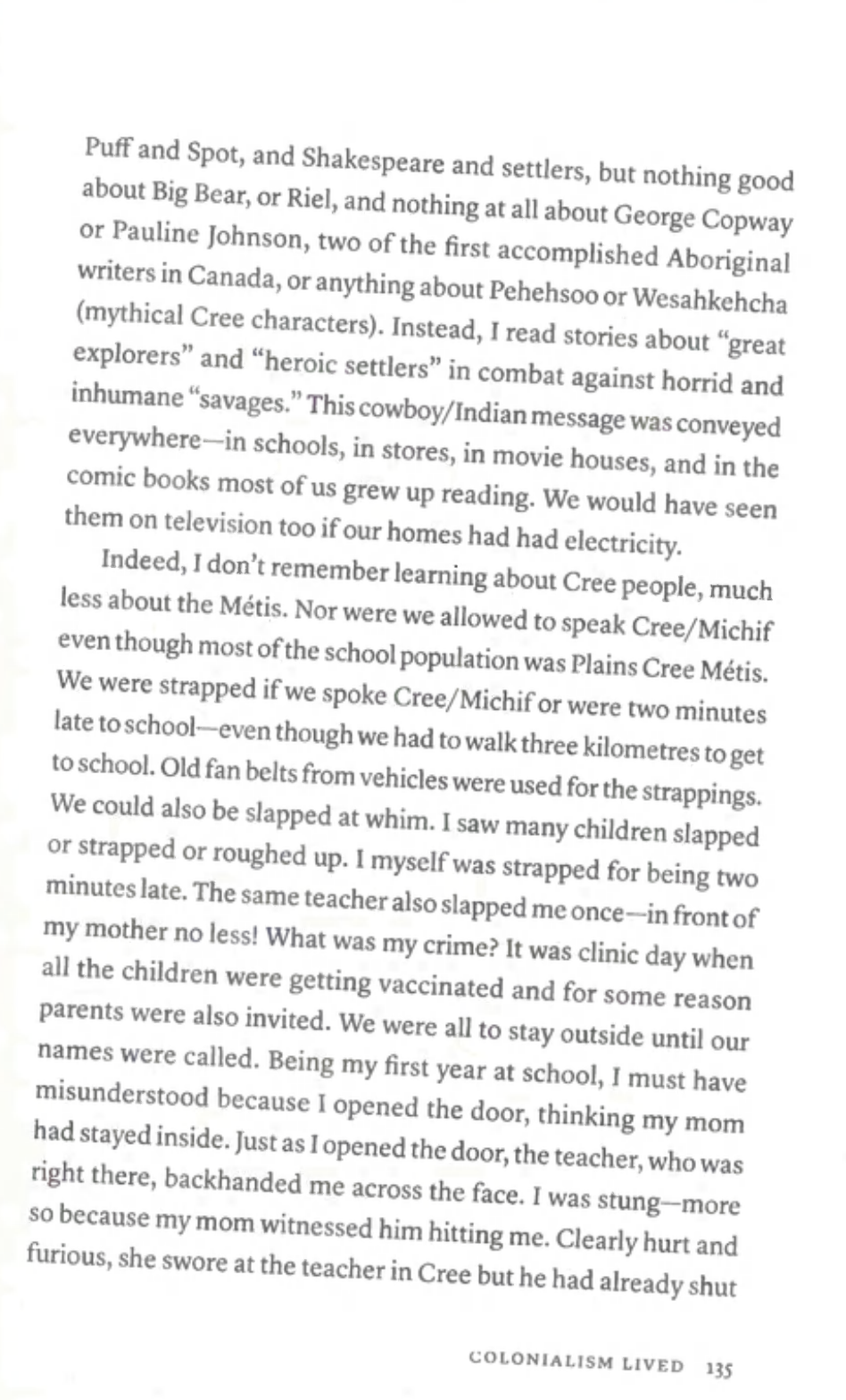
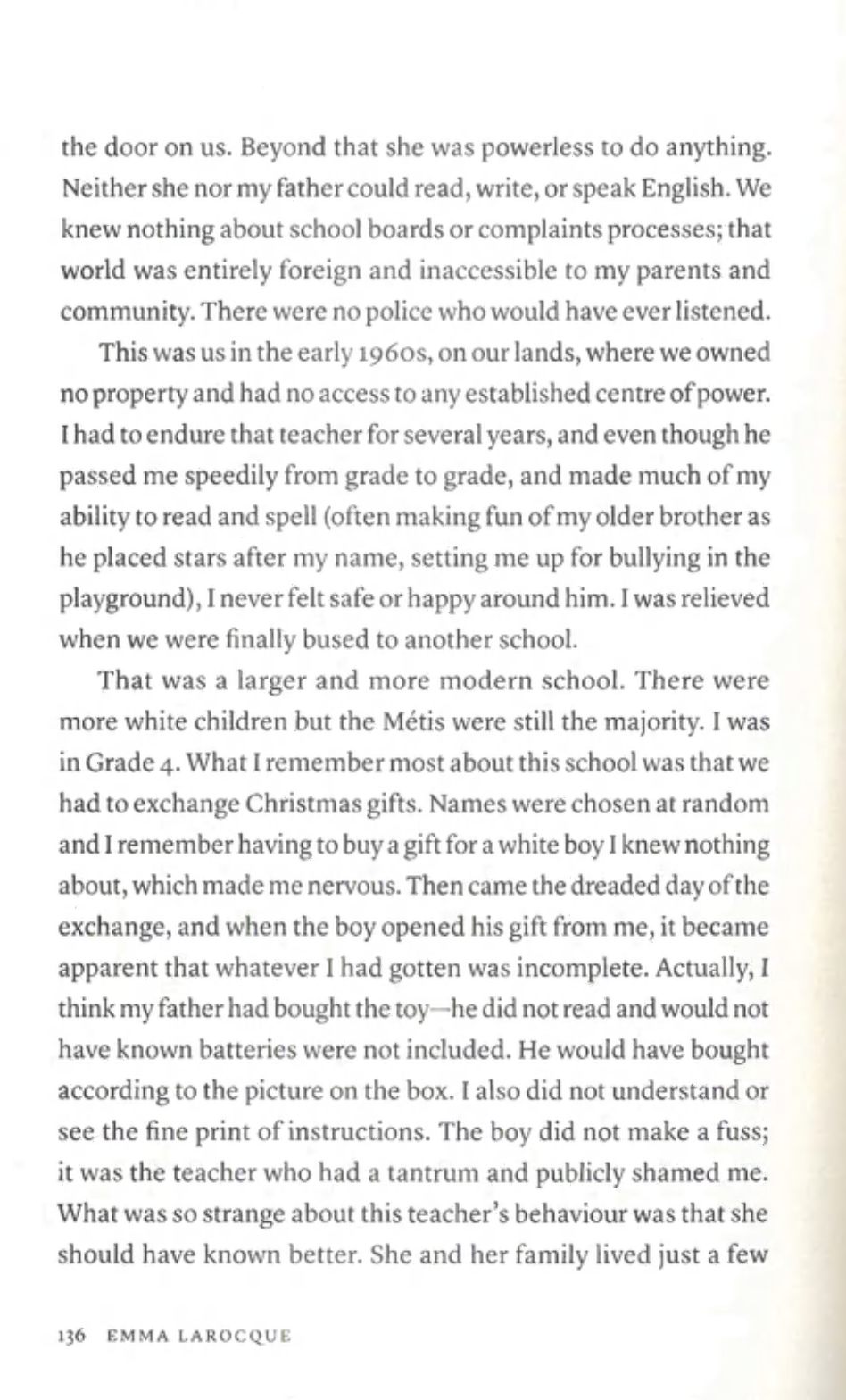
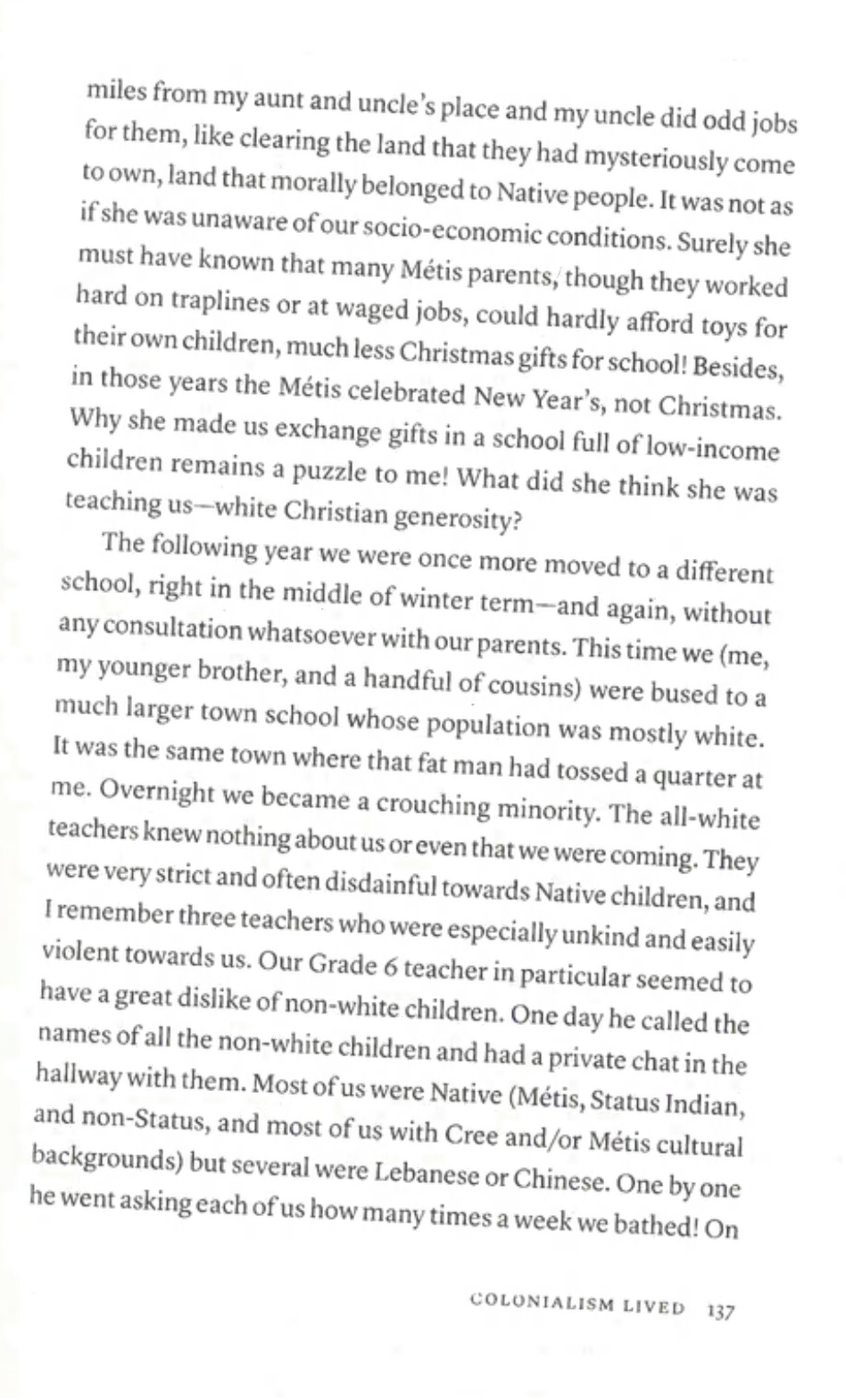
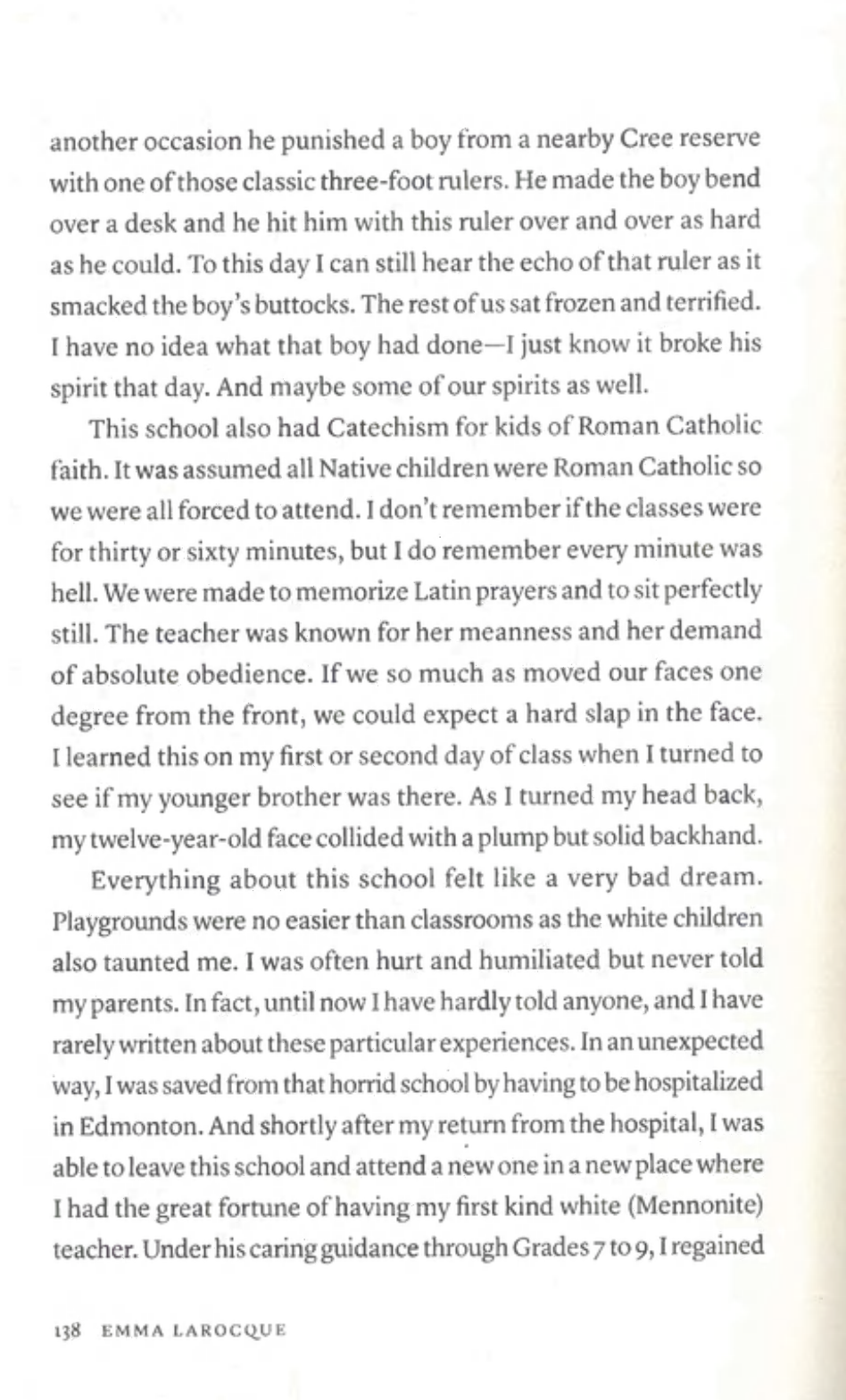
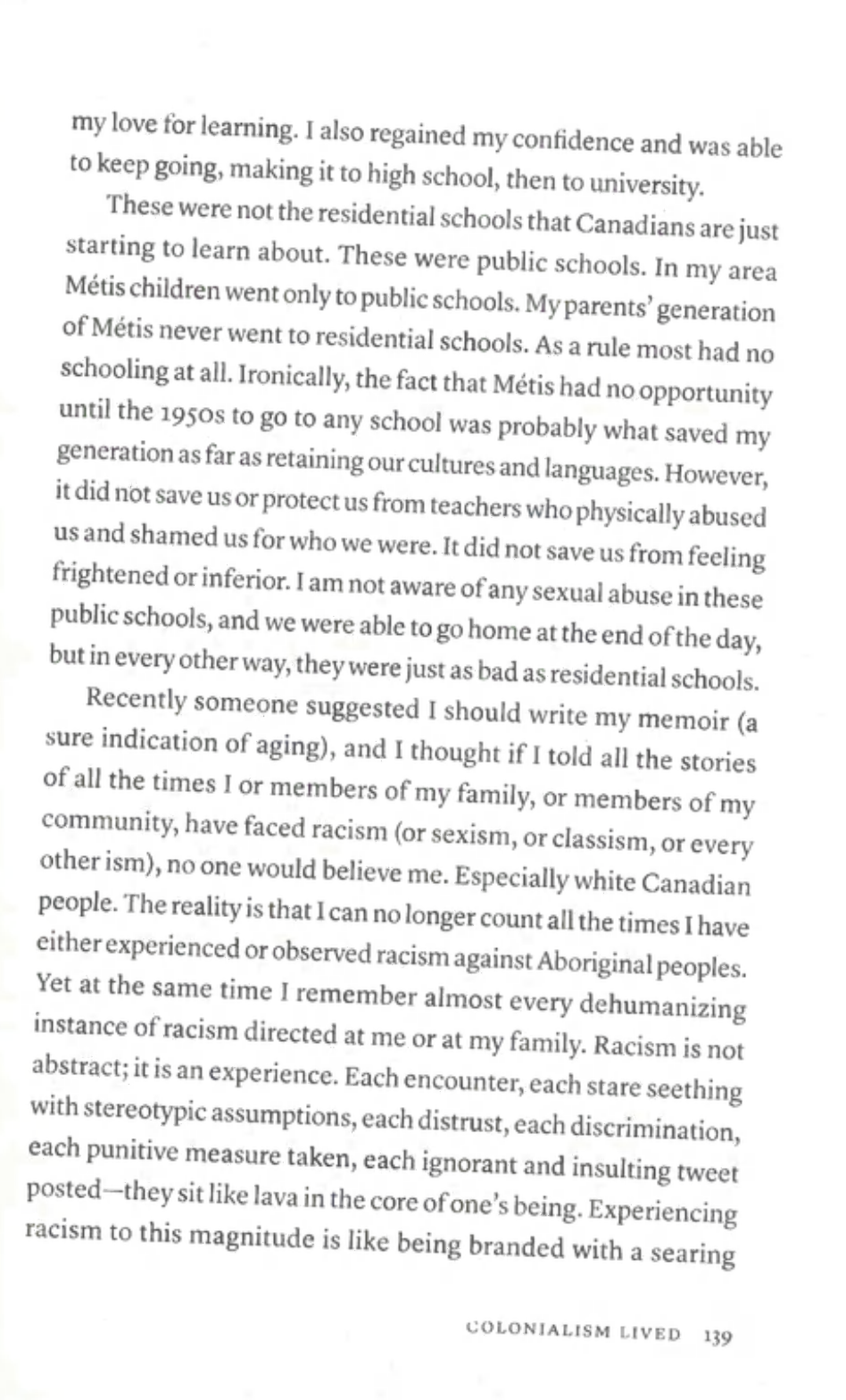
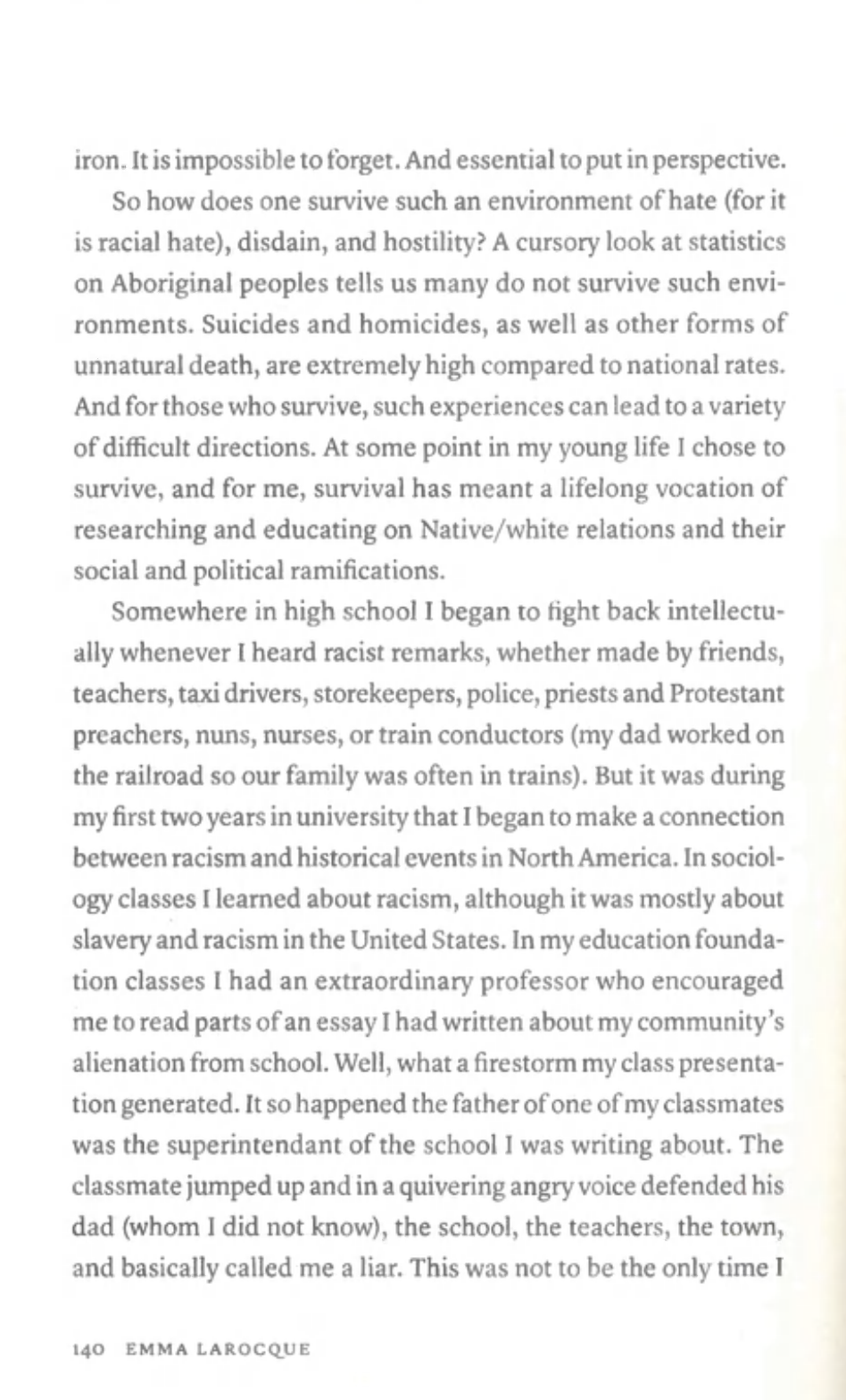
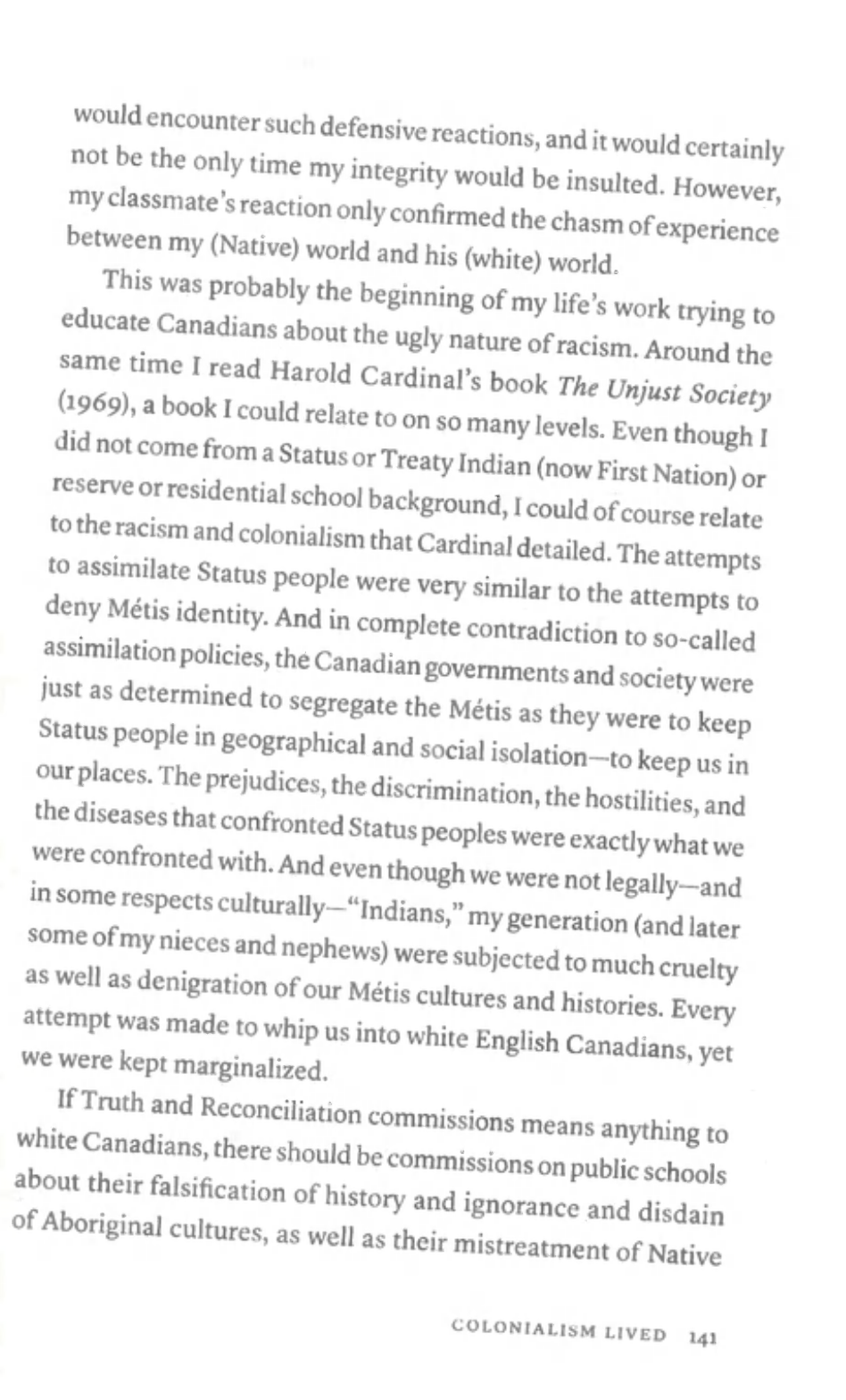
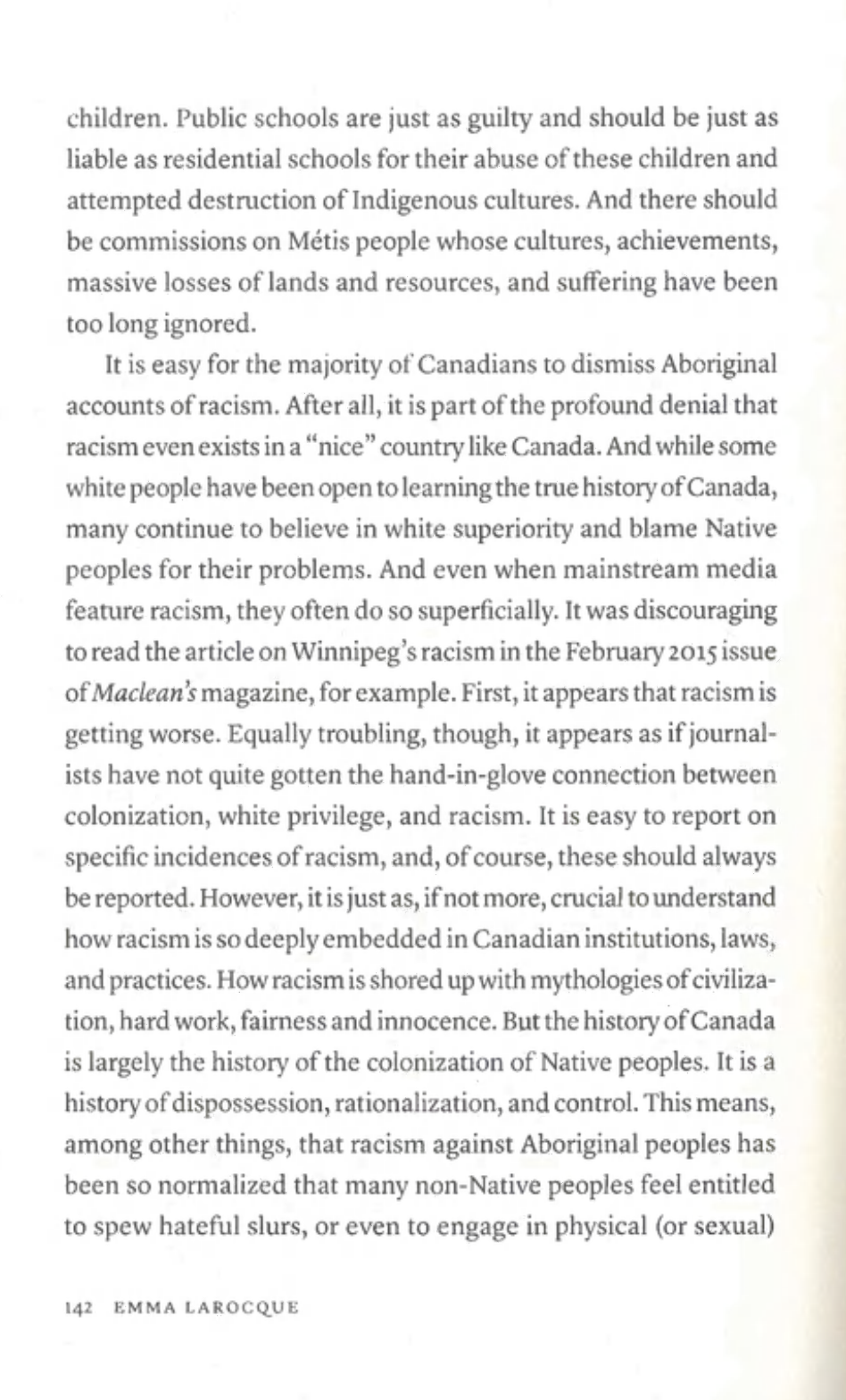
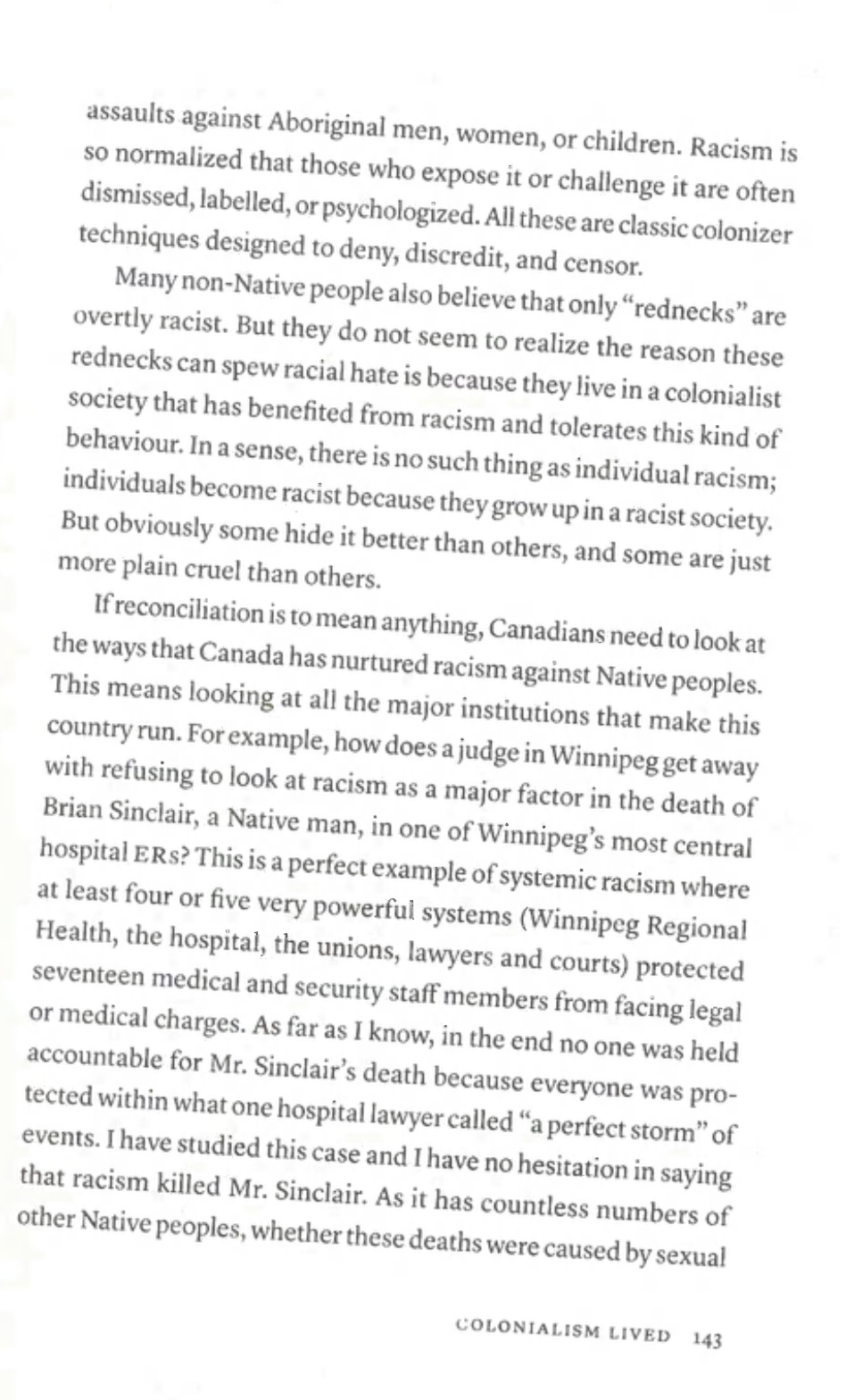
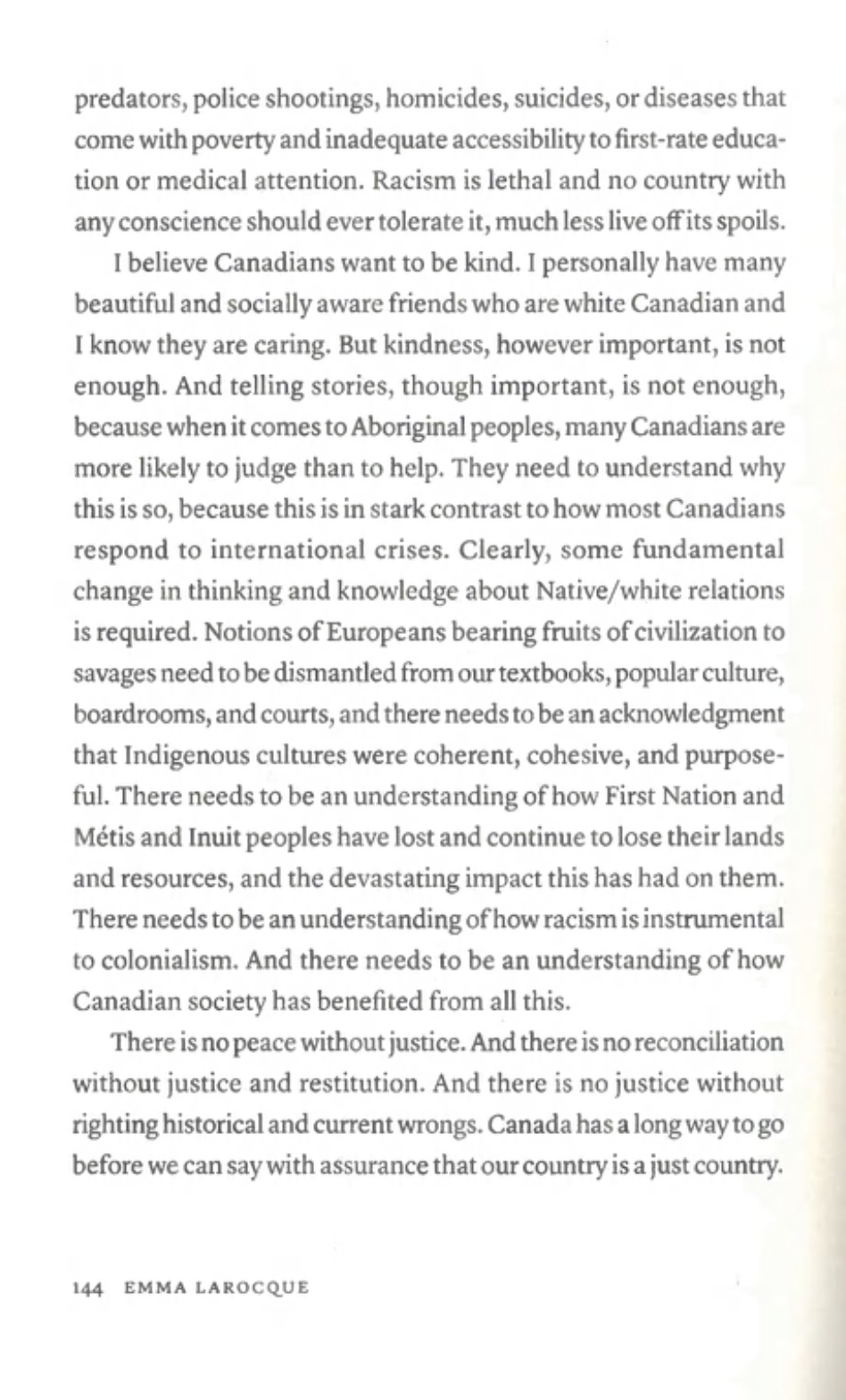
COLONIALISM LIVEO EMMA LAROCQUE DON'T REMEMBER WHEN | first heard the words \"colo- nization\" or \"racism,\" or when exactly I first began to make a conceptual connection between those words and my expe- rience. But I sure remember my first experience of them. I was eight or nine years old, perhaps younger. I was in a caf in a small town in northeastern Alberta, a town we frequented as a family as it was a major meeting place for commercial and community exchanges for Mtis and other Native people. I was sitting on one of those 1950s revolving red vinyl stools with metallic edges, sipping 133 pink cream soda and looking at a comic book, waiting for my par- ents. I heard an odd noise, and saw a quarter rolling right past my little nose. Then I heard awful words drip from some awful place: \"Hey, little squaw, wanna go for a ride?\" | looked up and saw this fat, red-faced white man, sneering at me. I quickly mumbled no and put my nose back in my comic book. Mercifully, he leftperhaps because it was broad daylight in a caf full of people. But no one had paid attention. I think back now and shudder with horror at what could have happened to me. At the time I didn't know the word \"squaw\" and I had no idea what the fat man meant. I just knew instinctively he was disgusting and dangerous. It was not to be my only encounter with racism (and sexism, but that is another essay). Sadly, it has been a lifelong challenge. I'll begin with just some of my elementary school experiences. The first school I went to at the age of nine was a typical one-room schoolhouse complete with a pot-belly stove and large chalk blackboards. This school housed one (white) teacher and about twenty mostly Mtis children, ranging from Grades 1 to 8. My parents were not keen on me going to school but I had staged a sit-down strike at home and howled until my parents relented. I had fallen in love with the idea of school because my older brother had taught me how to read those little Red, Blue and Yellow books. And my mother had instilled a love of learning from her vast storehouse of Cree/ Mtis knowledge. So | walked into that one-room schoolhouse with confidence and anticipation. In just a few years I was to dread going to any school. Like most children in the country, I learned about Dick, Jane, and Sally, with 134 EMMA LAROCQUE Puff and Spot, and Shakespeare and settlers, but nothing good about Big Bear, or Riel, and nothing at all about George Copway or Pauline Johnson, two of the first accomplished Aboriginal writers in Canada, or anything about Pehehsoo or Wesahkehcha (mythical Cree characters). Instead, I read stories about \"great explorers\" and \"heroic settlers\" in combat against horrid and inhumane \"savages.\" This cowboy/Indian message was conveyed everywherein schools, in Stores, in movie houses, and in the comic books most of us Brew up reading. We would have seen them on television too if our homes had had electricity. Indeed, I don't remember learning about Cree people, much less about the Mtis. Nor were we allowed to speak Cree/Michif even though most of the school population was Plains Cree Mtis, We were strapped if we spoke Cree/Michif or were two minutes late toschooleven though we had to walk three kilometres to get to school. Old fan belts from vehicles were used for the strappings, We could also be slapped at whim. I saw many children slapped or strapped or roughed up. I myself was Strapped for being two minutes late. The same teacher also slapped me oncein front of my mother no less! What was my crime? It was clinic day when all the children were getting vaccinated and for some reason parents were also invited. We were all to stay outside until our names were called. Being my first year at school, I must have misunderstood because | opened the door, thinking my mom had stayed inside. Just as I opened the door, the teacher, who was right there, backhanded me across the face. I was stungmore So because my mom witnessed him hitting me. Clearly hurt and furious, she swore at the teacher in Cree but he had already shut COLONIALISM LIVED 135 the door on us. Beyond that she was powerless to do anything. Neither she nor my father could read, write, or speak English. We knew nothing about school boards or complaints processes; that world was entirely foreign and inaccessible to my parents and community. There were no police who would have ever listened. This was us in the early 1960s, on our lands, where we owned no property and had no access to any established centre of power. [had to endure that teacher for several years, and even though he passed me speedily from grade to grade, and made much of my ability to read and spell (often making fun of my older brother as he placed stars after my name, setting me up for bullying in the playground), I never felt safe or happy around him. I was relieved when we were finally bused to another school. That was a larger and more modern school. There were more white children but the Mtis were still the majority. I was in Grade 4. What [remember most about this school was that we had to exchange Christmas gifts. Names were chosen at random and I remember having to buy a gift for a white boy I knew nothing about, which made me nervous. Then came the dreaded day of the exchange, and when the boy opened his gift from me, it became apparent that whatever I had gotten was incomplete. Actually, I think my father had bought the toy-he did not read and would not have known batteries were not included. He would have bought according to the picture on the box. I also did not understand or see the fine print of instructions. The boy did not make a fuss; it was the teacher who had a tantrum and publicly shamed me. What was so strange about this teacher's behaviour was that she should have known better. She and her family lived just a few 136 EMMA LAROCQUE miles from my aunt and uncle's place and my uncle did odd jobs for them, like clearing the land that they had mysteriously come to own, land that morally belonged to Native people. It was not as if she was unaware of our SOciO-economic conditions. Surely she must have known that many Mtis parents, though they worked hard on traplines or at waged jobs, could hardly afford toys for their own children, much less Christmas gifts for school! Besides, in those years the Mtis celebrated New Year's, not Christmas. Why she made us exchange gifts in a school full of low-income children remains a puzzle to me! What did she think she was teaching uswhite Christian generosity? The following year we were once more moved to a different school, right in the middle of winter termand again, without any consultation whatsoever with our parents. This time we (me, my younger brother, and a handful of cousins) were bused to a much larger town school whose population was mostly white. It was the same town where that fat man had tossed a quarter at me. Overnight we became a crouching minority. The all-white teachers knew nothing about us or even that we were coming. They were very strict and often disdainful towards Native children, and I remember three teachers who were especially unkind and easily violent towards us. Our Grade 6 teacher in Particular seemed to have a great dislike of non-white children. One day he called the names of all the non-white children and hada private chat in the hallway with them. Most of us were Native (Mtis, Status Indian, and non-Status, and most of us with Cree and/or Mtis cultural backgrounds) but several were Lebanese or Chinese. One by one he went asking each of us how many times a week we bathed! On COLONIALISM LIVED 437 another occasion he punished a boy from a nearby Cree reserve with one of those classic three-foot rulers. He made the boy bend over a desk and he hit him with this ruler over and over as hard as he could. To this day I can still hear the echo of that ruler as it smacked the boy's buttocks. The rest of us sat frozen and terrified. [ have no idea what that boy had doneI just know it broke his spirit that day. And maybe some of our spirits as well. This school also had Catechism for kids of Roman Catholic faith. It was assumed all Native children were Roman Catholic so we were all forced to attend. I don't remember if the classes were for thirty or sixty minutes, but I do remember every minute was hell. We were made to memorize Latin prayers and to sit perfectly still. The teacher was known for her meanness and her demand of absolute obedience. If we so much as moved our faces one degree from the front, we could expect a hard slap in the face. [ learned this on my first or second day of class when I turned to see if my younger brother was there. As I turned my head back, my twelve-year-old face collided with a plump but solid backhand. Everything about this school felt like a very bad dream. Playgrounds were no easier than classrooms as the white children also taunted me. I was often hurt and humiliated but never told my parents. In fact, until now I have hardly told anyone, and I have rarely written about these particular experiences. In an unexpected way, I was saved from that horrid school by having to be hospitalized in Edmonton. And shortly after my return from the hospital, | was able to leave this school and attend a new one in anew place where I had the great fortune of having my first kind white (Mennonite) teacher. Under his caring guidance through Grades 7 to 9, I regained i138 EMMA LAROCQUE my love for learning. I also regained my confidence and was able to keep going, making it to high school, then to university. These were not the residential schools that Canadians are just starting to learn about. These were public schools. In my area Mtis children went only to public schools. My parents' generation of Mtis never went to residential schools. As a rule most had no schooling at all. Ironically, the fact that Mtis had no opportunity until the 1950s to go to any school was probably what saved my generation as far as retaining our cultures and languages. However, it did not save us or protect us from teachers who physically abused us and shamed us for who we were. It did not save us from feeling frightened or inferior. lam not aware of any sexual abuse in these public schools, and we were able to go home at the end of the day, but in every other way, they were just as bad as residential schools. Recently someone suggested I should write my memoir (a sure indication of aging), and I thought if I told all the stories of all the times I or members of my family, or members of my community, have faced racism (or sexism, or classism, or every other ism), no one would believe me. Especially white Canadian people. The reality is that Ican no longer countall the times I have either experienced or observed racism against Aboriginal peoples. Yet at the same time I remember almost every dehumanizing instance of racism directed at me or at my family. Racism is not abstract; it is an experience. Each encounter, each stare seething with stereotypic assumptions, each distrust, each discrimination, each punitive measure taken, each ignorant and insulting tweet postedthey sit like lava in the core of one's being. Experiencing racism to this magnitude is like being branded with a searing COLONIALISM LIVED 139 iron. It is impossible to forget. And essential to put in perspective. So how does one survive such an environment of hate (for it is racial hate), disdain, and hostility? A cursory look at statistics on Aboriginal peoples tells us many do not survive such envi- ronments. Suicides and homicides, as well as other forms of unnatural death, are extremely high compared to national rates. And for those who survive, such experiences can lead to a variety of difficult directions. At some point in my young life I chose to survive, and for me, survival has meant a lifelong vocation of researching and educating on Native/white relations and their social and political ramifications. Somewhere in high school I began to fight back intellectu- ally whenever I heard racist remarks, whether made by friends, teachers, taxi drivers, storekeepers, police, priests and Protestant preachers, nuns, nurses, or train conductors (my dad worked on the railroad so our family was often in trains). But it was during my first two years in university that I began to make a connection between racism and historical events in North America. In sociol- ogy classes I learned about racism, although it was mostly about slavery and racism in the United States. In my education founda- tion classes I had an extraordinary professor who encouraged me to read parts of an essay I had written about my community's alienation from school. Well, what a firestorm my class presenta- tion generated. It so happened the father of one of my classmates was the superintendant of the school | was writing about. The classmate jumped up and in a quivering angry voice defended his dad (whom | did not know), the school, the teachers, the town, and basically called me a liar. This was not to be the only time I 140 EMMA LAROCQUE would encounter such defensive reactions, and it would certainly not be the only time my integrity would be insulted, However, my classmate's reaction only confirmed the chasm of experience between my ( Native) world and his (white) world. This was Probably the beginning of my life's work trying to educate Canadians about the ugly nature of racism. Around the same time I read Harold Cardinal's book The Unjust Society (1969), a book I could relate to on so many levels. Even though | did not come froma Status or Treaty Indian (now First Nation) or reserve or residential school background, I could of course relate to the racism and colonialism that Cardinal detailed. The attempts to assimilate Status people were very similar to the attempts to deny Mtis identity. And in complete contradiction to so-called assimilation policies, the Canadian governments and society were just as determined to segregate the Mtis as they were to keep Status people in 8eographical and social isolationto keep us in our places. The Prejudices, the discrimination, the hostilities, and in some respects culturally\"Indians,\" my generation (and later some of my nieces and nephews) were subjected to much cruelty as well as denigration of our Mtis cultures and histories. Every attempt was made to whip us into white English Canadians, yet we were kept marginalized, If Truth and Reconciliation commissions means anything to white Canadians, there should be commissions on public schools about their falsification of history and ignorance and disdain of Aboriginal cultures, as well as their mistreatment of Native COLONIALISM LIVED 141 children. Public schools are just as guilty and should be just as liable as residential schools for their abuse of these children and attempted destruction of Indigenous cultures. And there should be commissions on Mtis people whose cultures, achievements, massive losses of lands and resources, and suffering have been too long ignored. It is easy for the majority of Canadians to dismiss Aboriginal accounts of racism. After all, it is part of the profound denial that racism even exists in a \"nice\" country like Canada. And while some white people have been open to learning the true history of Canada, many continue to believe in white superiority and blame Native peoples for their problems. And even when mainstream media feature racism, they often do so superficially. It was discouraging toread the article on Winnipeg's racism in the February 2015 issue of Maclean's magazine, for example. First, it appears that racism is getting worse. Equally troubling, though, it appears as if journal- ists have not quite gotten the hand-in-glove connection between colonization, white privilege, and racism. It is easy to report on specific incidences of racism, and, of course, these should always be reported. However, it is just as, ifnot more, crucial to understand how racism is so deeply embedded in Canadian institutions, laws, and practices. How racism is shored up with mythologies of civiliza- tion, hard work, fairness and innocence. But the history of Canada is largely the history of the colonization of Native peoples. It is a history of dispossession, rationalization, and control. This means, among other things, that racism against Aboriginal peoples has been so normalized that many non-Native peoples feel entitled to spew hateful slurs, or even to engage in physical (or sexual) 142 EMMA LAROCQUE assaults against Aboriginal men, women, or children. Racism is so normalized that those who expose it or challenge it are often dismissed, labelled, or psychologized. All these are classic colonizer techniques designed to deny, discredit, and censor. Many non-Native people also believe that only "rednecks" are overtly racist. But they do not seem to realize the reason these rednecks can spew racial hate is because they live in a colonialist society that has benefited from racism and tolerates this kind of behaviour. In a sense, there is no such thing as individual racism; individuals become racist because they grow up in a racist society. But obviously some hide it better than others, and some are just more plain cruel than others. If reconciliation is to mean anything, Canadians need to look at the ways that Canada has nurtured racism against Native peoples. This means looking at all the major institutions that make this country run. For example, how does a judge in Winnipeg get away with refusing to look at racism as a major factor in the death of Brian Sinclair, a Native man, in one of Winnipeg's most central hospital ERS? This is a perfect example of systemic racism where at least four or five very powerful systems (Winnipeg Regional Health, the hospital, the unions, lawyers and courts) protected seventeen medical and security staff members from facing legal or medical charges. As far as I know, in the end no one was held accountable for Mr. Sinclair's death because everyone was pro- tected within what one hospital lawyer called "a perfect storm" of events. I have studied this case and I have no hesitation in saying that racism killed Mr. Sinclair. As it has countless numbers of other Native peoples, whether these deaths were caused by sexual COLONIALISM LIVED 143predators, police shootings, homicides, suicides, or diseases that come with poverty and inadequate accessibility to first-rate educa- tion or medical attention. Racism is lethal and no country with any conscience should ever tolerate it, much less live off its spoils. I believe Canadians want to be kind. I personally have many beautiful and socially aware friends who are white Canadian and I know they are caring. But kindness, however important, is not enough. And telling stories, though important, is not enough, because when it comes to Aboriginal peoples, many Canadians are more likely to judge than to help, They need to understand why this is so, because this is in stark contrast to how most Canadians respond to international crises. Clearly, some fundamental change in thinking and knowledge about Native/white relations is required. Notions of Europeans bearing fruits of civilization to savages need to be dismantled from our textbooks, popular culture, boardrooms, and courts, and there needs to be an acknowledgment that Indigenous cultures were coherent, cohesive, and purpose- ful. There needs to be an understanding of how First Nation and Mtis and Inuit peoples have lost and continue to lose their lands and resources, and the devastating impact this has had on them. There needs to be an understanding of how racism is instrumental to colonialism. And there needs to be an understanding of how Canadian society has benefited from all this. There is no peace without justice. And there isno reconciliation without justice and restitution. And there is no justice without righting historical and current wrongs. Canada has a long way to go before we can say with assurance that our country is a just country. 144 EMMA LAROCQUE English 30-1 \"Colonialism Lived\4. Choose one or two lines from this essay that particularly stood out for you. Explain why you chose the line and how it contributes to the message and theme of the essay. Remember to cite the page number(s). (3) 5. Provide a brief review of this essay. Consider the following in your response: Was the author 5 messaging effective? What, if anything, did you take away from it (why or why not)? (4)
Step by Step Solution
There are 3 Steps involved in it
1 Expert Approved Answer
Step: 1 Unlock
Question Has Been Solved by an Expert!
Get step-by-step solutions from verified subject matter experts
Step: 2 Unlock
Step: 3 Unlock
Students Have Also Explored These Related Literature Questions!