







Question: help please DIRECTIONS Complete steps 1-3 for the case C1 - Airbnb and Uber found in the back of the chapter (Chapter 7 of your
help please
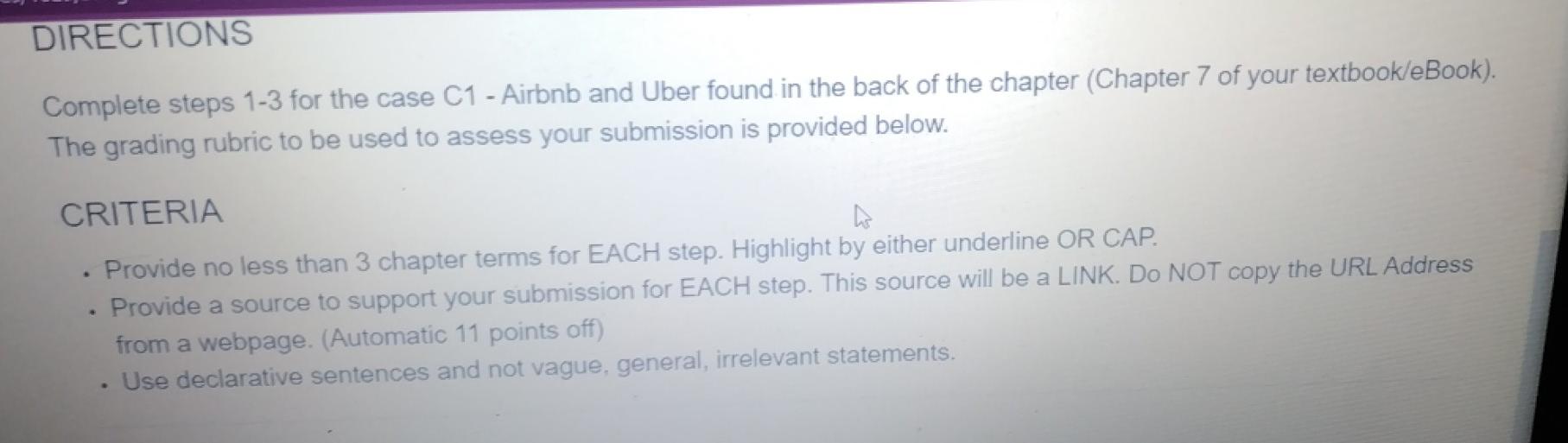
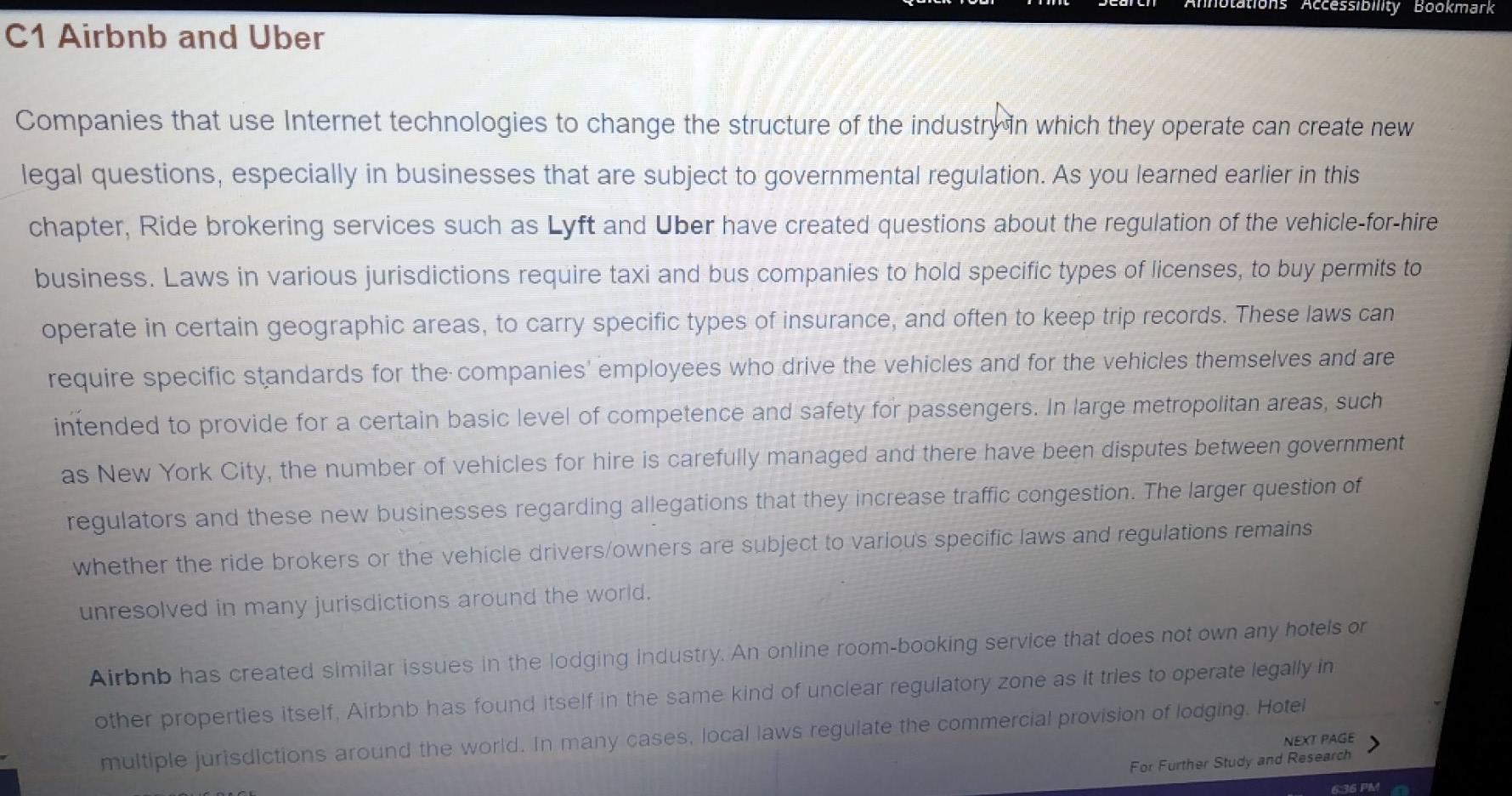
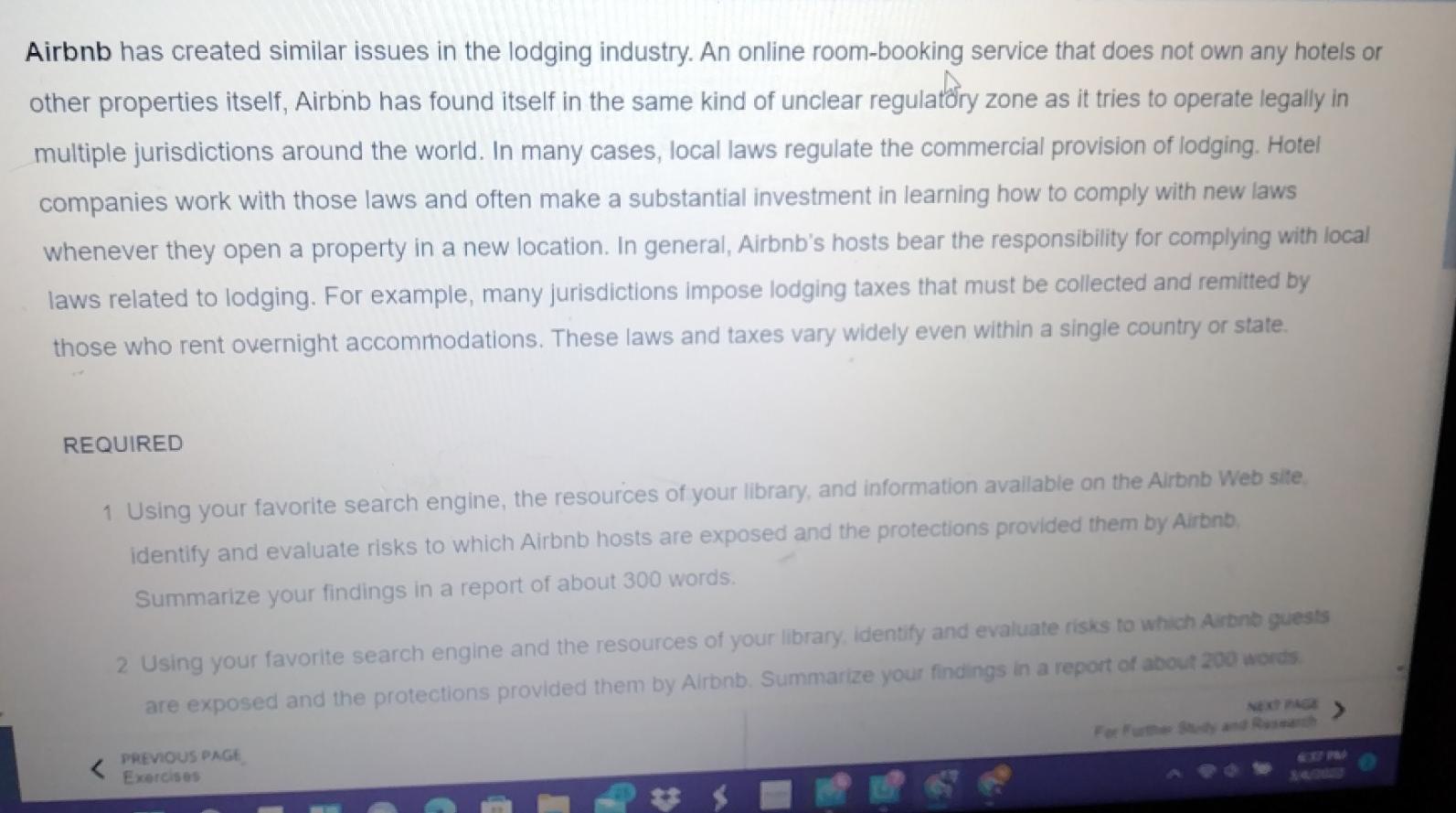
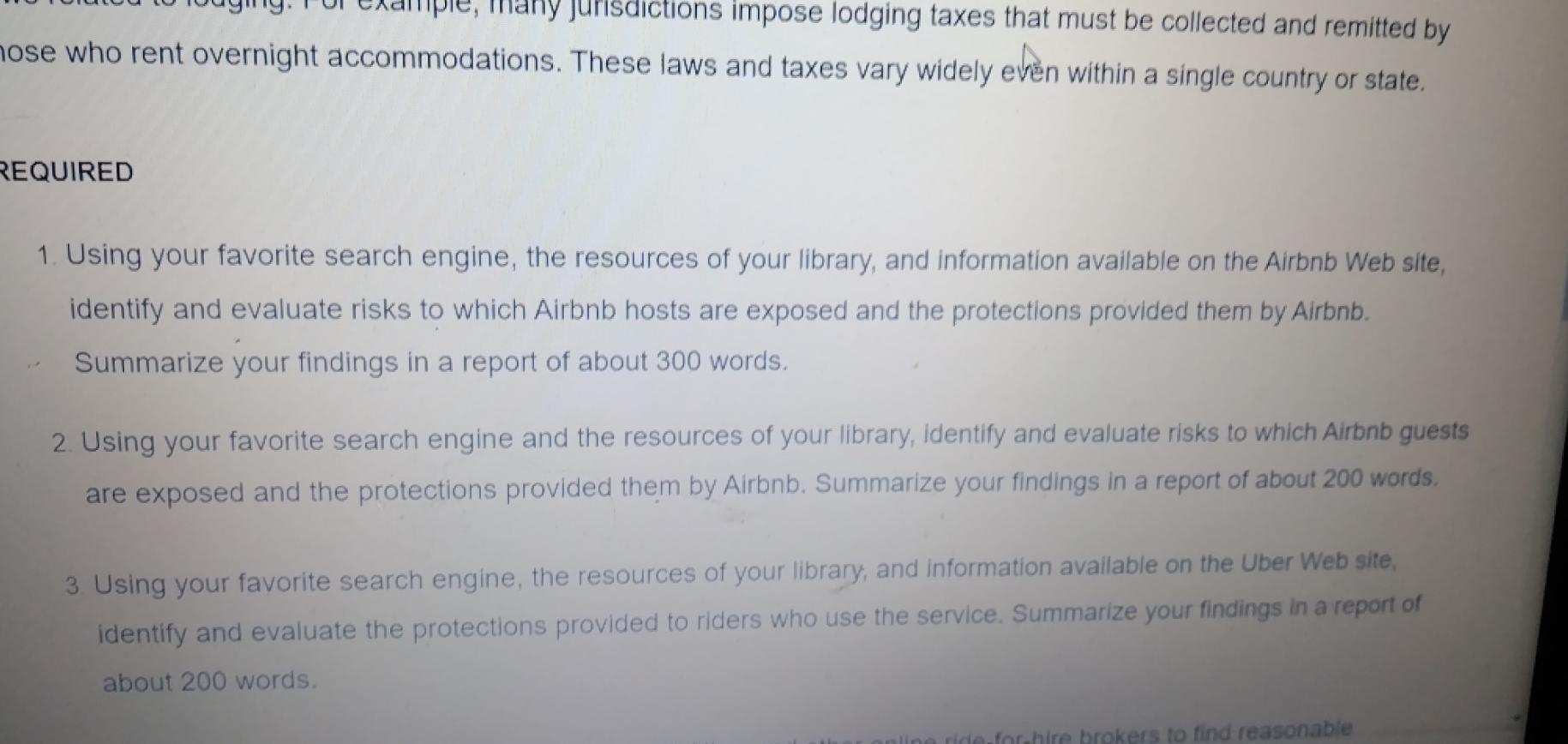
DIRECTIONS Complete steps 1-3 for the case C1 - Airbnb and Uber found in the back of the chapter (Chapter 7 of your textbook/eBook). The grading rubric to be used to assess your submission is provided below. CRITERIA ho Provide no less than 3 chapter terms for EACH step. Highlight by either underline OR CAP. Provide a source to support your submission for EACH step. This source will be a LINK. Do NOT copy the URL Address from a webpage. (Automatic 11 points off) Use declarative sentences and not vague, general, irrelevant statements. Accessibility Bookmark C1 Airbnb and Uber Companies that use Internet technologies to change the structure of the industrihin which they operate can create new legal questions, especially in businesses that are subject to governmental regulation. As you learned earlier in this chapter, Ride brokering services such as Lyft and Uber have created questions about the regulation of the vehicle-for-hire business. Laws in various jurisdictions require taxi and bus companies to hold specific types of licenses, to buy permits to operate in certain geographic areas, to carry specific types of insurance, and often to keep trip records. These laws can require specific standards for the companies' employees who drive the vehicles and for the vehicles themselves and are intended to provide for a certain basic level of competence and safety for passengers. In large metropolitan areas, such as New York City, the number of vehicles for hire carefully managed and there have been disputes between government regulators and these new businesses regarding allegations that they increase traffic congestion. The larger question of whether the ride brokers or the vehicle drivers/owners are subject to various specific laws and regulations remains unresolved in many jurisdictions around the world. Airbnb has created similar issues in the lodging industry. An online room-booking service that does not own any hotels or other properties itself, Airbnb has found itself in the same kind of unclear regulatory zone as it tries to operate legally in multiple jurisdictions around the world. In many cases, local laws regulate the commercial provision of lodging. Hotel NEXT PAGE For Further Study and Research 6:36 PM Airbnb has created similar issues in the lodging industry. An online room-booking service that does not own any hotels or other properties itself, Airbnb has found itself in the same kind of unclear regulatory zone as it tries to operate legally in multiple jurisdictions around the world. In many cases, local laws regulate the commercial provision of lodging. Hotel companies work with those laws and often make a substantial investment in learning how to comply with new laws whenever they open a property in a new location. In general, Airbnb's hosts bear the responsibility for complying with local laws related to lodging. For example, many jurisdictions impose lodging taxes that must be collected and remitted by those who rent overnight accommodations. These laws and taxes vary widely even within a single country or state. REQUIRED 1 Using your favorite search engine, the resources of your library, and information available on the Airbnb Web site. identify and evaluate risks to which Airbnb hosts are exposed and the protections provided them by Airbnb, Summarize your findings in a report of about 300 words. 2 Using your favorite search engine and the resources of your library, identify and evaluate risks to which Arbno guests are exposed and the protections provided them by Airbnb. Summarize your findings in a report of about 200 wordsStep by Step Solution
There are 3 Steps involved in it
1 Expert Approved Answer
Step: 1 Unlock

Question Has Been Solved by an Expert!
Get step-by-step solutions from verified subject matter experts
Step: 2 Unlock
Step: 3 Unlock
 Study Help