







Question: Help Please Question 2 3 pts Though it uses a similar catalytic mechanism, trypsin, unlike chymotrypsin, acts only upon protein substrates having a lysine or
 Help Please
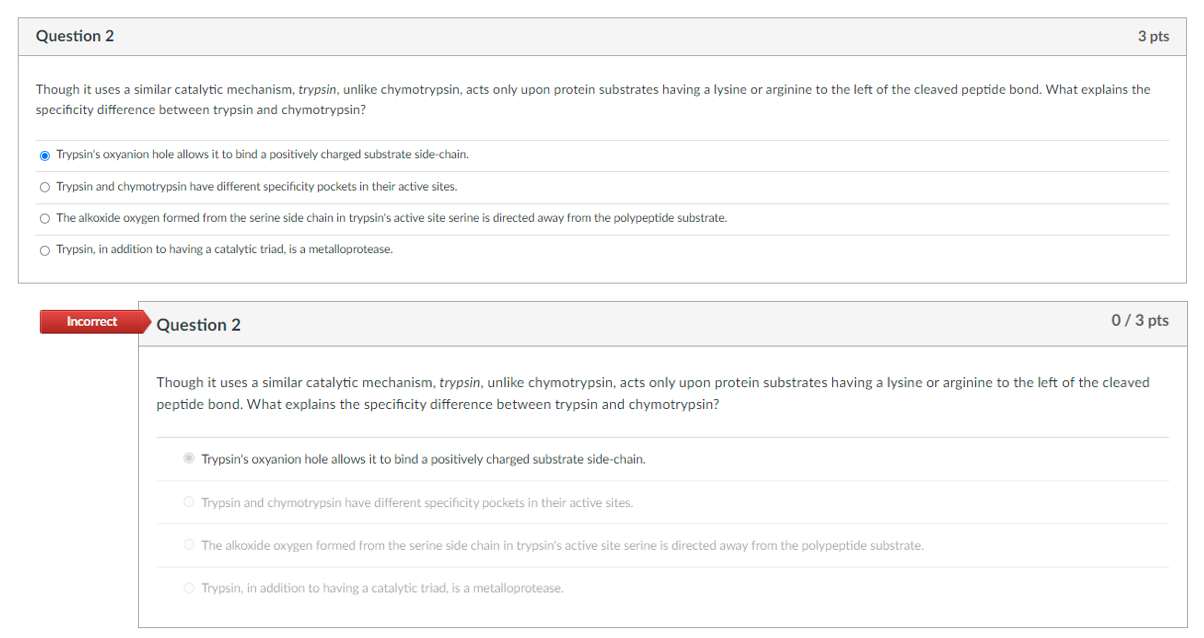
Question 2 3 pts Though it uses a similar catalytic mechanism, trypsin, unlike chymotrypsin, acts only upon protein substrates having a lysine or arginine to the left of the cleaved peptide bond. What explains the specificity difference between trypsin and chymotrypsin? Trypsin's oxyanion hole allows it to bind a positively charged substrate side-chain. Trypsin and chymotrypsin have different specificity pockets in their active sites. The alkoxide oxygen formed from the serine side chain in trypsin's active site serine is directed away from the polypeptide substrate. Trypsin, in addition to having a catalytic triad, is a metalloprotease. Incorrect Question 2 0/3 pts Though it uses a similar catalytic mechanism, trypsin, unlike chymotrypsin, acts only upon protein substrates having a lysine or arginine to the left of the cleaved peptide bond. What explains the specificity difference between trypsin and chymotrypsin? Trypsin's oxyanion hole allows it to bind a positively charged substrate side-chain. Trypsin and chymotrypsin have different specificity pockets in their active sites. The alkoxide oxygen formed from the serine side chain in trypsin's active site serine is directed away from the polypeptide substrate. Trypsin, in addition to having a catalytic triad, is a metalloprotease
Step by Step Solution
There are 3 Steps involved in it

Get step-by-step solutions from verified subject matter experts
 Study Help