







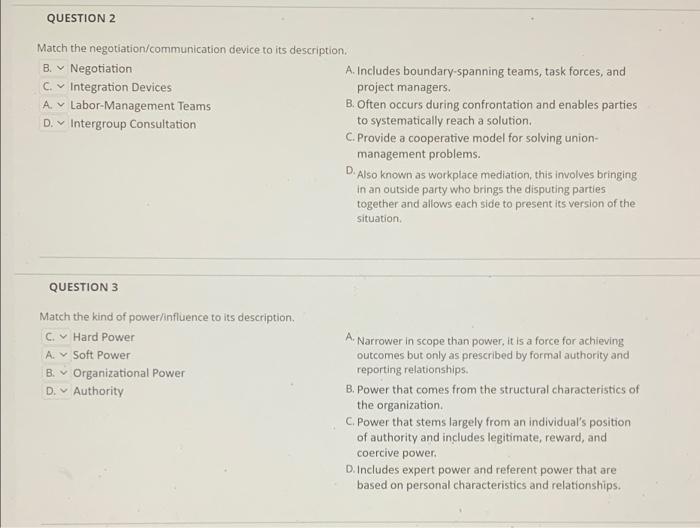
Question: help please QUESTION 2 Match the negotiation/communication device to its description. B. Negotiation C. Integration Devices A. Labor-Management Teams D. V Intergroup Consultation QUESTION 3
help please
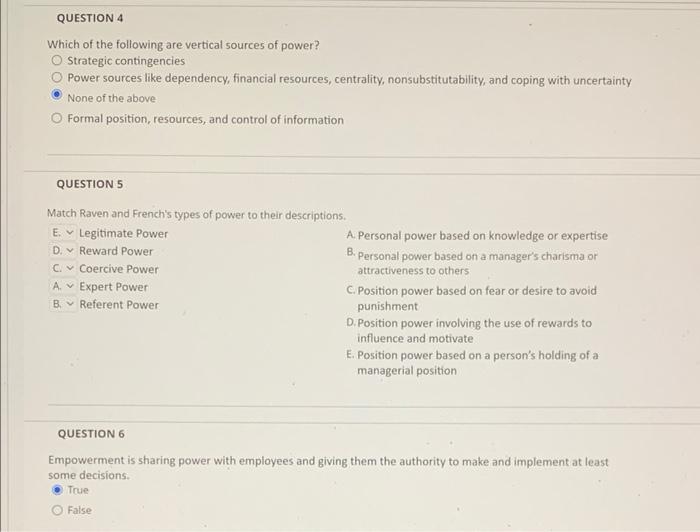
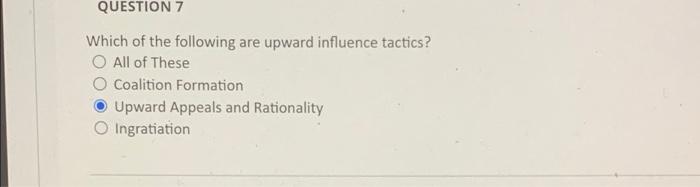
QUESTION 2 Match the negotiation/communication device to its description. B. Negotiation C. Integration Devices A. Labor-Management Teams D. V Intergroup Consultation QUESTION 3 Match the kind of power/influence to its description. C. Hard Power A. Soft Power B. V Organizational Power D. Authority A. Includes boundary-spanning teams, task forces, and project managers. B. Often occurs during confrontation and enables parties to systematically reach a solution. C. Provide a cooperative model for solving union- management problems. D. Also known as workplace mediation, this involves bringing in an outside party who brings the disputing parties together and allows each side to present its version of the situation. A. Narrower in scope than power, it is a force for achieving outcomes but only as prescribed by formal authority and reporting relationships. B. Power that comes from the structural characteristics of the organization. C. Power that stems largely from an individual's position of authority and includes legitimate, reward, and coercive power. D. Includes expert power and referent power that are based on personal characteristics and relationships. QUESTION 4 Which of the following are vertical sources of power? O Strategic contingencies Power sources like dependency, financial resources, centrality, nonsubstitutability, and coping with uncertainty None of the above Formal position, resources, and control of information QUESTION 5 Match Raven and French's types of power to their descriptions. E. Legitimate Power A. Personal power based on knowledge or expertise D. Reward Power B. Personal power based on a manager's charisma or attractiveness to others C. Coercive Power A Expert Power C. Position power based on fear or desire to avoid punishment B. Referent Power D. Position power involving the use of rewards to influence and motivate E. Position power based on a person's holding of a managerial position QUESTION 6 Empowerment is sharing power with employees and giving them the authority to make and implement at least some decisions. True False QUESTION 7 Which of the following are upward influence tactics? O All of These Coalition Formation Upward Appeals and Rationality Ingratiation Step by Step Solution
There are 3 Steps involved in it
1 Expert Approved Answer
Step: 1 Unlock

Question Has Been Solved by an Expert!
Get step-by-step solutions from verified subject matter experts
Step: 2 Unlock
Step: 3 Unlock
 Study Help