







Question: help please Using the techniques described in this chapter carefully read through the case study and determine the most accurate ICD- 10-CM code(s) and external
help please 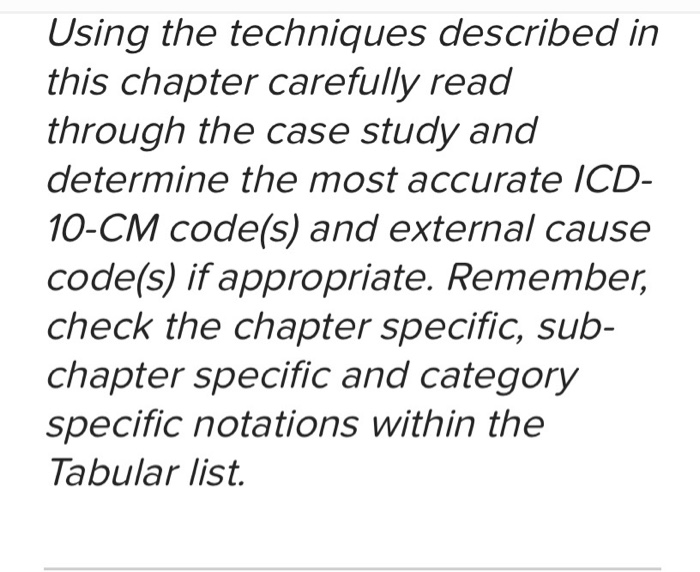
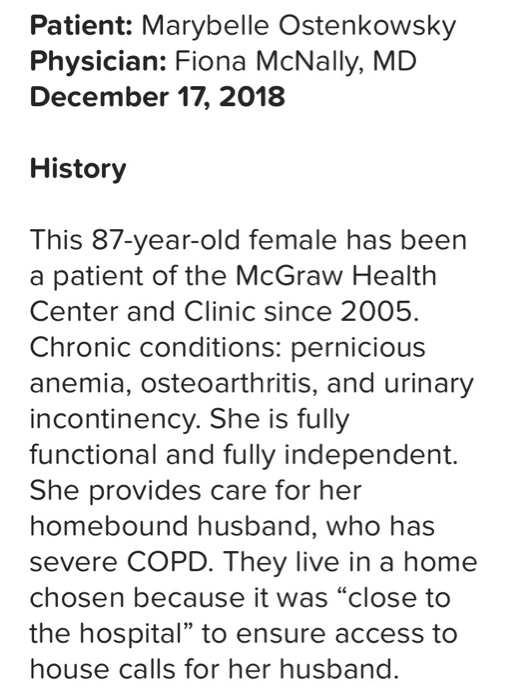
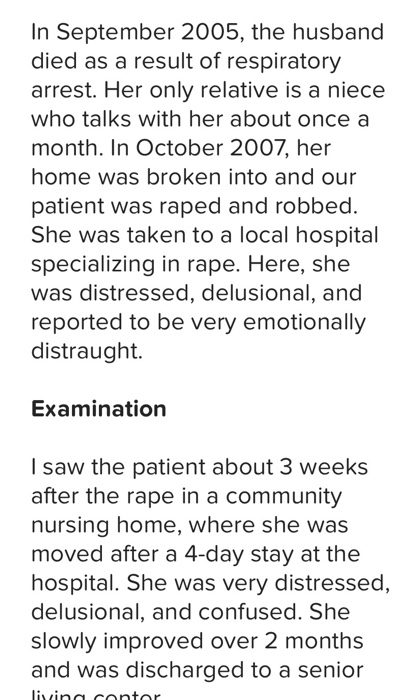
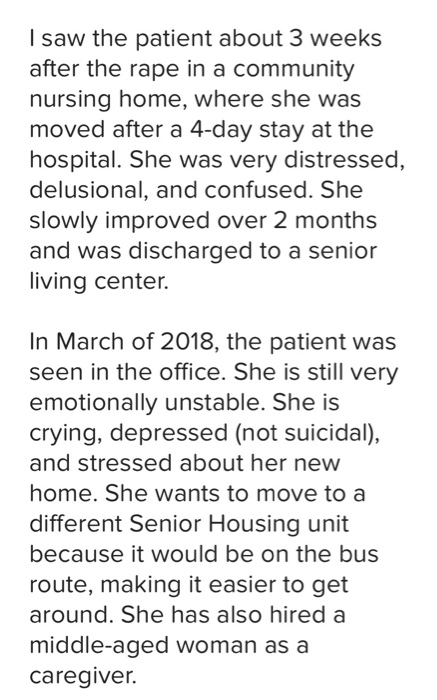
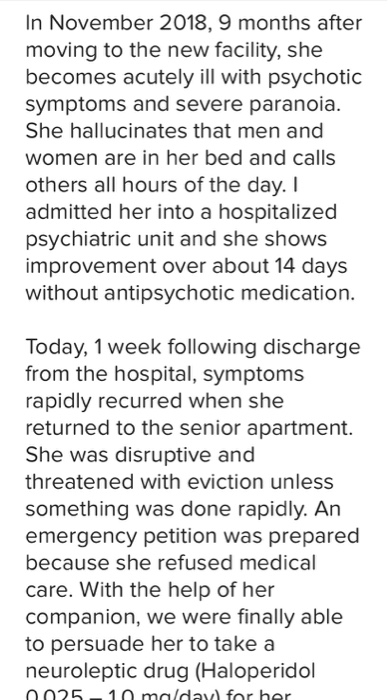
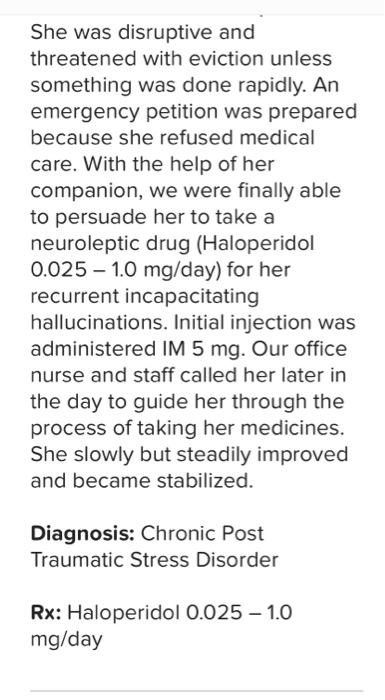
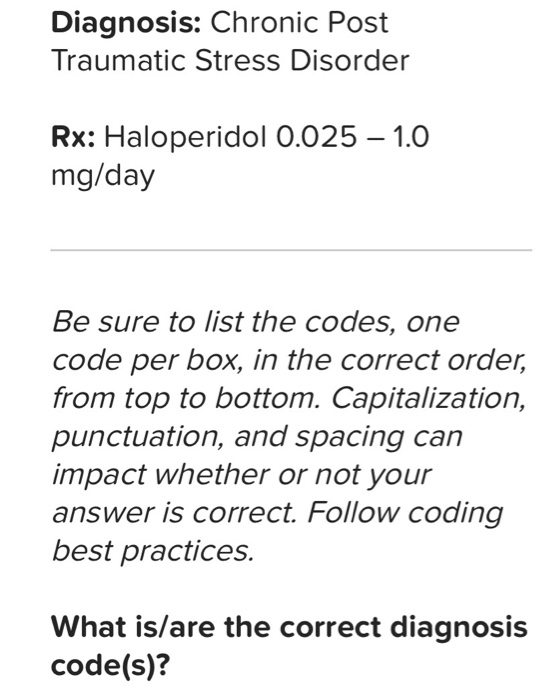
Using the techniques described in this chapter carefully read through the case study and determine the most accurate ICD- 10-CM code(s) and external cause code(s) if appropriate. Remember, check the chapter specific, sub- chapter specific and category specific notations within the Tabular list. Patient: Marybelle Ostenkowsky Physician: Fiona McNally, MD December 17, 2018 History This 87-year-old female has been a patient of the McGraw Health Center and Clinic since 2005. Chronic conditions: pernicious anemia, osteoarthritis, and urinary incontinency. She is fully functional and fully independent. She provides care for her homebound husband, who has severe COPD. They live in a home chosen because it was close to the hospital to ensure access to house calls for her husband. In September 2005, the husband died as a result of respiratory arrest. Her only relative is a niece who talks with her about once a month. In October 2007, her home was broken into and our patient was raped and robbed. She was taken to a local hospital specializing in rape. Here, she was distressed, delusional, and reported to be very emotionally distraught. Examination I saw the patient about 3 weeks after the rape in a community nursing home, where she was moved after a 4-day stay at the hospital. She was very distressed, delusional, and confused. She slowly improved over 2 months and was discharged to a senior liscina contor I saw the patient about 3 weeks after the rape in a community nursing home, where she was moved after a 4-day stay at the hospital. She was very distressed, delusional, and confused. She slowly improved over 2 months and was discharged to a senior living center. In March of 2018, the patient was seen in the office. She is still very emotionally unstable. She is crying, depressed (not suicidal), and stressed about her new home. She wants to move to a different Senior Housing unit because it would be on the bus route, making it easier to get around. She has also hired a middle-aged woman as a caregiver. In November 2018, 9 months after moving to the new facility, she becomes acutely ill with psychotic symptoms and severe paranoia. She hallucinates that men and women are in her bed and calls others all hours of the day. I admitted her into a hospitalized psychiatric unit and she shows improvement over about 14 days without antipsychotic medication. Today, 1 week following discharge from the hospital, symptoms rapidly recurred when she returned to the senior apartment. She was disruptive and threatened with eviction unless something was done rapidly. An emergency petition was prepared because she refused medical care. With the help of her companion, we were finally able to persuade her to take a neuroleptic drug (Haloperidol 0025_10 malday for her She was disruptive and threatened with eviction unless something was done rapidly. An emergency petition was prepared because she refused medical care. With the help of her companion, we were finally able to persuade her to take a neuroleptic drug (Haloperidol 0.025 1.0 mg/day) for her recurrent incapacitating hallucinations. Initial injection was administered IM 5 mg. Our office nurse and staff called her later in the day to guide her through the process of taking her medicines. She slowly but steadily improved and became stabilized. Diagnosis: Chronic Post Traumatic Stress Disorder Rx: Haloperidol 0.025 - 1.0 mg/day Diagnosis: Chronic Post Traumatic Stress Disorder Rx: Haloperidol 0.025 1.0 mg/day Be sure to list the codes, one code per box, in the correct order, from top to bottom. Capitalization, punctuation, and spacing can impact whether or not your answer is correct. Follow coding best practices. What is/are the correct diagnosis code(s)? Using the techniques described in this chapter carefully read through the case study and determine the most accurate ICD- 10-CM code(s) and external cause code(s) if appropriate. Remember, check the chapter specific, sub- chapter specific and category specific notations within the Tabular list. Patient: Marybelle Ostenkowsky Physician: Fiona McNally, MD December 17, 2018 History This 87-year-old female has been a patient of the McGraw Health Center and Clinic since 2005. Chronic conditions: pernicious anemia, osteoarthritis, and urinary incontinency. She is fully functional and fully independent. She provides care for her homebound husband, who has severe COPD. They live in a home chosen because it was close to the hospital to ensure access to house calls for her husband. In September 2005, the husband died as a result of respiratory arrest. Her only relative is a niece who talks with her about once a month. In October 2007, her home was broken into and our patient was raped and robbed. She was taken to a local hospital specializing in rape. Here, she was distressed, delusional, and reported to be very emotionally distraught. Examination I saw the patient about 3 weeks after the rape in a community nursing home, where she was moved after a 4-day stay at the hospital. She was very distressed, delusional, and confused. She slowly improved over 2 months and was discharged to a senior liscina contor I saw the patient about 3 weeks after the rape in a community nursing home, where she was moved after a 4-day stay at the hospital. She was very distressed, delusional, and confused. She slowly improved over 2 months and was discharged to a senior living center. In March of 2018, the patient was seen in the office. She is still very emotionally unstable. She is crying, depressed (not suicidal), and stressed about her new home. She wants to move to a different Senior Housing unit because it would be on the bus route, making it easier to get around. She has also hired a middle-aged woman as a caregiver. In November 2018, 9 months after moving to the new facility, she becomes acutely ill with psychotic symptoms and severe paranoia. She hallucinates that men and women are in her bed and calls others all hours of the day. I admitted her into a hospitalized psychiatric unit and she shows improvement over about 14 days without antipsychotic medication. Today, 1 week following discharge from the hospital, symptoms rapidly recurred when she returned to the senior apartment. She was disruptive and threatened with eviction unless something was done rapidly. An emergency petition was prepared because she refused medical care. With the help of her companion, we were finally able to persuade her to take a neuroleptic drug (Haloperidol 0025_10 malday for her She was disruptive and threatened with eviction unless something was done rapidly. An emergency petition was prepared because she refused medical care. With the help of her companion, we were finally able to persuade her to take a neuroleptic drug (Haloperidol 0.025 1.0 mg/day) for her recurrent incapacitating hallucinations. Initial injection was administered IM 5 mg. Our office nurse and staff called her later in the day to guide her through the process of taking her medicines. She slowly but steadily improved and became stabilized. Diagnosis: Chronic Post Traumatic Stress Disorder Rx: Haloperidol 0.025 - 1.0 mg/day Diagnosis: Chronic Post Traumatic Stress Disorder Rx: Haloperidol 0.025 1.0 mg/day Be sure to list the codes, one code per box, in the correct order, from top to bottom. Capitalization, punctuation, and spacing can impact whether or not your answer is correct. Follow coding best practices. What is/are the correct diagnosis code(s) Step by Step Solution
There are 3 Steps involved in it
1 Expert Approved Answer
Step: 1 Unlock

Question Has Been Solved by an Expert!
Get step-by-step solutions from verified subject matter experts
Step: 2 Unlock
Step: 3 Unlock
 Study Help