







Question: help Question 1 Match the correct term with its definition. also known as the historical cost principle, states that everything the company owns or controls
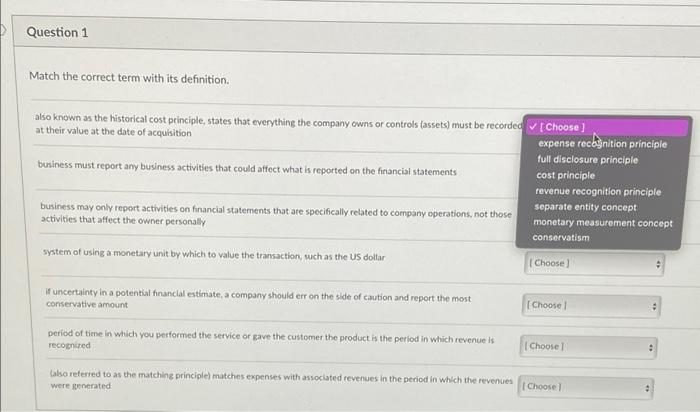
Question 1 Match the correct term with its definition. also known as the historical cost principle, states that everything the company owns or controls (assets) must be recorded [Choose ] at their value at the date of acquisition business must report any business activities that could affect what is reported on the financial statements business may only report activities on financial statements that are specifically related to company operations, not those activities that affect the owner personally system of using a monetary unit by which to value the transaction, such as the US dollar if uncertainty in a potential financial estimate, a company should err on the side of caution and report the most conservative amount period of time in which you performed the service or gave the customer the product is the period in which revenue is recognized (also referred to as the matching principle) matches expenses with associated revenues in the period in which the revenues were generated expense recognition principle full disclosure principle cost principle revenue recognition principle separate entity concept monetary measurement concept conservatism [Choose] [Choose] [Choose ] Choose
Step by Step Solution
There are 3 Steps involved in it

Get step-by-step solutions from verified subject matter experts
 Study Help