







Question: Help with 2 & 3 On Your Own 1. Now let's consider some of the other variables in the body dimensions data set. Using the
 Help with 2 & 3
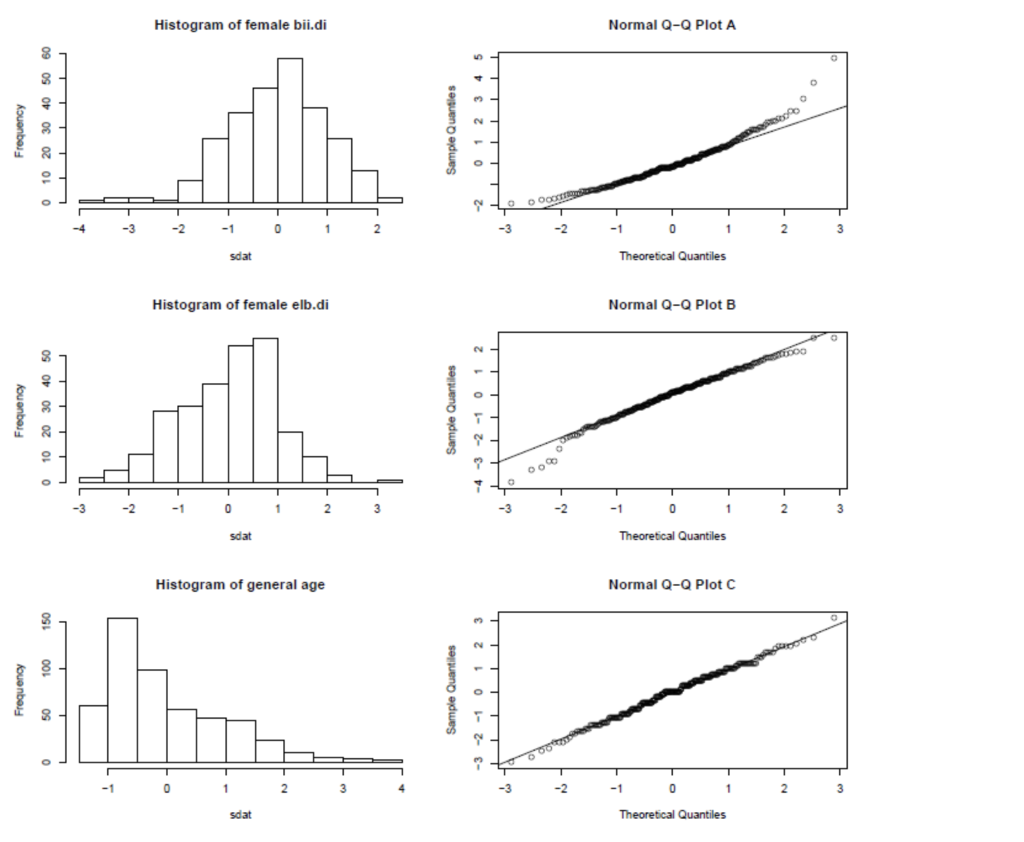
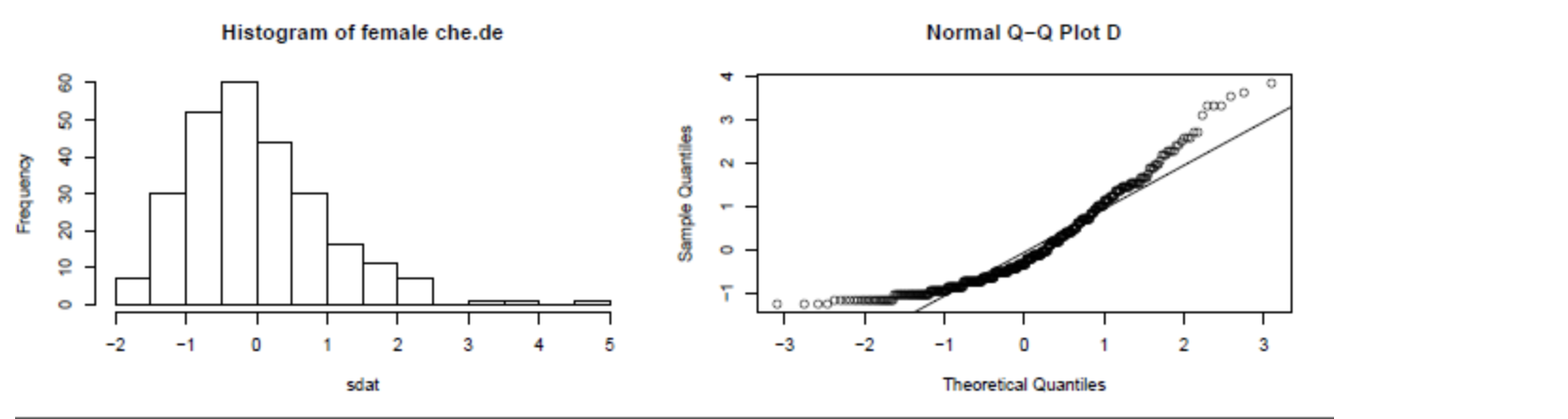
On Your Own 1. Now let's consider some of the other variables in the body dimensions data set. Using the figures at the end of the exercises, match the histogram to its normal probability plot. All of the variables have been standardized (first subtract the mean, then divide by the standard deviation), so the units won't be of any help. If you are uncertain based on these figures, generate the plots in R to check. a. The histogram for female biiliac (pelvic) diameter (bii.di) belongs to normal probability plot letter b. The histogram for female elbow diameter (elb.di) belongs to normal probability plot letter c. The histogram for general age ( age ) belongs to normal probability plot letter d. The histogram for female chest depth (che.de ) belongs to normal probability plot letter 2. Note that normal probability plots C and D have a slight stepwise pattern. Why do you think this is the case? 3. As you can see, normal probability plots can be used both to assess normality and visualize skewness. Make a normal probability plot for female knee diameter ( kne.di). Based on this normal probability plot, is this variable left skewed, symmetric, or right skewed? Use a histogram to confirm your findings. Histogram of female bii.di Normal Q-Q Plot A 8 2 3 4 5 Sample Quantiles -3 -1 0 1 -3 0 1 2 3 sdat Theoretical Quantiles Histogram of female elb.di Normal Q-Q Plot B TODO Frequency 0 10 20 30 40 50 Sample Quantiles 4 -3 -2 -1 0 1 2 -1 0 1 2 -3 -2 -1 0 1 2 3 sdat Theoretical Quantiles Histogram of general age Normal Q-Q Plot C m Frequency Sample Quantiles T 0 0 1 2 1 2 sdat Theoretical Quantiles Histogram of female che.de Normal Q-Q Plot D O 50 60 3 2 Popis Frequency 1 0 10 20 30 40 LI Sample Quantiles -1 0 OUTROS T T T -2 -1 0 1 2 3 4 5 -3 -2 0 1 2 3 sdat Theoretical Quantiles On Your Own 1. Now let's consider some of the other variables in the body dimensions data set. Using the figures at the end of the exercises, match the histogram to its normal probability plot. All of the variables have been standardized (first subtract the mean, then divide by the standard deviation), so the units won't be of any help. If you are uncertain based on these figures, generate the plots in R to check. a. The histogram for female biiliac (pelvic) diameter (bii.di) belongs to normal probability plot letter b. The histogram for female elbow diameter (elb.di) belongs to normal probability plot letter c. The histogram for general age ( age ) belongs to normal probability plot letter d. The histogram for female chest depth (che.de ) belongs to normal probability plot letter 2. Note that normal probability plots C and D have a slight stepwise pattern. Why do you think this is the case? 3. As you can see, normal probability plots can be used both to assess normality and visualize skewness. Make a normal probability plot for female knee diameter ( kne.di). Based on this normal probability plot, is this variable left skewed, symmetric, or right skewed? Use a histogram to confirm your findings. Histogram of female bii.di Normal Q-Q Plot A 8 2 3 4 5 Sample Quantiles -3 -1 0 1 -3 0 1 2 3 sdat Theoretical Quantiles Histogram of female elb.di Normal Q-Q Plot B TODO Frequency 0 10 20 30 40 50 Sample Quantiles 4 -3 -2 -1 0 1 2 -1 0 1 2 -3 -2 -1 0 1 2 3 sdat Theoretical Quantiles Histogram of general age Normal Q-Q Plot C m Frequency Sample Quantiles T 0 0 1 2 1 2 sdat Theoretical Quantiles Histogram of female che.de Normal Q-Q Plot D O 50 60 3 2 Popis Frequency 1 0 10 20 30 40 LI Sample Quantiles -1 0 OUTROS T T T -2 -1 0 1 2 3 4 5 -3 -2 0 1 2 3 sdat Theoretical Quantiles
Step by Step Solution
There are 3 Steps involved in it

Get step-by-step solutions from verified subject matter experts
 Study Help