



Question: help with step problems of WACC help with Market value weights help me with WACC target weights 1-3 WACC-Market value weights The market values and
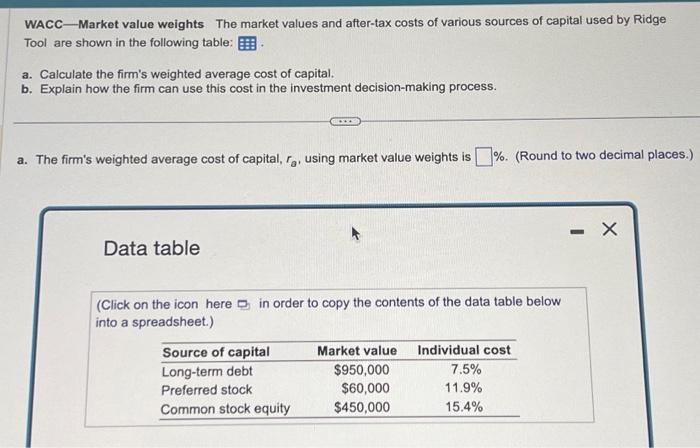
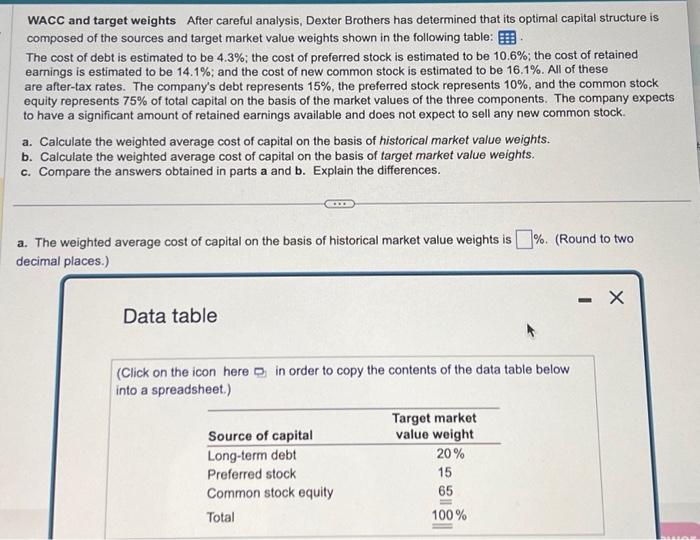
WACC-Market value weights The market values and after-tax costs of various sources of capital used by Ridge Tool are shown in the following table: a. Calculate the firm's weighted average cost of capital. b. Explain how the firm can use this cost in the investment decision-making process. a. The firm's weighted average cost of capital, ra, using market value weights is \%. (Round to two decimal places.) Data table into a spreadsheet.) WACC and target weights After careful analysis, Dexter Brothers has determined that its optimal capital structure is composed of the sources and target market value weights shown in the following table: The cost of debt is estimated to be 4.3%; the cost of preferred stock is estimated to be 10.6%; the cost of retained earnings is estimated to be 14.1%; and the cost of new common stock is estimated to be 16.1%. All of these are after-tax rates. The company's debt represents 15%, the preferred stock represents 10%, and the common stock equity represents 75% of total capital on the basis of the market values of the three components. The company expects to have a significant amount of retained earnings available and does not expect to sell any new common stock. a. Calculate the weighted average cost of capital on the basis of historical market value weights. b. Calculate the weighted average cost of capital on the basis of target market value weights. c. Compare the answers obtained in parts a and b. Explain the differences. a. The weighted average cost of capital on the basis of historical market value weights is %. (Round to two decimal places.) Data table (Click on the icon here in order to copy the contents of the data table below into a spreadsheet.)
Step by Step Solution
There are 3 Steps involved in it

Get step-by-step solutions from verified subject matter experts