







Question: help with this central limit theorem STATS LAB 7.1: Central Limit Theorem (Pocket Change} 1. Save the File with your Name in it, i.e. TEystengLahdocn
help with this central limit theorem
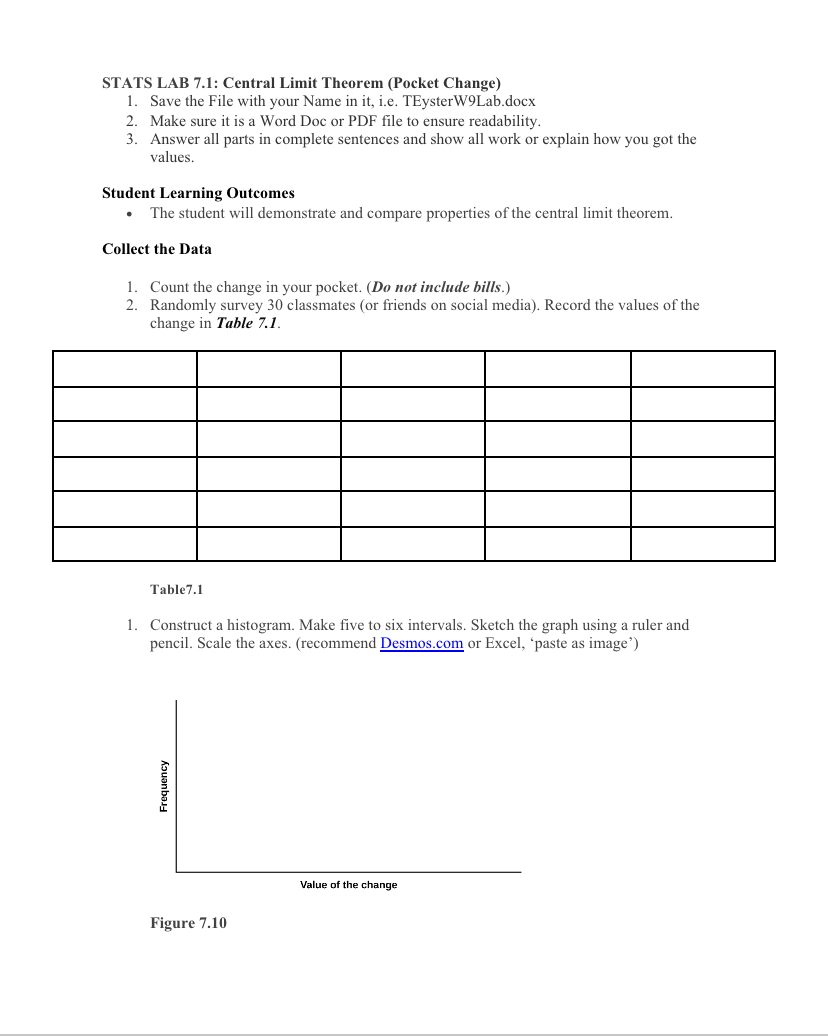
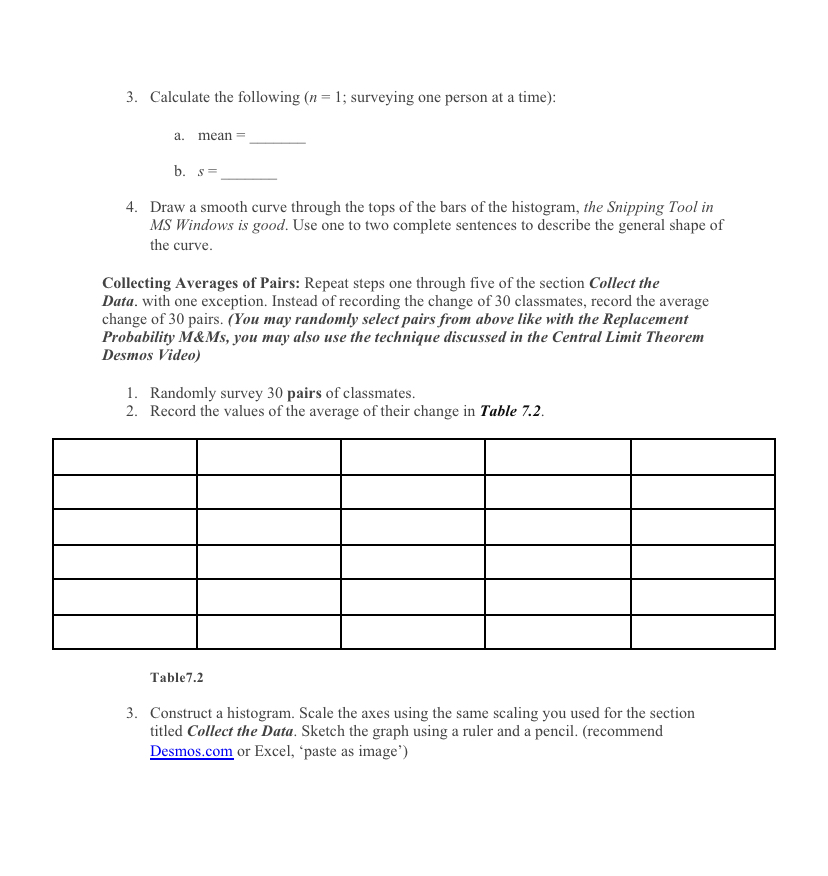
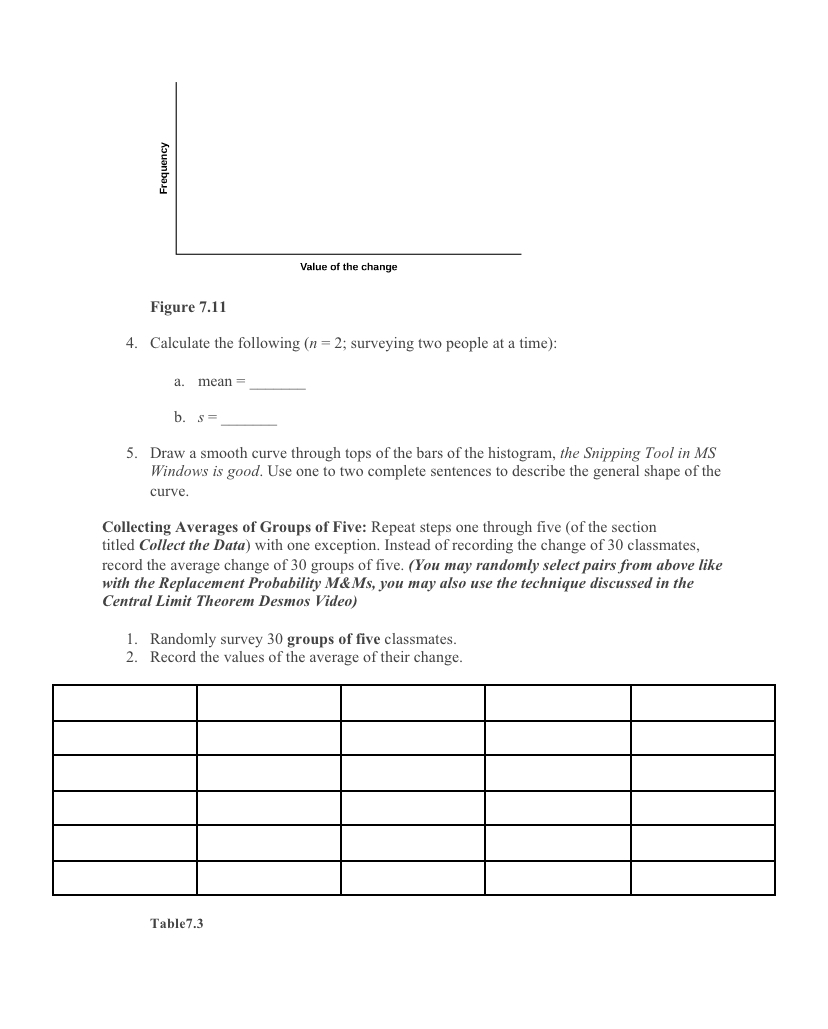
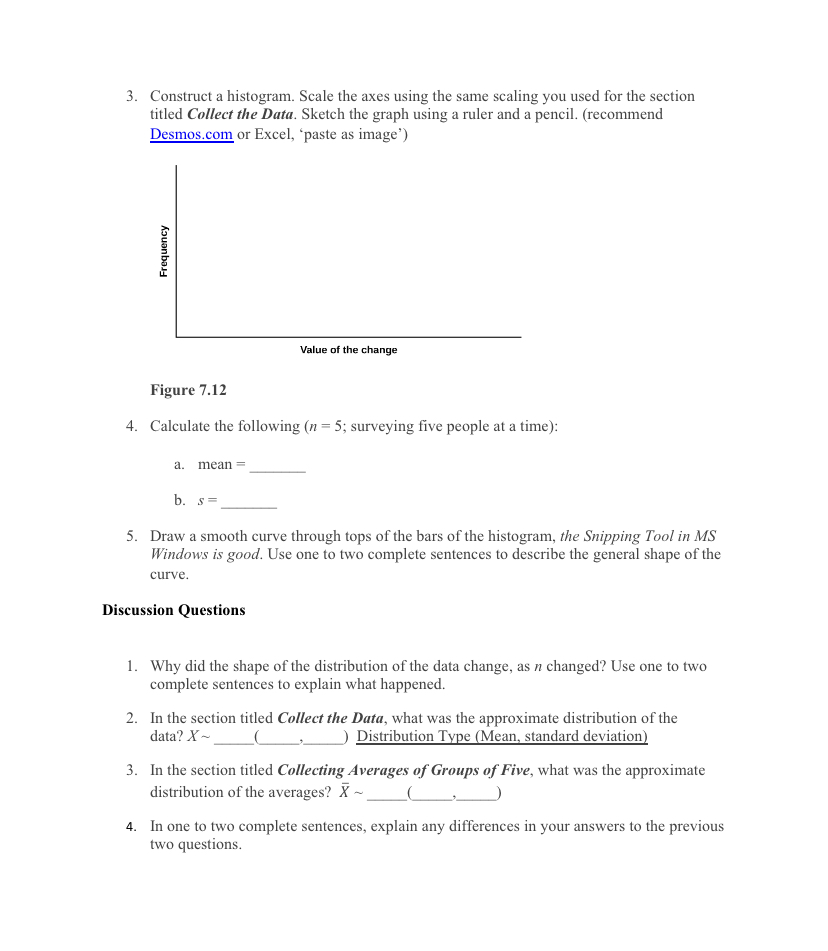
STATS LAB 7.1: Central Limit Theorem (Pocket Change} 1. Save the File with your Name in it, i.e. TEystengLahdocn 2. Male Sure it is a Word Doc or PDF le to wane readability. 3. Answer all parts in complete sentences and show all work or explain how you got the values. Student Learning Outcomes The student will demonstrate and compare properties of the central limit theorem. Coeet the Data 1. Count the change in your pocket. (Do not include bills.) 2. Randomly survey.r 3G classmates (or friends on social media). Record the values of the change in Table II. l. Constnlct a histogram. Make ve to six intervals. Sketch the graph using a ruler and pencil. Scale the axes. (recommend Desmos.com or Excel. 'paste as image') P Value of the manure. Hanna-Icy Figure 1.11} 3. Calculate the following (n = 1; surveying one person at a time): a. mean = b. s= 4. Draw a smooth curve through the tops of the bars of the histogram, the Snipping Tool in MS Windows is good. Use one to two complete sentences to describe the general shape of the curve. Collecting Averages of Pairs: Repeat steps one through five of the section Collect the Data. with one exception. Instead of recording the change of 30 classmates, record the average change of 30 pairs. (You may randomly select pairs from above like with the Replacement Desmos Video) Probability M&Ms, you may also use the technique discussed in the Central Limit Theorem 1. Randomly survey 30 pairs of classmates. 2. Record the values of the average of their change in Table 7.2. Table7.2 3. Construct a histogram. Scale the axes using the same scaling you used for the section titled Collect the Data. Sketch the graph using a ruler and a pencil. (recommend Desmos.com or Excel, 'paste as image")Frequency Value of the change Figure 7.11 4. Calculate the following (n = 2; surveying two people at a time): a. mean = b. s= 5. Draw a smooth curve through tops of the bars of the histogram, the Snipping Tool in MS Windows is good. Use one to two complete sentences to describe the general shape of the curve. Collecting Averages of Groups of Five: Repeat steps one through five (of the section titled Collect the Data) with one exception. Instead of recording the change of 30 classmates, record the average change of 30 groups of five. (You may randomly select pairs from above like with the Replacement Probability M&Ms, you may also use the technique discussed in the Central Limit Theorem Desmos Video) Table7.33. Construct a histogram. Scale the axes using the same scaling you used for the section titled Collect the Data. Sketch the graph using a ruler and a pencil. (recommend Desmos.com or Excel, 'paste as image') Frequency Value of the change Figure 7.12 4. Calculate the following (n = 5; surveying five people at a time): a. mean = b. s= 5. Draw a smooth curve through tops of the bars of the histogram, the Snipping Tool in MS Windows is good. Use one to two complete sentences to describe the general shape of the curve. Discussion Questions 1. Why did the shape of the distribution of the data change, as n changed? Use one to two complete sentences to explain what happened. 2. In the section titled Collect the Data, what was the approximate distribution of the data? X- ) Distribution Type (Mean, standard deviation) 3. In the section titled Collecting Averages of Groups of Five, what was the approximate distribution of the averages? X - 4. In one to two complete sentences, explain any differences in your answers to the previous two questions
Step by Step Solution
There are 3 Steps involved in it

Get step-by-step solutions from verified subject matter experts
 Study Help