







Question: Here are your 15 questions from Chapters 1, 2 and 3 listed below from this book https://shorturl.at/XTDZy Chapter 1 Page 8: Concept Check 1.1 -
Here are your 15 questions from Chapters 1, 2 and 3 listed below from this book https://shorturl.at/XTDZy
Chapter 1
- Page 8: Concept Check 1.1 - #1, #2
- Page 11: Concept Check 1.2 - #2
- Page 14: Concept Check 1.3 - #1
- Page 21: Concept Check 1.4 - #1
Chapter 2
- Page 33: Concept Check 2.1 - #1, #3
- Page 44: Concept Check 2.4 - #2
- Page 50: Concept Check 2.5 - #5
- Page 51: Concept Check 2.6 - #1
Chapter 3
- Page 69: Concept Check 3.2 - #3, #5
- Page 75: Concept Check 3.3 - #1
- Page 82: Concept Check 3.4 - #4
- Page 87: Concept Check 3.5 - #3
Task:
Please type the questions along with your answers all in one word file docx
book link https://shorturl.at/XTDZy
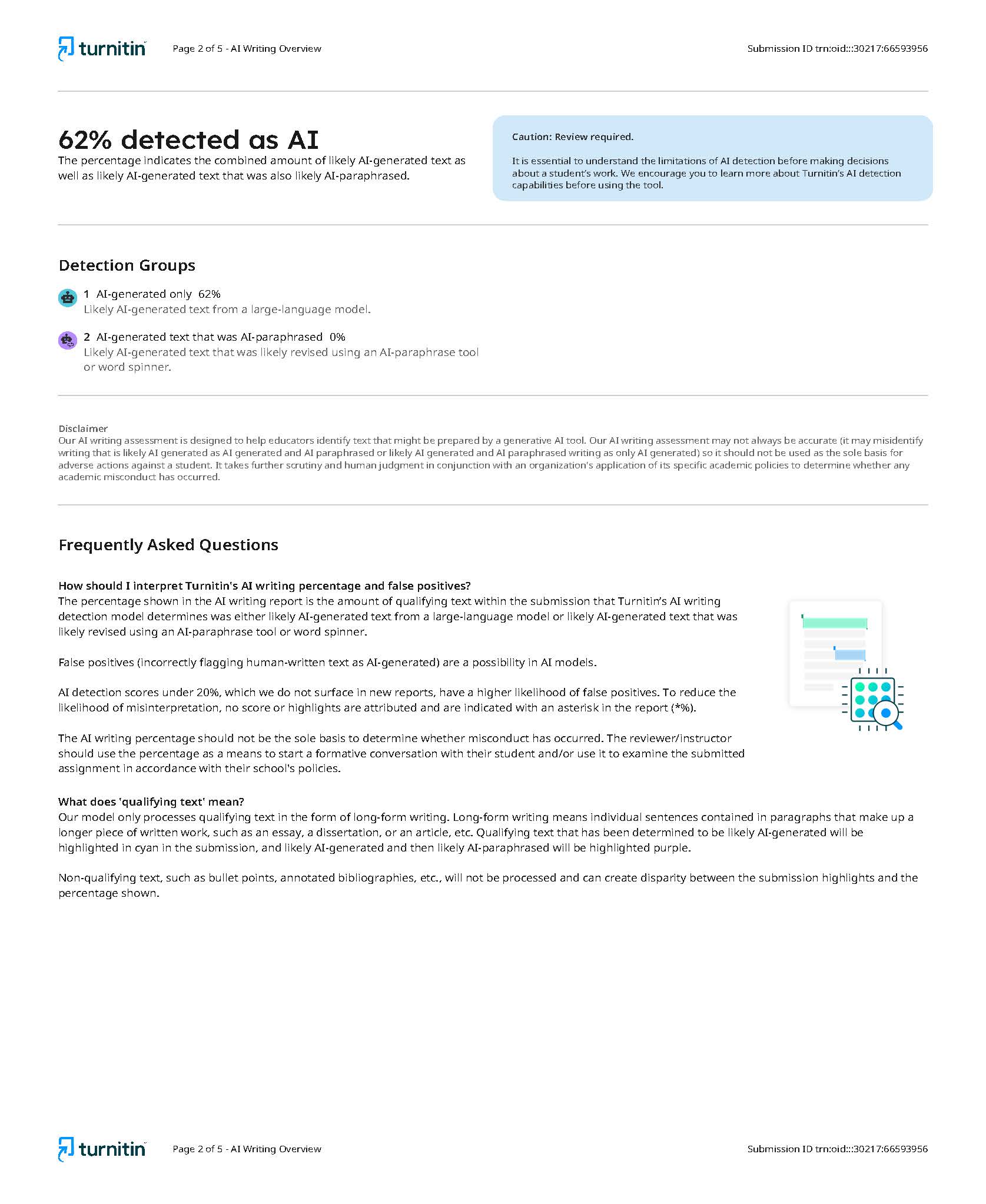
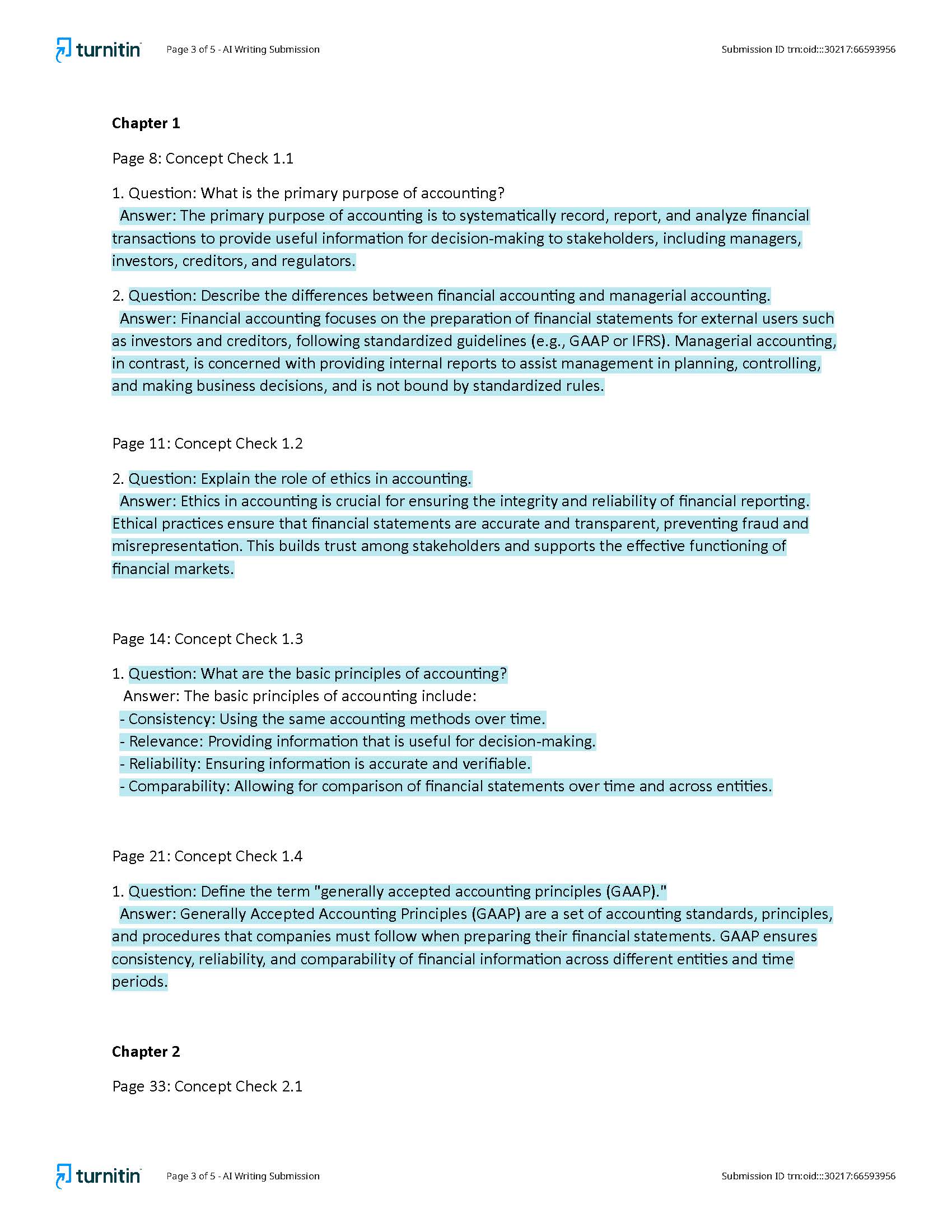
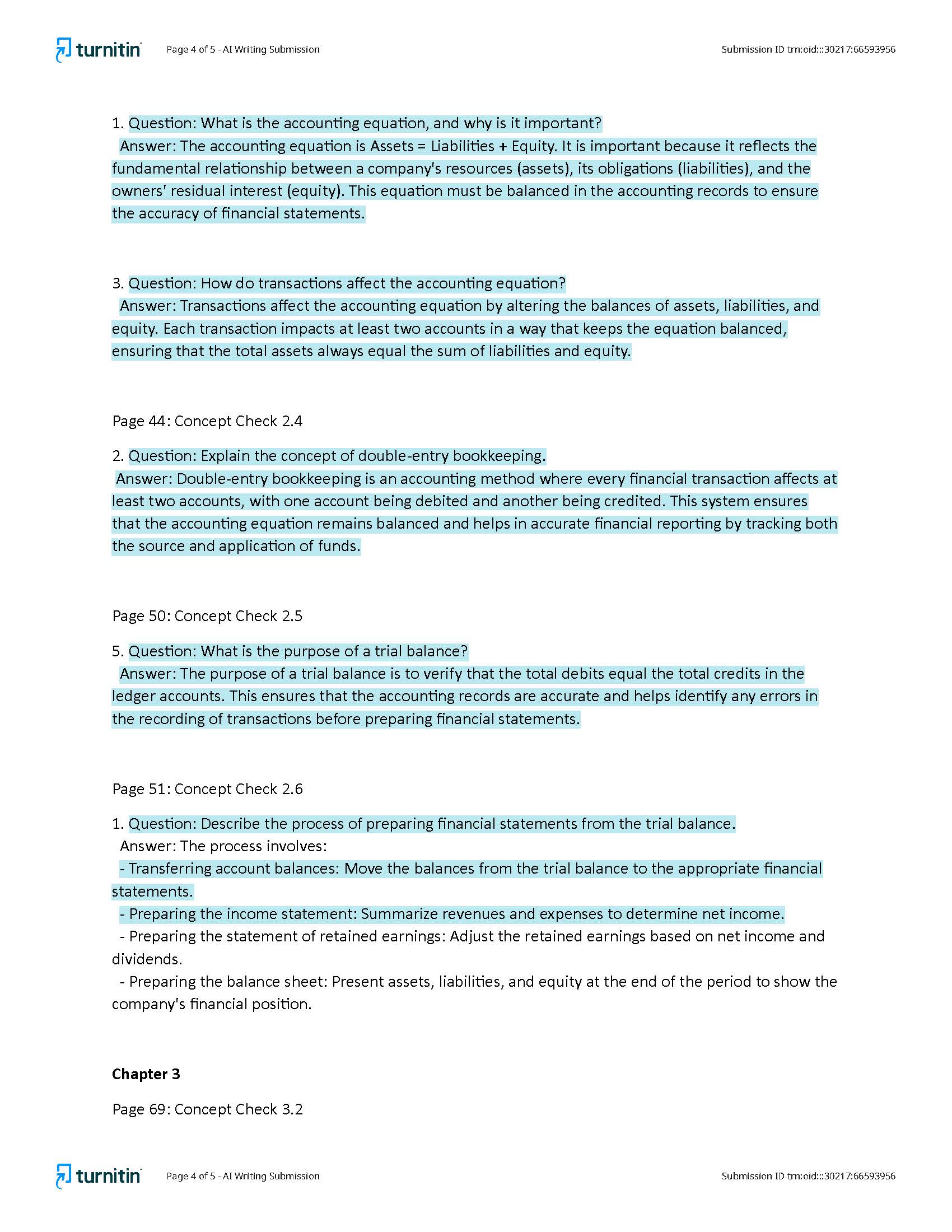
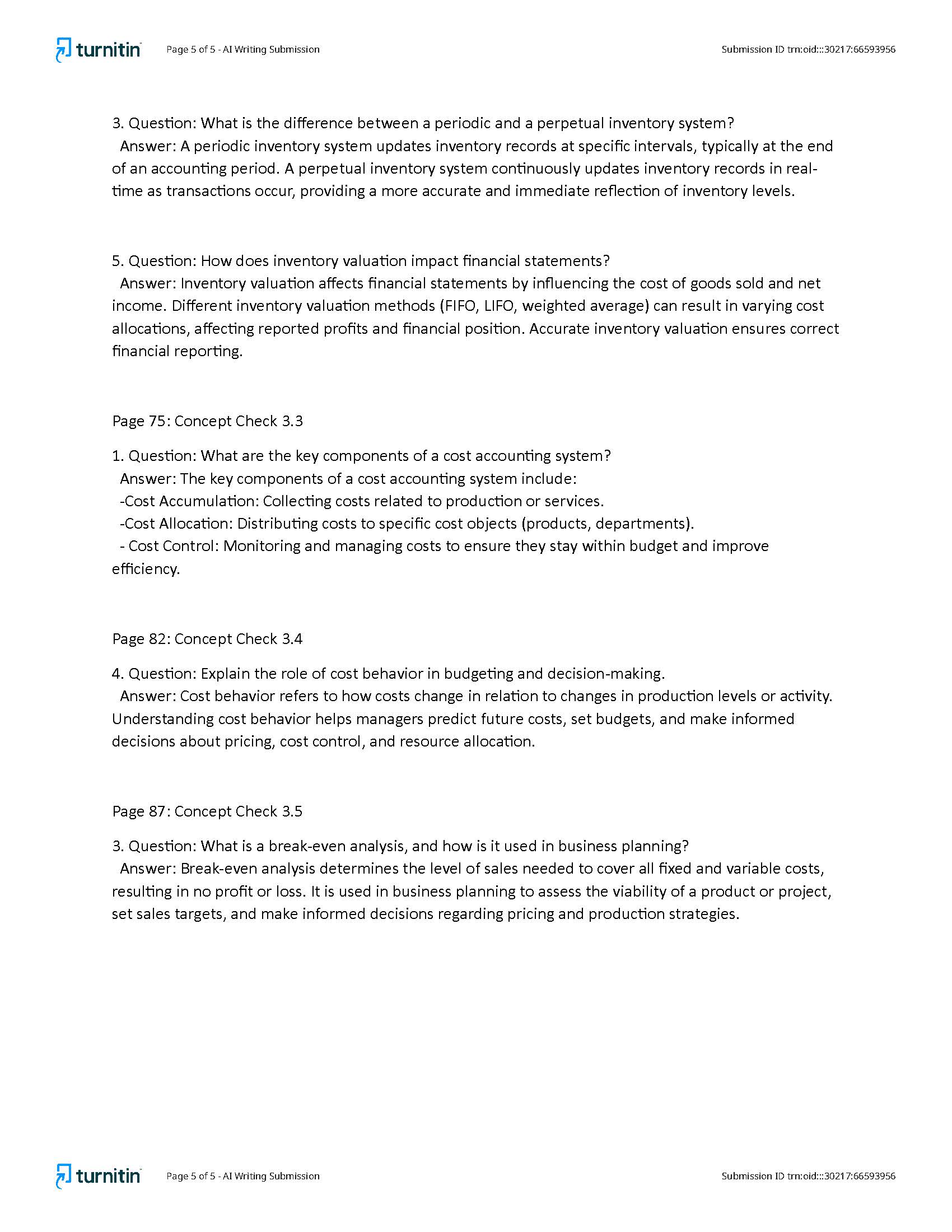 1 turnitin Page 1 of 5 - Cover Page Submission ID trn:oid::30217:66593956 434218-1935 434218_c.docx Politeknik Negeri Lhokseumawe Document Details Submission ID trn:oid:::30217:66593956 3 Pages Submission Date 910 Words Sep 10, 2024, 1:14 PM GMT+3 5,420 Characters Download Date Sep 10, 2024, 1:15 PM GMT+3 File Name 434218_c.docx File Size 14.9 KB turnitin Page 1 of 5 - Cover Page Submission ID trn:oid:::30217:66593956turnitin Page 2 of 5 - Al Writing Overview Submission ID trn:oid::30217:66593956 62% detected as AI Caution: Review required. The percentage indicates the combined amount of likely Al-generated text as It is essential to understand the limitations of Al detection before making decisions well as likely Al-generated text that was also likely Al-paraphrased. about a student's work. We encourage you to learn more about Turnitin's Al detection capabilities before using the tool. Detection Groups 1 Al-generated only 62% Likely Al-generated text from a large-language model. 2 Al-generated text that was Al-paraphrased 0% Likely Al-generated text that was likely revised using an Al-paraphrase tool or word spinner. Disclaimer Our AI writing assessment is designed to help educators identify text that might be prepared by a generative AI tool. Our AI writing assessment may not always be accurate (it may misidentify writing that is likely AI generated as Al generated and Al paraphrased or likely Al generated and Al paraphrased writing as only Al generated) so it should not be used as the sole basis for adverse actions against a student. It takes further scrutiny and human judgment in conjunction with an organization's application of its specific academic policies to determine whether any academic misconduct has occurred. Frequently Asked Questions How should I interpret Turnitin's AI writing percentage and false positives? The percentage shown in the AI writing report is the amount of qualifying text within the submission that Turnitin's Al writing detection model determines was either likely Al-generated text from a large-language model or likely Al-generated text that was likely revised using an Al-paraphrase tool or word spinner. False positives (incorrectly flagging human-written text as Al-generated) are a possibility in Al models. Al detection scores under 20%, which we do not surface in new reports, have a higher likelihood of false positives. To reduce the likelihood of misinterpretation, no score or highlights are attributed and are indicated with an asterisk in the report (*%). The AI writing percentage should not be the sole basis to determine whether misconduct has occurred. The reviewer/instructor should use the percentage as a means to start a formative conversation with their student and/or use it to examine the submitted assignment in accordance with their school's policies. What does 'qualifying text' mean? Our model only processes qualifying text in the form of long-form writing. Long-form writing means individual sentences contained in paragraphs that make up a onger piece of written work, such as an essay, a dissertation, or an article, etc. Qualifying text that has been determined to be likely Al-generated will be highlighted in cyan in the submission, and likely Al-generated and then likely Al-paraphrased will be highlighted purple. Non-qualifying text, such as bullet points, annotated bibliographies, etc., will not be processed and can create disparity between the submission highlights and the percentage shown. turnitin Page 2 of 5 - Al Writing Overview Submission ID trn:oid:30217:66593956g] turnitin | Page 2 of5-Arwriting Submission Subrmission ID troid:: 3021 7:66593956 Chapter 1 Page 8: Concept Check 1.1 1. Question: What is the primary purpose of accounting? Answer: The primary purpose of accounting is to systematically record, report, and analyze financial transactions to provide useful information for decision-making to stakeholders, including managers, investors, creditors, and regulators. 2. Question: Describe the differences between financial accounting and managerial accounting. Answer: Financial accounting focuses on the preparation of financial statements for external users such as investors and creditors, following standardized guidelines (e.g., GAAP or IFRS). Managerial accounting, in contrast, is concerned with providing internal reports to assist management in planning, controlling, and making business decisions, and is not bound by standardized rules. Page 11: Concept Check 1.2 2. Question: Explain the role of ethics in accounting. Answer: Ethics in accounting is crucial for ensuring the integrity and reliability of financial reporting. Ethical practices ensure that financial statements are accurate and transparent, preventing fraud and misrepresentation. This builds trust among stakeholders and supports the effective functioning of financial markets. Page 14: Concept Check 1.3 1. Question: What are the basic principles of accounting? Answer: The basic principles of accounting include: - Consistency: Using the same accounting methods over time. - Relevance: Providing information that is useful for decision-making. - Reliability: Ensuring information is accurate and verifiable. - Comparability: Allowing for comparison of financial statements over time and across entities. Page 21: Concept Check 1.4 1. Question: Define the term "generally accepted accounting principles (GAAP)." Answer: Generally Accepted Accounting Principles (GAAP) are a set of accounting standards, principles, and procedures that companies must follow when preparing their financial statements. GAAP ensures consistency, reliability, and comparability of financial information across different entities and time periods. Chapter 2 Page 33: Concept Check 2.1 ?_,l turnitin rage 3 of5-Arwriting submission Submission ID trr:oid::30217:66593956 g] turnitin | Page4ofs-Arwring Submission Subrmission ID troid:: 3021 7:66593956 1. Question: What is the accounting equation, and why is it important? Answer: The accounting equation is Assets = Liabilities + Equity. It is important because it reflects the fundamental relationship between a company's resources (assets), its obligations (liabilities), and the owners' residual interest (equity). This equation must be balanced in the accounting records to ensure the accuracy of financial statements. 3. Question: How do transactions affect the accounting equation? Answer: Transactions affect the accounting equation by altering the balances of assets, liabilities, and equity. Each transaction impacts at least two accounts in a way that keeps the equation balanced, ensuring that the total assets always equal the sum of liabilities and equity. Page 44: Concept Check 2.4 2. Question: Explain the concept of double-entry bookkeeping. Answer: Double-entry bookkeeping is an accounting method where every financial transaction affects at least two accounts, with one account being debited and another being credited. This system ensures that the accounting equation remains balanced and helps in accurate financial reporting by tracking both the source and application of funds. Page 50: Concept Check 2.5 5. Question: What is the purpose of a trial balance? Answer: The purpose of a trial balance is to verify that the total debits equal the total credits in the ledger accounts. This ensures that the accounting records are accurate and helps identify any errors in the recording of transactions before preparing financial statements. Page 51: Concept Check 2.6 1. Question: Describe the process of preparing financial statements from the trial balance. Answer: The process involves: - Transferring account balances: Move the balances from the trial balance to the appropriate financial statements. - Preparing the income statement: Summarize revenues and expenses to determine net income. - Preparing the statement of retained earnings: Adjust the retained earnings based on net income and dividends. - Preparing the balance sheet: Present assets, liabilities, and equity at the end of the period to show the company's financial position. Chapter 3 Page 69: Concept Check 3.2 ?_,l turnitin rage4of5-Arwriting submission Submission ID trr:oid::30217:66593956 g] turnitin | Pages of5-Arwriting Submission Subrmission ID troid:: 3021 7:66593956 3. Question: What is the difference between a periodic and a perpetual inventory system? Answer: A periodic inventory system updates inventory records at specific intervals, typically at the end of an accounting period. A perpetual inventory system continuously updates inventory records in real- time as transactions occur, providing a more accurate and immediate reflection of inventory levels. 5. Question: How does inventory valuation impact financial statements? Answer: Inventory valuation affects financial statements by influencing the cost of goods sold and net income. Different inventory valuation methods (FIFO, LIFO, weighted average) can result in varying cost allocations, affecting reported profits and financial position. Accurate inventory valuation ensures correct financial reporting. Page 75: Concept Check 3.3 1. Question: What are the key components of a cost accounting system? Answer: The key components of a cost accounting system include: -Cost Accumulation: Collecting costs related to production or services. -Cost Allocation: Distributing costs to specific cost objects (products, departments). - Cost Control: Monitoring and managing costs to ensure they stay within budget and improve efficiency. Page 82: Concept Check 3.4 4. Question: Explain the role of cost behavior in budgeting and decision-making. Answer: Cost behavior refers to how costs change in relation to changes in production levels or activity. Understanding cost behavior helps managers predict future costs, set budgets, and make informed decisions about pricing, cost control, and resource allocation. Page 87: Concept Check 3.5 3. Question: What is a break-even analysis, and how is it used in business planning? Answer: Break-even analysis determines the level of sales needed to cover all fixed and variable costs, resulting in no profit or loss. It is used in business planning to assess the viability of a product or project, set sales targets, and make informed decisions regarding pricing and production strategies. ?_,l turnitin rages of5-Arwriting submission Submission ID trr:oid::30217:66593956
 Step by Step Solution
There are 3 Steps involved in it
1 Expert Approved Answer
Step: 1 Unlock

Question Has Been Solved by an Expert!
Get step-by-step solutions from verified subject matter experts
Step: 2 Unlock
Step: 3 Unlock
 Study Help