







Question: Here is the link for the word document. PS3-TechWork Maria Barrios.docx I need at least 3 screenshots of the research activities Electronic Bo0ks An electronic
Here is the link for the word document.
PS3-TechWork Maria Barrios.docx
I need at least 3 screenshots of the research activities
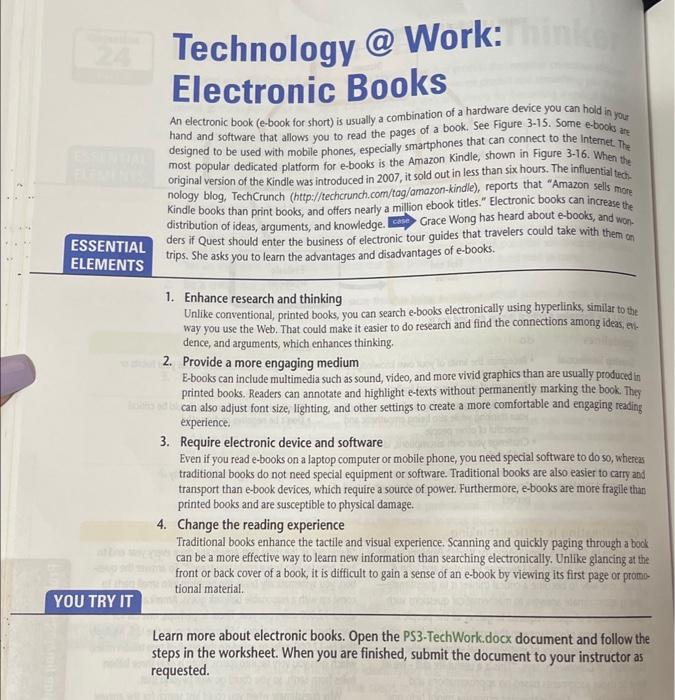
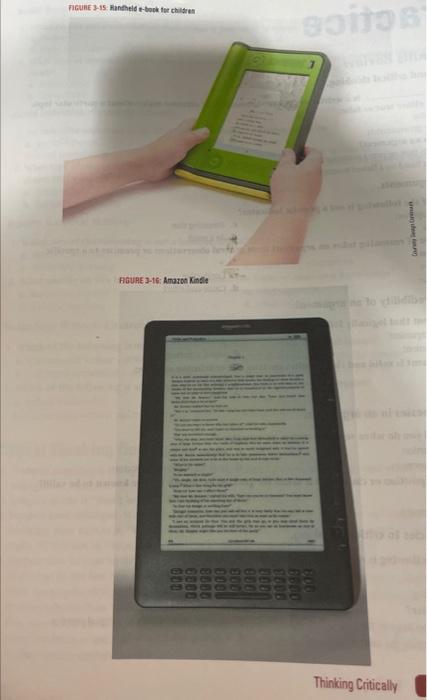
Electronic Bo0ks An electronic book (e-book for short) is usually a combination of a hardware device you can hold in yout hand and software that allows you to read the pages of a book. See Figure 3-15. Some e-boois art designed to be used with mobile phones, especially smartphones that can connect to the Internet The most popular dedicated platform for e-books is the Amazon Kindle, shown in Figure 3-16. When the original version of the Kindle was introduced in 2007, it sold out in less than six hours. The influential tech. nology blog, TechCrunch (http://techcrunch.com/tog/omazon-kindle), reports that "Amazon sells more Kindle books than print books, and offers nearly a million ebook titles." Electronic books can increase the distribution of ideas, arguments, and knowledge. Eesel Grace Wong has heard about e-books, and wonders if Quest should enter the business of electronic tour guides that travelers could take with them on trips. She asks you to learn the advantages and disadvantages of e-books. 1. Enhance research and thinking Unlike conventional, printed books, you can search e-books electronically using hyperlinks, similat to the way you use the Web. That could make it easier to do research and find the connections among ideas, ev. dence, and arguments, which enhances thinking. 2. Provide a more engaging medium E-books can include multimedia such as sound, video, and more vivid graphics than are usually produced in printed books. Readers can annotate and highlight e-texts without permanently marking the book. They can also adjust font size, lighting, and other settings to create a more comfortable and engaging readiing experience. 3. Require electronic device and software Even if you read e-books on a laptop computer or mobile phone, you need special software to do so, whereas traditional books do not need special equipment or software. Traditional books are also easier to carty and transport than e-book devices, which require a source of powet. Furthermore, e-books are more fragile than printed books and are susceptible to physical damage. 4. Change the reading experience Traditional books enhance the tactile and visual experience. Scanning and quickly paging through a book can be a more effective way to learn new information than searching electronically. Unlike glancing at the front or back cover of a book, it is difficult to gain a sense of an e-book by viewing its first page or promotional material. Learn more about electronic books. Open the PS3-TechWork.docx document and follow the steps in the worksheet. When you are finished, submit the document to your instructor as requested. Electronic Bo0ks An electronic book (e-book for short) is usually a combination of a hardware device you can hold in yout hand and software that allows you to read the pages of a book. See Figure 3-15. Some e-boois art designed to be used with mobile phones, especially smartphones that can connect to the Internet The most popular dedicated platform for e-books is the Amazon Kindle, shown in Figure 3-16. When the original version of the Kindle was introduced in 2007, it sold out in less than six hours. The influential tech. nology blog, TechCrunch (http://techcrunch.com/tog/omazon-kindle), reports that "Amazon sells more Kindle books than print books, and offers nearly a million ebook titles." Electronic books can increase the distribution of ideas, arguments, and knowledge. Eesel Grace Wong has heard about e-books, and wonders if Quest should enter the business of electronic tour guides that travelers could take with them on trips. She asks you to learn the advantages and disadvantages of e-books. 1. Enhance research and thinking Unlike conventional, printed books, you can search e-books electronically using hyperlinks, similat to the way you use the Web. That could make it easier to do research and find the connections among ideas, ev. dence, and arguments, which enhances thinking. 2. Provide a more engaging medium E-books can include multimedia such as sound, video, and more vivid graphics than are usually produced in printed books. Readers can annotate and highlight e-texts without permanently marking the book. They can also adjust font size, lighting, and other settings to create a more comfortable and engaging readiing experience. 3. Require electronic device and software Even if you read e-books on a laptop computer or mobile phone, you need special software to do so, whereas traditional books do not need special equipment or software. Traditional books are also easier to carty and transport than e-book devices, which require a source of powet. Furthermore, e-books are more fragile than printed books and are susceptible to physical damage. 4. Change the reading experience Traditional books enhance the tactile and visual experience. Scanning and quickly paging through a book can be a more effective way to learn new information than searching electronically. Unlike glancing at the front or back cover of a book, it is difficult to gain a sense of an e-book by viewing its first page or promotional material. Learn more about electronic books. Open the PS3-TechWork.docx document and follow the steps in the worksheet. When you are finished, submit the document to your instructor as requested
Step by Step Solution
There are 3 Steps involved in it

Get step-by-step solutions from verified subject matter experts
 Study Help