







Question: Here is the question about the 1-rule method and its solution The question for (c) is Using the 1-rule method discussed in class, find the
Here is the question about the 1-rule method and its solution
The question for (c) is
Using the 1-rule method discussed in class, find the relevant sets of classification rules for the target variable by testing each of the input attributes TikTok, Instagram, and Facebook. Which of these three sets of rules has the lowest misclassification rate?
I don't understand how to fund values in the box. For example, the first one has two boxes under TikTok and each box has a certain value (25/0, 25/50) and it shows we can calculate the misclassification rate using the value.
Can you explain how to get the values?
The following table summarizes the responses to the survey. For each entry, "Number of Instances" represents the number of respondents having the corresponding values for the attributes TikTok, Instagram, and Facebook.
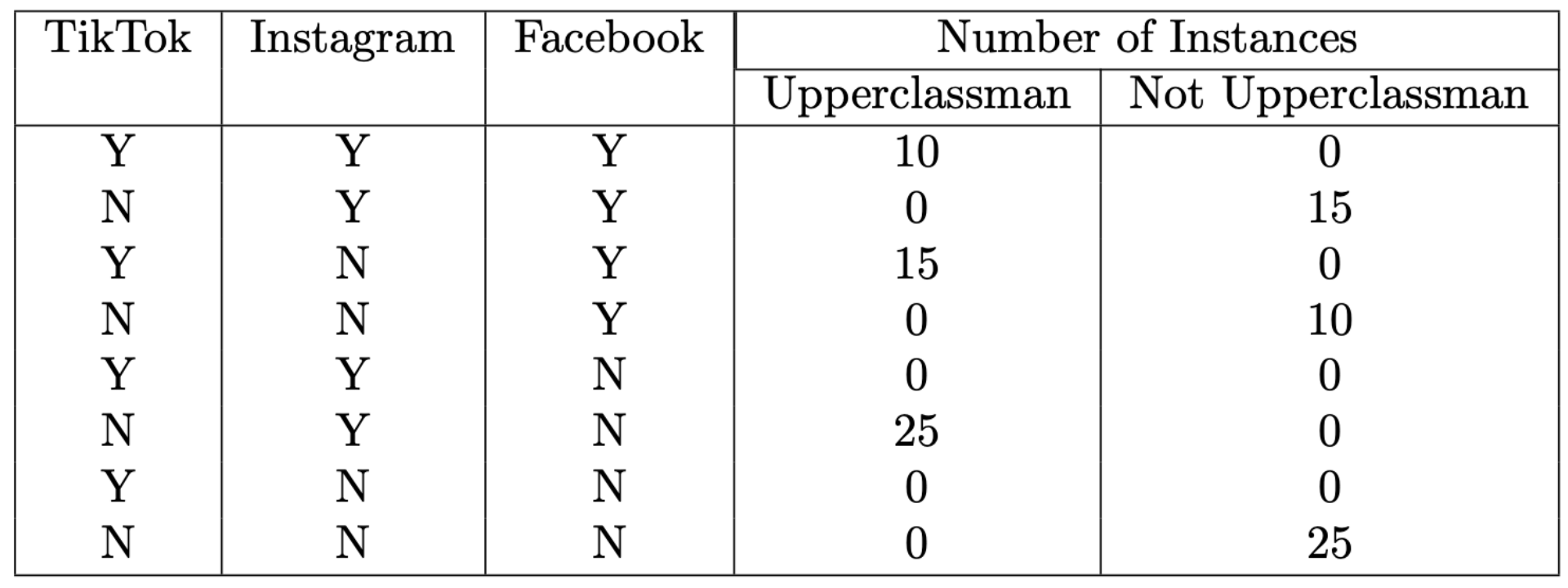
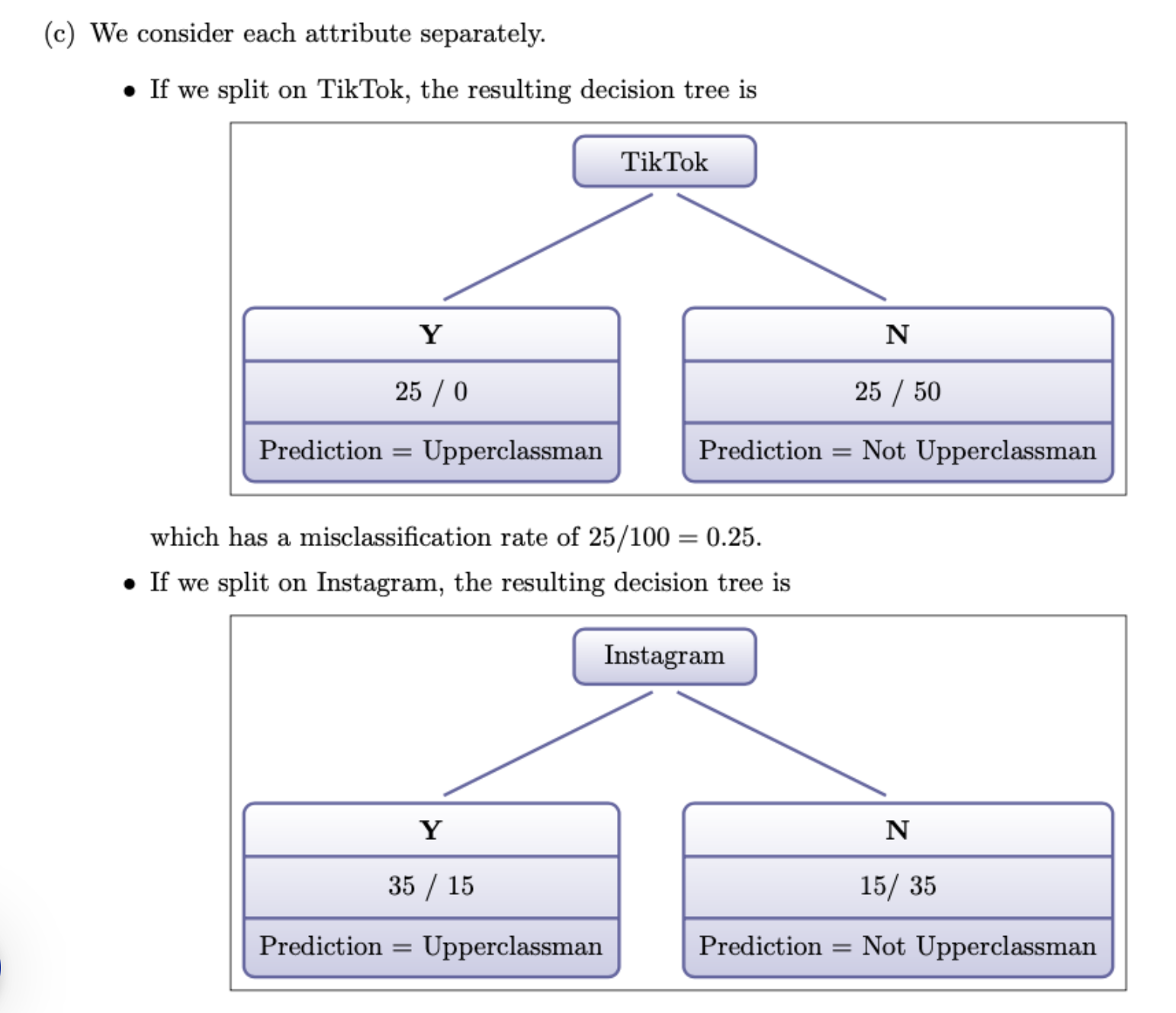
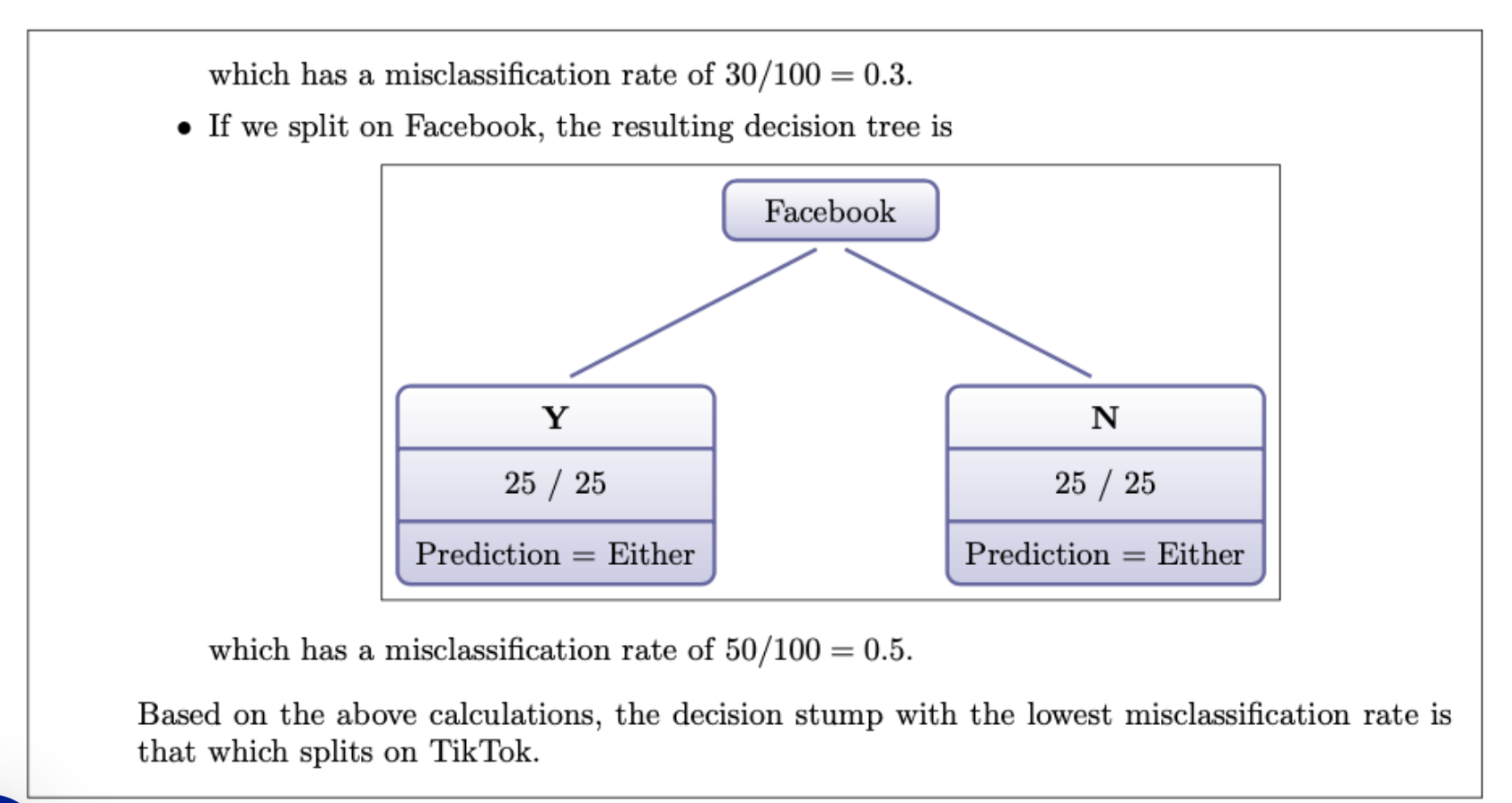
Tik Tok Instagram Facebook Number of Instances Upperclassman Not Upperclassman 10 O 0 15 15 ZKZKZKZK OO Z Z ZZKKKK ZZKKZZKK ooo5 0 25 25(c) We consider each attribute separately. 0 If we split on TikTok, the resulting decision tree is which has a. misclassication rate of 25/100 = 0.25. o If we split on Instagram, the resulting decision tree is Prediction = Upperclassman Prediction = Not Upperclassman which has a misclassication rate of 30/100 = 0.3. o If we split on Facebook, the resulting decision tree is Prediction = Either Prediction = Either which has a misclassication rate of 50/100 = 0.5. Based on the above calculations, the decision stump with the lowest misclassication rate is that which splits on TikTok
Step by Step Solution
There are 3 Steps involved in it

Get step-by-step solutions from verified subject matter experts
 Study Help