







Question: Hi, I am working on a class assignment, but I am a little stumped. I need help finishing the job cost sheet (the two last
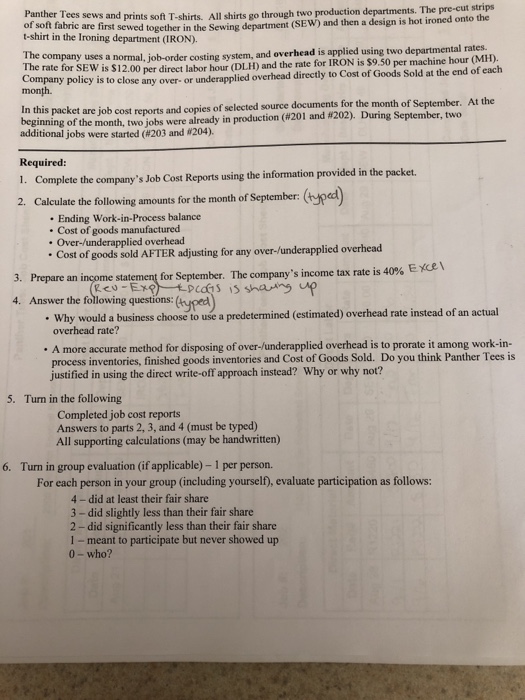
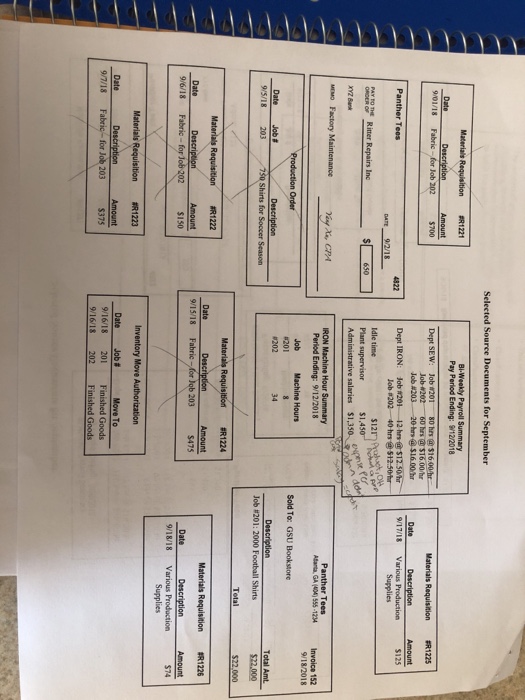
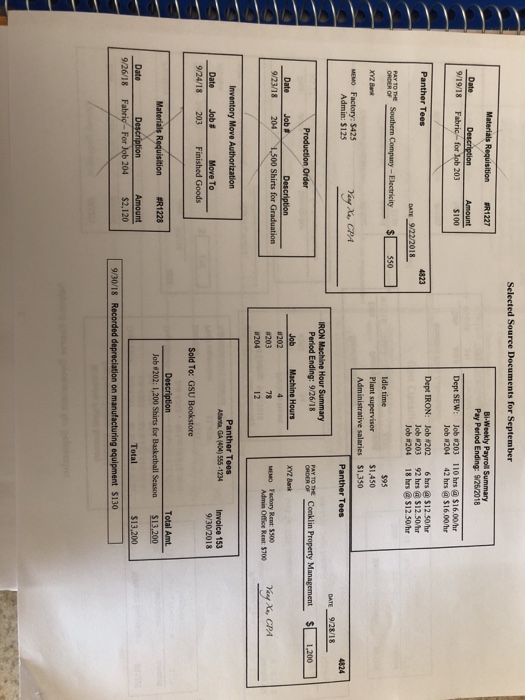
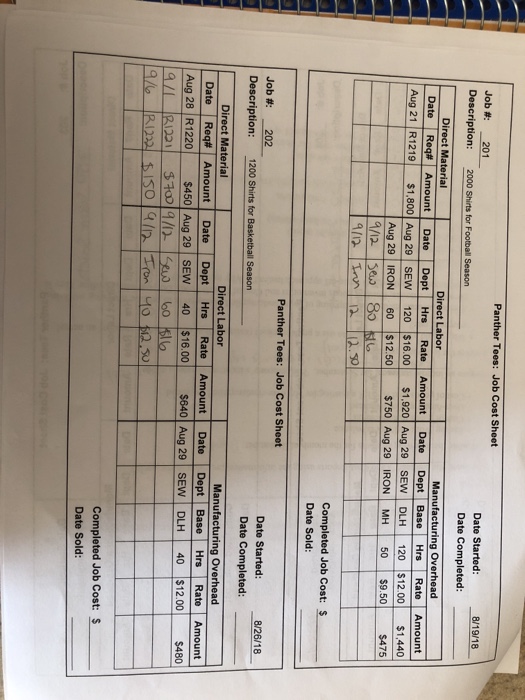
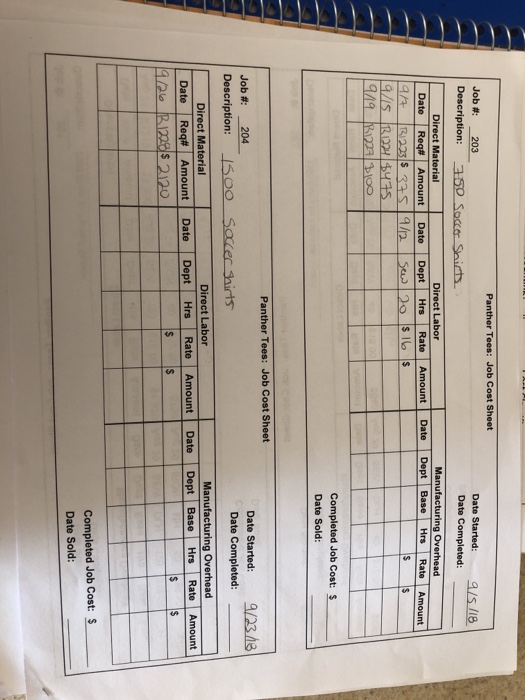
and prints soft T-shirts. All shirts go through two production departments. The pre-cut strips irst sewed together in the Sewing department (SEW) and then a design is hot ironed onto the Panther Tees sews t-shirt in the Ironing department (IRON). The company uses a The rate for SEW is $12.00 per direct labor Company policy is to close any over- or month normal, job-order costing system, and overhead is applied using two departmental rates. hour (DLH) and the rate for IRON is $9.50 per machine hour (MH) underapplied overhead directly to Cost of Goods Sold at the end of each n this packet are job cost reports and copies of selected source documents for the month of September. At the During September, two beginning of the additional jobs were started (#203 and A204). month, two Jobs were already in production (#201 and "202 Required: 1. Complete the company's Job Cost Reports using the information provided in the packet. 2. Calculate the following amounts for the month of September:(type) Ending Work-in-Process balance Cost of goods manufactured Over-/underapplied overhead Cost of goods sold AFTER adjusting for any over-/underapplied overhead for September. The company's income tax rate is 40% Een 3. Prepare an income stat 4. Answer the following questions(ype Why wou overhead rate? ld a business choose to use a predetermined (estimated) overhead rate instead of an actual . A more accurate method for disposing of over-/underapplied overhead is to prorate it among work-in- process inventories, finished goods inventories and Cost of Goods Sold. Do you think Panther Tees is justified in using the direct write-off approach instead? Why or why not? 5. Turn in the following Completed job cost reports Answers to parts 2, 3, and 4 (must be typed) All supporting calculations (may be handwritten) 6. Turn in group evaluation (if applicable) - 1 per person. For each person in your group (including yourself), evaluate participation as follows: 4 - did at least their fair share 3 - did slightly less than their fair share 2 - did significantly less than their fair share 1 - meant to participate but never showed up 0- who? and prints soft T-shirts. All shirts go through two production departments. The pre-cut strips irst sewed together in the Sewing department (SEW) and then a design is hot ironed onto the Panther Tees sews t-shirt in the Ironing department (IRON). The company uses a The rate for SEW is $12.00 per direct labor Company policy is to close any over- or month normal, job-order costing system, and overhead is applied using two departmental rates. hour (DLH) and the rate for IRON is $9.50 per machine hour (MH) underapplied overhead directly to Cost of Goods Sold at the end of each n this packet are job cost reports and copies of selected source documents for the month of September. At the During September, two beginning of the additional jobs were started (#203 and A204). month, two Jobs were already in production (#201 and "202 Required: 1. Complete the company's Job Cost Reports using the information provided in the packet. 2. Calculate the following amounts for the month of September:(type) Ending Work-in-Process balance Cost of goods manufactured Over-/underapplied overhead Cost of goods sold AFTER adjusting for any over-/underapplied overhead for September. The company's income tax rate is 40% Een 3. Prepare an income stat 4. Answer the following questions(ype Why wou overhead rate? ld a business choose to use a predetermined (estimated) overhead rate instead of an actual . A more accurate method for disposing of over-/underapplied overhead is to prorate it among work-in- process inventories, finished goods inventories and Cost of Goods Sold. Do you think Panther Tees is justified in using the direct write-off approach instead? Why or why not? 5. Turn in the following Completed job cost reports Answers to parts 2, 3, and 4 (must be typed) All supporting calculations (may be handwritten) 6. Turn in group evaluation (if applicable) - 1 per person. For each person in your group (including yourself), evaluate participation as follows: 4 - did at least their fair share 3 - did slightly less than their fair share 2 - did significantly less than their fair share 1 - meant to participate but never showed up 0- who
Step by Step Solution
There are 3 Steps involved in it

Get step-by-step solutions from verified subject matter experts
 Study Help