







Question: Hi it is case study - Management can anyone solve it to me ? The first C & C Grocery store was started in 1947
Hi it is case study - Management
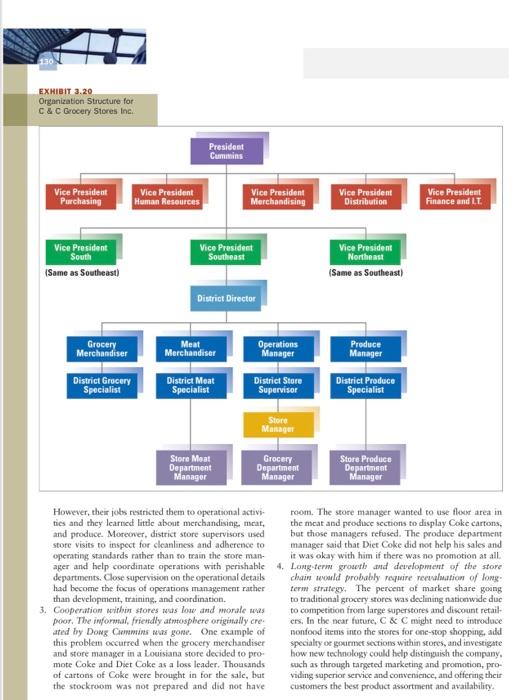
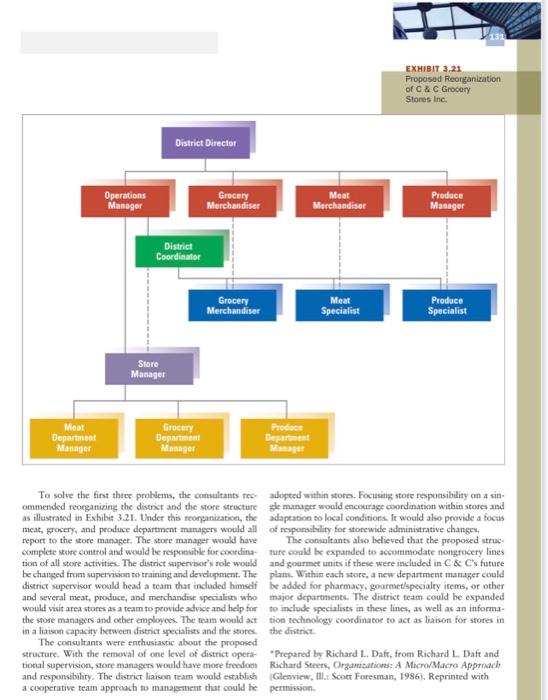
The first C \& C Grocery store was started in 1947 by Doug the stores. The grocery merchandisers were expected to Cummins and his brother Bob. Both were veterans who coordinate their activities with each store in the district. wanted to run their own business, so they used their savings Business for the C \& C chain has dropped off in all to start the small grocery store in Charlotte, North Carolina. regions in recent years-partly because of a declining econThe store was immediately successful. The location was omy, but mostly because of increased competition from good, and Doug Cummins had a winning personality. Store large discount retailers such as Wal-Mart, Target, and employees adopted Doug's informal style and "serve the Costco Wholesale. When these large discounters entered customer" attitude. C \& C's increasing circle of customers the grocery business, they brought a level of competition By 1997, C \& C had over 200 stores. A standard to hold its own against larger supermarket chains, but now physical layout was used for new stores. Company head- even the big chains were threatened by Wal-Mart, which quarters moved from Charlotte to Atlanta in 1985. The became no. 1 in grocery sales in 2001. C \& C managers organization chart for C&C is shown in Exhibit 3.20. The knew they couldn't compete on price, but they were concentral offices in Atlanta handled personnel, merchandis- sidering ways they could use advanced information teching, financial, purchasing, real estate, and legal affairs for nology to improve service and customer satisfaction and the entire chain. For management of individual stores, the distinguish the store from the large discounters. organization was divided by regions. The southern, south- However, the most pressing problem was how to eastern, and northeastern regions each had about seventy improve business with the resources and stores they now stores. Each region was divided into five districts of ten to had. A consulting team from a major university was hired fifteen stores each. A district director was responsible for to investigate store structure and operations. supervision and coordination of activities for the ten to the consultants visited several stores in each region, fifteen district stores. talking to about fifty managers and employees. The con- Each district was divided into four lines of authority sultants wrote a report that pinpointed four problem areas based on functional specialty. Three of these lines reached to be addressed by store executives. into the stores. The produce department manager within each store reported directly to the produce specialist for the 1. The chain was slow to adapt to change. Store layout division, and the same was true for the meat department and structure were the same as had been designed fifmanager, who reported directly to the district meat spe- teen years ago. Each store did things the same way, even cialist. The meat and produce managers were responsible though some stores were in low-income areas and other for all activities associated with the acquisition and sale stores in suburban areas. A new computerized supply of perishable products. The store manager's responsibil- chain management system for ordering and stocking ity included the grocery line, front-end departments, and had been developed, but after two years it was only store operations. The store manager was responsible for partially implemented in the stores. Other proposed appearance of personnel, cleanliness, adequate checkout information technology (IT) initiatives were still "on the service, and price accuracy. A grocery manager reported to back burner, " not yet even in the development stage. the store manager, maintained inventories, and restocked 2. Roles of the district store supervisor and the store manshelves for grocery items. The district merchandising office ager were causing dissatisfaction. The store managers was responsible for promotional campaigns, advertising wanted to learn general management skills for potential circulars, district advertising, and attracting customers into promotion into district or regional management positions. However, their jobs restricted them to operational activi. Room. The store manager wanted to use floost area in tics and they learned litte about merchandiving, meat, the meat and peoduce sections to display Coke cartons. and produce. Moreover, district store supervisors used but those managers refused. The produce department store visits to iespect for cleanliness and adherence to manager said that Diee Coke did not help his sales and operaring standsfds rather than fo train the sore man-. it was okay with him if there was no promotion at all ager and help coordinate operations with perishable 4. Long-term groueth and development af the store departments. Close supervision on the operational details chain wevuld probably revuire reetuluation of long: had become the focus of operations management rather term strafegy, The percent of market share goang than developmient, training, and coordination. to traditional grocery stores was declining naticewide duc 3. Cooperation within stores was lose and monale was to competition from large superstores and diwcount retailpoor. The informal, friendly atnosphere origitally cre- ers, In the near future, C&C evight need to introduce ated hy Dong Cammins was gone. One example of nonfood iteds into the stores for ene-stop thopping, add this problem occurred when the grocery merchandiser specialty or goxirmer sections within seores, and investigate and store manager in a Louisiana store decided to pro-. bow new technology could help distinguish the company, mote Coke and Diet Coke as a loss leader. Thousands such as rhurough targeted marketing and promotion, proof cartons of Coke were brought in for the salc, bat viding superior service and convenicnce, and offering their the stockroom was not prepared and did not have customers the best product assortment and availability. To solve the first three protvems, the consultants rec- adopted within store. Focusing stote responsibility on a sinommended reorganizing the district and the store structure gkemanager would encourage coordination within stores and as illustrated in Exhibit 3.21. Under this reorganization, the adaptation to local conditions. It would also provide a focts meat, grocery, and produce department manapers would all of responsibulity for storewide administrative changes, report to the store manager. The stoce manaper would have The consultants also believed that the proposed straccomplete seore control and would be responsible for coordina- ture could be expanded to accommodate nongrocery lines tion of all store activities. The district supervisor's role would and gourmet units if these were included in C. \& C's future be changed frum supervison to training and development. The plans. Within each store, a new department manager could district sapervisor woald head a team thar included himsdif be added for pharmacy, gourmet/specialty items, or other and several meat, produce, and merchandive specialion who majot degartments. The diutrict team could be expanded would visit area stores as a team to provide advice and help for to include specialists in these liner, as well as an informathe store managers and oeber employees. The team would act tion rechnology coordinatoe to act as liaison for stores in in a liaison capacity berween diserict sjecialists and the stores. the district. The consultants were enthusiastic about the proposed structure. With the removal of one level of district opera- "Prepared by Richard L. Daft, from Richard L. Daft and tional supervision, store managers would have more freedons Rochard Seeers, Orgamathons: A Mrero/Macro Approach and responsibility. The destrict liaison team would establish (Gleaview, III.. Scott Foresman, 1986), Reprinted with a cooperative team approach to managernent that could be permission. The first C \& C Grocery store was started in 1947 by Doug the stores. The grocery merchandisers were expected to Cummins and his brother Bob. Both were veterans who coordinate their activities with each store in the district. wanted to run their own business, so they used their savings Business for the C \& C chain has dropped off in all to start the small grocery store in Charlotte, North Carolina. regions in recent years-partly because of a declining econThe store was immediately successful. The location was omy, but mostly because of increased competition from good, and Doug Cummins had a winning personality. Store large discount retailers such as Wal-Mart, Target, and employees adopted Doug's informal style and "serve the Costco Wholesale. When these large discounters entered customer" attitude. C \& C's increasing circle of customers the grocery business, they brought a level of competition By 1997, C \& C had over 200 stores. A standard to hold its own against larger supermarket chains, but now physical layout was used for new stores. Company head- even the big chains were threatened by Wal-Mart, which quarters moved from Charlotte to Atlanta in 1985. The became no. 1 in grocery sales in 2001. C \& C managers organization chart for C&C is shown in Exhibit 3.20. The knew they couldn't compete on price, but they were concentral offices in Atlanta handled personnel, merchandis- sidering ways they could use advanced information teching, financial, purchasing, real estate, and legal affairs for nology to improve service and customer satisfaction and the entire chain. For management of individual stores, the distinguish the store from the large discounters. organization was divided by regions. The southern, south- However, the most pressing problem was how to eastern, and northeastern regions each had about seventy improve business with the resources and stores they now stores. Each region was divided into five districts of ten to had. A consulting team from a major university was hired fifteen stores each. A district director was responsible for to investigate store structure and operations. supervision and coordination of activities for the ten to the consultants visited several stores in each region, fifteen district stores. talking to about fifty managers and employees. The con- Each district was divided into four lines of authority sultants wrote a report that pinpointed four problem areas based on functional specialty. Three of these lines reached to be addressed by store executives. into the stores. The produce department manager within each store reported directly to the produce specialist for the 1. The chain was slow to adapt to change. Store layout division, and the same was true for the meat department and structure were the same as had been designed fifmanager, who reported directly to the district meat spe- teen years ago. Each store did things the same way, even cialist. The meat and produce managers were responsible though some stores were in low-income areas and other for all activities associated with the acquisition and sale stores in suburban areas. A new computerized supply of perishable products. The store manager's responsibil- chain management system for ordering and stocking ity included the grocery line, front-end departments, and had been developed, but after two years it was only store operations. The store manager was responsible for partially implemented in the stores. Other proposed appearance of personnel, cleanliness, adequate checkout information technology (IT) initiatives were still "on the service, and price accuracy. A grocery manager reported to back burner, " not yet even in the development stage. the store manager, maintained inventories, and restocked 2. Roles of the district store supervisor and the store manshelves for grocery items. The district merchandising office ager were causing dissatisfaction. The store managers was responsible for promotional campaigns, advertising wanted to learn general management skills for potential circulars, district advertising, and attracting customers into promotion into district or regional management positions. However, their jobs restricted them to operational activi. Room. The store manager wanted to use floost area in tics and they learned litte about merchandiving, meat, the meat and peoduce sections to display Coke cartons. and produce. Moreover, district store supervisors used but those managers refused. The produce department store visits to iespect for cleanliness and adherence to manager said that Diee Coke did not help his sales and operaring standsfds rather than fo train the sore man-. it was okay with him if there was no promotion at all ager and help coordinate operations with perishable 4. Long-term groueth and development af the store departments. Close supervision on the operational details chain wevuld probably revuire reetuluation of long: had become the focus of operations management rather term strafegy, The percent of market share goang than developmient, training, and coordination. to traditional grocery stores was declining naticewide duc 3. Cooperation within stores was lose and monale was to competition from large superstores and diwcount retailpoor. The informal, friendly atnosphere origitally cre- ers, In the near future, C&C evight need to introduce ated hy Dong Cammins was gone. One example of nonfood iteds into the stores for ene-stop thopping, add this problem occurred when the grocery merchandiser specialty or goxirmer sections within seores, and investigate and store manager in a Louisiana store decided to pro-. bow new technology could help distinguish the company, mote Coke and Diet Coke as a loss leader. Thousands such as rhurough targeted marketing and promotion, proof cartons of Coke were brought in for the salc, bat viding superior service and convenicnce, and offering their the stockroom was not prepared and did not have customers the best product assortment and availability. To solve the first three protvems, the consultants rec- adopted within store. Focusing stote responsibility on a sinommended reorganizing the district and the store structure gkemanager would encourage coordination within stores and as illustrated in Exhibit 3.21. Under this reorganization, the adaptation to local conditions. It would also provide a focts meat, grocery, and produce department manapers would all of responsibulity for storewide administrative changes, report to the store manager. The stoce manaper would have The consultants also believed that the proposed straccomplete seore control and would be responsible for coordina- ture could be expanded to accommodate nongrocery lines tion of all store activities. The district supervisor's role would and gourmet units if these were included in C. \& C's future be changed frum supervison to training and development. The plans. Within each store, a new department manager could district sapervisor woald head a team thar included himsdif be added for pharmacy, gourmet/specialty items, or other and several meat, produce, and merchandive specialion who majot degartments. The diutrict team could be expanded would visit area stores as a team to provide advice and help for to include specialists in these liner, as well as an informathe store managers and oeber employees. The team would act tion rechnology coordinatoe to act as liaison for stores in in a liaison capacity berween diserict sjecialists and the stores. the district. The consultants were enthusiastic about the proposed structure. With the removal of one level of district opera- "Prepared by Richard L. Daft, from Richard L. Daft and tional supervision, store managers would have more freedons Rochard Seeers, Orgamathons: A Mrero/Macro Approach and responsibility. The destrict liaison team would establish (Gleaview, III.. Scott Foresman, 1986), Reprinted with a cooperative team approach to managernent that could be permission
can anyone solve it to me ? 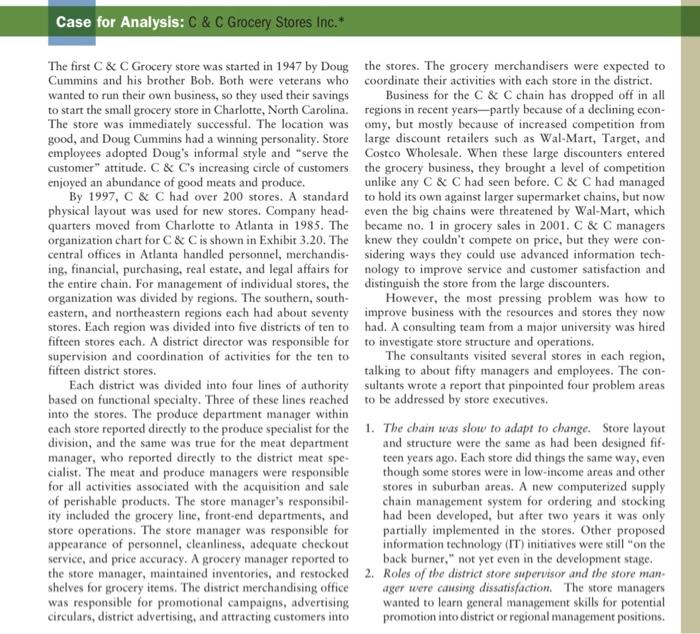
Step by Step Solution
There are 3 Steps involved in it
1 Expert Approved Answer
Step: 1 Unlock

Question Has Been Solved by an Expert!
Get step-by-step solutions from verified subject matter experts
Step: 2 Unlock
Step: 3 Unlock
 Study Help