Question: Hi pls, help me solve this using the Linear Programming Graphical Method. THANK YOU IN ADVANCE! The Central Fabric Company purchases surplus bolts of fabric
Hi pls, help me solve this using the Linear Programming Graphical Method. THANK YOU IN ADVANCE!
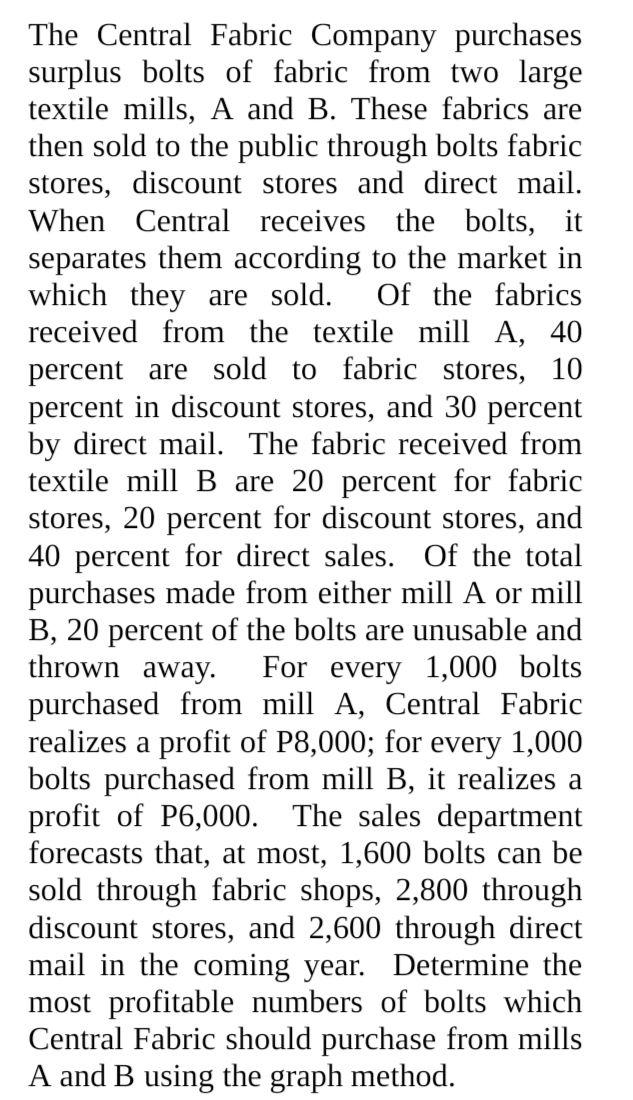
The Central Fabric Company purchases surplus bolts of fabric from two large textile mills, A and B. These fabrics are then sold to the public through bolts fabric stores, discount stores and direct mail. When Central receives the bolts, it separates them according to the market in which they are sold. Of the fabrics received from the textile mill A, 40 percent are sold to fabric stores, 10 percent in discount stores, and 30 percent by direct mail. The fabric received from textile mill B are 20 percent for fabric stores, 20 percent for discount stores, and 40 percent for direct sales. Of the total purchases made from either mill A or mill B, 20 percent of the bolts are unusable and purchased from mill A, Central Fabric realizes a profit of P8,000; for every 1,000 bolts purchased from mill B, it realizes a profit of P6,000. The sales department forecasts that, at most, 1,600 bolts can be sold through fabric shops, 2,800 through discount stores, and 2,600 through direct mail in the coming year. Determine the most profitable numbers of bolts which Central Fabric should purchase from mills A and B using the graph method. The Central Fabric Company purchases surplus bolts of fabric from two large textile mills, A and B. These fabrics are then sold to the public through bolts fabric stores, discount stores and direct mail. When Central receives the bolts, it separates them according to the market in which they are sold. Of the fabrics received from the textile mill A, 40 percent are sold to fabric stores, 10 percent in discount stores, and 30 percent by direct mail. The fabric received from textile mill B are 20 percent for fabric stores, 20 percent for discount stores, and 40 percent for direct sales. Of the total purchases made from either mill A or mill B, 20 percent of the bolts are unusable and purchased from mill A, Central Fabric realizes a profit of P8,000; for every 1,000 bolts purchased from mill B, it realizes a profit of P6,000. The sales department forecasts that, at most, 1,600 bolts can be sold through fabric shops, 2,800 through discount stores, and 2,600 through direct mail in the coming year. Determine the most profitable numbers of bolts which Central Fabric should purchase from mills A and B using the graph method









 Study Help