Question: hi there, I need help with writing this annotated bibliography. it has to be written as a call to action. I definitely need help bringing
hi there,
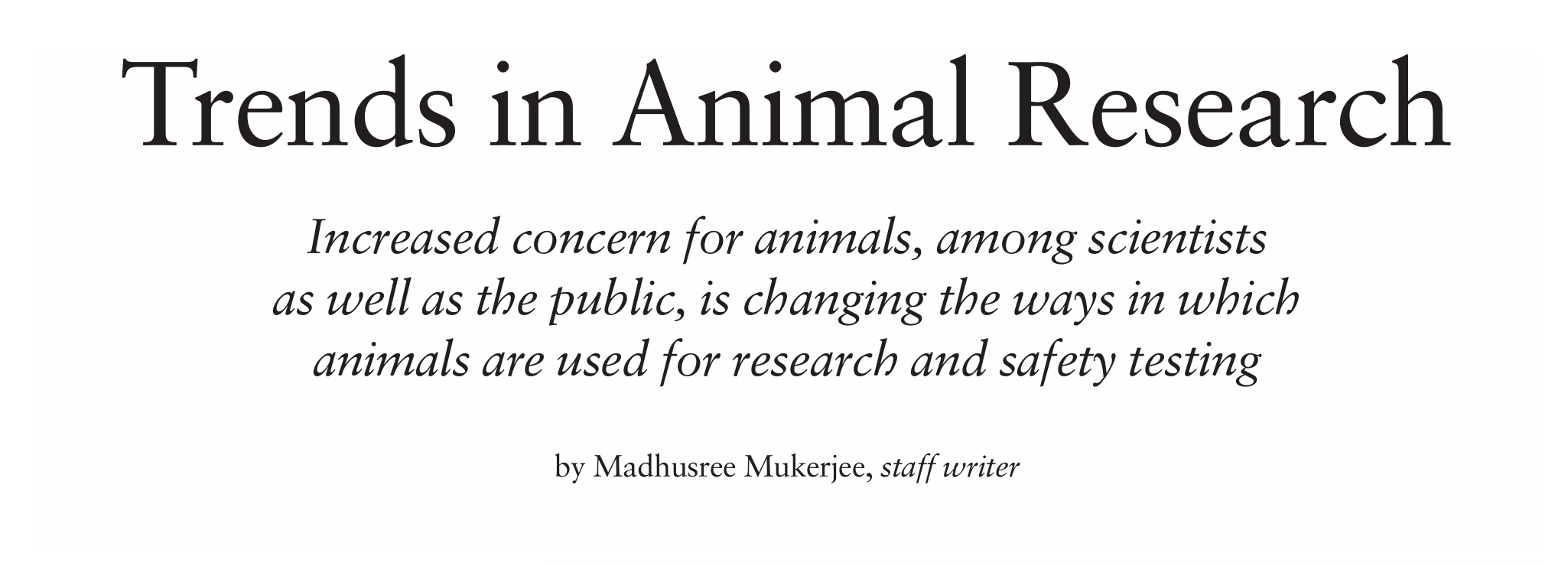
I need help with writing this annotated bibliography. it has to be written as a "call to action". I definitely need help bringing it all together and adding more, but I will provide the links and the rubric for the class. the main article that I am using is within other articles so I will provide pictures of which one I am researching. The title is called "Trends in Animal research". I four resources for my essay that will be listed. " I also need to have quotations from two sources that was given and explaining it towards the topic."
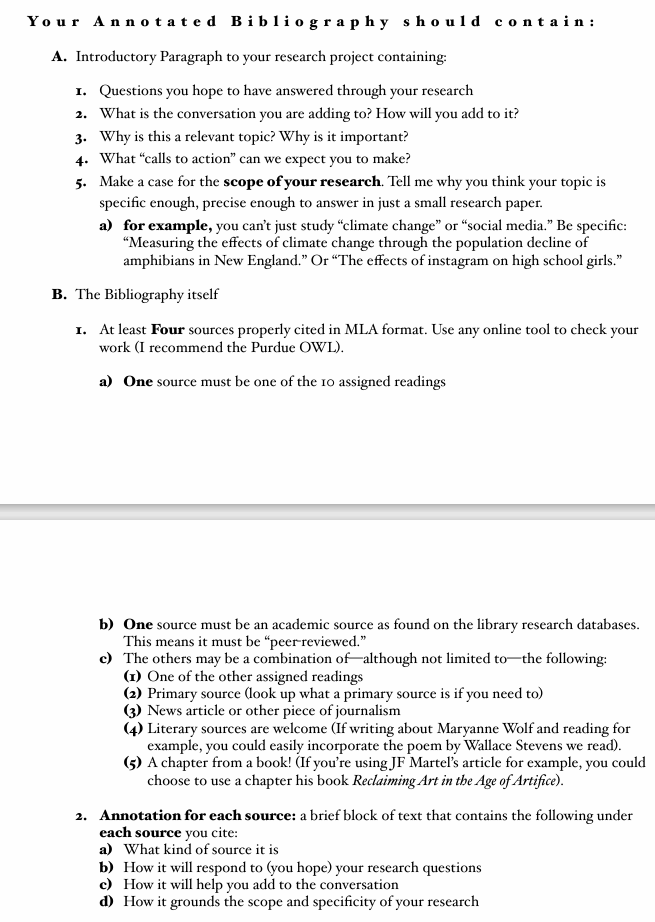
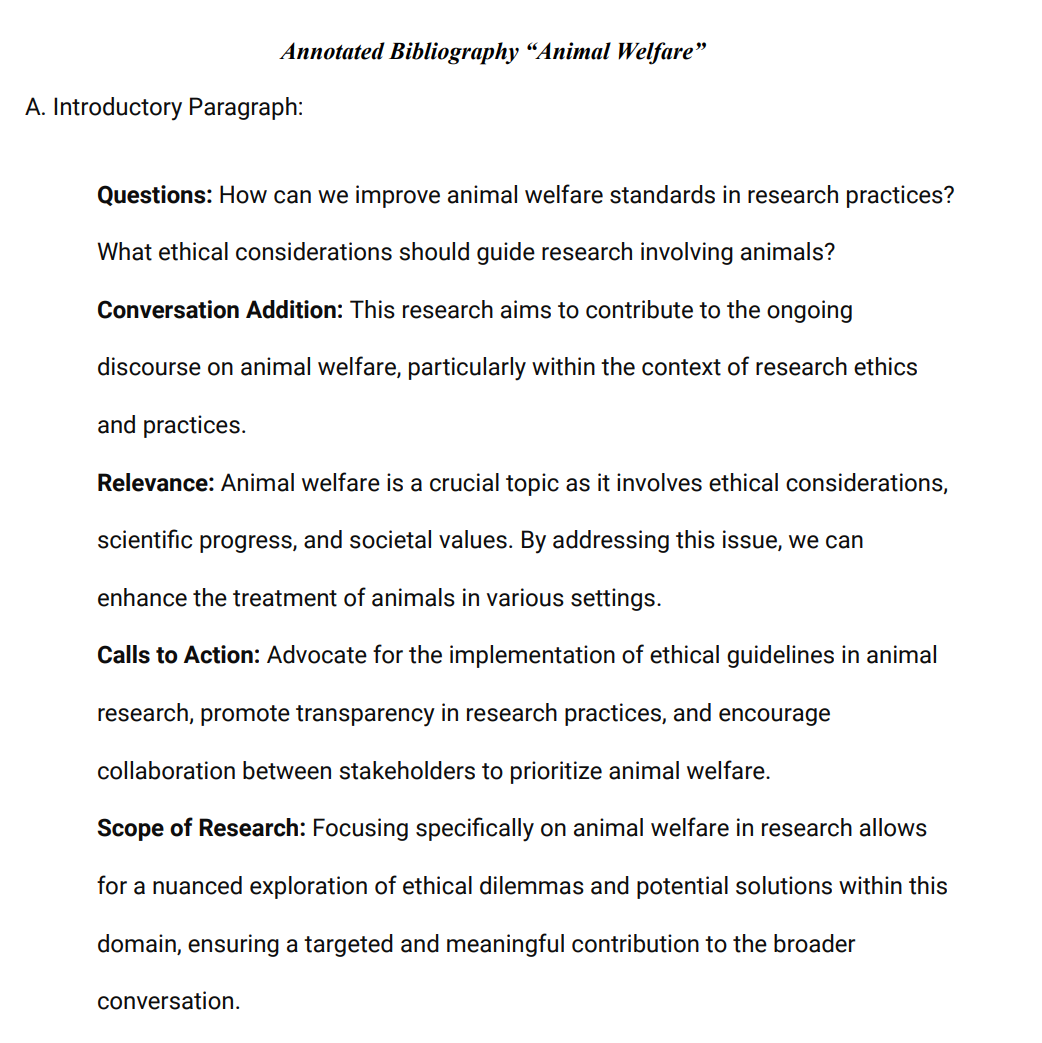
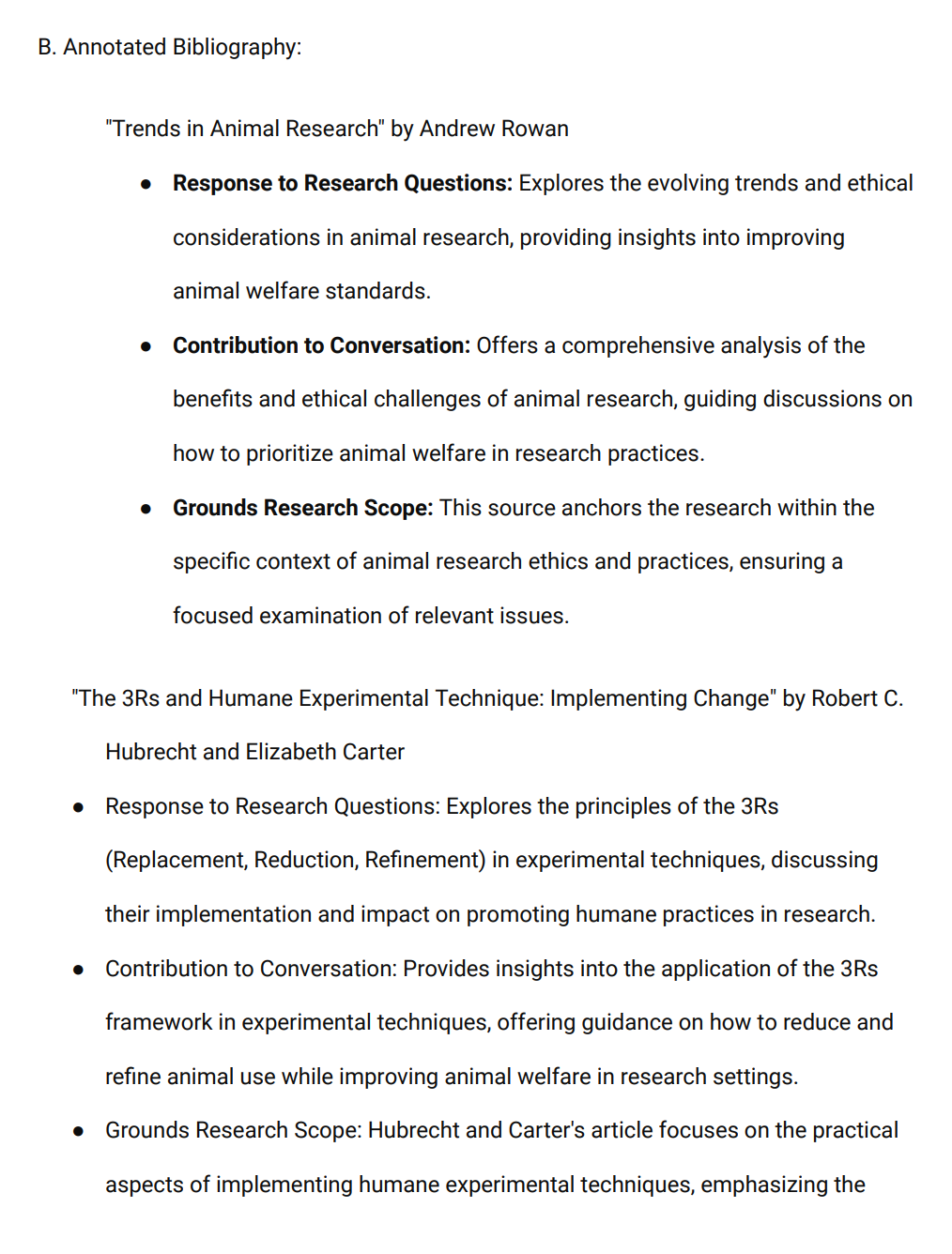
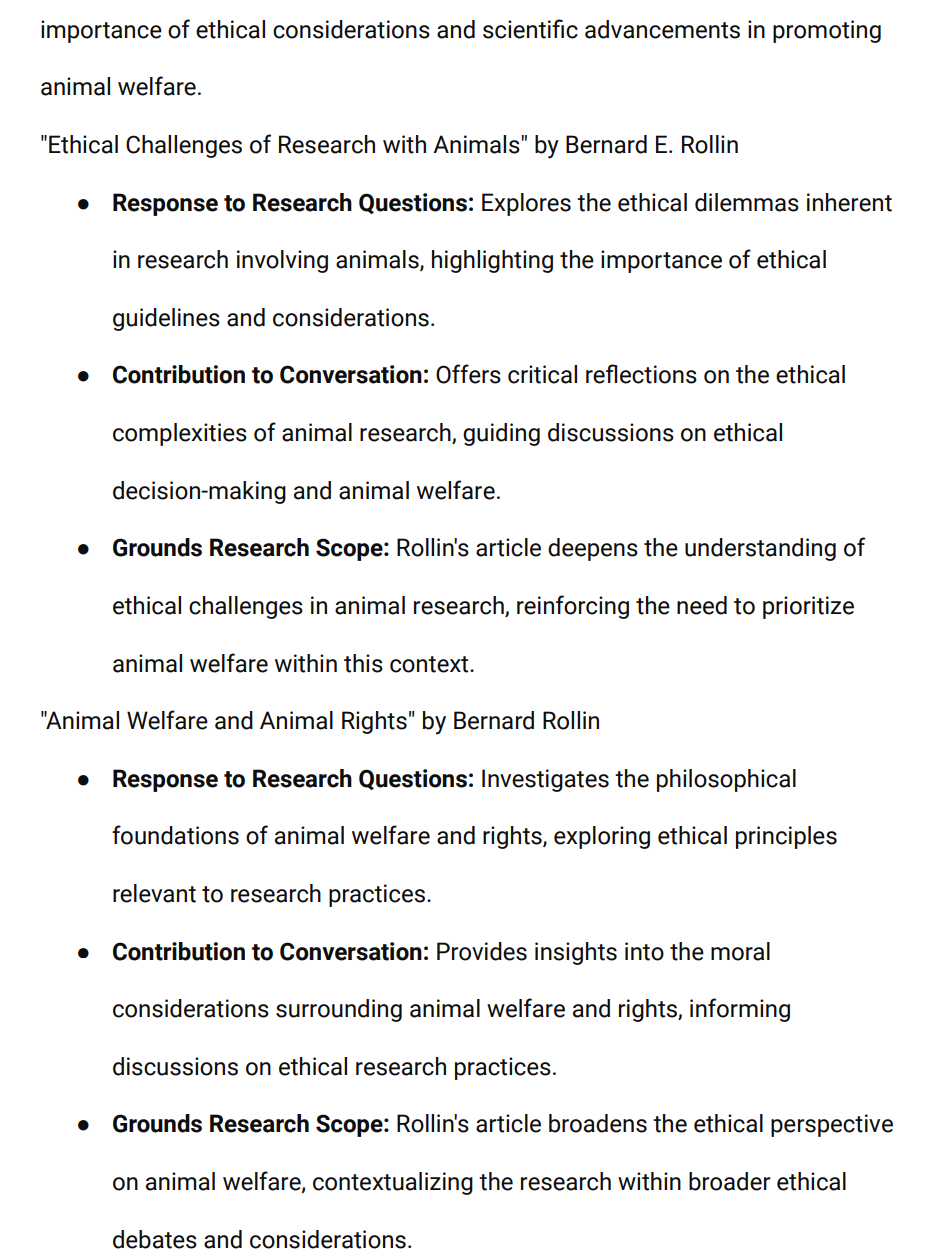
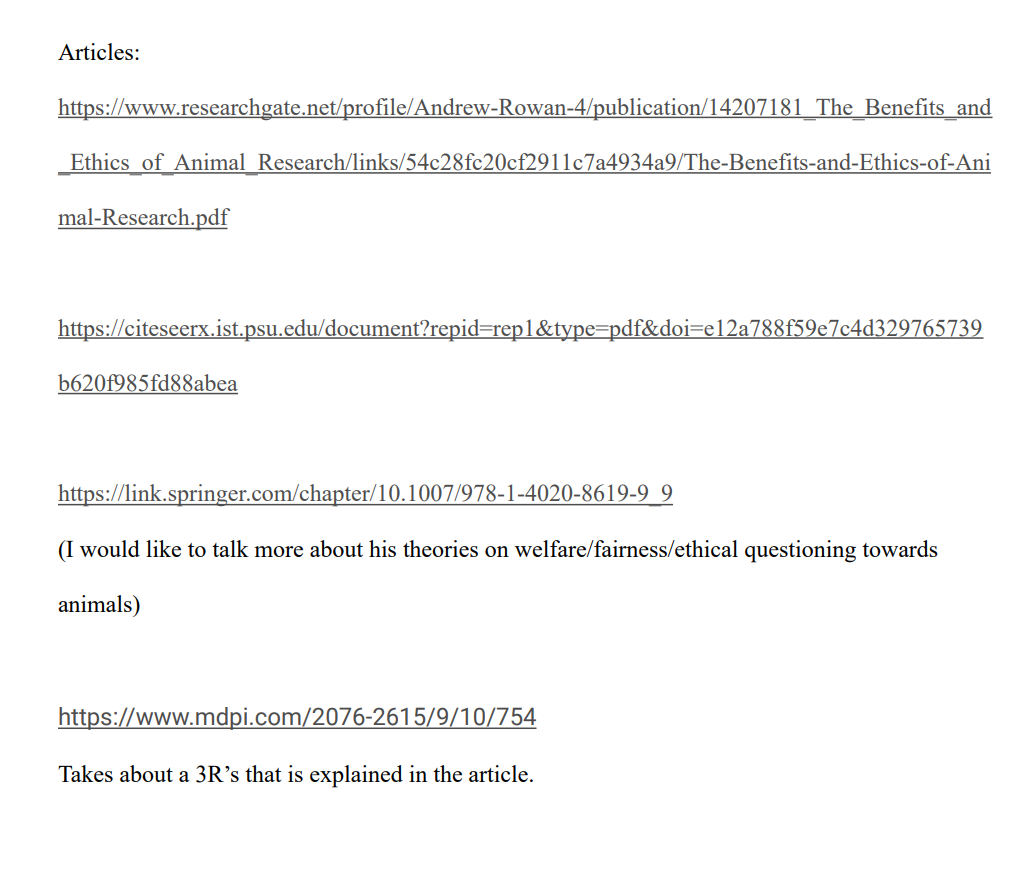
Your Annotated Bibliography should contain: A. Introductory Paragraph to your research project containing: I. oo s, Questions you hope to have answered through your research What is the conversation you are adding to? How will you add to it? Why is this a relevant topic? Why is it important? What \"calls to action\" can we expect you to make? Make a case for the scope of vour research. Tell me why you think your topic is specific enough, precise enough to answer in just a small research paper. a) for example, vou can't just study \"climate change\" or \"social media.\" Be specific: \"Measuring the effects of climate change through the population decline of amphibians in New England.\" Or \"The effects of instagram on high school girls.\" B. The Bibliography itself I. At least Four sources properly cited in MLA format. Use any online tool to check your work (I recommend the Purdue OWL). a) Omne source must be one of the 10 assigned readings b) One source must be an academic source as found on the library research databases. This means it must be \"peerreviewed.\" ) The others may be a combination ofalthough not limited tothe following: (1) One of the other assigned readings (2) Primary source (look up what a primary source is if you need to) (3) News article or other piece of journalism (4) Literary sources are welcome (If writing about Marvanne Wolf and reading for example, vou could easily incorporate the poem by Wallace Stevens we read). (5) A chapter from a book! (If you're using JF Martel's article for example, you could choose to use a chapter his book Reclaiming Art in the Age of Artifice). Annotation for each source: a brief block of text that contains the following under each source you cite: a) What kind of source it is b) How it will respond to (you hope) your research questions ) How it will help you add to the conversation d) How it grounds the scope and specificity of your research Description: Theannotated bibliography contains both information for finding your source (as does any works cited page) and a small block of text explaining why you have chosen to use it. List at least Four Sources you will be using for your research, at least one of those sources must be from a scholarly article you've found through the library research database. Trends in Animal Research Increased concern for animals, aimong scientists as well as the public, is changing the ways in which animals are used for research and safety testing by Madhusree Mukerjee, staff writer Annotated Bibliography \"Animal Welfare\" A. Introductory Paragraph: Questions: How can we improve animal welfare standards in research practices? What ethical considerations should guide research involving animals? Conversation Addition: This research aims to contribute to the ongoing discourse on animal welfare, particularly within the context of research ethics and practices. Relevance: Animal welfare is a crucial topic as it involves ethical considerations, scientific progress, and societal values. By addressing this issue, we can enhance the treatment of animals in various settings. Calls to Action: Advocate for the implementation of ethical guidelines in animal research, promote transparency in research practices, and encourage collaboration between stakeholders to prioritize animal welfare. Scope of Research: Focusing specifically on animal welfare in research allows for a nuanced exploration of ethical dilemmas and potential solutions within this domain, ensuring a targeted and meaningful contribution to the broader conversation. B. Annotated Bibliography: "Trends in Animal Research" by Andrew Rowan e Response to Research Questions: Explores the evolving trends and ethical considerations in animal research, providing insights into improving animal welfare standards. e Contribution to Conversation: Offers a comprehensive analysis of the benefits and ethical challenges of animal research, guiding discussions on how to prioritize animal welfare in research practices. e Grounds Research Scope: This source anchors the research within the specific context of animal research ethics and practices, ensuring a focused examination of relevant issues. "The 3Rs and Humane Experimental Technique: Implementing Change" by Robert C. Hubrecht and Elizabeth Carter e Response to Research Questions: Explores the principles of the 3Rs (Replacement, Reduction, Refinement) in experimental techniques, discussing their implementation and impact on promoting humane practices in research. e Contribution to Conversation: Provides insights into the application of the 3Rs framework in experimental techniques, offering guidance on how to reduce and refine animal use while improving animal welfare in research settings. e Grounds Research Scope: Hubrecht and Carter's article focuses on the practical aspects of implementing humane experimental techniques, emphasizing the importance of ethical considerations and scientific advancements in promoting animal welfare. "Ethical Challenges of Research with Animals" by Bernard E. Rollin e Response to Research Questions: Explores the ethical dilemmas inherent in research involving animals, highlighting the importance of ethical guidelines and considerations. e Contribution to Conversation: Offers critical reflections on the ethical complexities of animal research, guiding discussions on ethical decision-making and animal welfare. e Grounds Research Scope: Rollin's article deepens the understanding of ethical challenges in animal research, reinforcing the need to prioritize animal welfare within this context. "Animal Welfare and Animal Rights" by Bernard Rollin e Response to Research Questions: Investigates the philosophical foundations of animal welfare and rights, exploring ethical principles relevant to research practices. e Contribution to Conversation: Provides insights into the moral considerations surrounding animal welfare and rights, informing discussions on ethical research practices. e Grounds Research Scope: Rollin's article broadens the ethical perspective on animal welfare, contextualizing the research within broader ethical debates and considerations. Articles: https://www.researchgate.net/profile/Andrew-Rowan-4/publication/14207181 The Benefits and Ethics of Animal Research/links/54c28fc20cf2911c7a4934a9/The-Benefits-and-Ethics-of-Ani mal-Research.pdf https://citeseerx.ist.psu.edu/document?repid=rep1&type=pdf&doi=el2a788f59e7c4d329765739 b620f985fd88abea https://link.springer.com/chapter/10.1007/978-1-4020-8619-9 9 (I would like to talk more about his theories on welfare/fairness/ethical questioning towards animals) https://www.mdpi.com/2076-2615/9/10/754 Takes about a 3R's that is explained in the article
Step by Step Solution
There are 3 Steps involved in it
1 Expert Approved Answer
Step: 1 Unlock
Question Has Been Solved by an Expert!
Get step-by-step solutions from verified subject matter experts
Step: 2 Unlock
Step: 3 Unlock
Students Have Also Explored These Related Business Writing Questions!










 Study Help