Question: Hi there pls help me on this ! Use the following information to answer the next question. A car is traveling down a road. Two
Hi there pls help me on this !
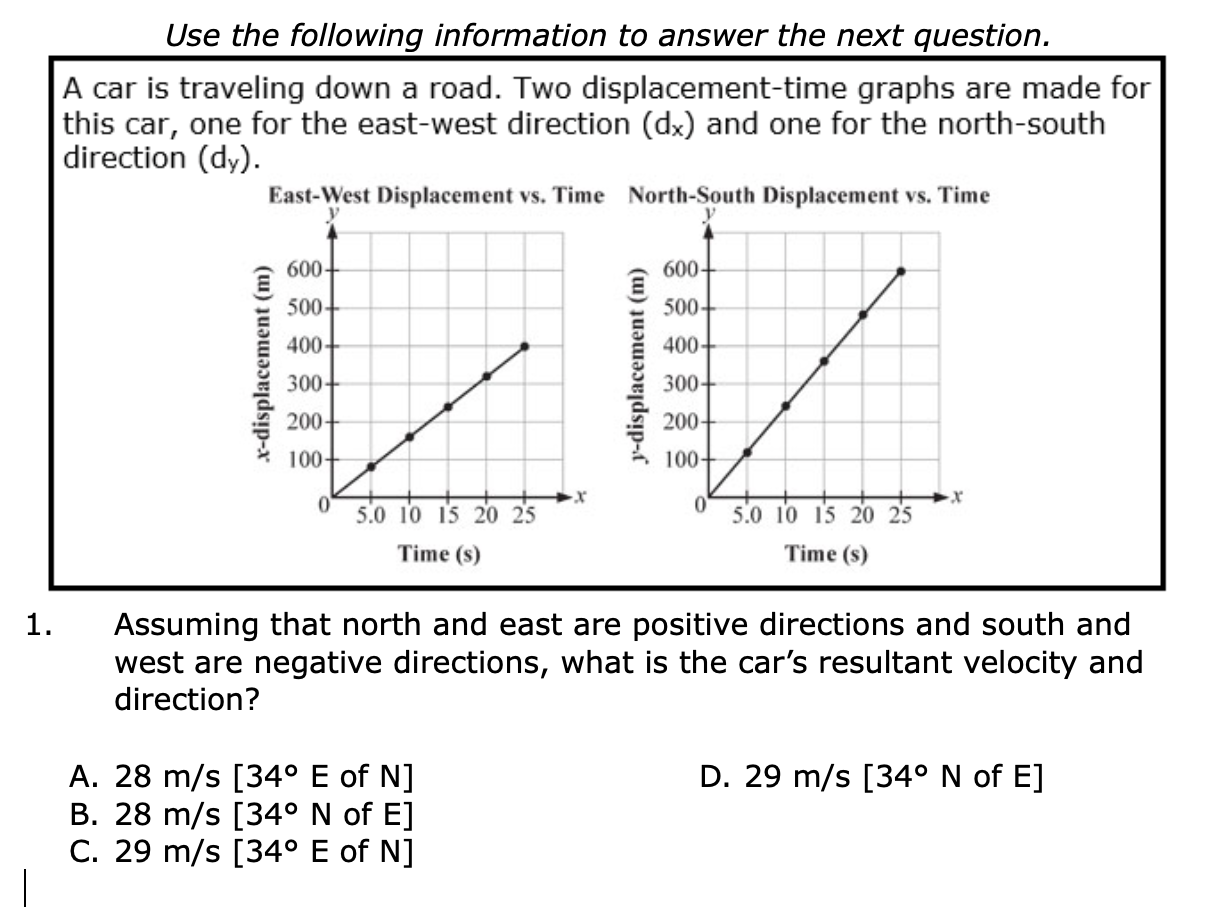
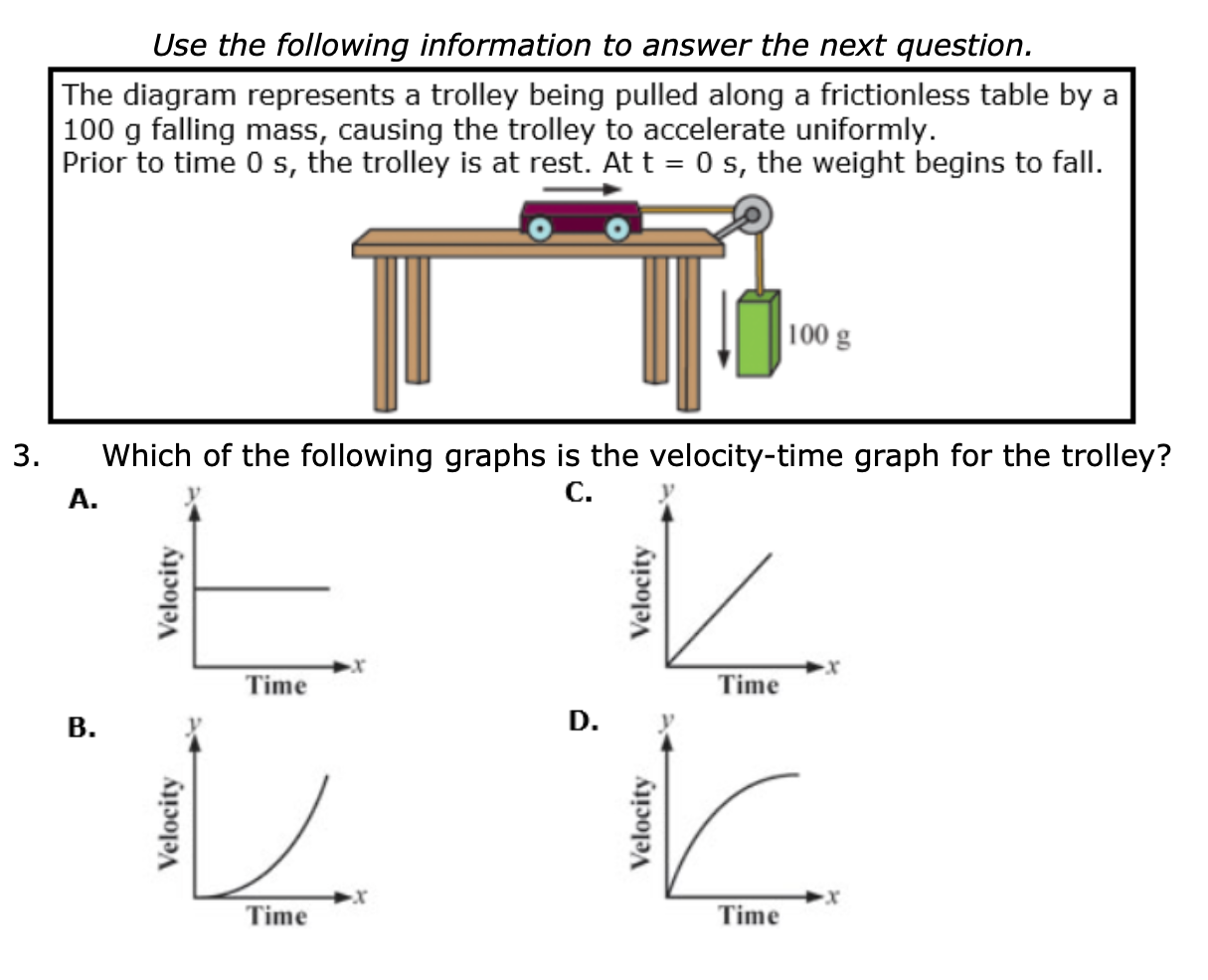
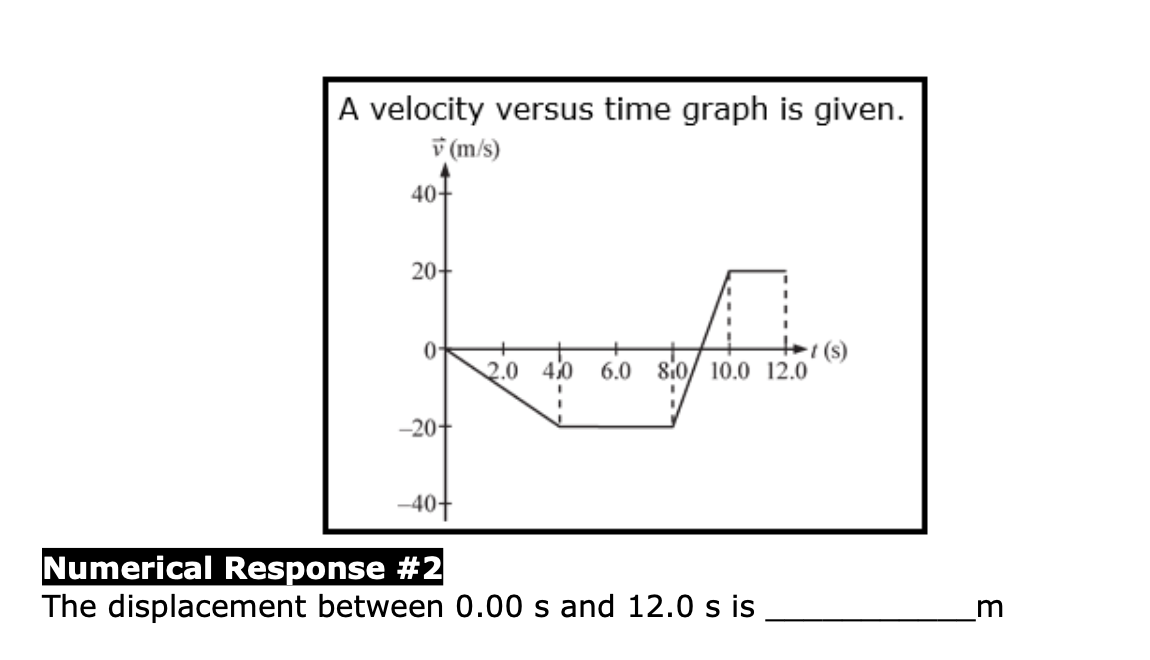
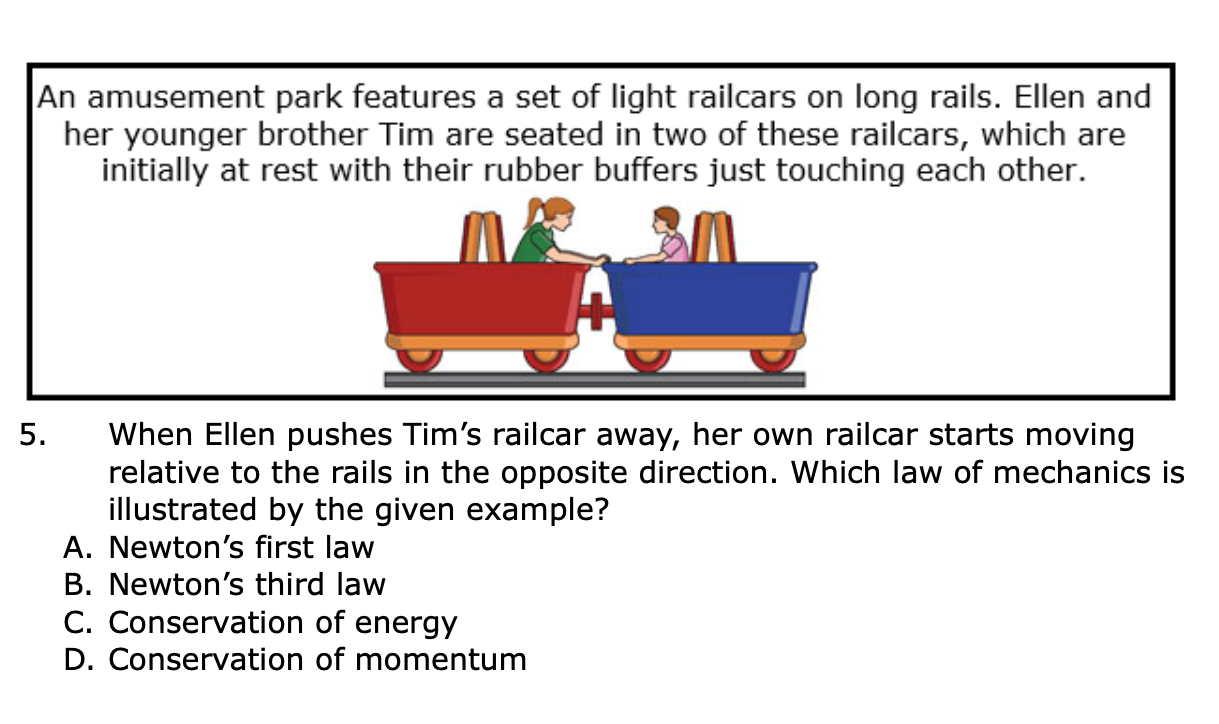
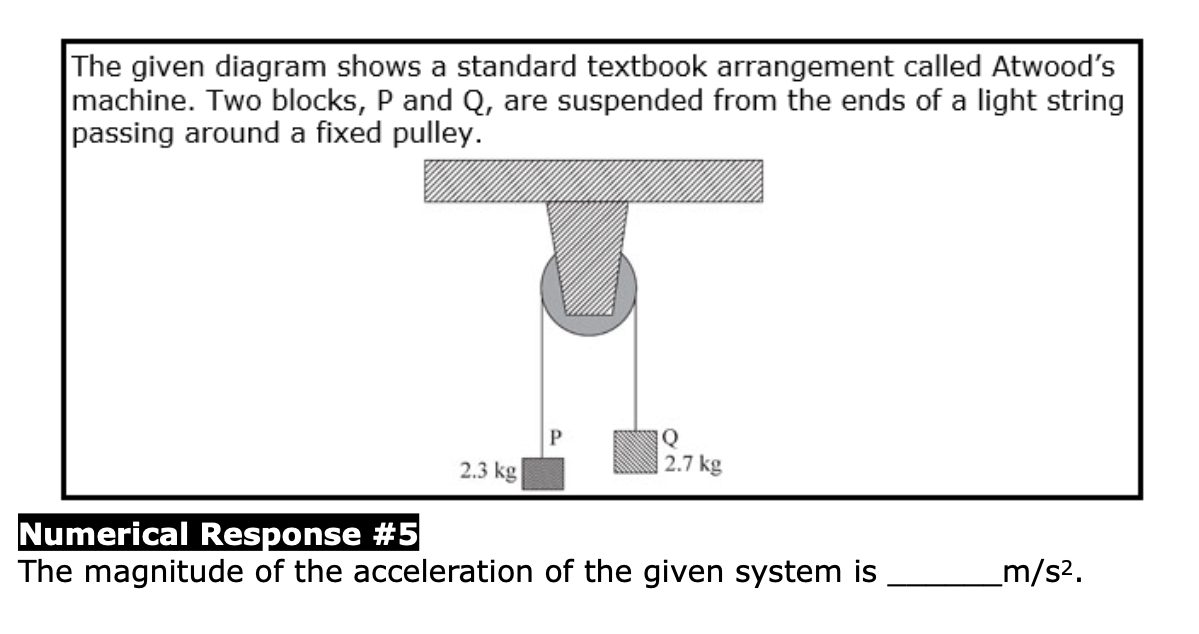
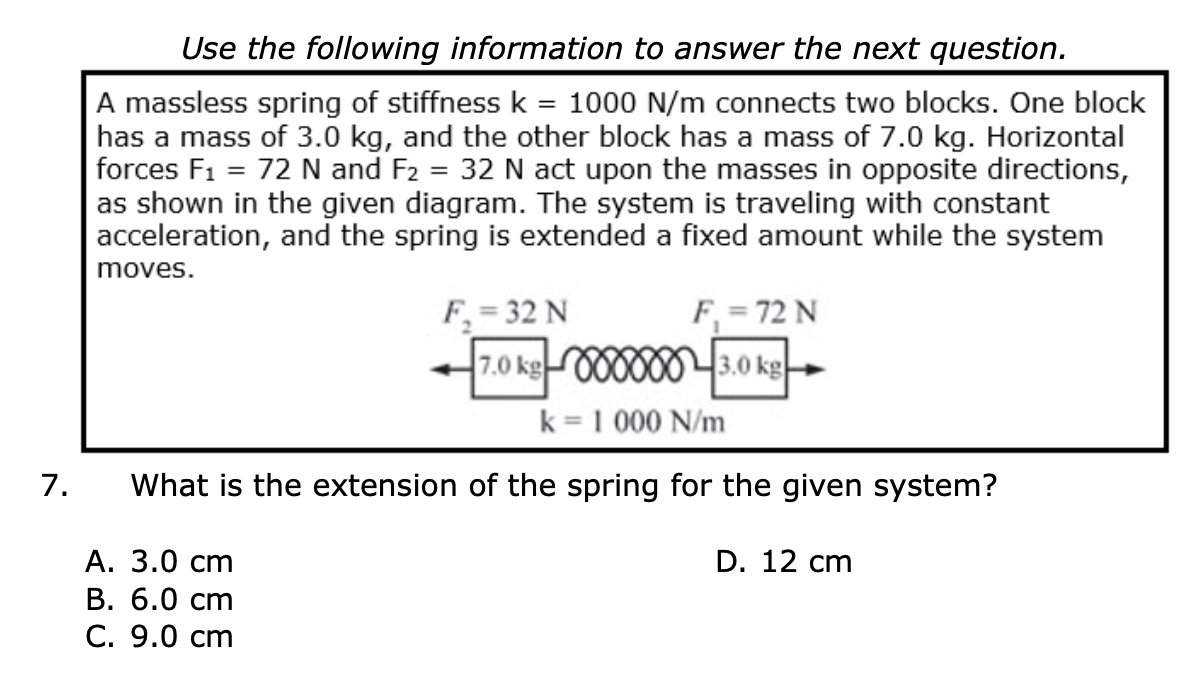
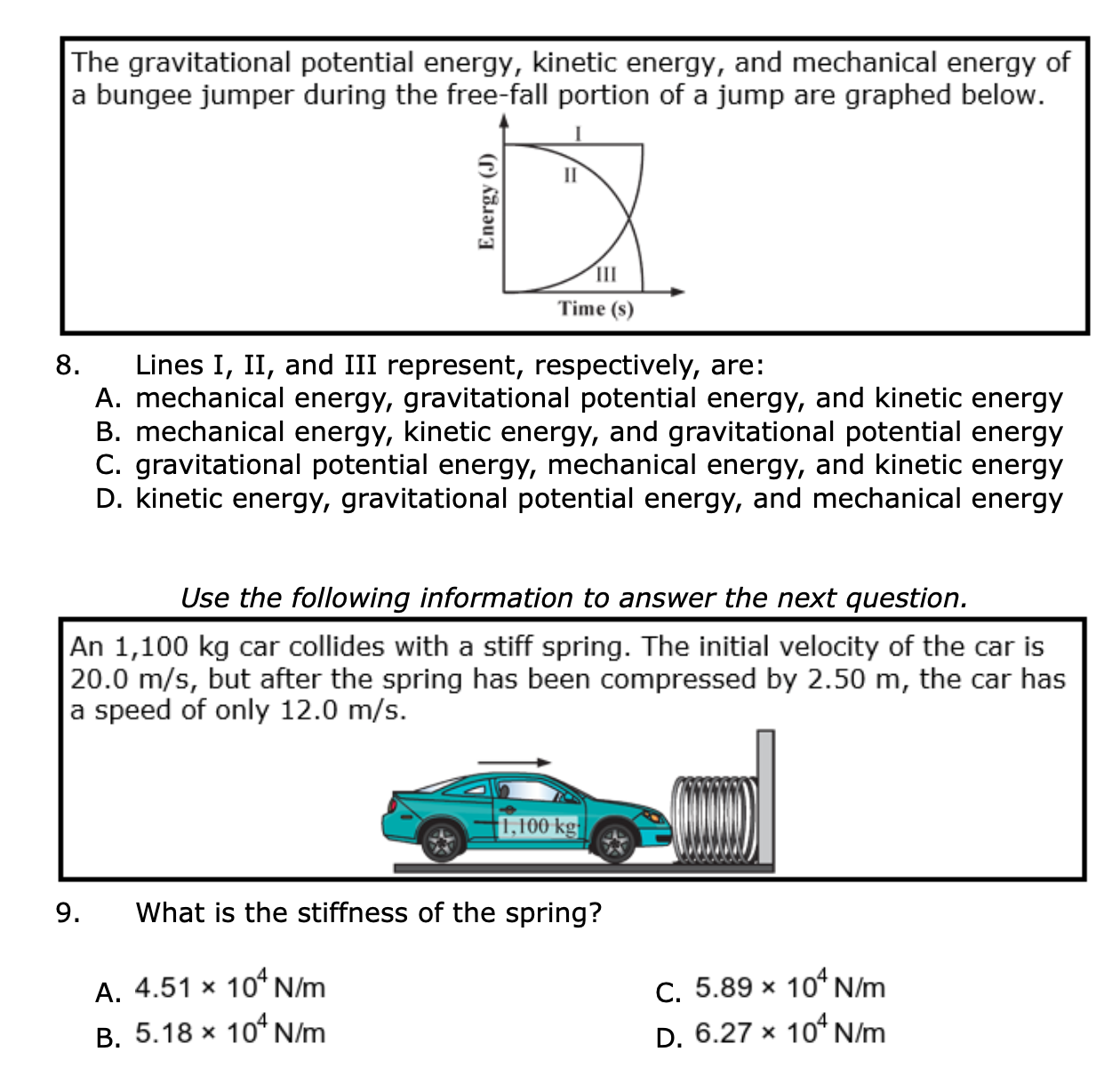
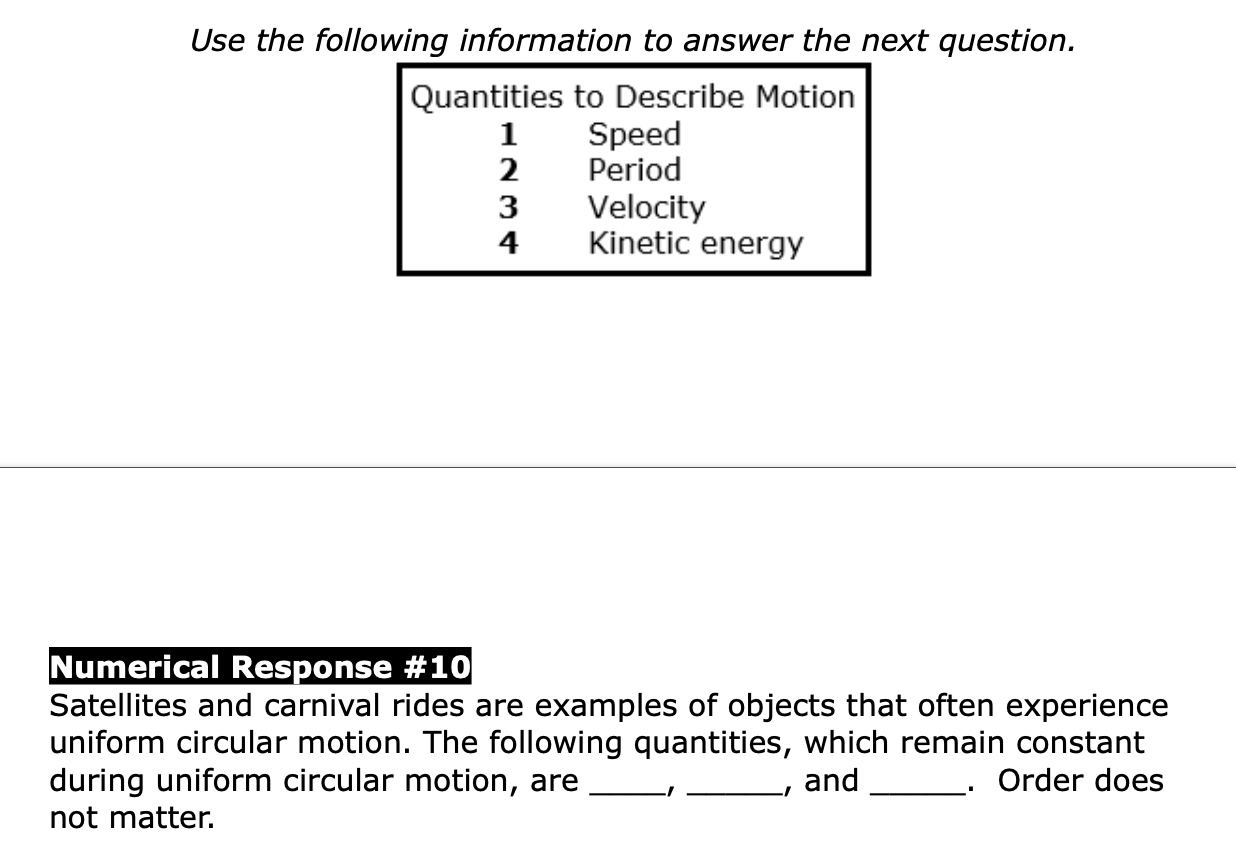
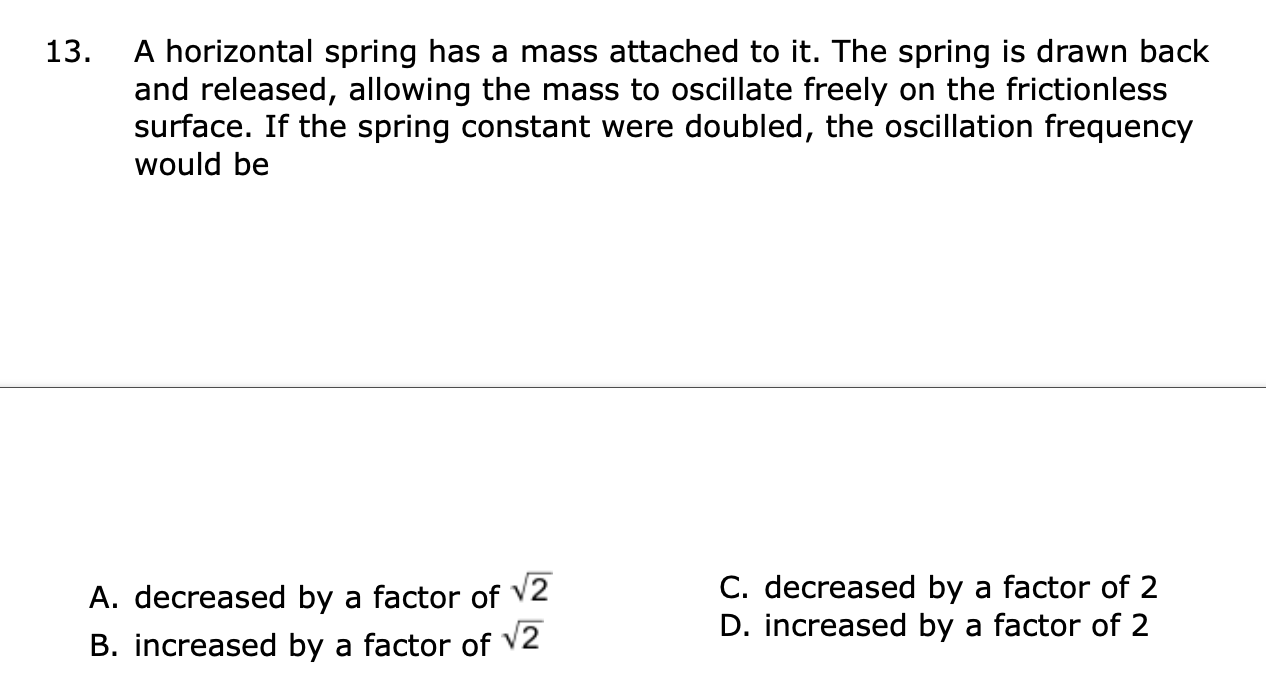
Use the following information to answer the next question. A car is traveling down a road. Two displacement-time graphs are made for this car, one for the east-west direction (dx) and one for the north-south direction (dy). East-West Displacement vs. Time North-South Displacement vs. Time 600- 600- 500- 500- 400- 400- x-displacement (m) J-displacement (m) 300- 300- 200- 200 100- 100+ 5.0 10 15 20 25 5.0 10 15 20 25 -X Time (s) Time (s) 1. Assuming that north and east are positive directions and south and west are negative directions, what is the car's resultant velocity and direction? A. 28 m/s [340 E of N] D. 29 m/s [340 N of E] B. 28 m/s [340 N of E] C. 29 m/s [340 E of N]Use the following information to answer the next question. The diagram represents a trolley being pulled along a frictionless table by a 100 g falling mass, causing the trolley to accelerate uniformly. Prior to time 0 s, the trolley is at rest. At t = 0 s, the weight begins to fall. 100 g 3. Which of the following graphs is the velocity-time graph for the trolley? A. C. Velocity Velocity Time Time B. D. Velocity Velocity -X -X Time TimeA velocity versus time graph is given. v (m/s) 407 20+ - 1 (S) 2.0 450 6.0 810/ 10.0 12.0 -20+ -40+ Numerical Response #2 The displacement between 0.00 s and 12.0 s is mAn amusement park features a set of light railcars on long rails. Ellen and her younger brother Tim are seated in two of these railcars, which are initially at rest with their rubber buffers just touching each other. 5. When Ellen pushes Tim's railcar away, her own railcar starts moving relative to the rails in the opposite direction. Which law of mechanics is illustrated by the given example? A. Newton's first law B. Newton's third law C. Conservation of energy D. Conservation of momentumThe given diagram shows a standard textbook arrangement called Atwood's machine. Two blocks, P and Q, are suspended from the ends of a light string passing around a fixed pulley. P O 2.3 kg 2.7 kg Numerical Response #5 The magnitude of the acceleration of the given system is m/$2.Use the following information to answer the next question. A massless spring of stiffness k = 1000 N/m connects two blocks. One block has a mass of 3.0 kg, and the other block has a mass of 7.0 kg. Horizontal forces F1 = 72 N and F2 = 32 N act upon the masses in opposite directions, as shown in the given diagram. The system is traveling with constant acceleration, and the spring is extended a fixed amount while the system moves. F, = 32 N F. = 72 N 7.0 kg 6080 3.0 kg k = 1 000 N/m 7. What is the extension of the spring for the given system? A. 3.0 cm D. 12 cm B. 6.0 cm C. 9.0 cmThe gravitational potential energy, kinetic energy, and mechanical energy of a bungee jumper during the free-fall portion of a jump are graphed below. Energy (J) III Time (s) 8. Lines I, II, and III represent, respectively, are: A. mechanical energy, gravitational potential energy, and kinetic energy B. mechanical energy, kinetic energy, and gravitational potential energy C. gravitational potential energy, mechanical energy, and kinetic energy D. kinetic energy, gravitational potential energy, and mechanical energy Use the following information to answer the next question. An 1,100 kg car collides with a stiff spring. The initial velocity of the car is 20.0 m/s, but after the spring has been compressed by 2.50 m, the car has a speed of only 12.0 m/s. 1,100 kg 9. What is the stiffness of the spring? A. 4.51 x 10* N/m C. 5.89 x 10* N/m B. 5.18 x 10# N/m D. 6.27 x 10* N/mUse the following information to answer the next question. Quantities to Describe Motion Speed Period Velocity Kinetic energy Numerical Response #10 Satellites and carnival rides are examples of objects that often experience uniform circular motion. The following quantities, which remain constant during uniform circular motion, are and Order does not matter.13. A horizontal spring has a mass attached to it. The spring is drawn back and released, allowing the mass to oscillate freely on the frictionless surface. If the spring constant were doubled, the oscillation frequency would be A. decreased by a factor of V2 C. decreased by a factor of 2 B. increased by a factor of V2 D. increased by a factor of 2
Step by Step Solution
There are 3 Steps involved in it
1 Expert Approved Answer
Step: 1 Unlock
Question Has Been Solved by an Expert!
Get step-by-step solutions from verified subject matter experts
Step: 2 Unlock
Step: 3 Unlock
Students Have Also Explored These Related Physics Questions!