







Question: In what ways did the rise of socialist ideas lead to the development of the discipline of Sociology? Capitalism had wreaked havoc in the society.
In what ways did the rise of socialist ideas lead to the development of the discipline of Sociology?
Capitalism had wreaked havoc in the society. The poor were getting poorer while the rich were getting richer. Socialist idealists wanted to experiment with these occurrences in society. They held meetings and wrote large volumes of books to hold the mirror up to society. There was a need for accountability which they were determined to pursue. They viewed some dimensions of human conduct as hidden which should be exposed. The exposition took the form of academic dueling and this was very taxing. Equality was the mantra for everyone and justice must be served immediately and within the shortest possible time to encourage mutual respect and satisfaction for all involved in the very important quest of human utopia and dystopia. B. Capitalism as an economic system developed in Europe after the industrial revolution. The rich were getting richer and the poor were getting poorer to the disdain of the poor and lowly in society. There was the notion that poor people should replace the elite and rule the society instead. They were seen as people who could be very considerate bearing in mind their own circumstances. Mobilisation of resources was important to the venture. Sociology was developed with the sole aim of overturning the status quo. Equality was the mantra for everyone and justice must be served immediately and within the shortest possible time to encourage mutual respect and satisfaction for all involved in the very impottant quest for human freedom, Sociology envisaged an equal society for everyone. C.Capitalism as an economic system had developed in Europe and had led to gross social and economic inequality between those who owned the means of production and those who did not. Inspired by the writings of Karl Marx, those who held the sociatist ideas believed that this exploitative economic system must cease. To cause this change to happen, there was the need to study and understand how capitalism operates and the conditions that provided a fertile ground for its emergence. Sociology was developed to do just that and proponents of the socialist ideas envisaged an equal society where means of production and distribution will be held in common.n


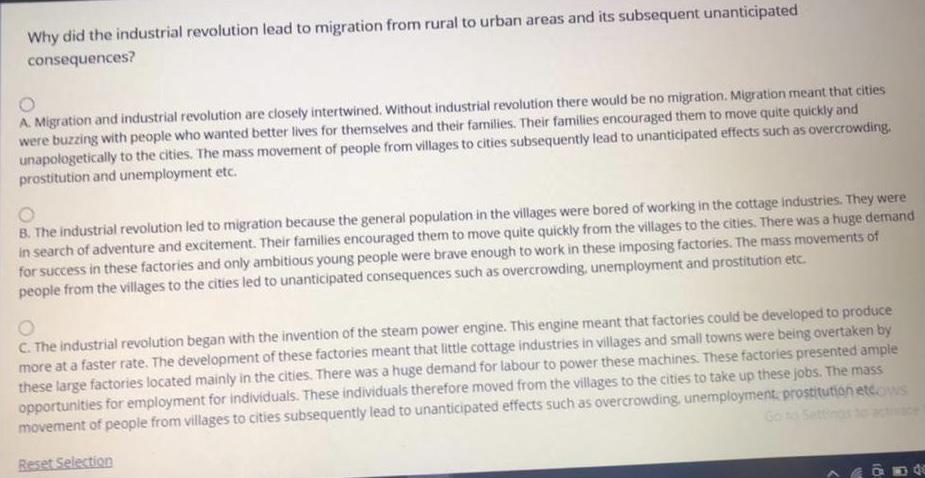
n what ways did the rise of socialist ideas lead to the development of the discipline of Sociology Capitalism had wreaked havoc in the society. The poor were getting poorer while the rich were getting richer. Socialist idealists wanted to periment with these occurrences in society. They held meetings and wrote large volumes of books to hold the mirror up to society. There was a eed for accountability which they were determined to pursue. They viewed some dimensions of human conduct as hidden which should be exposed. he exposition took the form of academic duelling and this was very taxing. Equality was the mantra for everyone and justice must be served mmediately and within the shortest possible time to encourage mutual respect and satisfaction for all involved in the very important quest of human utopia and dystopia. B. Capitalism as an economic system developed in Europe after the industrial revolution. The rich were getting richer and the poor were getting poorer to the disdain of the poor and lowly in society. There was the notion that poor people should replace the elite and rule the society instead. They were seen as people who could be very considerate bearing in mind their own circumstances. Mobilisation of resources was important to the venture. Sociology was developed with the sole aim of overturning the status quo. Equality was the mantra for everyone and justice must be served immediately and within the shortest possible time to encourage mutual respect and satisfaction for all involved in the very impottant quest for human freedom, Sociology envisaged an equal society for everyone. C.Capitalism as an economic system had developed in Europe and had led to gross social and economic inequality between those who owned the means of production and those who did not. Inspired by the writings of Karl Marx, those who held the sociatist ideas believed that this exploitative economic system must cease. To cause this change to happen, there was the need to study and understand how capitalism operates and the conditions that provided a fertile ground for its emergence. Sociology was developed to do just that and proponents of the socialist ideas envisaged an equal society where means of production and distribution will be held in common. An Economist studies the production, distribution and consumption of goods and services. The economist also examines how prices are determined or what effects taxes will have. Sociology studies human behaviour and social interactions in society. What then will be the focus of Sociology of Economics? A. Sociology of economics focuses on how production distribution and consumption of goods and service affect human behaviour and social interactions of farmilies in the society. Additionally. Sociology of Economics will be interested in studying how demand and supply of goods and services leads to stability and/or social change of society. B. Sociology of Economics focuses on wants, efforts and satisfaction. In other words, It deals with decisions regarding the commodities and services to be produced in the economy. how to produce them most economically and how to provide for the growth of the society C. Sociology of Economics focuses on the production. distribution, and consumption of goods and services. It studies how individuals. businesses. governments, and nations make choices about how to allocate resources. It deals with decisions regarding the commodities and services to be produced in the economy, how to produce them most economically and how to provide for the growth of the society. D. Sociology of Economics assesses the relationship between the consumption and production of goods and services in an environment of finite resources. A focus of the subject is how economic agents behave or interact both individually (microeconomics) and in aggregate (macroeconomics). Go Reset Selection A Hide Karl Marx viewed the economy as the crucial factor by arguing that whoever controlled the economy-controlled society. He was opposed to the capitalist system of production. He was also eager to change the structure of capitalism and establish new institutions in society. Based on these views, Marx divided society into two - the Substructure and Superstructure. Marx asserted that the superstructure consists of the political, religious, education, marriage, and health institutions of society. Furthermore, he maintained that the superstructure is strongly influenced by the substructure or economic base of society. What is your understanding of the concept "substructure" as explained by Marx? A The main focus of the Marxist theory has been class conflict or class struggle, between those who own the means of production and those who do not. He explained the substructure as the struggle over scarce resources between social classes in society, especially between the bourgeolsie (Le. those who own the means of production) and proletariat - the workers who offer their labour in exchange for a wage in order to survive. B. All history. Marx said, is composed of struggles between dasses such as the Masters and Slaves: Lords and Serfs: Bourgeoisie and Proletariat. He therefore referred to the substructure as the relations of production that existed since time in history. C. in Karl Marxs view. the substructure is the clash of contradictions and the creation of new, more advanced structures out of these clashes or conflicts in society. Activate Windows D. The economic institution is the most important among all the other institutions because every society depends on the economic institution for survival. In Marx's view. the substructure is the foundation upon which the superstructure which is made up of the remaining institutions of socie Why did the industrial revolution lead to migration from rural to urban areas and its subsequent unanticipated consequences? A. Migration and industrial revolution are closely intertwined. Without industrial revolution there would be no migration. Migration meant that cities were buzzing with people who wanted better lives for themselves and their families. Their families encouraged them to move quite quickly and unapologetically to the cities. The mass movement of people from villages to cities subsequently lead to unanticipated effects such as overcrowding. prostitution and unemployment etc. B. The industrial revolution led to migration because the general population in the villages were bored of working in the cottage industries. They were in search of adventure and excitement. Their families encouraged them to move quite quickly from the villages to the cities. There was a huge demand for success in these factories and only ambitious young people were brave enough to work in these imposing factories. The mass movements of people from the villages to the cities led to unanticipated consequences such as overcrowding, unemployment and prostitution etc. C. The industrial revolution began with the invention of the steam power engine. This engine meant that factories could be developed to produce more at a faster rate. The development of these factories meant that little cottage industries in villages and small towns were being overtaken by these large factories located mainly in the cities. There was a huge demand for labour to power these machines. These factories presented ample opportunities for employment for individuals. These individuals therefore moved from the villages to the cities to take up these jobs. The mass movement of people from villages to cities subsequently lead to unanticipated effects such as overcrowding, unemployment, prostitution etcows Go to Settinos Reset Selection
Step by Step Solution
3.42 Rating (149 Votes )
There are 3 Steps involved in it
1 Answer c capitalism is an economic system had developed In Europe and had led to gross social and economic inequality between those who owned the means of production and those who did not Inspired b... View full answer

Get step-by-step solutions from verified subject matter experts
 Study Help