



Question: Hii- Could someone please help me answer these questions! I would really appreciate it. The company's discount rate is 15%. Click here to view Exhibit
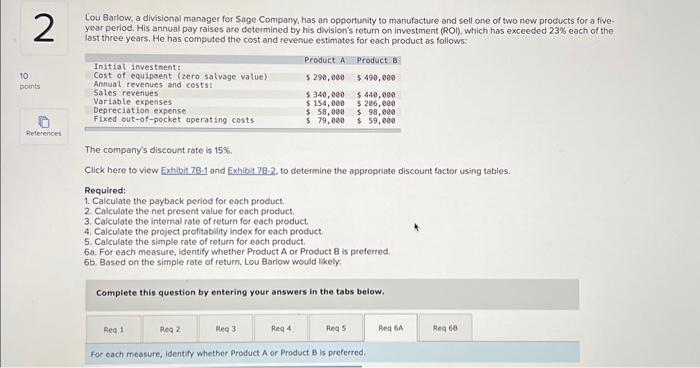
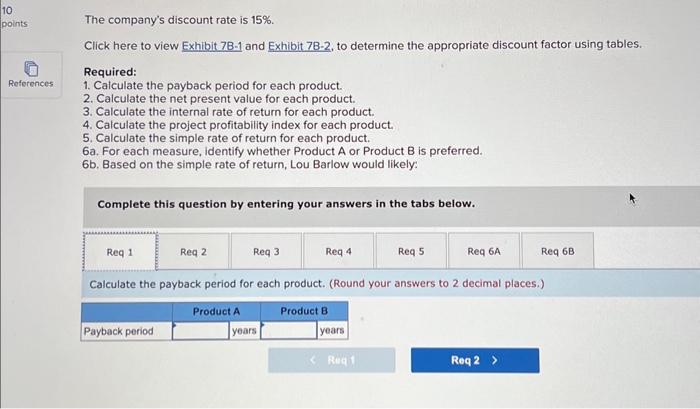
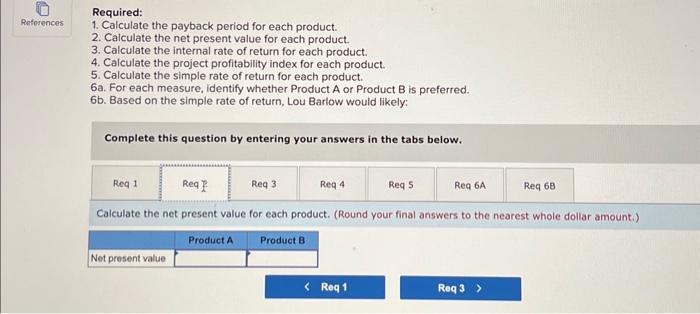
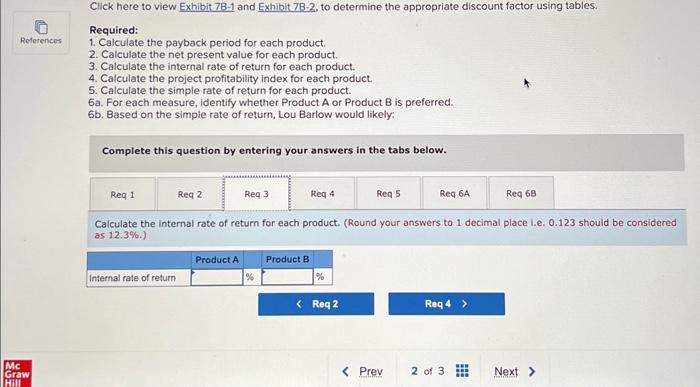
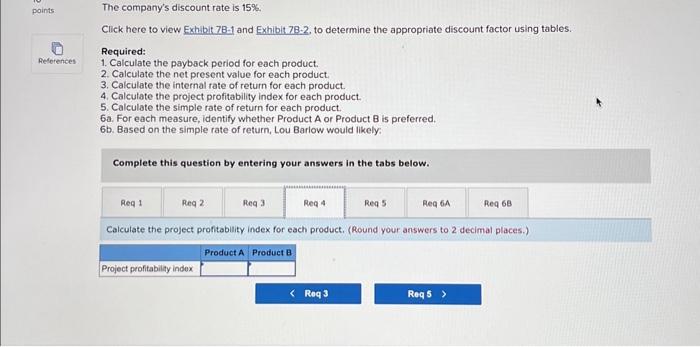
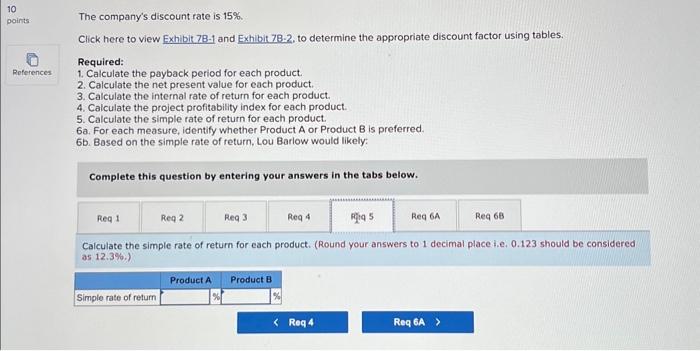
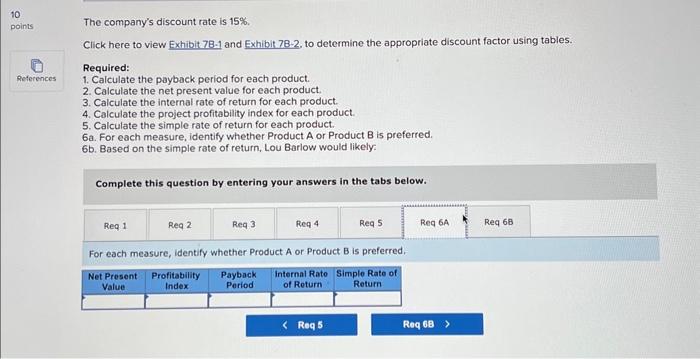
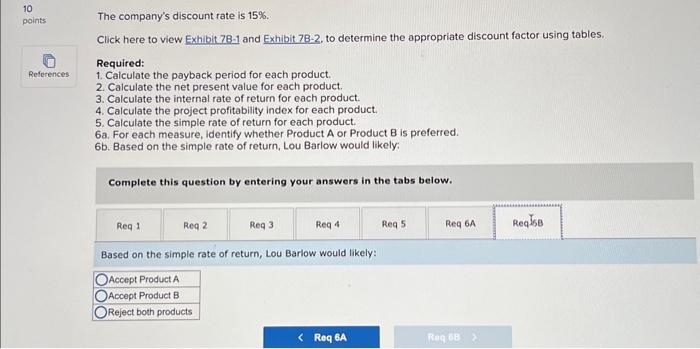
The company's discount rate is 15%. Click here to view Exhibit 781 and Exhibit 782, to determine the appropriate discount factor using tables. Required: 1. Calculate the payback period for each product. 2. Calculate the net present value for each product. 3. Calculate the internal rate of return for each product. 4. Calcutate the project profitability index for each product. 5. Calculate the simple rate of return for each product. 5a. For each measure, identify whether Product A or Product B is preferred. 5b. Based on the simple rate of return, Lou Barlow would likely: Complete this question by entering your answers in the tabs below. Calculate the project profitability index for each product. (Round your answers to 2 decimal places.) The company's discount rate is 15%. Click here to view Exhibit 78-1 and Exhibit 78-2, to determine the appropriate discount factor using tables. Required: 1. Calculate the payback period for each product. 2. Calculate the net present value for each product. 3. Calculate the internal rate of return for each product. 4. Calculate the project profitability index for each product. 5. Calculate the simple rate of return for each product. 6a. For each measure, identify whether Product A or Product B is preferred. 6 b. Based on the simple rate of return, Lou Barlow would likely: Complete this question by entering your answers in the tabs below. Calculate the simple rate of return for each product. (Round your answers to 1 decimal place i.e, 0.123 should be considered as 12.3% ) The company's discount rate is 15%. Click here to view Exhibit 78-1 and Exhibit 78-2, to determine the appropriate discount factor using tables. Required: 1. Calculate the payback period for each product. 2. Calculate the net present value for each product. 3. Calculate the internal rate of return for each product. 4. Calculate the project profitability index for each product. 5. Calculate the simple rate of return for each product. 6a. For each measure, identify whether Product A or Product B is preferred. 6b. Based on the simple rate of return, Lou Barlow would likely: Complete this question by entering your answers in the tabs below. Calculate the payback period for each product. (Round your answers to 2 decimal places.) Click here to view Exhibit 78-1 and Exhibit 78-2, to determine the appropriate discount factor using tables. Required: 1. Calculate the payback period for each product. 2. Calculate the net present value for each product. 3. Calculate the internal rate of return for each product. 4. Calculate the project profitability index for each product. 5. Calculate the simple rate of return for each product. 6 . For each measure, identify whether Product A or Product B is preferred. 6b. Based on the simple rate of return, Lou Barlow would likely: Complete this question by entering your answers in the tabs below. Calculate the internal rate of return for each product. (Round your answers to 1 decimal place i.e. 0.123 should be considered as 12.3%.) The company's discount rate is 15%. Click here to view Exhibit 78-1 and Exhibit 78-2, to determine the appropriate discount factor using tables. Required: 1. Calculate the payback period for each product. 2. Calculate the net present value for each product. 3. Calculate the internal rate of return for each product. 4. Calculate the project profitability index for each product. 5. Calculate the simple rate of return for each product. 6 . For each measure, identify whether Product A or Product B is preferred. 6b. Based on the simple rate of return, Lou Barlow would likely: Complete this question by entering your answers in the tabs below. Based on the simple rate of return, Lou Barlow would likely: Lou Barlow, a divisional manager for Sage Company, has an opportunity to manufacture and sell ane of two new products for a fiveyear period. His annual pay raises are dotermined by his division's return on investment (ROI), which has exceeded 23% each of the last three years. He has computed the cost and revenue estimates for each product as follows: The company's discount rate is 15%. Click here to view Fxhibit 781 and Exhibit 78-2, to determine the appropriate discount factor using tables. Required: 1. Calculate the payback period for each product. 2. Caiculate the net present value for each product. 3. Calculate the internal rate of return for each product. 4. Caiculate the project profitability index for each product. 5. Calculate the simple rate of return for each product. 6 a. For each measure, identify whether Product A or Product B is preferred. 6b. Based on the simple rate of return, Lou Barlow would likely: Complete this question by entering your answers in the tabs below. For each measure, identify whether Product A or Product B is preferred. Required: 1. Calculate the payback period for each product. 2. Calculate the net present value for each product. 3. Calculate the internal rate of return for each product. 4. Calculate the project profitability index for each product. 5. Calculate the simple rate of return for each product. 6a. For each measure, identify whether Product A or Product B is preferred. 6b. Based on the simple rate of return, Lou Barlow would likely: Complete this question by entering your answers in the tabs below. Calculate the net present value for each product. (Round your final answers to the nearest whole dollar amount.) The company's discount rate is 15%. Click here to view Exhibit 781 and Exhibit 782, to determine the appropriate discount factor using tables. Required: 1. Calculate the payback period for each product. 2. Calculate the net present value for each product. 3. Calculate the internal rate of return for each product. 4. Calculate the project profitability index for each product. 5. Calculate the simple rate of return for each product. 6a. For each measure, identify whether Product A or Product B is preferred. 6b. Based on the simple rate of return, Lou Barlow would likely: Complete this question by entering your answers in the tabs below. For each measure, identify whether Product A or Product B is preferred. The company's discount rate is 15%. Click here to view Exhibit 781 and Exhibit 782, to determine the appropriate discount factor using tables. Required: 1. Calculate the payback period for each product. 2. Calculate the net present value for each product. 3. Calculate the internal rate of return for each product. 4. Calcutate the project profitability index for each product. 5. Calculate the simple rate of return for each product. 5a. For each measure, identify whether Product A or Product B is preferred. 5b. Based on the simple rate of return, Lou Barlow would likely: Complete this question by entering your answers in the tabs below. Calculate the project profitability index for each product. (Round your answers to 2 decimal places.) The company's discount rate is 15%. Click here to view Exhibit 78-1 and Exhibit 78-2, to determine the appropriate discount factor using tables. Required: 1. Calculate the payback period for each product. 2. Calculate the net present value for each product. 3. Calculate the internal rate of return for each product. 4. Calculate the project profitability index for each product. 5. Calculate the simple rate of return for each product. 6a. For each measure, identify whether Product A or Product B is preferred. 6 b. Based on the simple rate of return, Lou Barlow would likely: Complete this question by entering your answers in the tabs below. Calculate the simple rate of return for each product. (Round your answers to 1 decimal place i.e, 0.123 should be considered as 12.3% ) The company's discount rate is 15%. Click here to view Exhibit 78-1 and Exhibit 78-2, to determine the appropriate discount factor using tables. Required: 1. Calculate the payback period for each product. 2. Calculate the net present value for each product. 3. Calculate the internal rate of return for each product. 4. Calculate the project profitability index for each product. 5. Calculate the simple rate of return for each product. 6a. For each measure, identify whether Product A or Product B is preferred. 6b. Based on the simple rate of return, Lou Barlow would likely: Complete this question by entering your answers in the tabs below. Calculate the payback period for each product. (Round your answers to 2 decimal places.) Click here to view Exhibit 78-1 and Exhibit 78-2, to determine the appropriate discount factor using tables. Required: 1. Calculate the payback period for each product. 2. Calculate the net present value for each product. 3. Calculate the internal rate of return for each product. 4. Calculate the project profitability index for each product. 5. Calculate the simple rate of return for each product. 6 . For each measure, identify whether Product A or Product B is preferred. 6b. Based on the simple rate of return, Lou Barlow would likely: Complete this question by entering your answers in the tabs below. Calculate the internal rate of return for each product. (Round your answers to 1 decimal place i.e. 0.123 should be considered as 12.3%.) The company's discount rate is 15%. Click here to view Exhibit 78-1 and Exhibit 78-2, to determine the appropriate discount factor using tables. Required: 1. Calculate the payback period for each product. 2. Calculate the net present value for each product. 3. Calculate the internal rate of return for each product. 4. Calculate the project profitability index for each product. 5. Calculate the simple rate of return for each product. 6 . For each measure, identify whether Product A or Product B is preferred. 6b. Based on the simple rate of return, Lou Barlow would likely: Complete this question by entering your answers in the tabs below. Based on the simple rate of return, Lou Barlow would likely: Lou Barlow, a divisional manager for Sage Company, has an opportunity to manufacture and sell ane of two new products for a fiveyear period. His annual pay raises are dotermined by his division's return on investment (ROI), which has exceeded 23% each of the last three years. He has computed the cost and revenue estimates for each product as follows: The company's discount rate is 15%. Click here to view Fxhibit 781 and Exhibit 78-2, to determine the appropriate discount factor using tables. Required: 1. Calculate the payback period for each product. 2. Caiculate the net present value for each product. 3. Calculate the internal rate of return for each product. 4. Caiculate the project profitability index for each product. 5. Calculate the simple rate of return for each product. 6 a. For each measure, identify whether Product A or Product B is preferred. 6b. Based on the simple rate of return, Lou Barlow would likely: Complete this question by entering your answers in the tabs below. For each measure, identify whether Product A or Product B is preferred. Required: 1. Calculate the payback period for each product. 2. Calculate the net present value for each product. 3. Calculate the internal rate of return for each product. 4. Calculate the project profitability index for each product. 5. Calculate the simple rate of return for each product. 6a. For each measure, identify whether Product A or Product B is preferred. 6b. Based on the simple rate of return, Lou Barlow would likely: Complete this question by entering your answers in the tabs below. Calculate the net present value for each product. (Round your final answers to the nearest whole dollar amount.) The company's discount rate is 15%. Click here to view Exhibit 781 and Exhibit 782, to determine the appropriate discount factor using tables. Required: 1. Calculate the payback period for each product. 2. Calculate the net present value for each product. 3. Calculate the internal rate of return for each product. 4. Calculate the project profitability index for each product. 5. Calculate the simple rate of return for each product. 6a. For each measure, identify whether Product A or Product B is preferred. 6b. Based on the simple rate of return, Lou Barlow would likely: Complete this question by entering your answers in the tabs below. For each measure, identify whether Product A or Product B is preferred
Step by Step Solution
There are 3 Steps involved in it

Get step-by-step solutions from verified subject matter experts