



Question: Homework Q4.1 question 1 Find the intervals on which f(x) is increasing, the intervals on which f(x) is decreasing, and the local extrema. f(x) =
Homework Q4.1
question 1
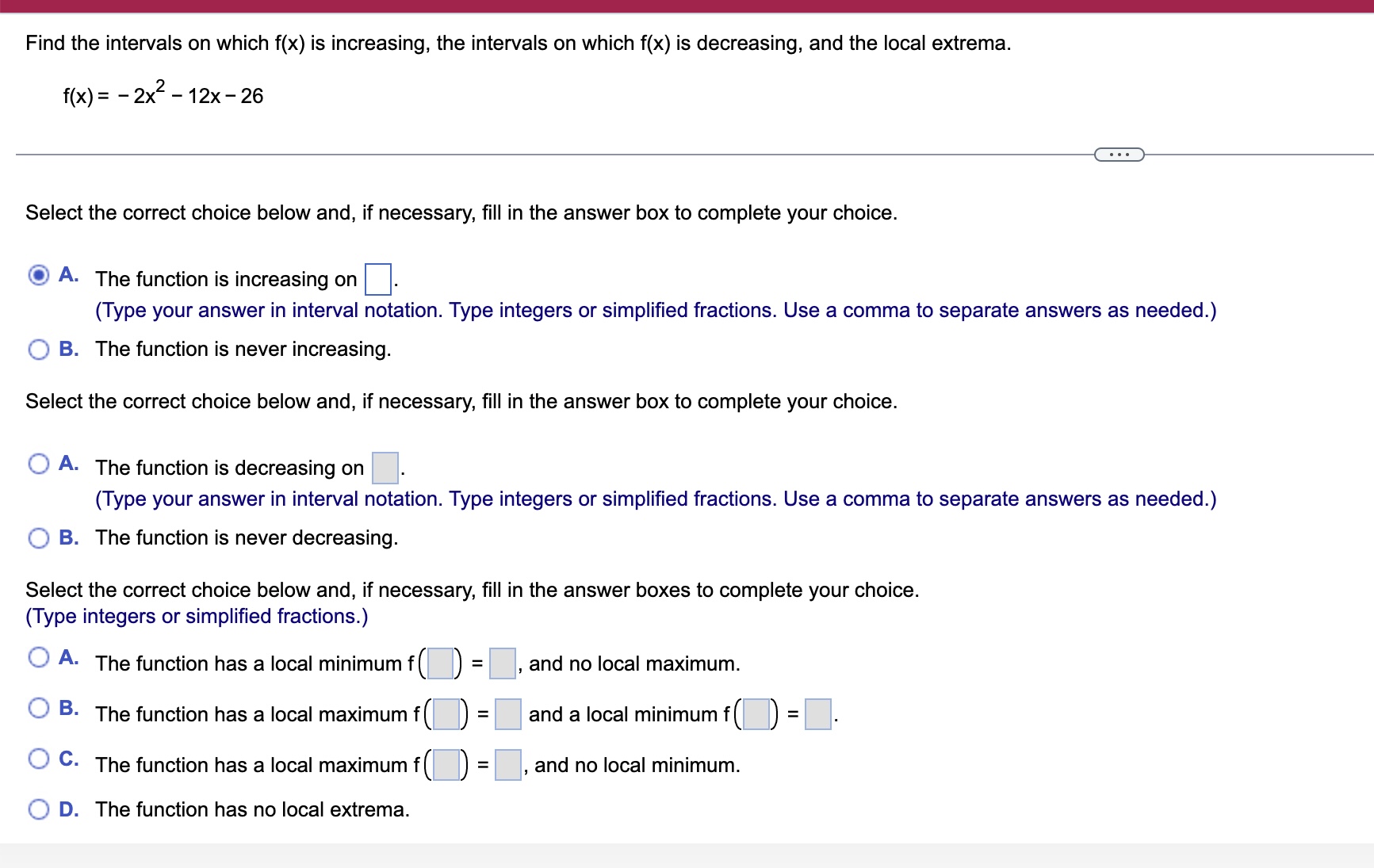
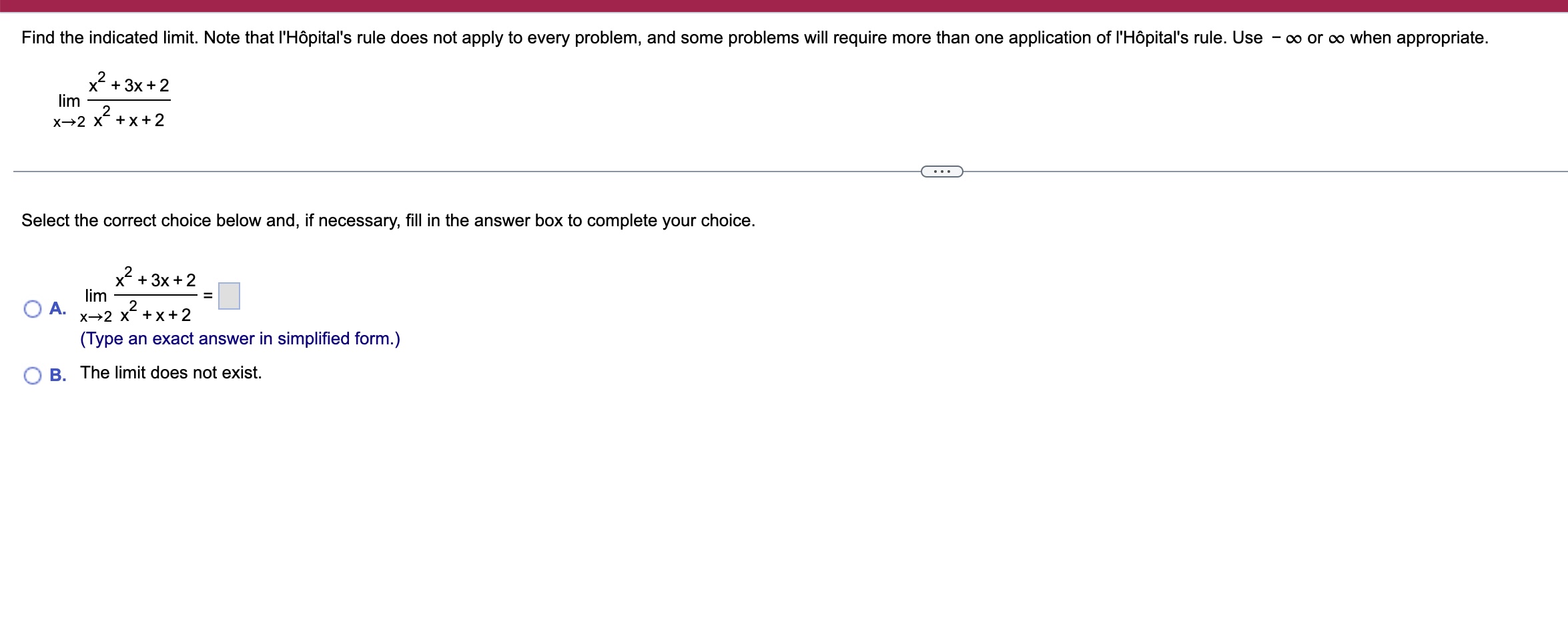
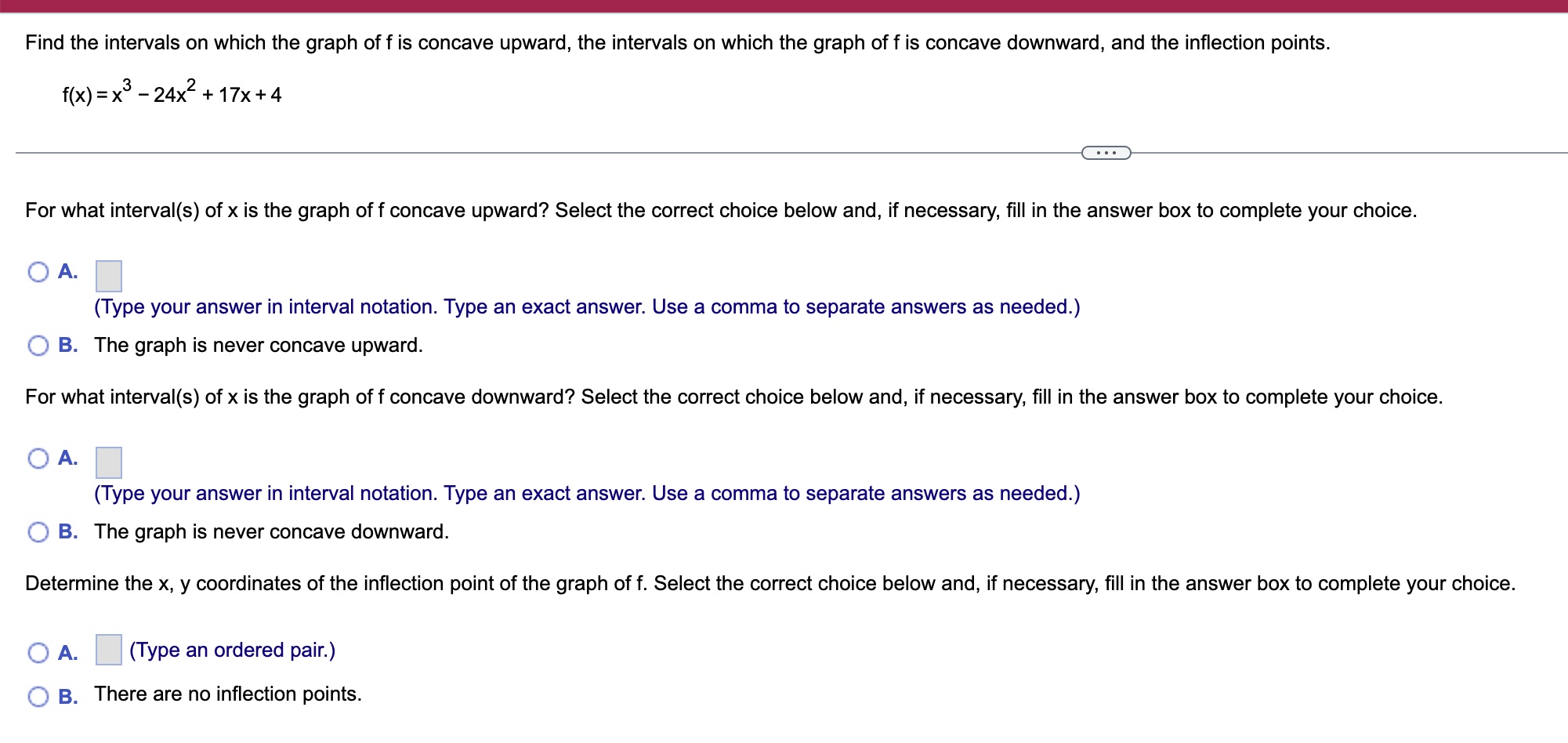
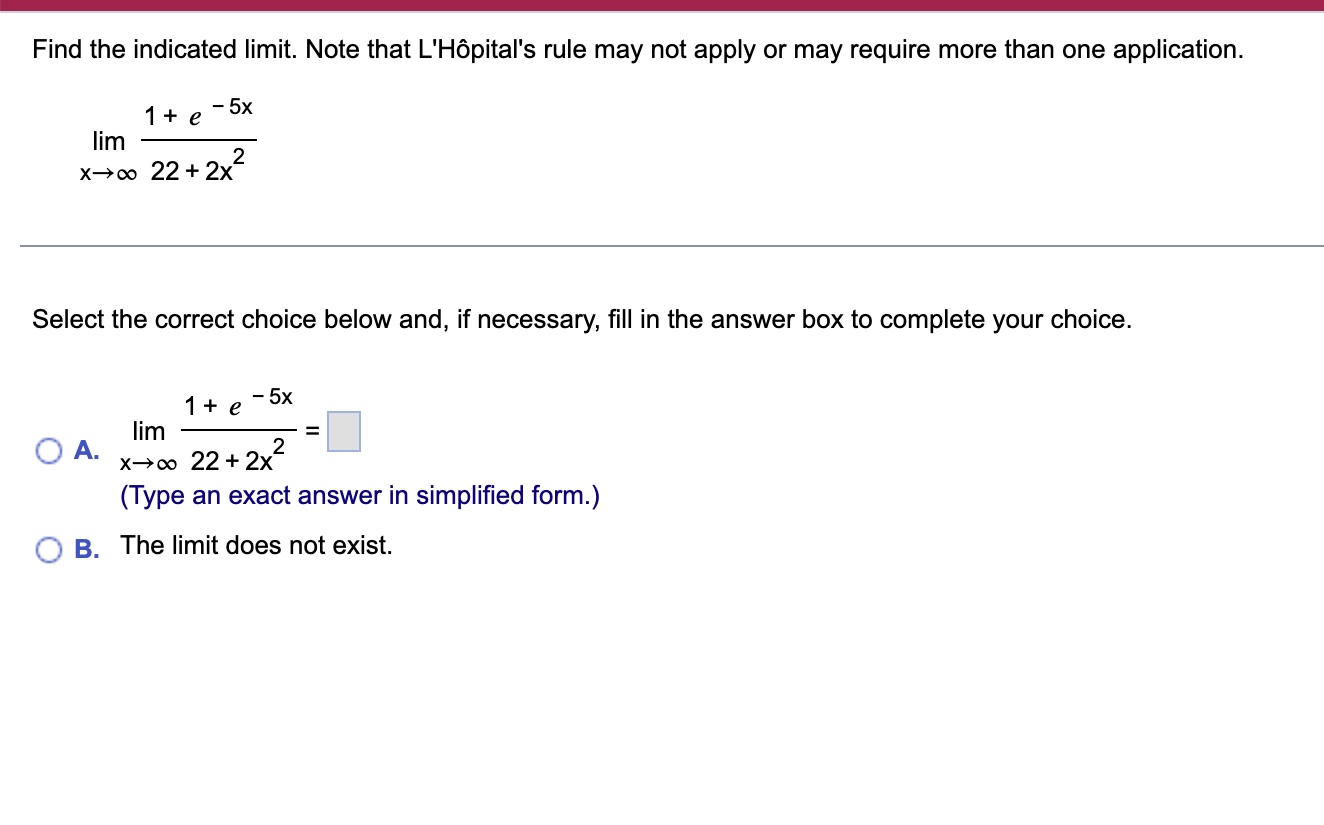
Find the intervals on which f(x) is increasing, the intervals on which f(x) is decreasing, and the local extrema. f(x) = - 2x4 - 12x - 26 . . . Select the correct choice below and, if necessary, fill in the answer box to complete your choice. O A. The function is increasing on (Type your answer in interval notation. Type integers or simplified fractions. Use a comma to separate answers as needed.) O B. The function is never increasing. Select the correct choice below and, if necessary, fill in the answer box to complete your choice. O A. The function is decreasing on (Type your answer in interval notation. Type integers or simplified fractions. Use a comma to separate answers as needed.) O B. The function is never decreasing. Select the correct choice below and, if necessary, fill in the answer boxes to complete your choice. (Type integers or simplified fractions.) O A. The function has a local minimum f() = , and no local maximum. O B. The function has a local maximum f( = and a local minimum f() =. O C. The function has a local maximum f( = and no local minimum. O D. The function has no local extrema.Find the indicated limit. Note that I'Hopital's rule does not apply to every problem, and some problems will require more than one application of I'Hopital's rule. Use - co or co when appropriate. x2 + 3x+2 lim x-2x+x+2 Select the correct choice below and, if necessary, fill in the answer box to complete your choice. x2 + 3x+2 O A. lim X - 2 x + x+2 (Type an exact answer in simplified form.) O B. The limit does not exist. Find the intervals on which the graph off is concave upward, the intervals on which the graph off is concave downward, and the inection points. f(x)=x3-24x2+17x+4 ...) For what interval(s) of x is the graph of f concave upward? Select the correct choice below and, if necessary, ll in the answer box to complete your choice. OA. (Type your answer in interval notation. Type an exact answer. Use a comma to separate answers as needed.) O B. The graph is never concave upward. For what interval(s) of x is the graph of f concave downward? Select the correct choice below and, if necessary, ll in the answer box to complete your choice. OA. (Type your answer in interval notation. Type an exact answer. Use a comma to separate answers as needed.) 0 B. The graph is never concave downward. Determine the x, y coordinates of the inection point of the graph of f. Select the correct choice below and, if necessary, ll in the answer box to complete your choice. O A. (Type an ordered pair.) O 3_ There are no inection points. Find the indicated limit. Note that L'Hopital's rule may not apply or may require more than one application. 1+ e - 5x lim X- co 22 + 2x2 Select the correct choice below and, if necessary, fill in the answer box to complete your choice. 1+ e - 5x lim O A. x - co 22 + 2x2 (Type an exact answer in simplified form.) O B. The limit does not exist
Step by Step Solution
There are 3 Steps involved in it

Get step-by-step solutions from verified subject matter experts