







Question: How do I answer this? There is two parts to this one question. Salamander Inc. is a food processing company that operates divisions in three
How do I answer this? There is two parts to this one question.
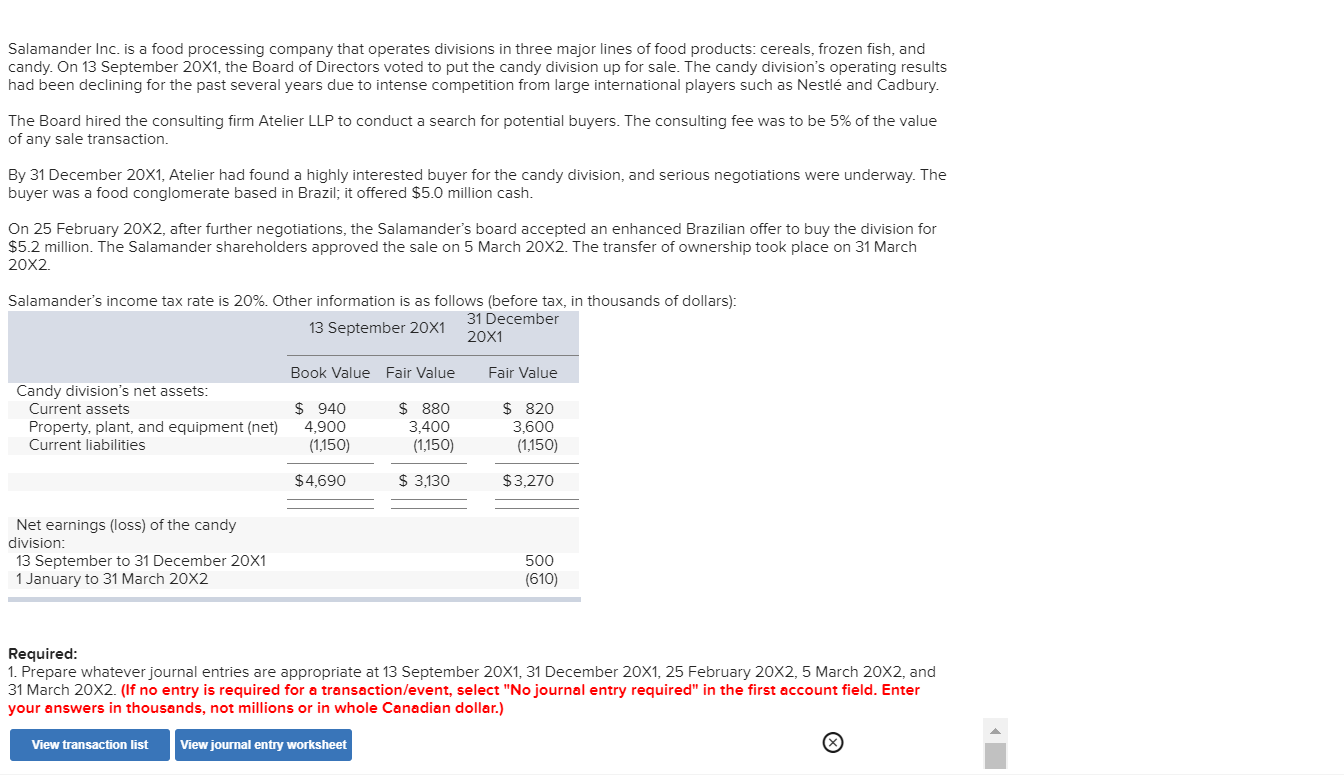
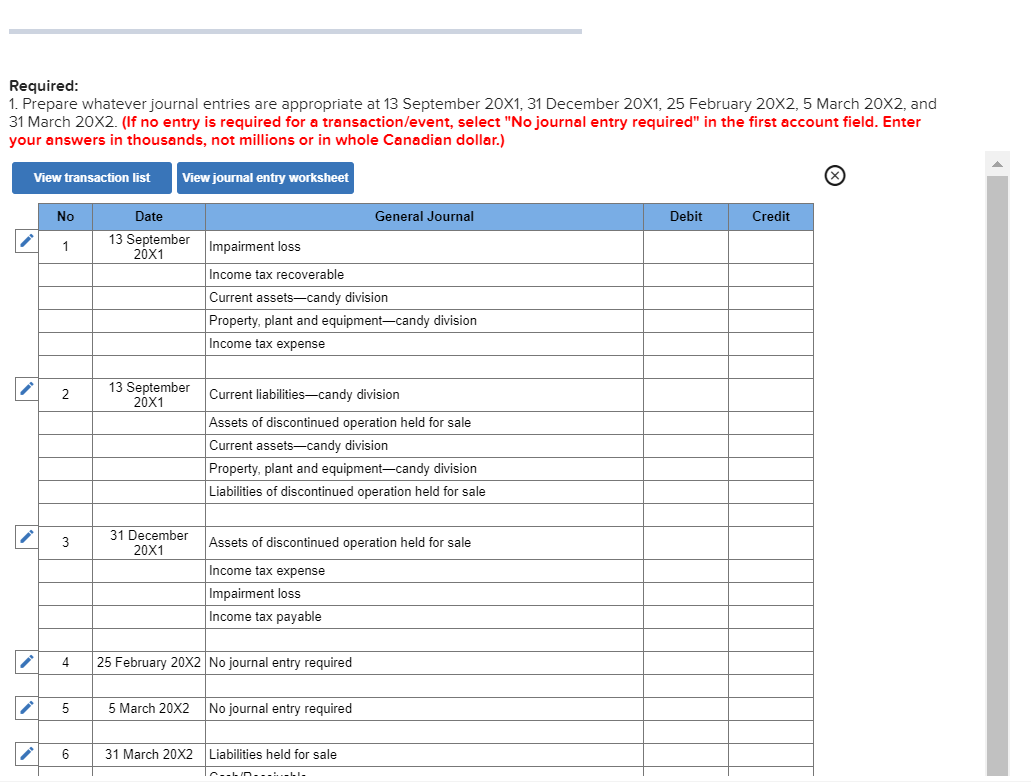
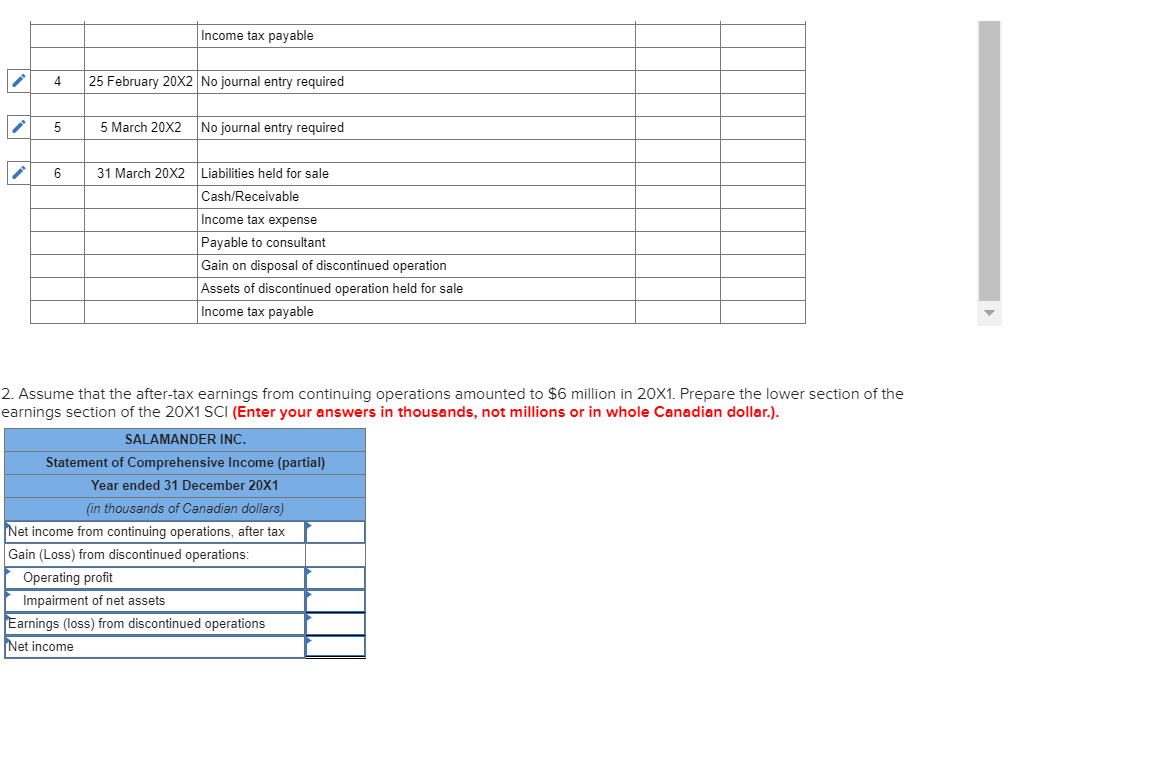
Salamander Inc. is a food processing company that operates divisions in three major lines of food products: cereals, frozen fish, and candy. On 13 September 20X1, the Board of Directors voted to put the candy division up for sale. The candy division's operating results had been declining for the past several years due to intense competition from large international players such as Nestl and Cadbury. The Board hired the consulting firm Atelier LLP to conduct a search for potential buyers. The consulting fee was to be 5% of the value of any sale transaction. By 31 December 20X1, Atelier had found a highly interested buyer for the candy division, and serious negotiations were underway. The buyer was a food conglomerate based in Brazil; it offered $5.0 million cash. On 25 February 20X2, after further negotiations, the Salamander's board accepted an enhanced Brazilian offer to buy the division for $5.2 million. The Salamander shareholders approved the sale on 5 March 20X2. The transfer of ownership took place on 31 March 20X2. Salamander's income tax rate is 20%. Other information is as follows (before tax, in thousands of dollars): 31 December 13 September 20X1 20X1 Book Value Fair Value Fair Value Candy division's net assets: Current assets Property, plant, and equipment (net) Current liabilities $ 940 4,900 (1,150) $ 880 3,400 (1,150) $ 820 3,600 (1,150) $4,690 $ 3,130 $3,270 Net earnings (loss) of the candy division: 13 September to 31 December 20X1 1 January to 31 March 20X2 500 (610) Required: 1. Prepare whatever journal entries are appropriate at 13 September 20X1, 31 December 20X1, 25 February 20X2,5 March 20X2, and 31 March 20X2. (If no entry is required for a transaction/event, select "No journal entry required" in the first account field. Enter your answers in thousands, not millions or in whole Canadian dollar.) View transaction list View journal entry worksheet Required: 1. Prepare whatever journal entries are appropriate at 13 September 20X1, 31 December 20X1, 25 February 20X2,5 March 20X2, and 31 March 20X2. (If no entry is required for a transaction/event, select "No journal entry required" in the first account field. Enter your answers in thousands, not millions or in whole Canadian dollar.) View transaction list View journal entry worksheet No General Journal Debit Credit Date 13 September 20X1 1 Impairment loss Income tax recoverable Current assets-candy division Property, plant and equipment-candy division Income tax expense 2 13 September 20X1 Current liabilitiescandy division Assets of discontinued operation held for sale Current assets-candy division Property, plant and equipment-candy division Liabilities of discontinued operation held for sale 31 December 3 20X1 Assets of discontinued operation held for sale Income tax expense Impairment loss Income tax payable 4 25 February 20X2 No journal entry required 5 5 March 20X2 No journal entry required 6 31 March 20X2 Liabilities held for sale -LIN... Income tax payable 4 25 February 20X2 No journal entry required 5 5 March 20X2 No journal entry required 6 31 March 20X2 Liabilities held for sale Cash/Receivable Income tax expense Payable to consultant Gain on disposal of discontinued operation Assets of discontinued operation held for sale Income tax payable 2. Assume that the after-tax earnings from continuing operations amounted to $6 million in 20X1. Prepare the lower section of the earnings section of the 20X1 SCI (Enter your answers in thousands, not millions or in whole Canadian dollar.). SALAMANDER INC. Statement Comprehensive (partial) Year ended 31 December 20X1 (in thousands of Canadian dollars) Net income from continuing operations, after tax Gain (Loss) from discontinued operations: Operating profit Impairment of net assets Earnings (loss) from discontinued operations Net income
Step by Step Solution
There are 3 Steps involved in it

Get step-by-step solutions from verified subject matter experts
 Study Help