







Question: how do i do this? Required information (The following information applies to the questions displayed below.) Most Company has an opportunity to invest in one
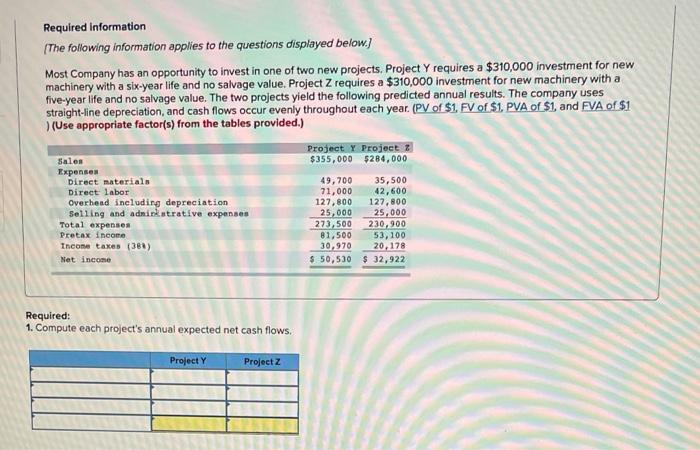
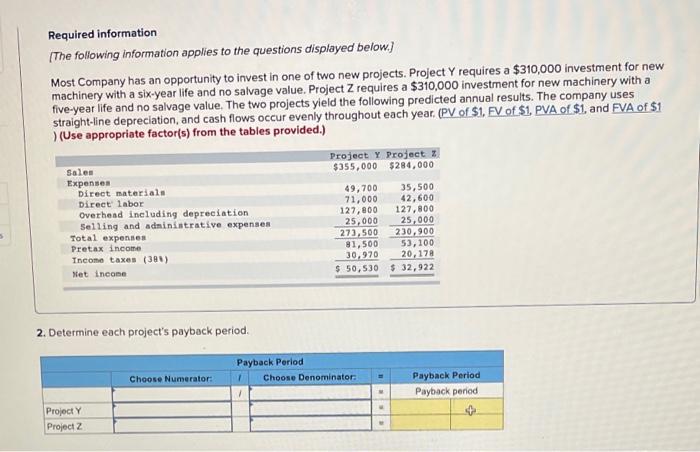
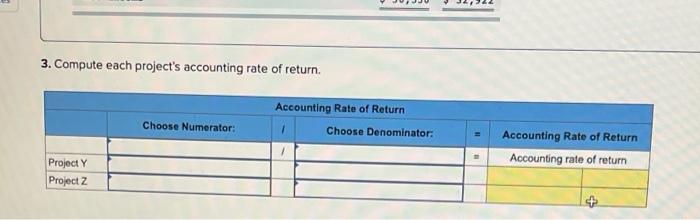
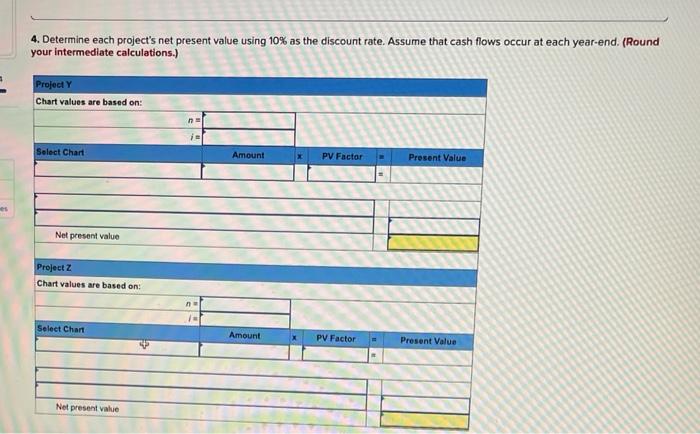
Required information (The following information applies to the questions displayed below.) Most Company has an opportunity to invest in one of two new projects. Project Y requires a $310,000 investment for new machinery with a six-year life and no salvage value. Project Z requires a $310,000 investment for new machinery with a five-year life and no salvage value. The two projects yield the following predicted annual results. The company uses straight-line depreciation, and cash flows occur evenly throughout each year. (PV of $1. FV of $1. PVA of $i, and FVA of $1 (Use appropriate factor(s) from the tables provided.) Project Y Project 7 $355,000 $284,000 Sales Expenses Direct materials Direct labor Overhead including depreciation Selling and adnikatrative expenses Total expenses Pretax income Income taxes (388) Net income 49,700 71,000 127,800 25,000 273,500 81,500 30,970 $ 50,530 35,500 42,600 127,800 25,000 230,900 53, 100 20,178 $ 32,922 Required: 1. Compute each project's annual expected net cash flows. Project Y Projectz Required information [The following information applies to the questions displayed below.) Most Company has an opportunity to invest in one of two new projects. Project Y requires a $310,000 investment for new machinery with a six-year life and no salvage value. Project Z requires a $310,000 investment for new machinery with a five-year life and no salvage value. The two projects yield the following predicted annual results. The company uses straight-line depreciation, and cash flows occur evenly throughout each year (PV of $1. FV of $1. PVA of $i. and FVA of $1 ) (Use appropriate factor(s) from the tables provided.) Sales Expensen Direct materials Direct labor Overhead including depreciation Selling and administrative expenses Total expenses Pretax income Income taxes (381) Net Income Project Y Project z $355,000 $284,000 49,700 35,500 71,000 42,600 127,800 127,800 25,000 25,000 273,500 230,900 81,500 53,100 30,970 20,178 $ 50,530 $ 32,922 5 2. Determine each project's payback period. Payback Period Choose Denominator Choose Numerator: Payback Period Payback period Project Project 2 3. Compute each project's accounting rate of return. Accounting Rate of Return Choose Numerator: Choose Denominator: Accounting Rate of Return Accounting rate of return Project Y Project Z 4. Determine each project's net present value using 10% as the discount rate. Assume that cash flows occur at each year-end. (Round your intermediate calculations.) ProjectY Chart values are based on: n je Select Chart Amount PV Factor Present Value Net present value Project Z Chart values are based on: Select Chant Amount PV Factor Present Value Net present value
Step by Step Solution
There are 3 Steps involved in it

Get step-by-step solutions from verified subject matter experts
 Study Help