







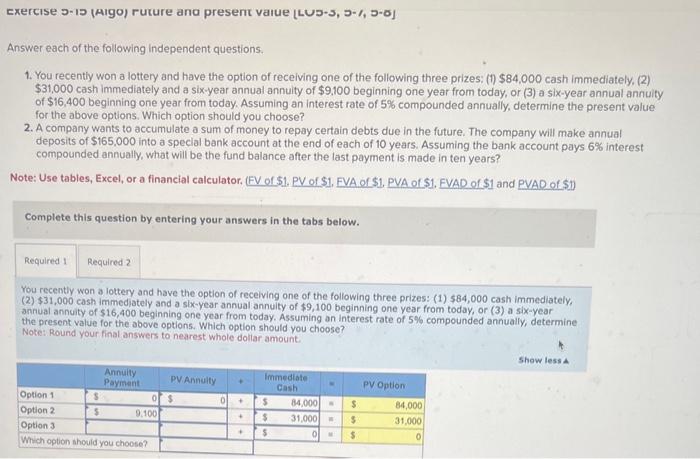
Question: how do i solve ? cxercise 51 (Aigo) ruture ana present vaiue [LUD-5, D-1, D-0] Answer each of the following independent questions. 1. You recently
![vaiue [LUD-5, D-1, D-0] Answer each of the following independent questions. 1.](https://dsd5zvtm8ll6.cloudfront.net/si.experts.images/questions/2024/10/66fd461e27b7c_58966fd461db8e9d.jpg)
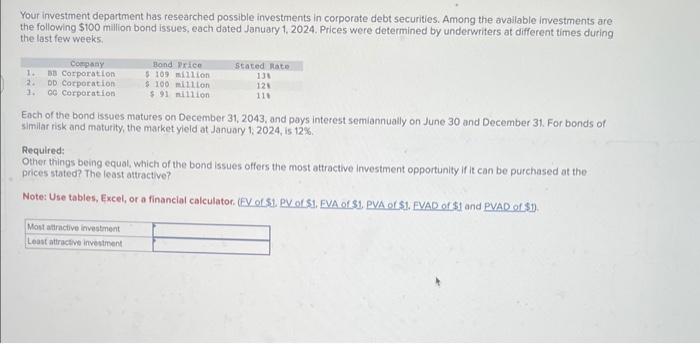
cxercise 51 (Aigo) ruture ana present vaiue [LUD-5, D-1, D-0] Answer each of the following independent questions. 1. You recently won a lottery and have the option of receiving one of the following three prizes: (1) $84,000 cash immediately, (2) $31,000 cash immediately and a six-year annual annuity of $9.100 beginning one year from today, or (3) a six-year annual annuity of $16,400 beginning one year from today. Assuming an interest rate of 5% compounded annually, determine the present value for the above options. Which option should you choose? 2. A company wants to accumulate a sum of money to repay certain debts due in the future. The company will make annual deposits of $165,000 into a special bank account at the end of each of 10 years. Assuming the bank account pays 6% interest compounded annually, what will be the fund balance after the last payment is made in ten years? Note: Use tables, Excel, or a financial calculator, (FV of \$1. PV of \$1, EVA of \$1. PVA of \$1. FVAD of \$1 and PVAD of \$1) Complete this question by entering your answers in the tabs below. You recentiy won a lottery and have the option of receiving one of the following three prizes: (1) $84,000 cash immediately, (2) $31,000 cash immedjately and a slx-year annual annuity of $9,100 beginning one year from today, or (3) a six-year annual annuty of $16,400 beginning one year from today. Assuming an interest rate of 5% compounded annually, determine the present value for the above options. Which option should you choose? Note: Round your final answers to nearest whole dollar amount. Exercise 210 (AIgo) ruture and present vatue [LUD-5, 2-1, 2-0) Answer each of the following independent questions. 1. You recently won a lottery and have the option of receiving one of the following three prizes: (1) $84,000 cash immediately, (2) $31,000 cash immedlately and a six-year annual annuity of $9,100 beginning one year from today, or (3) a six-year annual annuity of $16,400 beginning one year from today. Assuming an interest rate of 5% compounded annually, determine the present value for the above options. Which option should you choose? 2. A company wants to accumulate a sum of money to repay certain debts due in the future. The company will make annual deposits of $165,000 into a special bank account at the end of each of 10 years. Assuming the bank account pays 6% interest compounded annually, what will be the fund balance after the last payment is made in ten years? Note: Use tables, Excel, or a financial calculator. (EV of \$1, PV of \$1. EVA of S1, PVA of S1, EVAD of \$1 and PVAD of \$1) Complete this question by entering your answers in the tabs below. A company wants to accumulate a sum of money to repay certain debts due in the future. The compony will make annual deposits of $165,000 inte a specai blnk account at the end of each of 10 years. Assuming the bank account pays 6% interest compounded annually, what will be the fund balance after the last payment is made in ten years? Note: Round your final answers to nearest whole dollor amount. Your investment department has researched possible investments in corporate debt securities. Among the avallable investments are the following $100 million bond issues, each dated January 1, 2024. Prices were determined by underwriters at different times during the last few weeks. Each of the bond issues matures on December 31, 2043, and pays interest semiannually on June 30 and December 31 . For bonds of similar risk and maturity, the market yield at January 1,2024 , is 12% Requlred: Other things being equal, which of the bond issues offers the most attractive investment opportunity if it can be purchased at the prices stated? The least attractive? Note: Use tables, Excel, or a financial calculator. EV of S1. PY of \$1. EVA of \$1. PVA of \$1. EVAD of \$1 and PVAD of \$1
Step by Step Solution
There are 3 Steps involved in it

Get step-by-step solutions from verified subject matter experts
 Study Help