







Question: How does the use of cache memory in modern computer systems improve the efficiency and speed of memory access, and what are the implications of
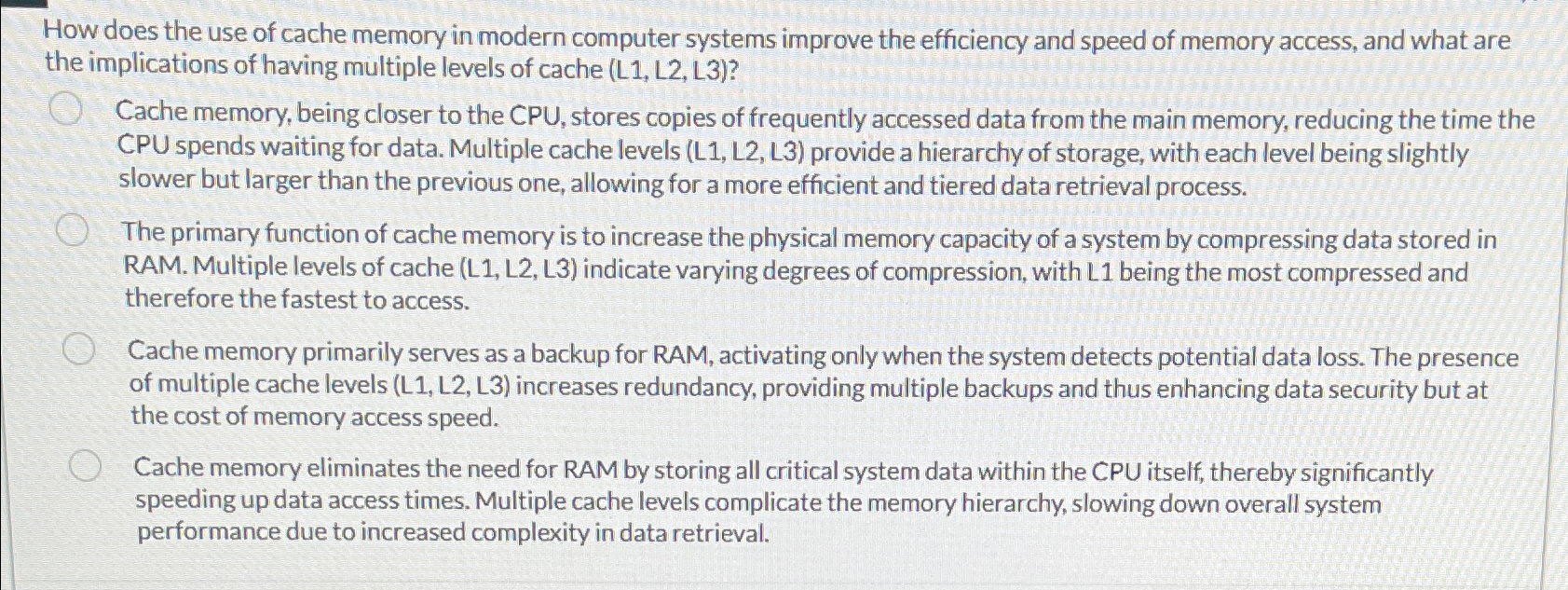
How does the use of cache memory in modern computer systems improve the efficiency and speed of memory access, and what are the implications of having multiple levels of cache L L L
Cache memory, being closer to the CPU, stores copies of frequently accessed data from the main memory, reducing the time the CPU spends waiting for data. Multiple cache levels L L L provide a hierarchy of storage, with each level being slightly slower but larger than the previous one, allowing for a more efficient and tiered data retrieval process.
The primary function of cache memory is to increase the physical memory capacity of a system by compressing data stored in RAM. Multiple levels of cache indicate varying degrees of compression, with being the most compressed and therefore the fastest to access.
Cache memory primarily serves as a backup for RAM, activating only when the system detects potential data loss. The presence of multiple cache levels L L L increases redundancy, providing multiple backups and thus enhancing data security but at the cost of memory access speed.
Cache memory eliminates the need for RAM by storing all critical system data within the CPU itself, thereby significantly speeding up data access times. Multiple cache levels complicate the memory hierarchy, slowing down overall system performance due to increased complexity in data retrieval.
Step by Step Solution
There are 3 Steps involved in it
1 Expert Approved Answer
Step: 1 Unlock

Question Has Been Solved by an Expert!
Get step-by-step solutions from verified subject matter experts
Step: 2 Unlock
Step: 3 Unlock
 Study Help