







Question: How many marks should we give for part a? How many marks should we give for part b? How many marks should we give for
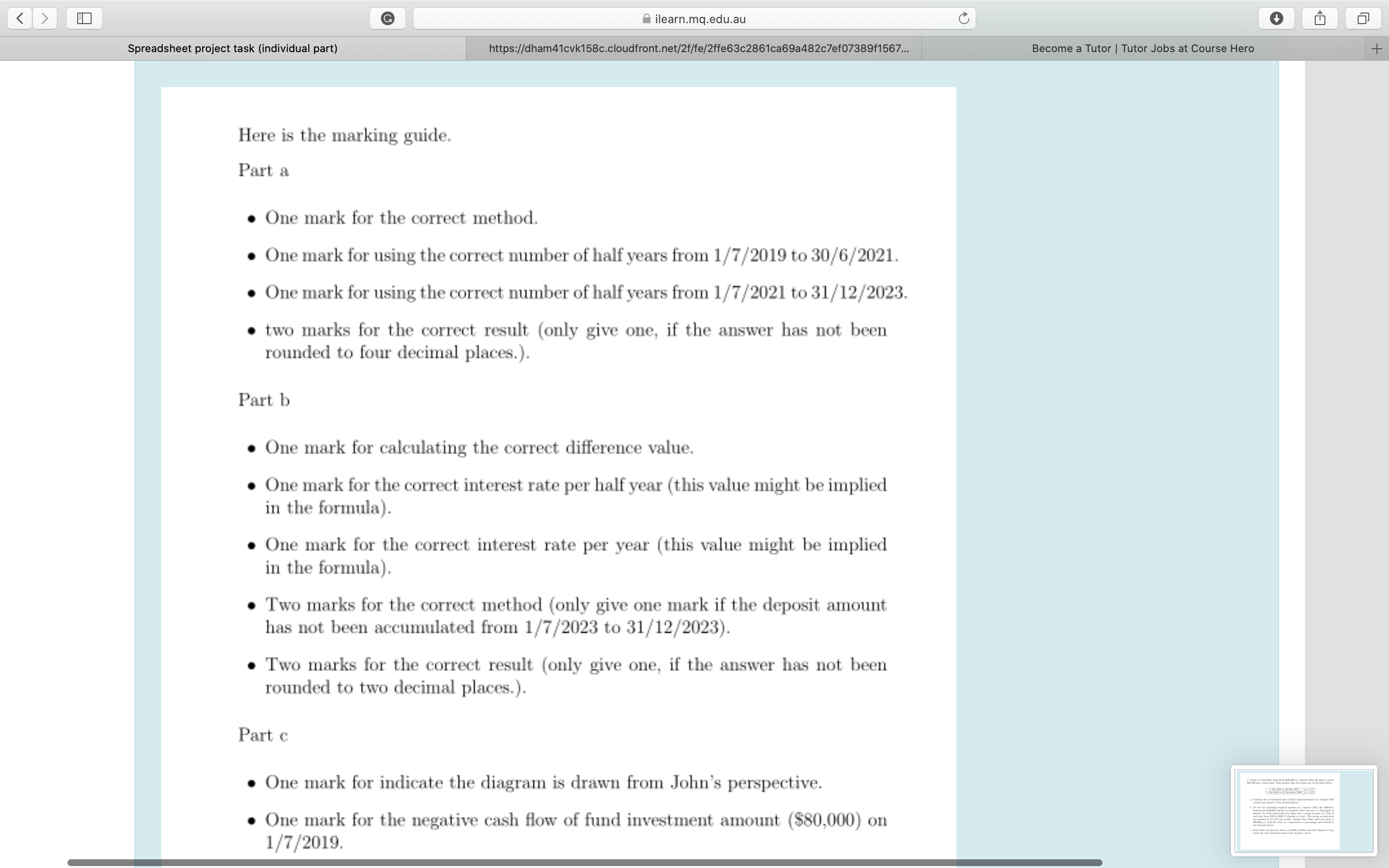
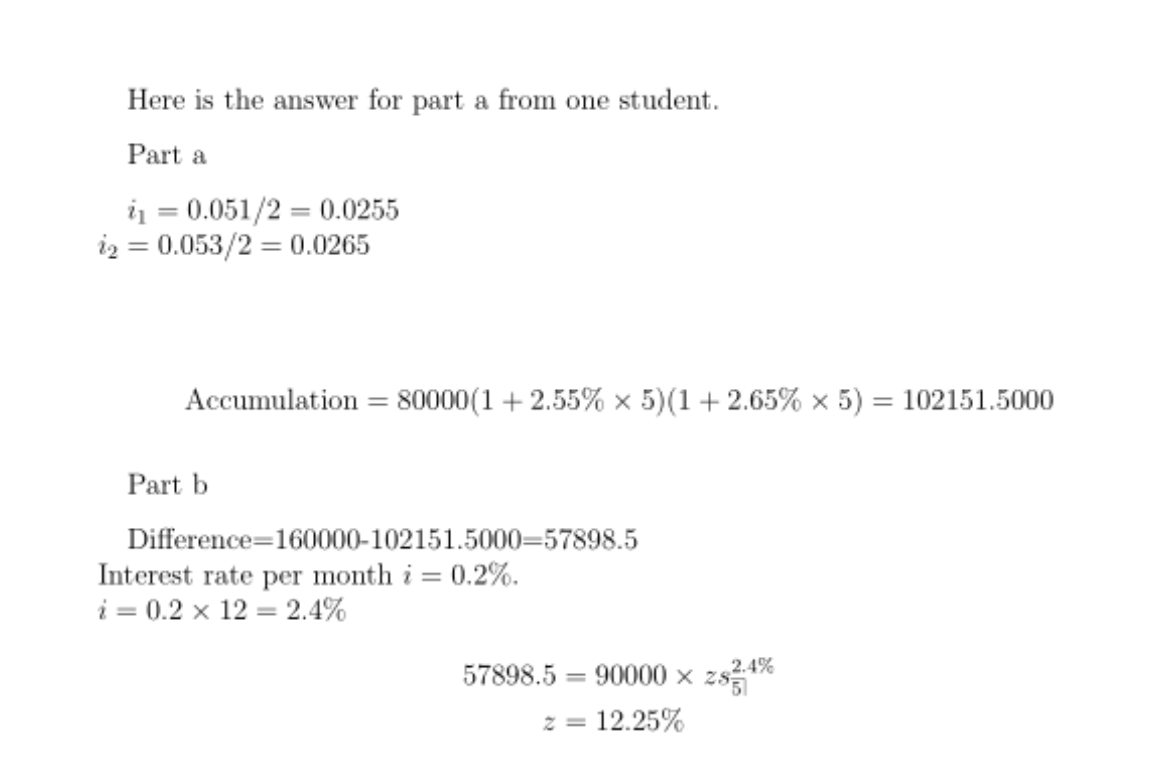
How many marks should we give for part a?
How many marks should we give for part b?
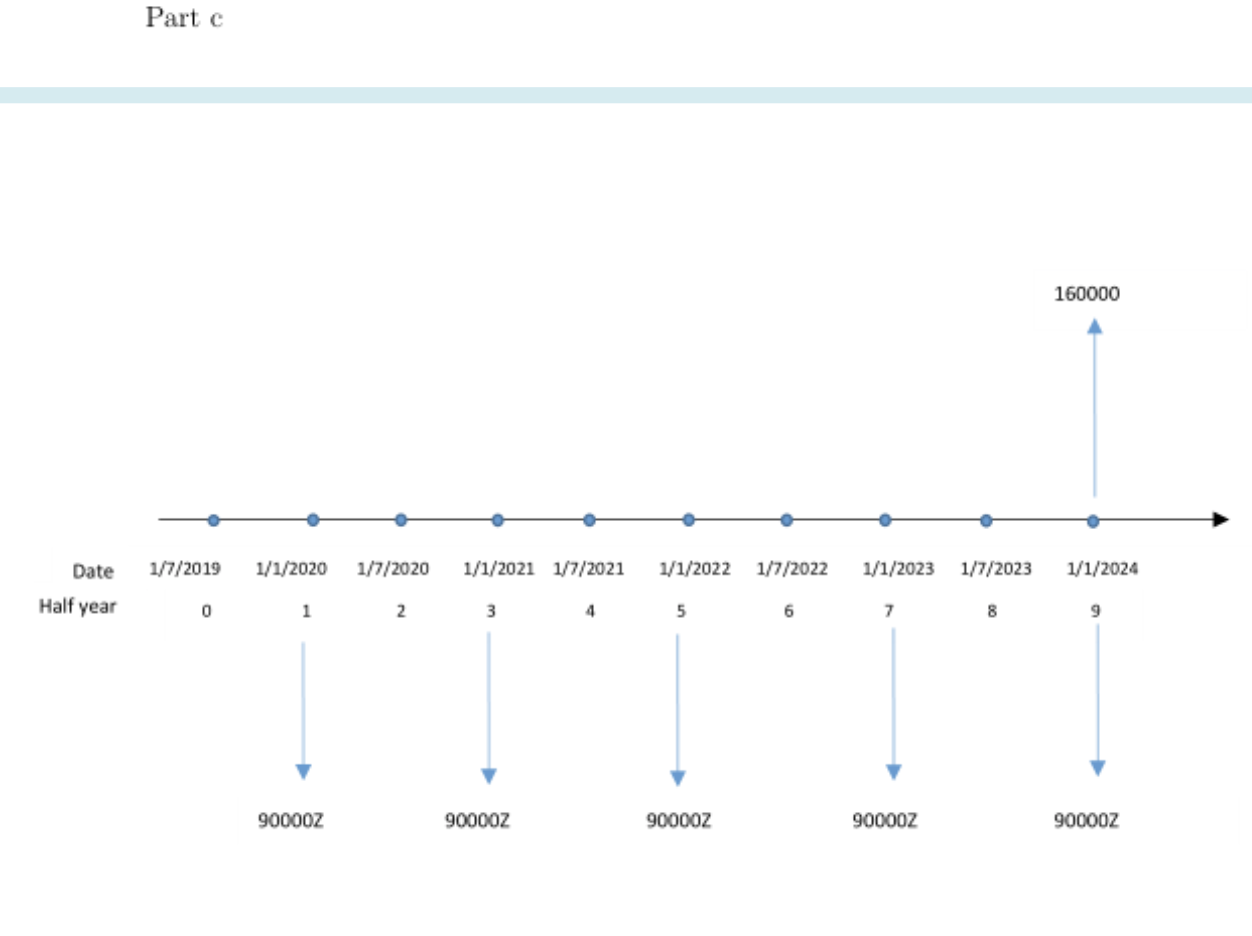
How many marks should we give for part c
Thnks. just need a simple explanation
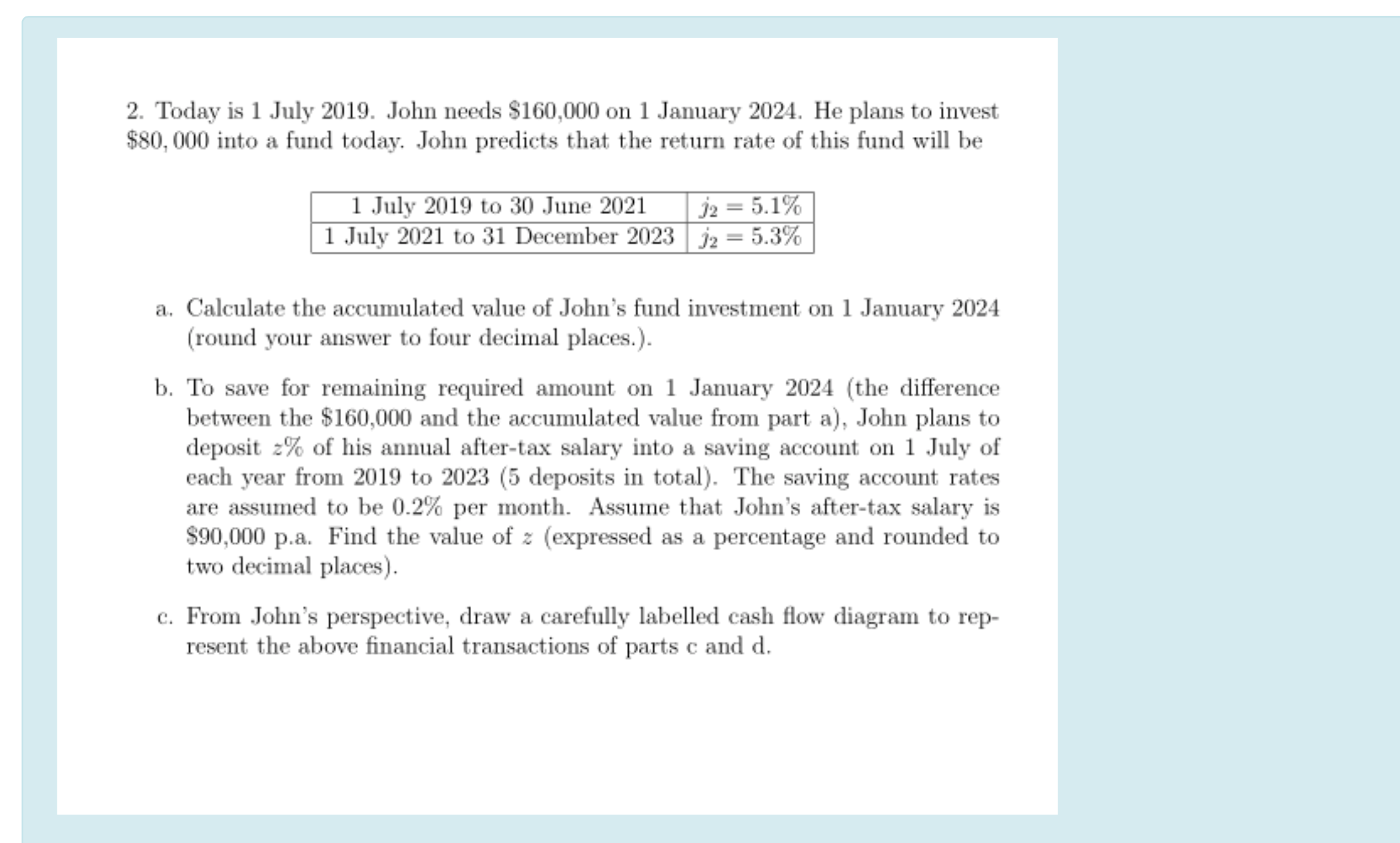
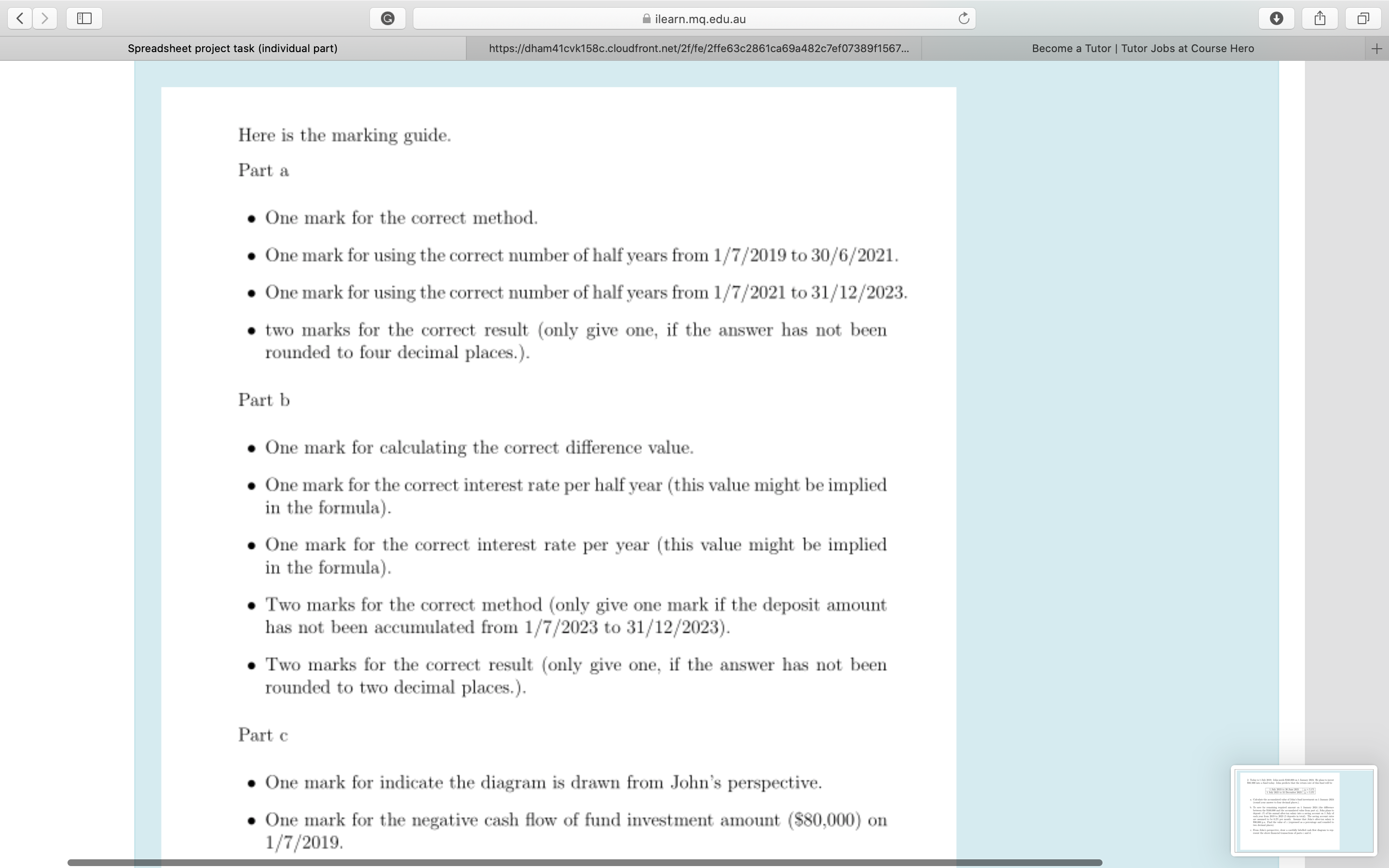
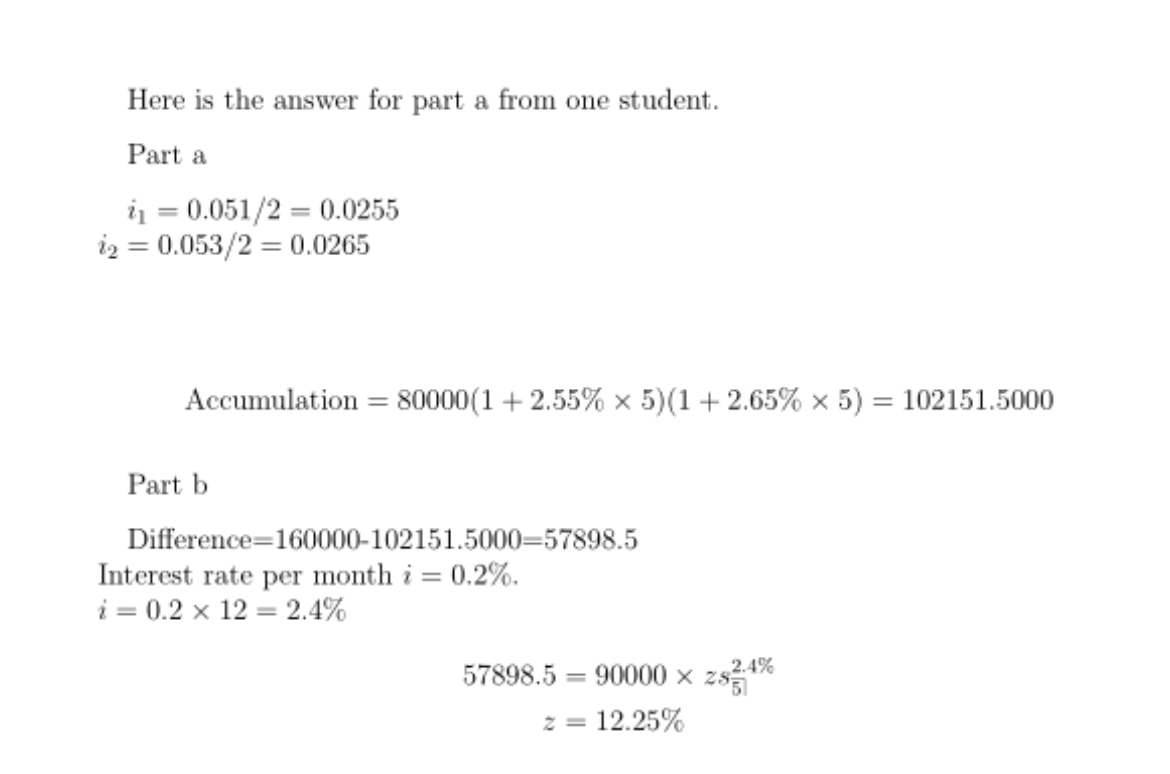
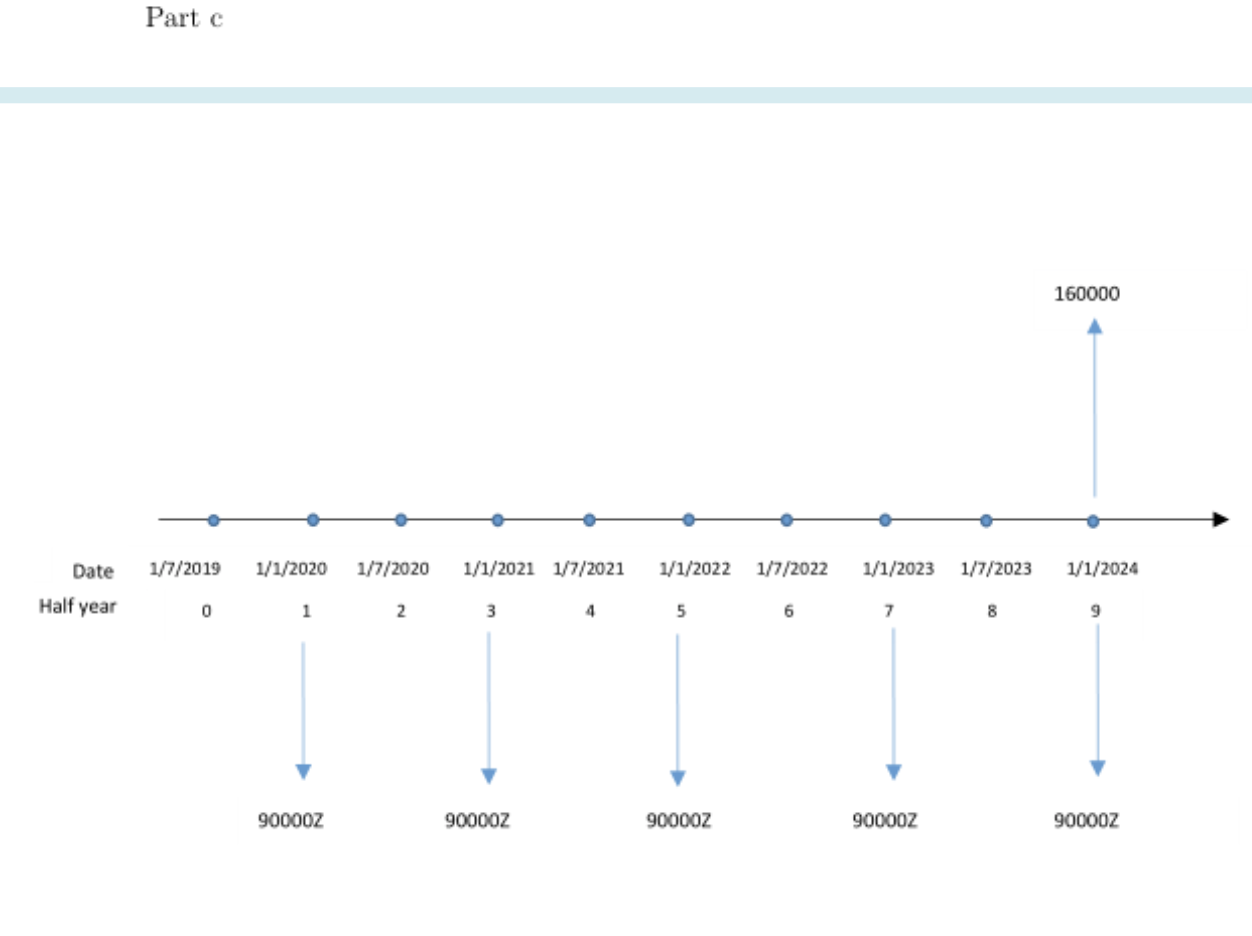
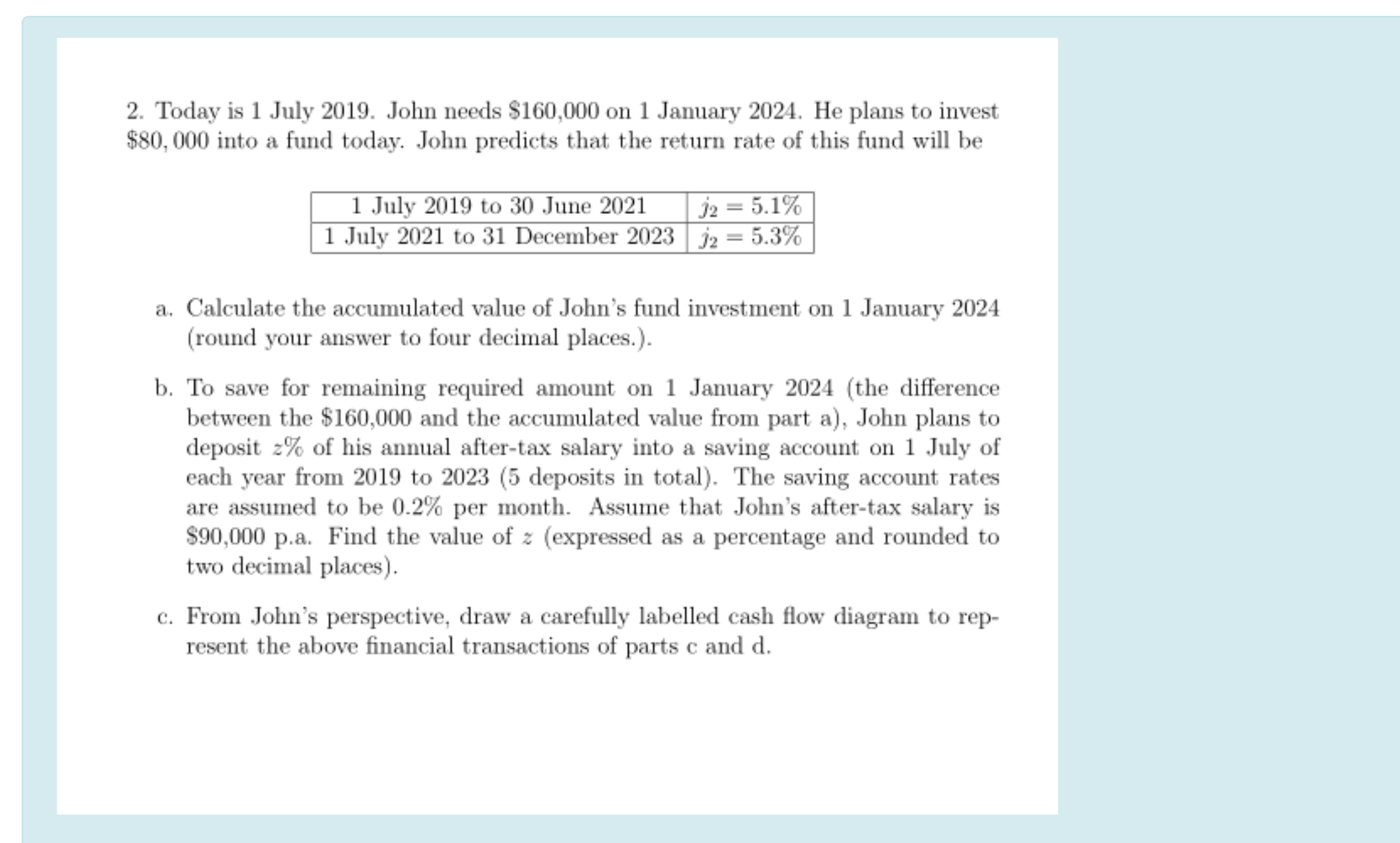
2. Today is 1 July 2019. John needs $160,000 on 1 January 2024. He plans to invest $80, 000 into a fund today. John predicts that the return rate of this fund will be 1 July 2019 to 30 June 2021 12 = 5.1% 1 July 2021 to 31 December 2023 12 = 5.3% a. Calculate the accumulated value of John's fund investment on 1 January 2024 (round your answer to four decimal places.). b. To save for remaining required amount on 1 January 2024 (the difference between the $160,000 and the accumulated value from part a), John plans to deposit 2% of his annual after-tax salary into a saving account on 1 July of each year from 2019 to 2023 (5 deposits in total). The saving account rates are assumed to be 0.2%% per month. Assume that John's after-tax salary is $90,000 p.a. Find the value of z (expressed as a percentage and rounded to two decimal places). c. From John's perspective, draw a carefully labelled cash flow diagram to rep- resent the above financial transactions of parts c and d. G ilearn.mq.edu.au C Spreadsheet project task (individual part) https://dham41cvk158c.cloudfront.net/2f/fe/2ffe63c2861ca69a482c7ef07389f1567... Become a Tutor | Tutor Jobs at Course Hero + Here is the marking guide. Part a . One mark for the correct method. . One mark for using the correct number of half years from 1/7/2019 to 30/6/2021. . One mark for using the correct number of half years from 1/7/2021 to 31/12/2023. . two marks for the correct result (only give one, if the answer has not been rounded to four decimal places.). Part b . One mark for calculating the correct difference value. . One mark for the correct interest rate per half year (this value might be implied in the formula). . One mark for the correct interest rate per year (this value might be implied in the formula). . Two marks for the correct method (only give one mark if the deposit amount has not been accumulated from 1/7/2023 to 31/12/2023). . Two marks for the correct result (only give one, if the answer has not been rounded to two decimal places.). Part c . One mark for indicate the diagram is drawn from John's perspective. . One mark for the negative cash flow of fund investment amount ($80,000) on 1/7/2019.Here is the answer for part a from one student. Part a 21 = 0.051/2 = 0.0255 12 = 0.053/2 = 0.0265 Accumulation = 80000(1 + 2.55% x 5) (1 + 2.65% x 5) = 102151.5000 Part b Difference=160000-102151.5000-57898.5 Interest rate per month i = 0.2%. i = 0.2 x 12 = 2.4% 57898.5 = 90000 x 2324 z = 12.25%
Step by Step Solution
There are 3 Steps involved in it

Get step-by-step solutions from verified subject matter experts
 Study Help