Question: How to Cite Sources for Review Assignments Using MLA format for citations: 1. Sources List (List at the bottom of your postings) Textbook Structure: Last
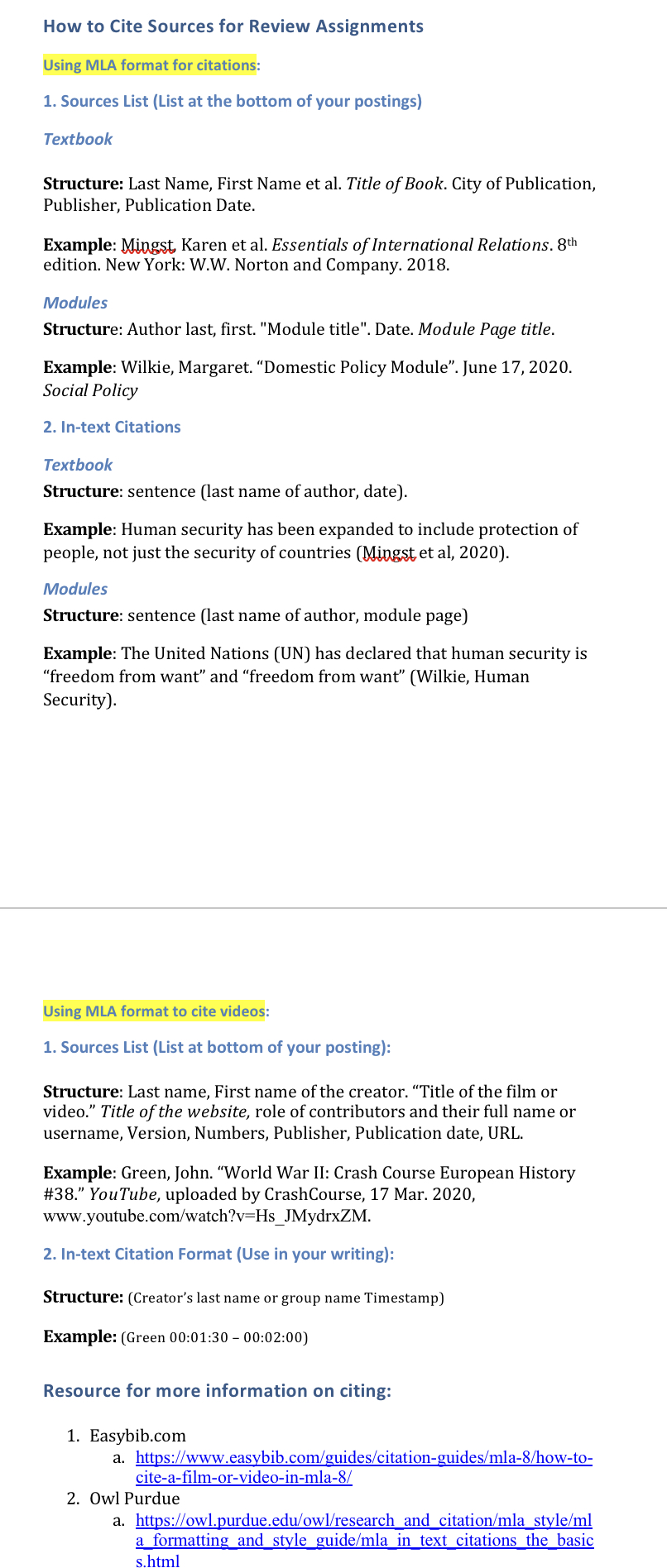
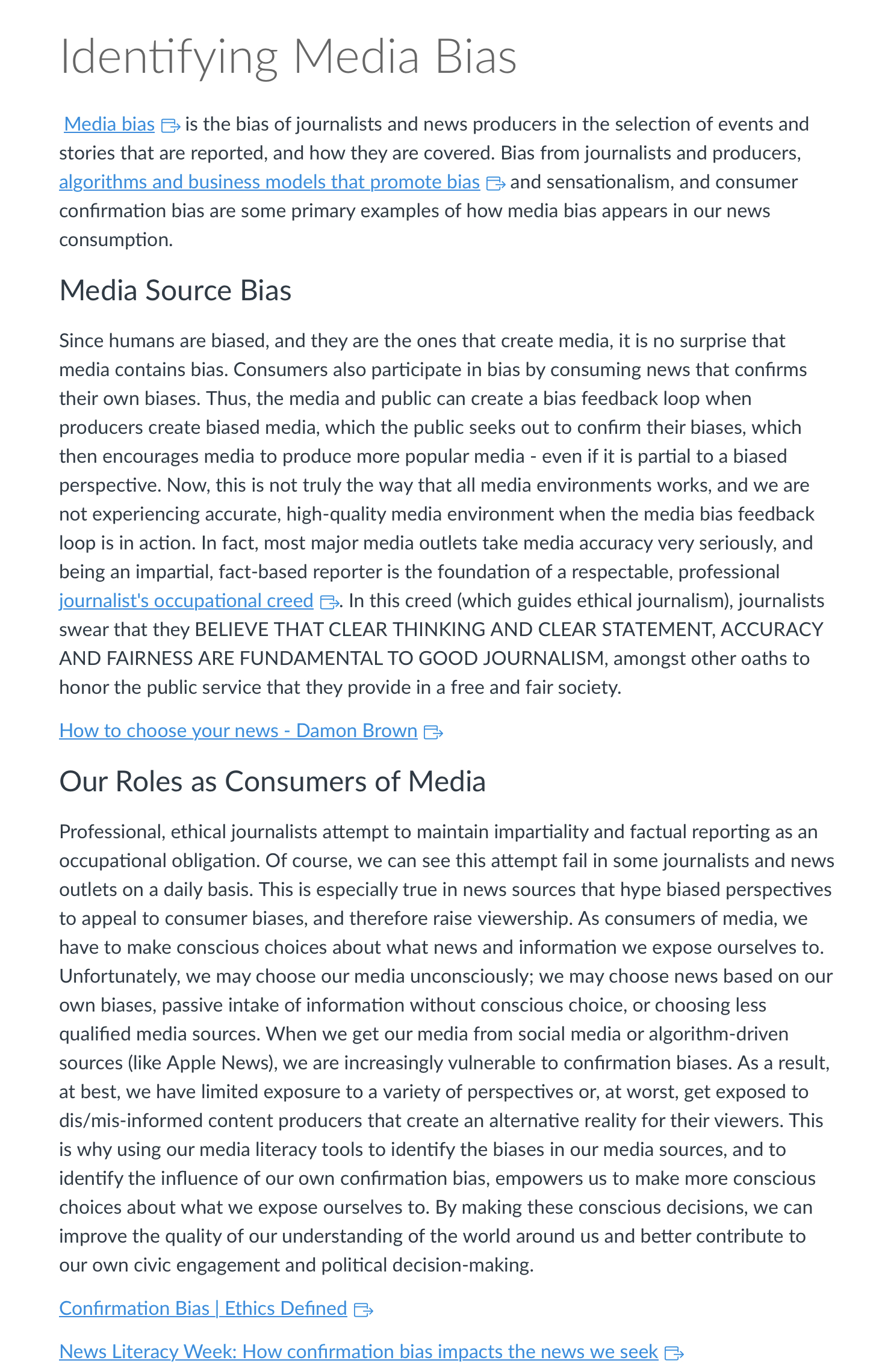
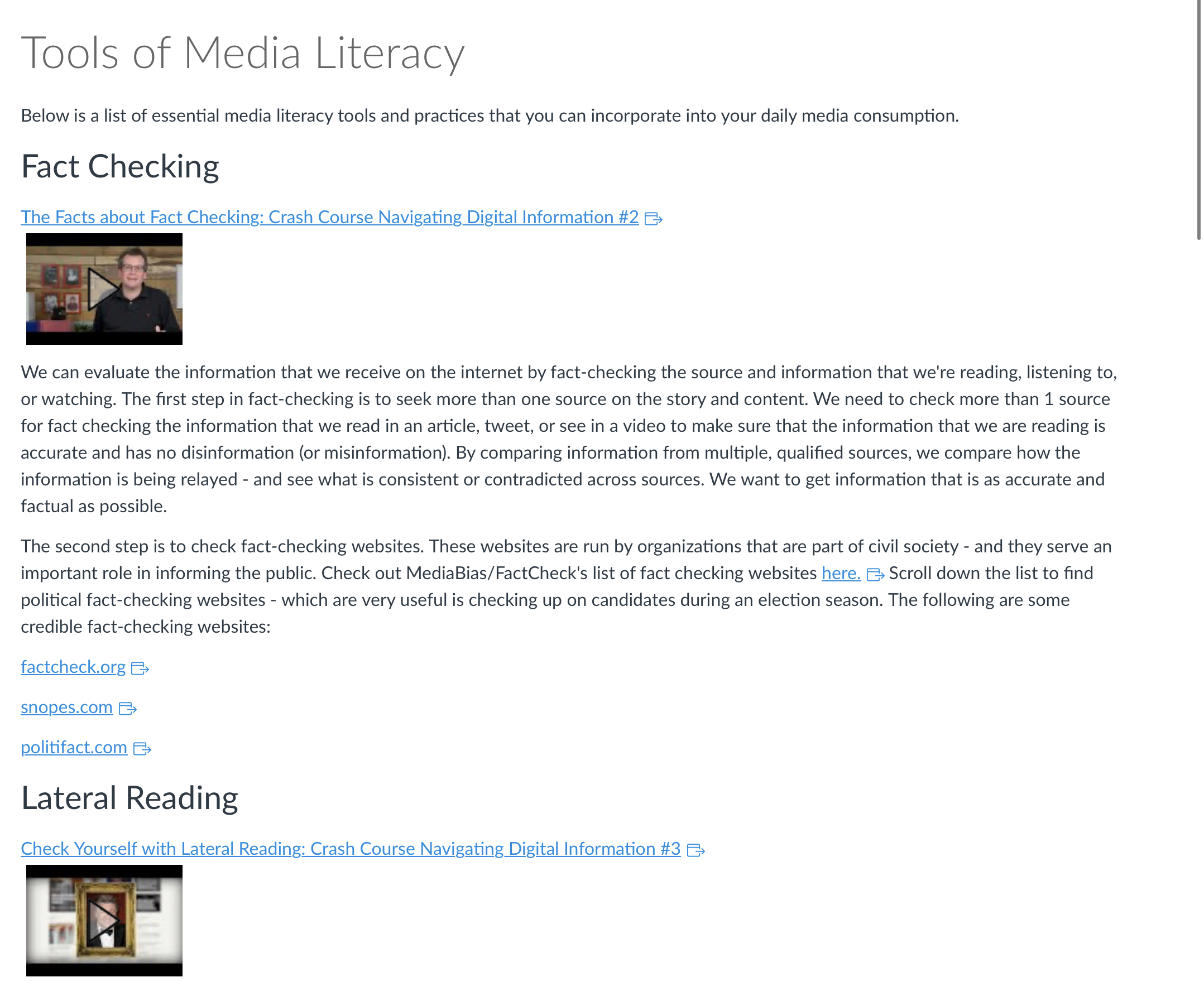
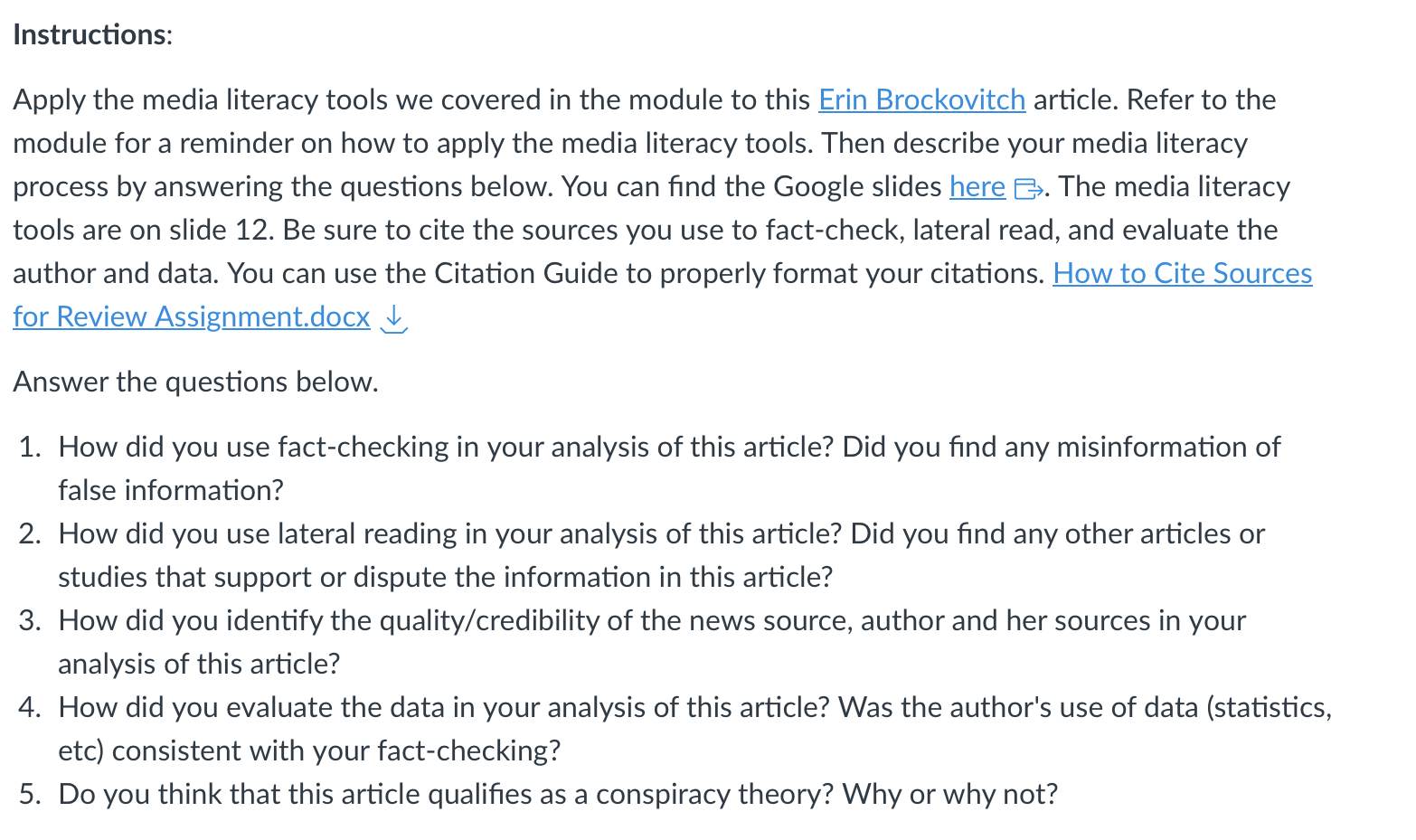
How to Cite Sources for Review Assignments Using MLA format for citations: 1. Sources List (List at the bottom of your postings) Textbook Structure: Last Name, First Name et al. Title of Book. City of Publication, Publisher, Publication Date. Example: Mingst, Karen et al. Essentials of International Relations. 8th edition. New York: W.W. Norton and Company. 2018. Modules Structure: Author last, first. "Module title". Date. Module Page title. Example: Wilkie, Margaret. "Domestic Policy Module". June 17, 2020. Social Policy 2. In-text Citations Textbook Structure: sentence (last name of author, date). Example: Human security has been expanded to include protection of people, not just the security of countries (Mingst et al, 2020). Modules Structure: sentence (last name of author, module page) Example: The United Nations (UN) has declared that human security is "freedom from want" and "freedom from want" (Wilkie, Human Security). Using MLA format to cite videos: 1. Sources List (List at bottom of your posting): Structure: Last name, First name of the creator. "Title of the film or video." Title of the website, role of contributors and their full name or username, Version, Numbers, Publisher, Publication date, URL. Example: Green, John. "World War II: Crash Course European History #38." YouTube, uploaded by CrashCourse, 17 Mar. 2020, www.youtube.com/watch?v=Hs_JMydrxZM. 2. In-text Citation Format (Use in your writing): Structure: (Creator's last name or group name Timestamp) Example: (Green 00:01:30 - 00:02:00) Resource for more information on citing: 1. Easybib.com a. https://www.easybib.com/guides/citation-guides/mla-8/how-to- cite-a-film-or-video-in-mla-8/ 2. Owl Purdue a. https:/owl.purdue.edu/owl/research and_citation/mla style/ml a formatting and style guide/mla in text citations the basic htmll[dentifying Media Bias Media bias s is the bias of journalists and news producers in the selection of events and stories that are reported, and how they are covered. Bias from journalists and producers, algorithms and business models that promote bias = and sensationalism, and consumer confirmation bias are some primary examples of how media bias appears in our news consumption. Media Source Bias Since humans are biased, and they are the ones that create media, it is no surprise that media contains bias. Consumers also participate in bias by consuming news that confirms their own biases. Thus, the media and public can create a bias feedback loop when producers create biased media, which the public seeks out to confirm their biases, which then encourages media to produce more popular media - even if it is partial to a biased perspective. Now, this is not truly the way that all media environments works, and we are not experiencing accurate, high-quality media environment when the media bias feedback loop is in action. In fact, most major media outlets take media accuracy very seriously, and being an impartial, fact-based reporter is the foundation of a respectable, professional journalist's occupational creed . In this creed (which guides ethical journalism), journalists swear that they BELIEVE THAT CLEAR THINKING AND CLEAR STATEMENT, ACCURACY AND FAIRNESS ARE FUNDAMENTAL TO GOOD JOURNALISM, amongst other oaths to honor the public service that they provide in a free and fair society. How to choose your news - Damon Brown Our Roles as Consumers of Media Professional, ethical journalists attempt to maintain impartiality and factual reporting as an occupational obligation. Of course, we can see this attempt fail in some journalists and news outlets on a daily basis. This is especially true in news sources that hype biased perspectives to appeal to consumer biases, and therefore raise viewership. As consumers of media, we have to make conscious choices about what news and information we expose ourselves to. Unfortunately, we may choose our media unconsciously; we may choose news based on our own biases, passive intake of information without conscious choice, or choosing less qualified media sources. When we get our media from social media or algorithm-driven sources (like Apple News), we are increasingly vulnerable to confirmation biases. As a result, at best, we have limited exposure to a variety of perspectives or, at worst, get exposed to dis/mis-informed content producers that create an alternative reality for their viewers. This is why using our media literacy tools to identify the biases in our media sources, and to identify the influence of our own confirmation bias, empowers us to make more conscious choices about what we expose ourselves to. By making these conscious decisions, we can improve the quality of our understanding of the world around us and better contribute to our own civic engagement and political decision-making. Confirmation Bias | Ethics Defined 5 News Literacy Week: How confirmation bias impacts the news we seek = Tools of Media Literacy Below is a list of essential media literacy tools and practices that you can incorporate into your daily media consumption. Fact Checking The Facts about Fact Checking: Crash Course Navigating Digital Information #2 &> We can evaluate the information that we receive on the internet by fact-checking the source and information that we're reading, listening to, or watching. The first step in fact-checking is to seek more than one source on the story and content. We need to check more than 1 source for fact checking the information that we read in an article, tweet, or see in a video to make sure that the information that we are reading is accurate and has no disinformation (or misinformation). By comparing information from multiple, qualified sources, we compare how the information is being relayed - and see what is consistent or contradicted across sources. We want to get information that is as accurate and factual as possible. The second step is to check fact-checking websites. These websites are run by organizations that are part of civil society - and they serve an important role in informing the public. Check out MediaBias/FactCheck's list of fact checking websites here. = Scroll down the list to find political fact-checking websites - which are very useful is checking up on candidates during an election season. The following are some credible fact-checking websites: factcheck.org &= shopes.com B> politifact.com 5 Lateral Reading Check Yourself with Lateral Reading: Crash Course Navigating Digital Information #3 = Instructions: Apply the media literacy tools we covered in the module to this Erin Brockovitch article. Refer to the module for a reminder on how to apply the media literacy tools. Then describe your media literacy process by answering the questions below. You can find the Google slides here ;. The media literacy tools are on slide 12. Be sure to cite the sources you use to fact-check, lateral read, and evaluate the author and data. You can use the Citation Guide to properly format your citations. How to Cite Sources for Review Assignment.docx Answer the questions below. 1. How did you use fact-checking in your analysis of this article? Did you find any misinformation of false information? How did you use lateral reading in your analysis of this article? Did you find any other articles or studies that support or dispute the information in this article? How did you identify the quality/credibility of the news source, author and her sources in your analysis of this article? How did you evaluate the data in your analysis of this article? Was the author's use of data (statistics, etc) consistent with your fact-checking? Do you think that this article qualifies as a conspiracy theory? Why or why not
Step by Step Solution
There are 3 Steps involved in it
1 Expert Approved Answer
Step: 1 Unlock
Question Has Been Solved by an Expert!
Get step-by-step solutions from verified subject matter experts
Step: 2 Unlock
Step: 3 Unlock
Students Have Also Explored These Related Business Writing Questions!









 Study Help