







Question: How valid is the case against Dr. Green and the Plan? Who should bear the liability- the health care provider or the health care organization
How valid is the case against Dr. Green and the Plan? Who should bear the liability- the health care provider or the health care organization that employs him or her? Why? Be sure to discuss all of the elements of each claim.
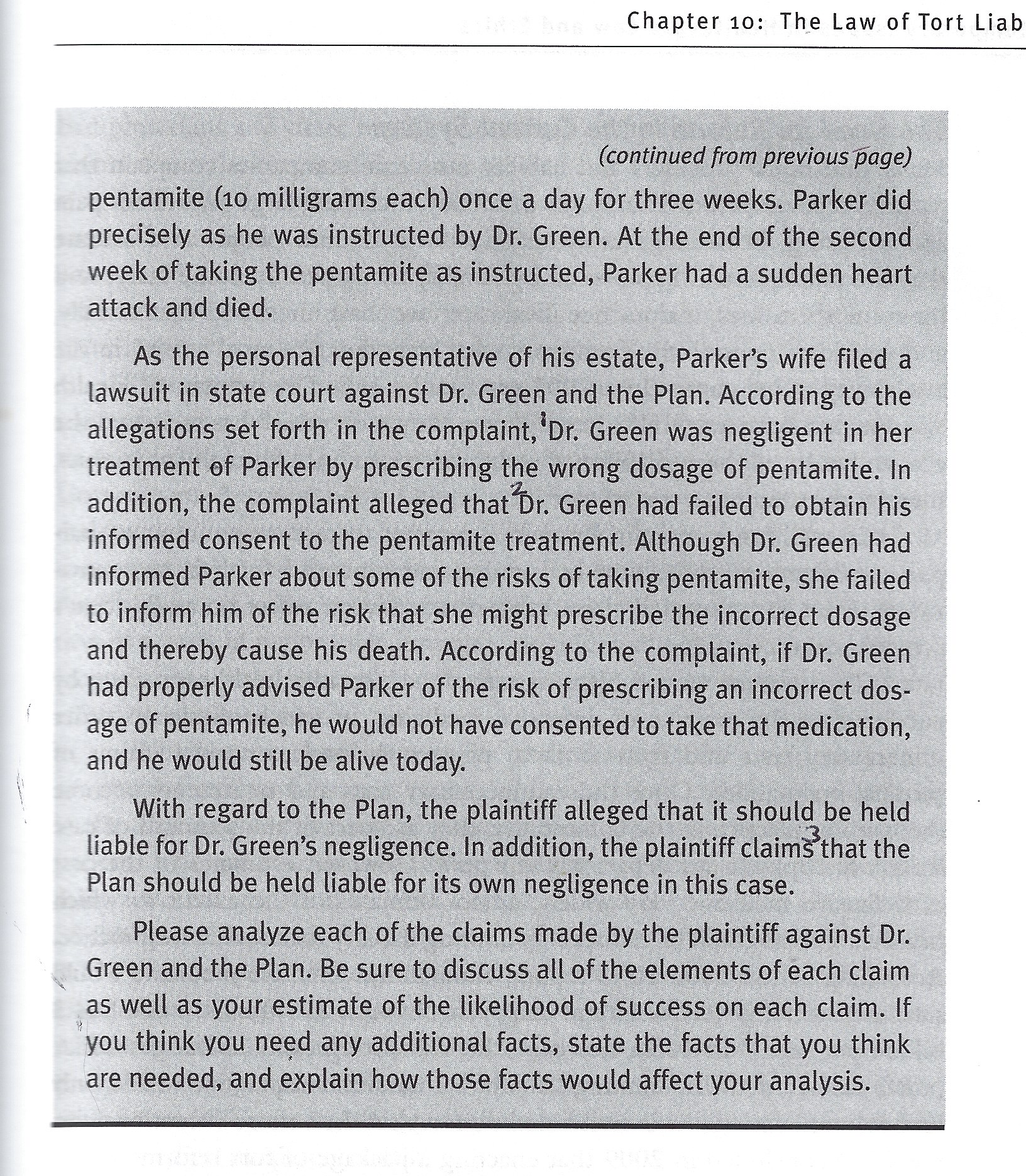
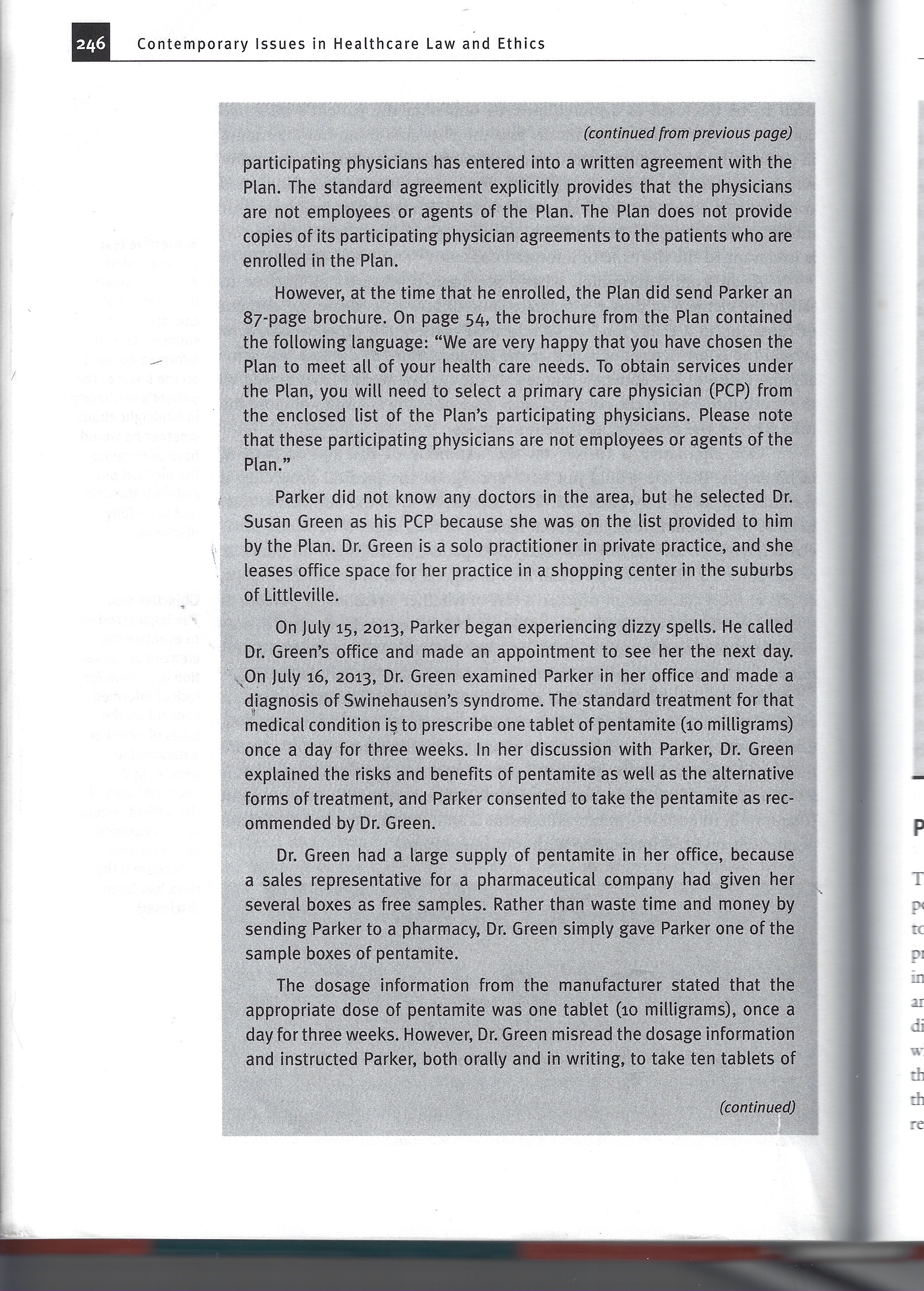
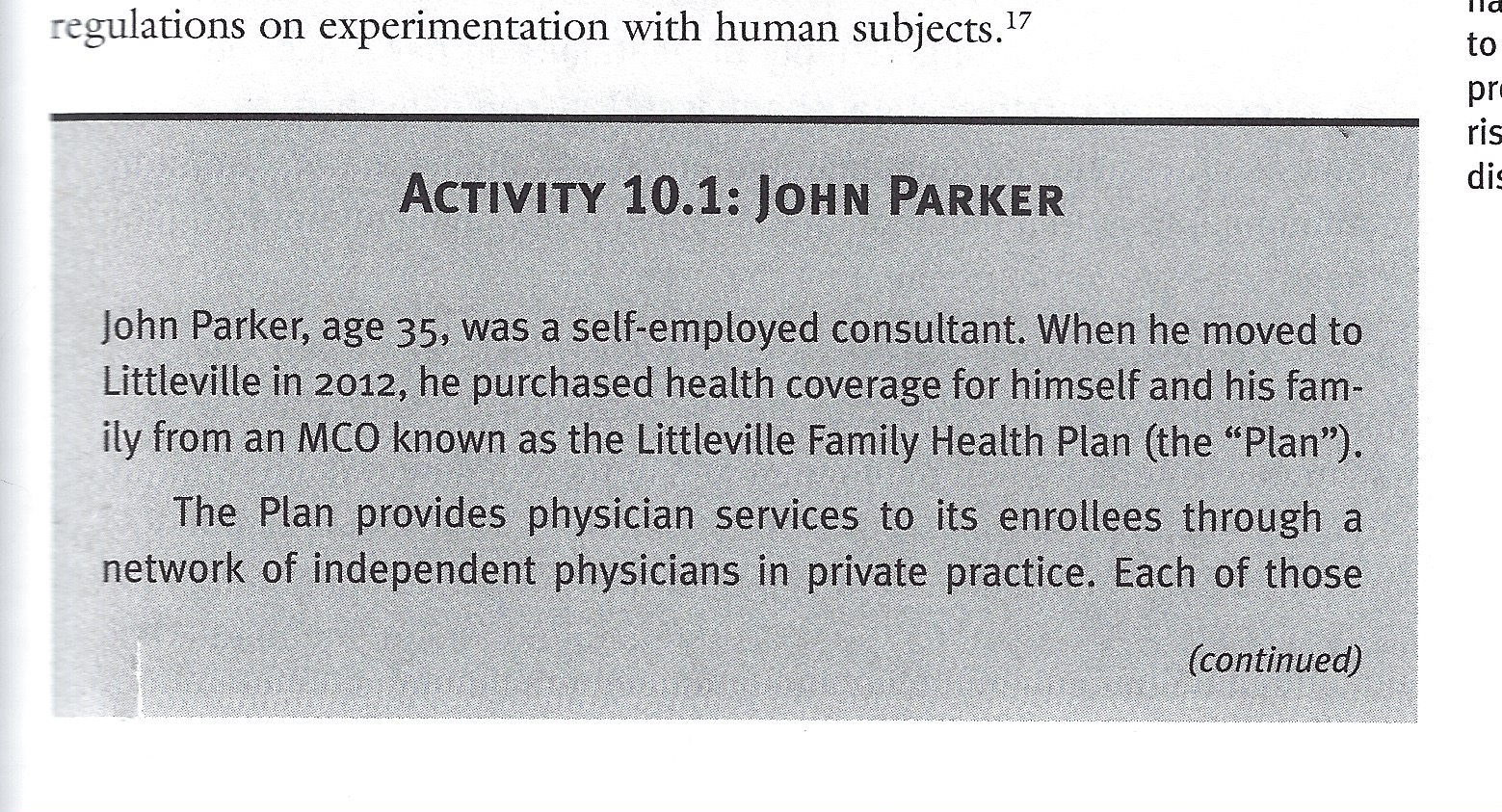
Chapter 10: The Law of Tort Liab (continued from previous page) pentamite (10 milligrams each) once a day for three weeks. Parker did precisely as he was instructed by Dr. Green. At the end of the second week of taking the pentamite as instructed, Parker had a sudden heart attack and died. As the personal representative of his estate, Parker's wife filed a lawsuit in state court against Dr. Green and the Plan. According to the allegations set forth in the complaint, 'Dr. Green was negligent in her treatment of Parker by prescribing the wrong dosage of pentamite. In addition, the complaint alleged that Dr. Green had failed to obtain his informed consent to the pentamite treatment. Although Dr. Green had informed Parker about some of the risks of taking pentamite, she failed to inform him of the risk that she might prescribe the incorrect dosage and thereby cause his death. According to the complaint, if Dr. Green had properly advised Parker of the risk of prescribing an incorrect dos- age of pentamite, he would not have consented to take that medication, and he would still be alive today. With regard to the Plan, the plaintiff alleged that it should be held liable for Dr. Green's negligence. In addition, the plaintiff claims that the Plan should be held liable for its own negligence in this case. Please analyze each of the claims made by the plaintiff against Dr. Green and the Plan. Be sure to discuss all of the elements of each claim as well as your estimate of the likelihood of success on each claim. If you think you need any additional facts, state the facts that you think are needed, and explain how those facts would affect your analysis.246 Contemporary Issues in Healthcare Law and Ethics (continued from previous page) participating physicians has entered into a written agreement with the Plan. The standard agreement explicitly provides that the physicians are not employees or agents of the Plan. The Plan does not provide copies of its participating physician agreements to the patients who are enrolled in the Plan. However, at the time that he enrolled, the Plan did send Parker an 87-page brochure. On page 54, the brochure from the Plan contained the following language: "We are very happy that you have chosen the Plan to meet all of your health care needs. To obtain services under the Plan, you will need to select a primary care physician (PCP) from the enclosed list of the Plan's participating physicians. Please note that these participating physicians are not employees or agents of the Plan." Parker did not know any doctors in the area, but he selected Dr. Susan Green as his PCP because she was on the list provided to him by the Plan. Dr. Green is a solo practitioner in private practice, and she leases office space for her practice in a shopping center in the suburbs of Littleville. On July 15, 2013, Parker began experiencing dizzy spells. He called Dr. Green's office and made an appointment to see her the next day. On July 16, 2013, Dr. Green examined Parker in her office and made a diagnosis of Swinehausen's syndrome. The standard treatment for that medical condition is to prescribe one tablet of pentamite (10 milligrams) once a day for three weeks. In her discussion with Parker, Dr. Green explained the risks and benefits of pentamite as well as the alternative forms of treatment, and Parker consented to take the pentamite as rec- ommended by Dr. Green. Dr. Green had a large supply of pentamite in her office, because a sales representative for a pharmaceutical company had given her several boxes as free samples. Rather than waste time and money by sending Parker to a pharmacy, Dr. Green simply gave Parker one of the sample boxes of pentamite. The dosage information from the manufacturer stated that the appropriate dose of pentamite was one tablet (10 milligrams), once a day for three weeks. However, Dr. Green misread the dosage information and instructed Parker, both orally and in writing, to take ten tablets of (continued)regulations on experimentation with human subjects. 17 to pr ris ACTIVITY 10.1: JOHN PARKER dis John Parker, age 35, was a self-employed consultant. When he moved to Littleville in 2012, he purchased health coverage for himself and his fam- ily from an MCO known as the Littleville Family Health Plan (the "Plan"). The Plan provides physician services to its enrollees through a network of independent physicians in private practice. Each of those (continued)
Step by Step Solution
There are 3 Steps involved in it

Get step-by-step solutions from verified subject matter experts
 Study Help