







Question: how would I solve a problem like this one? For each of the following cost flow assumptions, calculate cost of goods sold, ending inventory, and

how would I solve a problem like this one?

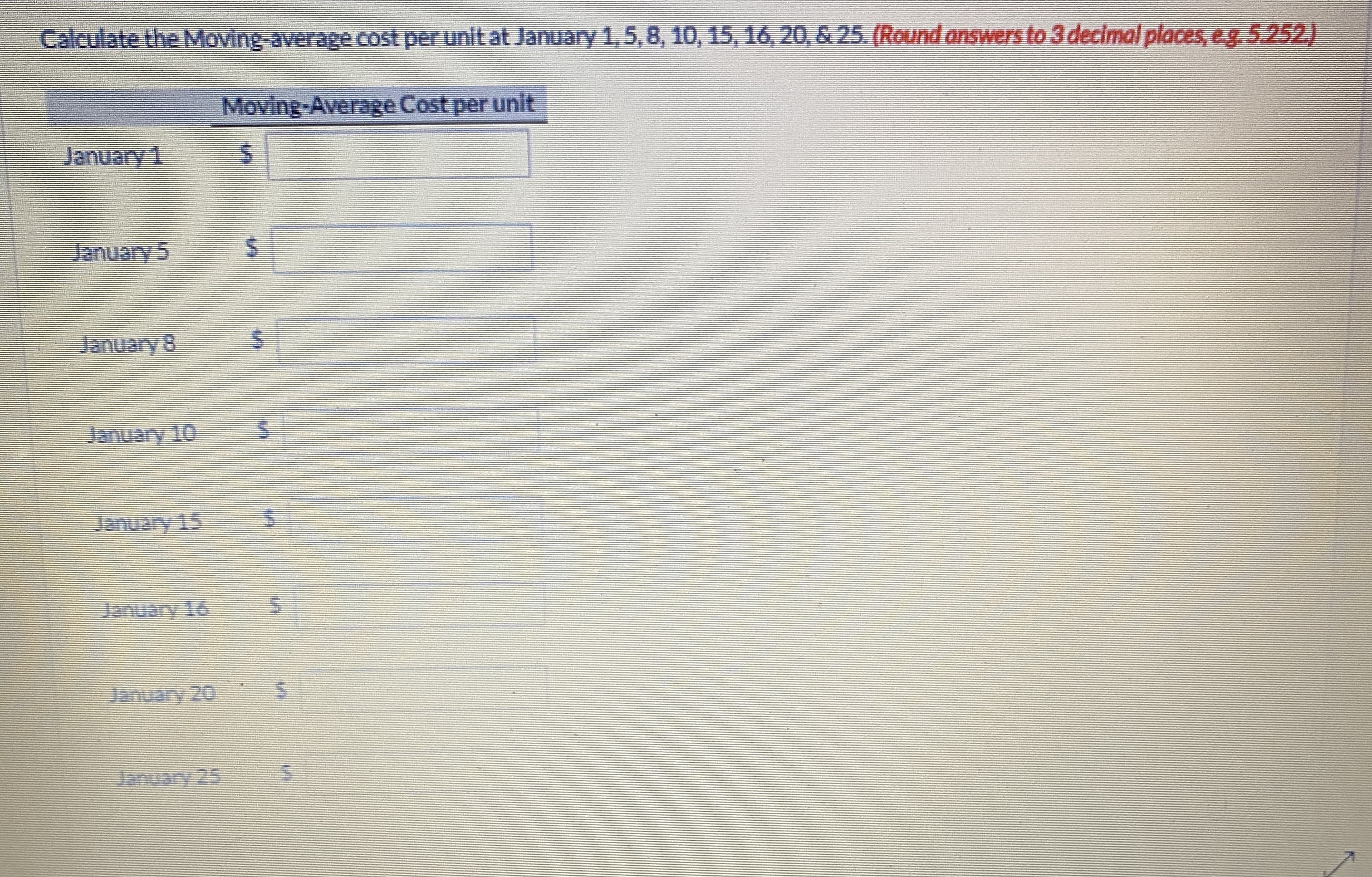
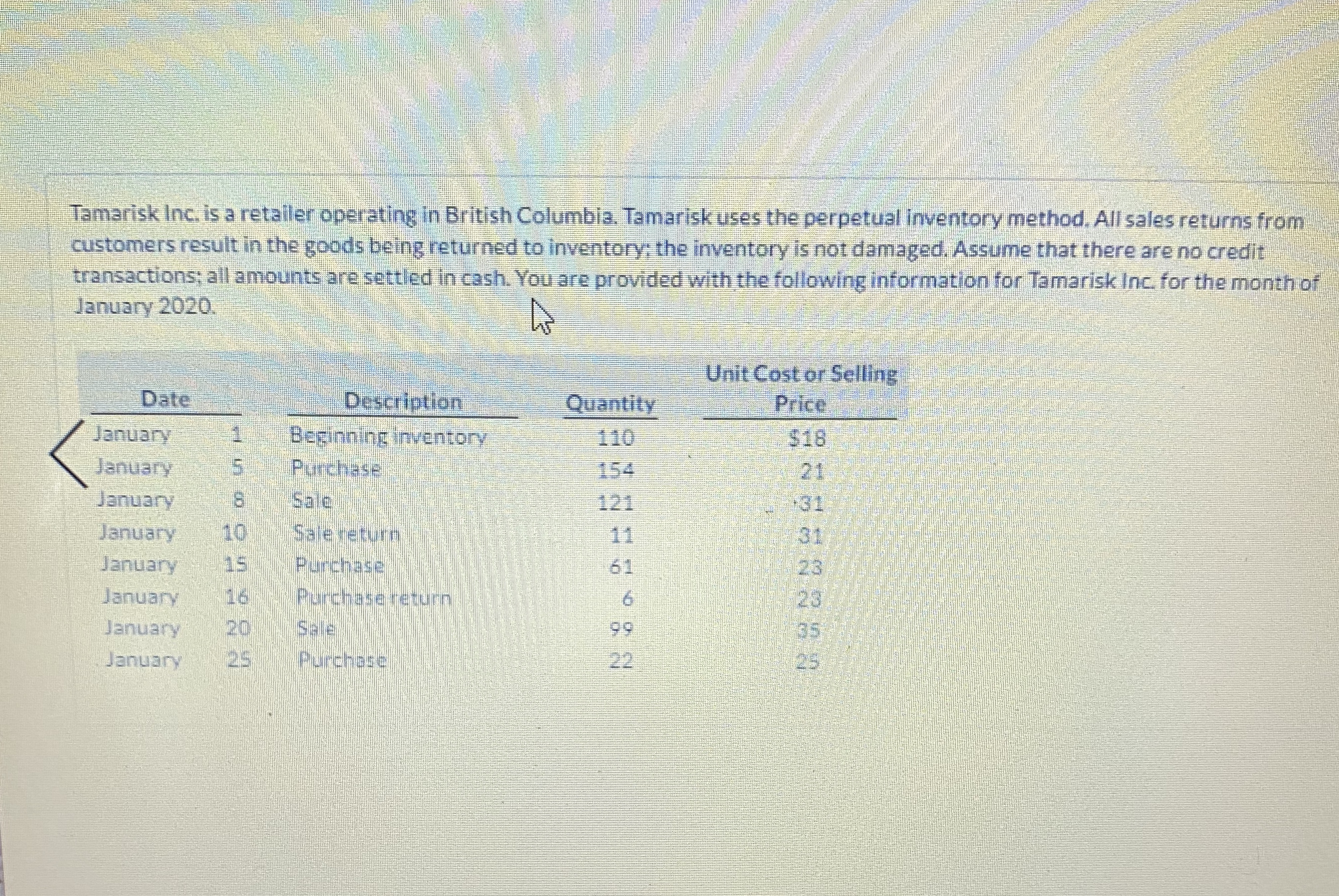
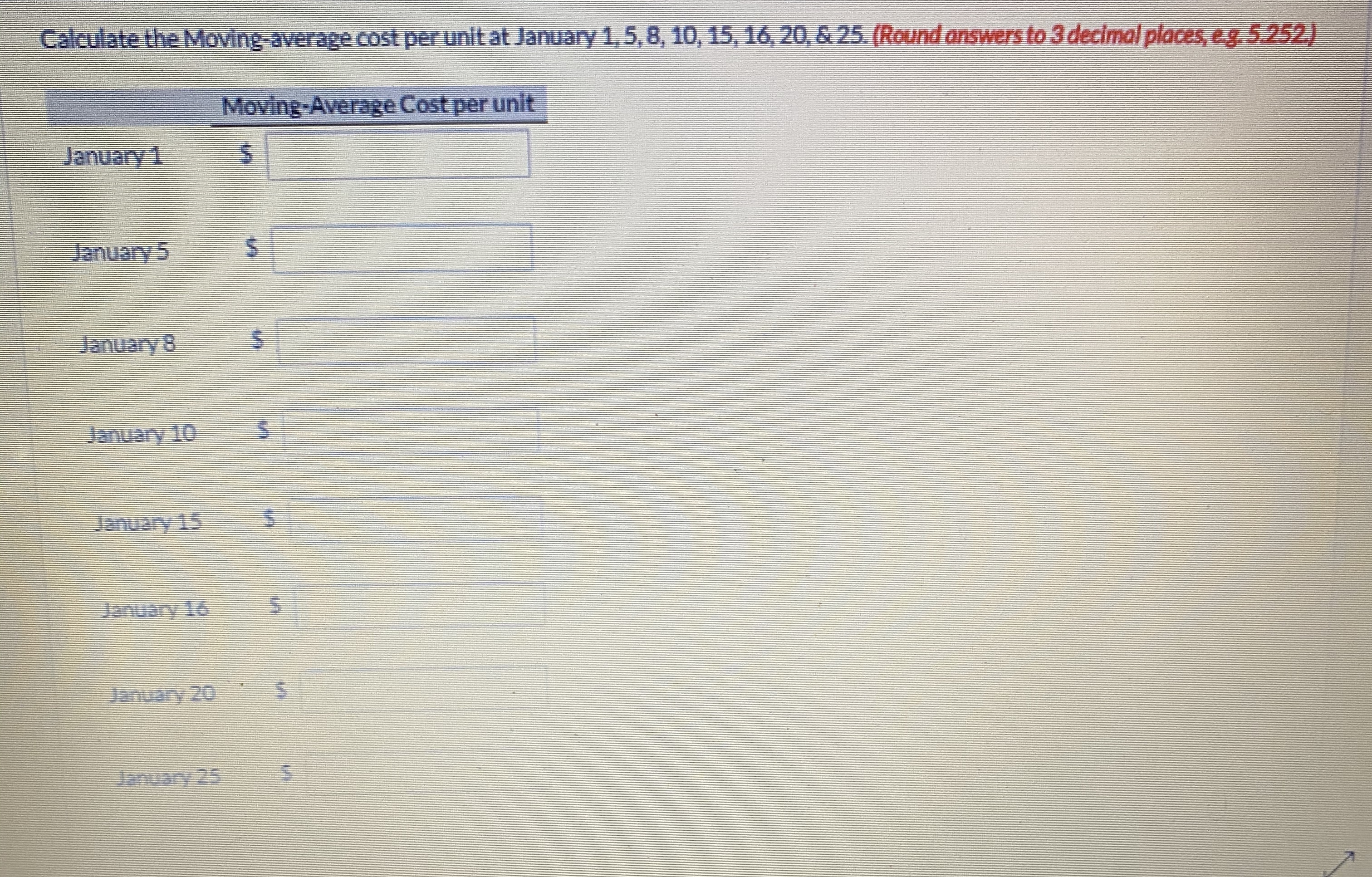
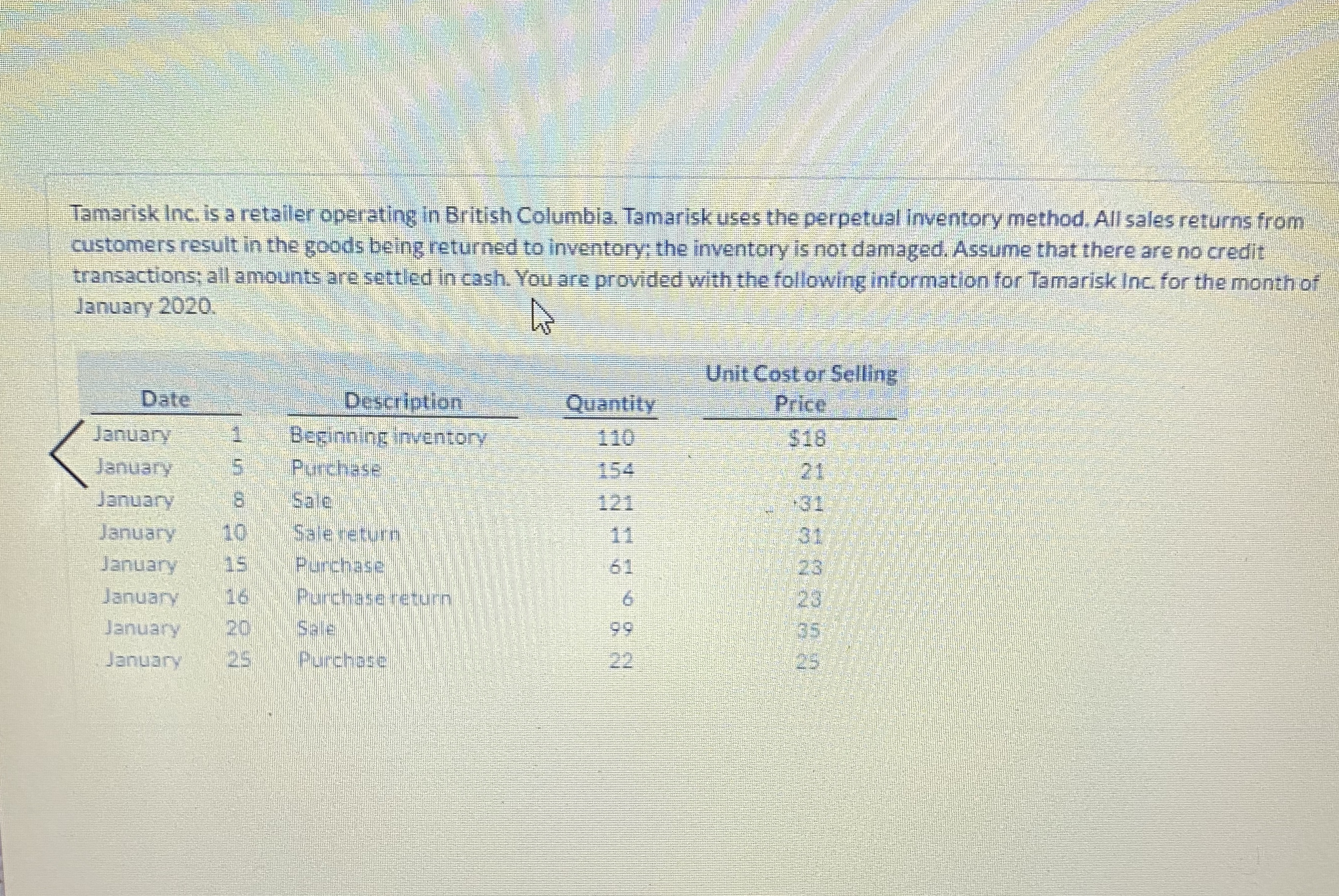
For each of the following cost flow assumptions, calculate cost of goods sold, ending inventory, and gross profit (1) LIFO. (2) FIFO. (3) Moving- average cost. (Round average-cost per unit to 3 decimal places, e.g. 12.502 and final answers to 0 decimal places, e.g. 1,250.) LIFO FIFO Moving-average Cost of goods sold Ending inventory Gross profitCalculate the Moving average cost per unit at January 1, 5,8, 10, 15, 16, 20, & 25. (Round answers to 3 decimal places, e.g. 5.252) Moving-Average Cost per unit January 1 January 5 January 8 January 10 S January 15 January 16 S January 20 S January 25Tamarisk Inc. is a retailer operating in British Columbia. Tamarisk uses the perpetual inventory method. All sales returns from customers result in the goods being returned to inventory; the inventory is not damaged. Assume that there are no credit transactions: all amounts are settled in cash. You are provided with the following information for Tamarisk Inc. for the month of January 2020. Unit Cost or Selling Date Description Quantity Price January Beginning inventory 110 $16 January Purchase 154 21 January 121 January Sale return 11 January Purchase 61 January Purchase return 6 January 99 January Purchase 22
Step by Step Solution
There are 3 Steps involved in it

Get step-by-step solutions from verified subject matter experts
 Study Help