



Question: How would you use a decision matrix to determine the risks of your suggested strategic alternative and the potential financial implications for your company of
- How would you use a decision matrix to determine the risks of your suggested strategic alternative and the potential financial implications for your company of pursuing this alternative? Is the decision matrix an effective tool for predicting risk? Why or why not? How does the application of the decision matrix alter what you previously chose as the most advantageous strategy?
- Utilizing a risk matrix, identify a minimum of 10 unique risks associated with the strategic alternative you believe will provide the most significant opportunity for your firm to add value. Choose two or three of the most critical risks and discuss their potential impacts on your selected alternative.
https://strategicmanagementinsight.com/tools/
https://www.businessnewsdaily.com/6146-decision-matrix.html
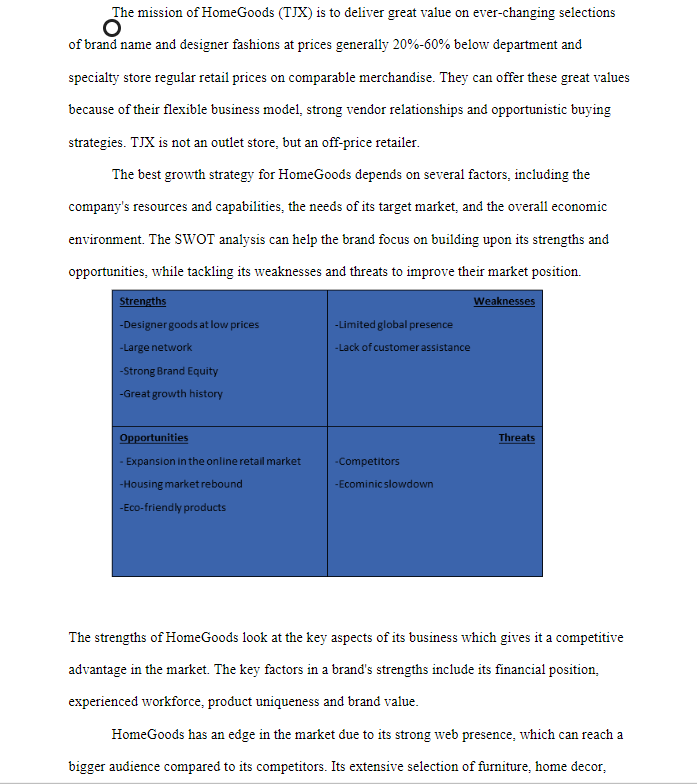
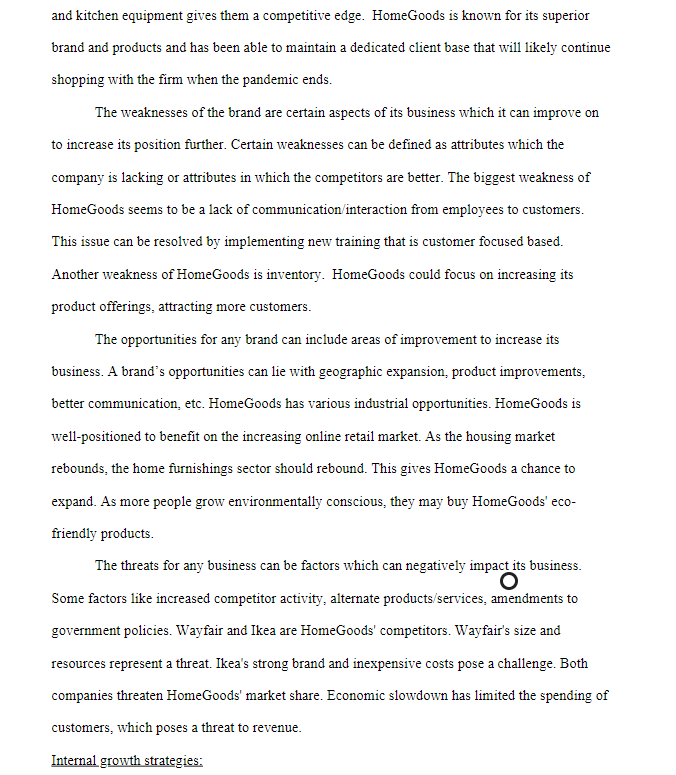
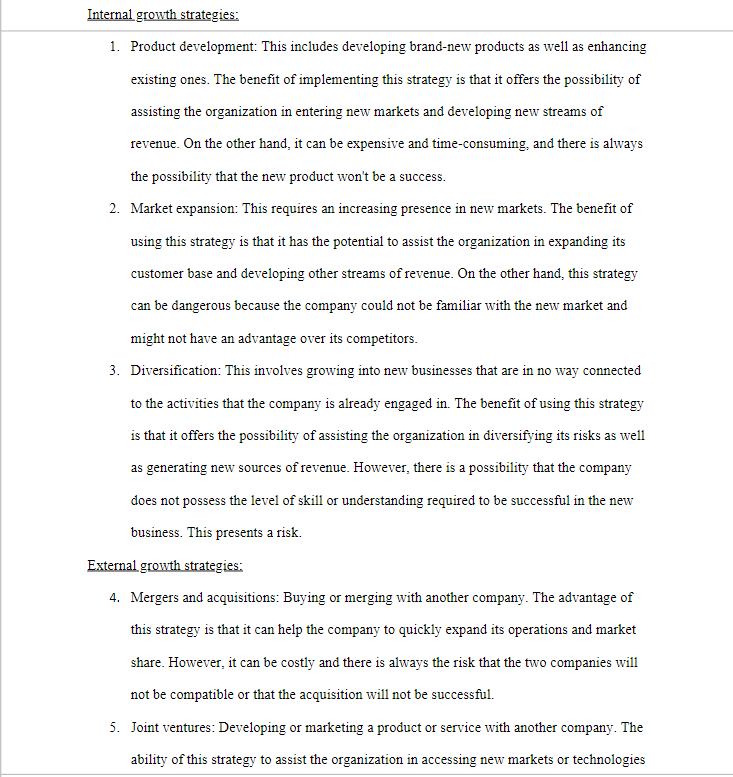
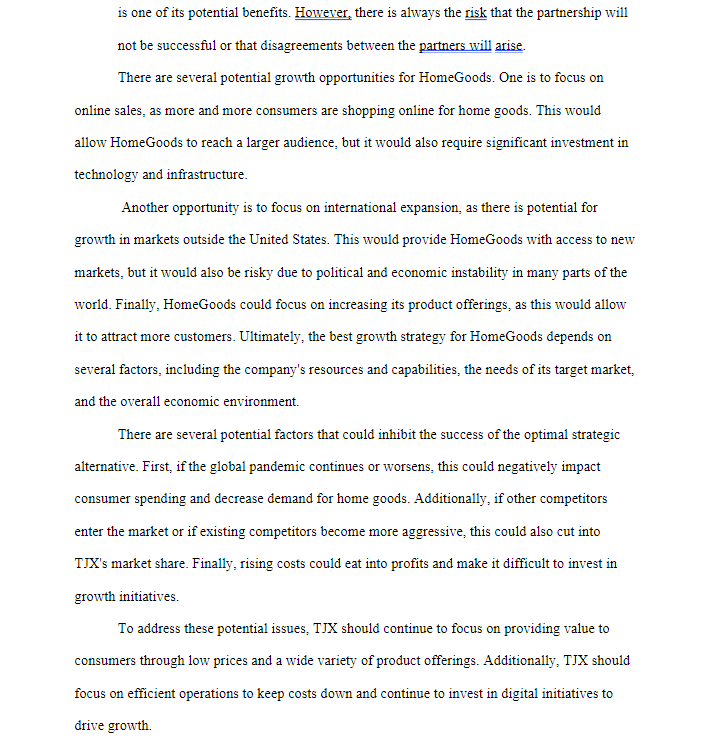
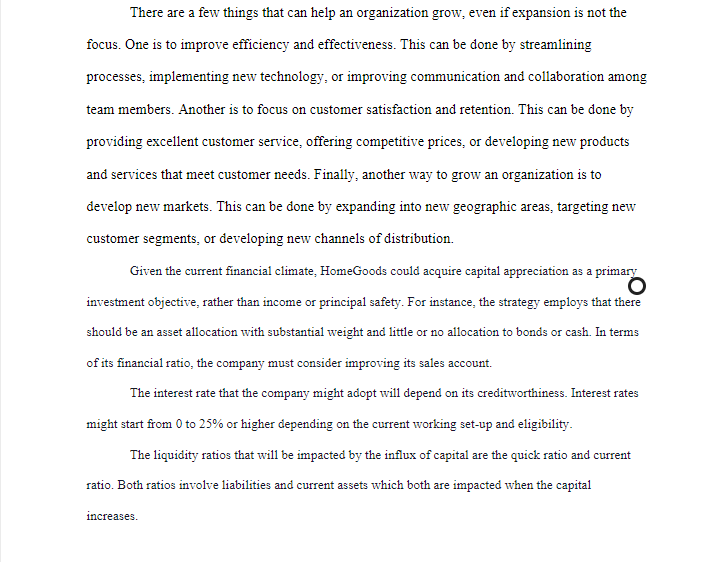
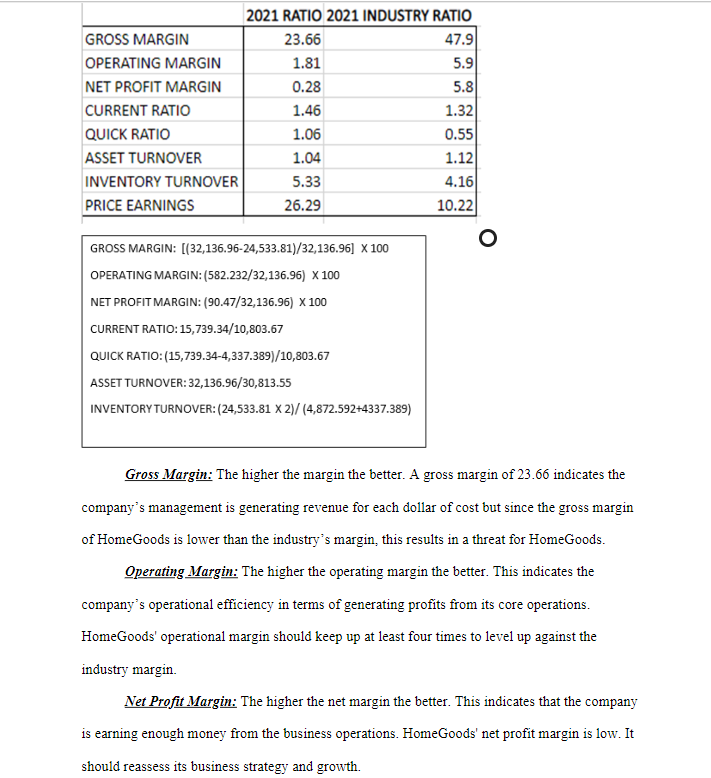
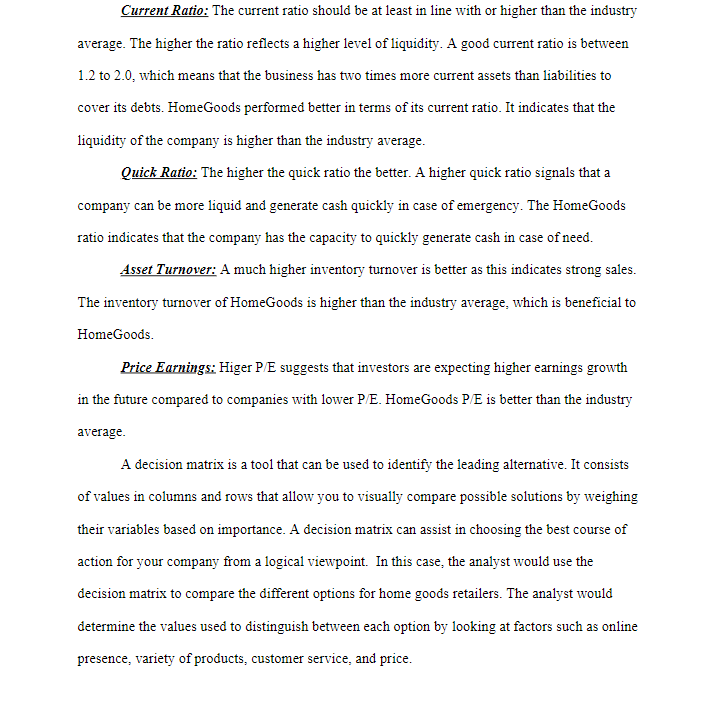
The mission of Home Goods {TIDE} is to deliver great value on everchanging selections of brat? name and designer fashions at prices generallv sassson. belotv department and specialty store regular retail prices on comparable merchandise. They can offer these great values because of their flexible business model= strong vendor relationships and opportunistic buying strategies. TD: is not an outlet store: but an oHprice retailer. The best grotvth strategy for HorneGoods depends on several factors: including the company's resources and capabilities, the needs of its target market, and the overall economic environment. The SWOT analvsis can help the brand focus on building upon its strengths and opportunities: tvhile tackling its weaknesses and threats to improve their market position. The strengths of HomeGoods look at the key aspects of its business which gives it a competitive advantage in the market. The key factors in a brand's strengths include its financial position= experienced tvorkforce, product uniqueness and brand value. HomeGoods has an edge in the market due to its strong web presence: tvhich can reach a bigger audience compared to its competitors. Its extensive selection of furniture, home decor. and kitchen equipment gives them a competitive edge. HomeGoods is known for its superior brand and products and has been able to maintain a dedicated client base that will likely continue shopping with the firm when the pandemic ends. The weaknesses of the brand are certain aspects of its business which it can improve on to increase its position further. Certain weaknesses can be defined as attributes which the company is lacking or attributes in which the competitors are better. The biggest weakness of HomeGoods seems to be a lack of communication interaction from employees to customers. This issue can be resolved by implementing new training that is customer focused based. Another weakness of HomeGoods is inventory. HomeGoods could focus on increasing its product offerings, attracting more customers. The opportunities for any brand can include areas of improvement to increase its business. A brand's opportunities can lie with geographic expansion, product improvements, better communication, etc. HomeGoods has various industrial opportunities. HomeGoods is well-positioned to benefit on the increasing online retail market. As the housing market rebounds, the home furnishings sector should rebound. This gives HomeGoods a chance to expand. As more people grow environmentally conscious, they may buy HomeGoods' eco- friendly products. The threats for any business can be factors which can negatively impact its business. O Some factors like increased competitor activity, alternate products/services, amendments to government policies. Wayfair and Ikea are HomeGoods' competitors. Wayfair's size and resources represent a threat. Ikea's strong brand and inexpensive costs pose a challenge. Both companies threaten HomeGoods' market share. Economic slowdown has limited the spending of customers, which poses a threat to revenue. Internal growth strategies:Internal growth strategies: 1. Product development: This includes developing brand-new products as well as enhancing existing ones. The benefit of implementing this strategy is that it offers the possibility of assisting the organization in entering new markets and developing new streams of revenue. On the other hand, it can be expensive and time-consuming, and there is always the possibility that the new product won't be a success. 2. Market expansion: This requires an increasing presence in new markets. The benefit of using this strategy is that it has the potential to assist the organization in expanding its customer base and developing other streams of revenue. On the other hand, this strategy can be dangerous because the company could not be familiar with the new market and might not have an advantage over its competitors. 3. Diversification: This involves growing into new businesses that are in no way connected to the activities that the company is already engaged in. The benefit of using this strategy is that it offers the possibility of assisting the organization in diversifying its risks as well as generating new sources of revenue. However, there is a possibility that the company does not possess the level of skill or understanding required to be successful in the new business. This presents a risk. External growth strategies: 4. Mergers and acquisitions: Buying or merging with another company. The advantage of this strategy is that it can help the company to quickly expand its operations and market share. However, it can be costly and there is always the risk that the two companies will not be compatible or that the acquisition will not be successful. 5. Joint ventures: Developing or marketing a product or service with another company. The ability of this strategy to assist the organization in accessing new markets or technologiesis one of its potential benefits. However there is always the risk that the partnership will not he successful or that disagreements between the pannersnsl arise. There are several potential growth opportunities for HomeGoods. One is to focus on online sales, as more and more consumers are shopping online for home goods. This would allow HomeGoods to reach a larger audience= hut it would also require significant investment in technology and infrastructure. Another opportunity is to focus on international expansion= as there is potential for growth in markets outside the United States. This would provide I-Iom eGoods with access to new markets, but it would also be risky due to political and economic instahility in many parts of the world. Finally, HomeGoods could focus on increasing its product offerings: as this would allow it to attract more customers. Uluimately: the be st growth strategy for HomeGoods depends on several factors. including the company's resources and capahilities. the needs of its target market. and the overall economic enviromnent. There are several potential factors that could inhibit the success of the optimal strategic alternative. First. if the global pandemic continues or worsens: this could negatively impact consumer spending and decrease demand for home goods. Additionally. if other competitors enter the market or if existing competitors become more aggressive. this could also cut into TJ'X's market share. Finally, rising costs could eat into profits and make it difficult to invest in growth initiatives. To address these potential issues. TJ'X should continue to focus on providing value to consumers through low prices and a wide variety of product offerings. Additionally. TJX should focus on efficient operations to keep costs down and continue to invest in digital initiatives to drive growth. There are a few things that can help an organization grow, even if expansion is not the focus. One is to improve efficiency and effectiveness. This can be done by streamlining processes, implementing new technology, or improving communication and collaboration among team members. Another is to focus on customer satisfaction and retention. This can be done by providing excellent customer service, offering competitive prices, or developing new products and services that meet customer needs. Finally, another way to grow an organization is to develop new markets. This can be done by expanding into new geographic areas, targeting new customer segments, or developing new channels of distribution. Given the current financial climate, HomeGoods could acquire capital appreciation as a primary O investment objective, rather than income or principal safety. For instance, the strategy employs that there should be an asset allocation with substantial weight and little or no allocation to bonds or cash. In terms of its financial ratio, the company must consider improving its sales account. The interest rate that the company might adopt will depend on its creditworthiness. Interest rates might start from 0 to 25% or higher depending on the current working set-up and eligibility. The liquidity ratios that will be impacted by the influx of capital are the quick ratio and current ratio. Both ratios involve liabilities and current assets which both are impacted when the capital increases .2021 RATIO 2021 INDUSTRY RATIO GROSS MARGIN 23.66 47.9 OPERATING MARGIN 1.81 5.9 NET PROFIT MARGIN 0.28 5.8 CURRENT RATIO 1.46 1.32 QUICK RATIO 1.06 0.55 ASSET TURNOVER 1.04 1.12 INVENTORY TURNOVER 5.33 4.16 PRICE EARNINGS 26.29 10.22 O GROSS MARGIN: [(32,136.96-24,533.81)/32,136.96] X 100 OPERATING MARGIN: (582.232/32,136.96) X 100 NET PROFIT MARGIN: (90.47/32,136.96) X 100 CURRENT RATIO: 15,739.34/10,803.67 QUICK RATIO: (15,739.34-4,337.389)/10,803.67 ASSET TURNOVER: 32,136.96/30,813.55 INVENTORY TURNOVER: (24,533.81 x 2)/ (4,872.592+4337.389) Gross Margin: The higher the margin the better. A gross margin of 23.66 indicates the company's management is generating revenue for each dollar of cost but since the gross margin of HomeGoods is lower than the industry's margin, this results in a threat for HomeGoods. Operating Margin: The higher the operating margin the better. This indicates the company's operational efficiency in terms of generating profits from its core operations. HomeGoods' operational margin should keep up at least four times to level up against the industry margin. Net Profit Margin: The higher the net margin the better. This indicates that the company is earning enough money from the business operations. HomeGoods' net profit margin is low. It should reassess its business strategy and growth.Current Ratio: The current ratio should be at least in line with or higher than the industry average. The higher the ratio reflects a higher level of liquidity. A good current ratio is between 1.2 to 2.0, which means that the business has two times more current assets than liabilities to cover its debts. HomeGoods performed better in terms of its current ratio. It indicates that the liquidity of the company is higher than the industry average. Quick Ratio: The higher the quick ratio the better. A higher quick ratio signals that a company can be more liquid and generate cash quickly in case of emergency. The HomeGoods ratio indicates that the company has the capacity to quickly generate cash in case of need. Asset Turnover: A much higher inventory turnover is better as this indicates strong sales. The inventory turnover of HomeGoods is higher than the industry average, which is beneficial to HomeGoods. Price Earnings: Higer P/E suggests that investors are expecting higher earnings growth in the future compared to companies with lower P/E. HomeGoods P/E is better than the industry average. A decision matrix is a tool that can be used to identify the leading alternative. It consists of values in columns and rows that allow you to visually compare possible solutions by weighing their variables based on importance. A decision matrix can assist in choosing the best course of action for your company from a logical viewpoint. In this case, the analyst would use the decision matrix to compare the different options for home goods retailers. The analyst would determine the values used to distinguish between each option by looking at factors such as online presence, variety of products, customer service, and price
Step by Step Solution
There are 3 Steps involved in it

Get step-by-step solutions from verified subject matter experts