Question: HSC4500 Lesson 6 Assignment 1. The data in the table below describes characteristics of the 38 persons who ate food at or from a church
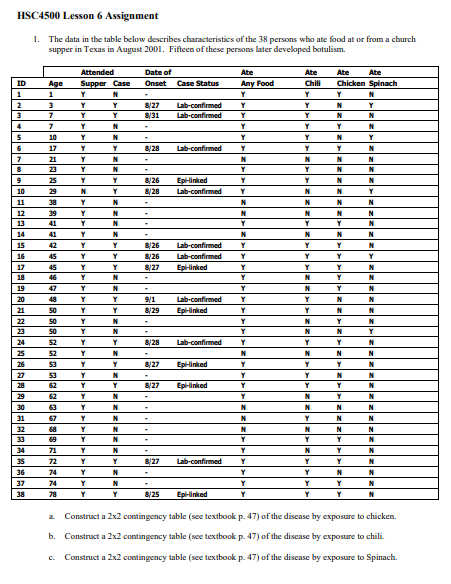
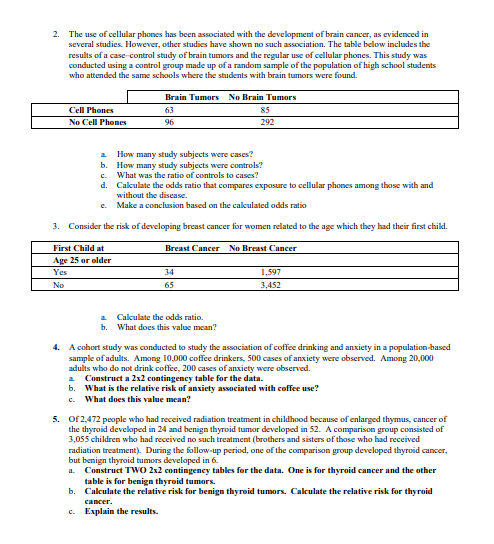
HSC4500 Lesson 6 Assignment 1. The data in the table below describes characteristics of the 38 persons who ate food at or from a church supper in Texas in August 2001. Fifteen of these persons later developed botulism. Date of Onset ID Case Status 1 2 3 Ate Chili Y Y Y Ate Ate Chicken Spinach Y N N Y N N Y N 8/27 8/31 Lab-confirmed Lab-confirmed Y 8/28 Lab-confirmed Age 1 3 7 7 10 17 21 23 25 29 38 39 41 41 42 45 5 6 7 8 9 10 11 12 13 14 15 8/26 Y Y N Y Y N Epi-linked Lab-confirmed Ate Any Food Y Y Y Y Y Y N Y Y Y N N Y N Y Y Y Y Y 8/28 N Y N N N N N N Y N Y Y N N N N Y N N N N N Y N N Y N Y 16 8/26 8/26 8/27 Lab-confirmed Lab-confirmed Epi-linked 45 46 47 Y Y N Y Y Y N N Attended Supper Case Y N Y Y Y Y Y N Y N Y Y Y N Y N Y Y N Y Y N Y N Y N Y N Y Y Y Y Y Y Y N Y N Y Y Y Y Y N Y N Y Y Y N Y Y Y N Y Y Y N Y N Y N Y N Y N Y N Y Y Y N Y N Y Y N Y N Y Y 9/1 8/29 17 18 19 20 21 22 23 24 25 26 27 Lab-confirmed Epi-linked Y N N Y N N N Y N Y N Y Y Y Y N Y Y N N N Y N N 8/28 Lab-confirmed 8/27 Epi-linked Y Y Y N Y N Y N N N 8/27 Ep-linked 48 50 50 50 52 52 53 53 62 62 63 67 68 69 71 72 74 74 78 Y Y 29 30 31 32 33 34 Y N N N Y Y RRRRRRR N Y N Y N N N N Y N N N N N 8/27 Lab-confirmed 36 37 38 Y Y Y Y Y Y Y Y Y Y N Y Y N N N N N 8/25 Epi-linked Construct a 2x2 contingency table (see textbook p. 47) of the disease by exposure to chicken. b. Construct a 2x2 contingency table (see textbook p. 47) of the disease by exposure to chili. C. Construct a 2x2 contingency table (see textbook p. 47) of the disease by exposure to Spinach. 2. The use of cellular phones has been associated with the development of brain cancer, as evidenced in several studies. However, other studies have shown no such association. The table below includes the results of a case-control study of brain tumors and the regular use of cellular phones. This study was conducted using a control group made up of a random sample of the population of high school students who attended the same schools where the students with brain tumors were found. Cell Phones No Cell Phones Brain Tumors No Brain Tumors 63 85 96 292 a How many study subjects were cases? b. How many study subjects were controls? c. What was the ratio of controls to cases? d. Calculate the odds ratio that compares exposure to cellular phones among those with and without the disease c. Make a conclusion based on the calculated odds ratio 3. Consider the risk of developing breast cancer for women related to the age which they had their first child. First Child at Breast Cancer No Breast Cancer Age 25 or older Yes 34 1,597 No 65 3,452 a Calculate the odds ratio. b. What does this value mean? 4. A cohort study was conducted to study the association of coffee drinking and anxiety in a population-based sample of adults. Among 10.000 coffee drinkers, 500 cases of anxiety were observed. Among 20,000 adults who do not drink coffee, 200 cases of anxiety were observed. a Construct a 2x2 contingency table for the data. b. What is the relative risk of anxiety associated with coffee use? c. What does this value mean? 5. Of 2,472 people who had received radiation treatment in childhood because of enlarged thymus cancer of the thyroid developed in 24 and benign thyroid tumor developed in 52. A comparison group consisted of 3,055 children who had received no such treatment (brothers and sisters of those who had received radiation treatment). During the follow-up period, one of the comparison group developed thyroid cancer, but benign thyroid tumors developed in 6. a. Construct TWO 2x2 contingency tables for the data. One is for thyroid cancer and the other table is for benign thyroid tumors. b. Calculate the relative risk for benign thyroid tumors. Calculate the relative risk for thyroid cancer. c. Explain the results. HSC4500 Lesson 6 Assignment 1. The data in the table below describes characteristics of the 38 persons who ate food at or from a church supper in Texas in August 2001. Fifteen of these persons later developed botulism. Date of Onset ID Case Status 1 2 3 Ate Chili Y Y Y Ate Ate Chicken Spinach Y N N Y N N Y N 8/27 8/31 Lab-confirmed Lab-confirmed Y 8/28 Lab-confirmed Age 1 3 7 7 10 17 21 23 25 29 38 39 41 41 42 45 5 6 7 8 9 10 11 12 13 14 15 8/26 Y Y N Y Y N Epi-linked Lab-confirmed Ate Any Food Y Y Y Y Y Y N Y Y Y N N Y N Y Y Y Y Y 8/28 N Y N N N N N N Y N Y Y N N N N Y N N N N N Y N N Y N Y 16 8/26 8/26 8/27 Lab-confirmed Lab-confirmed Epi-linked 45 46 47 Y Y N Y Y Y N N Attended Supper Case Y N Y Y Y Y Y N Y N Y Y Y N Y N Y Y N Y Y N Y N Y N Y N Y Y Y Y Y Y Y N Y N Y Y Y Y Y N Y N Y Y Y N Y Y Y N Y Y Y N Y N Y N Y N Y N Y N Y Y Y N Y N Y Y N Y N Y Y 9/1 8/29 17 18 19 20 21 22 23 24 25 26 27 Lab-confirmed Epi-linked Y N N Y N N N Y N Y N Y Y Y Y N Y Y N N N Y N N 8/28 Lab-confirmed 8/27 Epi-linked Y Y Y N Y N Y N N N 8/27 Ep-linked 48 50 50 50 52 52 53 53 62 62 63 67 68 69 71 72 74 74 78 Y Y 29 30 31 32 33 34 Y N N N Y Y RRRRRRR N Y N Y N N N N Y N N N N N 8/27 Lab-confirmed 36 37 38 Y Y Y Y Y Y Y Y Y Y N Y Y N N N N N 8/25 Epi-linked Construct a 2x2 contingency table (see textbook p. 47) of the disease by exposure to chicken. b. Construct a 2x2 contingency table (see textbook p. 47) of the disease by exposure to chili. C. Construct a 2x2 contingency table (see textbook p. 47) of the disease by exposure to Spinach. 2. The use of cellular phones has been associated with the development of brain cancer, as evidenced in several studies. However, other studies have shown no such association. The table below includes the results of a case-control study of brain tumors and the regular use of cellular phones. This study was conducted using a control group made up of a random sample of the population of high school students who attended the same schools where the students with brain tumors were found. Cell Phones No Cell Phones Brain Tumors No Brain Tumors 63 85 96 292 a How many study subjects were cases? b. How many study subjects were controls? c. What was the ratio of controls to cases? d. Calculate the odds ratio that compares exposure to cellular phones among those with and without the disease c. Make a conclusion based on the calculated odds ratio 3. Consider the risk of developing breast cancer for women related to the age which they had their first child. First Child at Breast Cancer No Breast Cancer Age 25 or older Yes 34 1,597 No 65 3,452 a Calculate the odds ratio. b. What does this value mean? 4. A cohort study was conducted to study the association of coffee drinking and anxiety in a population-based sample of adults. Among 10.000 coffee drinkers, 500 cases of anxiety were observed. Among 20,000 adults who do not drink coffee, 200 cases of anxiety were observed. a Construct a 2x2 contingency table for the data. b. What is the relative risk of anxiety associated with coffee use? c. What does this value mean? 5. Of 2,472 people who had received radiation treatment in childhood because of enlarged thymus cancer of the thyroid developed in 24 and benign thyroid tumor developed in 52. A comparison group consisted of 3,055 children who had received no such treatment (brothers and sisters of those who had received radiation treatment). During the follow-up period, one of the comparison group developed thyroid cancer, but benign thyroid tumors developed in 6. a. Construct TWO 2x2 contingency tables for the data. One is for thyroid cancer and the other table is for benign thyroid tumors. b. Calculate the relative risk for benign thyroid tumors. Calculate the relative risk for thyroid cancer. c. Explain the results









 Study Help